85. Cinema Paradiso

I guess I have Italian films on the brain. What Bicycle Thieves and Neorealism did for the Italian movie industry in the 40s, Cinema Paradiso revived in the 80s. Considered one of the greatest films of all time, Cinema Paradiso is a movie about youth, realizing your destiny, nostalgia, and the power of movies. Basically, it’s a full-length version of that Nicole Kidman AMC ad, but actually good (Side note, but I need people besides just my wife to know this: Rewatch that ad sometime. She goes on about “we come to movie theaters to live, laugh, love, blah, blah, blah” and then she says, “and to go someplace we’ve never been before”, and when she says that, it shows a movie clip on the screen. Originally, it was a clip of Jurassic World, but recently, it changed to Avatar: The Way of Water. You know…places we’ve already been before! How are you going to say a line like that in all seriousness and then show clips from sequels?? End of rant).

Anyway, Cinema Paradiso is about young Salvatore, a boy in a Sicilian village post-World War II who gets into all sorts of trouble. By visiting the local theater, Cinema Paradiso, Salvatore develops a deep love of movies. Alfredo, the projectionist, encourages Salvatore’s passion and lets him sit in the projection booth with him as the movies play. Alfredo acts as a friend and father figure to Salvatore, who lost his father in the war, and lets him watch as Alfredo cuts out scenes of kisses and hugs from the films because the owner of the theater, the local priest, demands it despite audience reactions. One night, Cinema Paradiso catches on fire with Alfredo inside. Salvatore rescues him, but Alfredo is left permanently blind when reel of film explodes in his face. Cinema Paradiso gets rebuilt, and a teenaged Salvatore becomes the new projectionist, having been taught by Alfredo. He also purchases a camera and films random things around the village, including a girl named Elena. Salvatore falls head-over-heels for Elena, but her father does not approve, and eventually her family moves away. After a brief stint in the military, Salvatore is convinced by Alfredo to leave the village and never return, and instead become a filmmaker, and so he does. Thirty years later, he returns for Alfredo’s funeral and discovers a gift Alfredo left for him after he passed: a film reel of all the romantic scenes cut from movies being shown at Cinema Paradiso.

What a picture! The ending where Salvatore watches the film reel Alfredo left him is considered one of the greatest film endings of all time, and with good reason. It’s a montage of passion, love between man and woman, sure, but a love for how movies can make us feel. And it just goes to show that spying on people is creepy, but if you do it with a movie camera, it’s sweet and beautiful. I think that’s the message of the movie, but if that’s not it, then nostalgia for one’s childhood is. Nostalgia is a pretty hot commodity these days. It’s a selling point for movies and television, remakes of video games, increasing viewership on Facebook pages, and getting you to buy a cable plan with MeTV. Nostalgia brought back Dunkaroos from extinction, so I have surely benefitted from it. But it’s all surface-level, remember-the-good-ol’-days-type stuff. Cinema Paradiso begs you to look deeper. Yes, there’s the good, but there’s bad too in every childhood, and it’s up to you to make peace with the fact that both helped shape who you became.

Bonus Review: La La Land
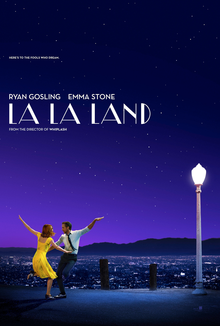
Another movie about nostalgia, just geared towards old Hollywood musicals, this time. La La Land was a surprise hit from the guy who made J.K. Simmons more than just the Peanut M&M – a jazz musical, with all original songs choreography, would be a tough sell in our modern days, but after the success of Whiplash, writer-director Damien Chazelle got carte blanche to make his dream project. La La Land is an ode to the Hollywood of old and an amalgamation of Singin’ in the Rain, An American in Paris, The Umbrellas of Cherbourg and The Young Girls of Rochefort.

Sebastian (Ryan Gosling) and Mia (Emma Stone) are two struggling artists that run into each other pretty frequently in one of the largest-populated cities in the country. Sebastian dreams of opening his own jazz club and tickling the ivories every night, while Mia wants to be a leading lady. They bond over their mutual lack of luck and quickly fall in love. While together, they push each other to pursue their dreams, but even with the added support, it doesn’t get any easier. Mia writes a one-woman play, which tanks, and Sebastian joins his friend in a pop band for the steady income but hates it. Their differing schedules keep them from seeing each other very much. After a fight, Mia goes home to Nevada, but after she leaves, a producer who caught her play wants her to audition for a role. Sebastian drives out to Nevada to convince her to come back and audition, and she successfully gets the part. Five years later, Mia is a successful actress and married with a child, but not to Sebastian. She and her husband go out for a date night and accidentally come across Sebastian’s jazz club. Between songs, Sebastian and Mia’s eyes meet, and for a brief eight minutes, they imagine what their lives could have been like together before returning to reality, briefly smiling at one another, and going their separate ways.

Sometimes, dreams don’t work out, and sometimes you have to choose which dream to make a reality. Not everything gets tied up in a neat little bow like in the movies. La La Land is a contradiction in how it fawns over movies and then demands you believe that things don’t always work out despite what the movies tell you, but it’s an enjoyable one to watch. It has all the flair and color of its inspirations, the music is surprisingly catchy, and Ryan Gosling and Emma Stone seep with chemistry (but if you’ve seen Crazy, Stupid Love, you already knew that). A love letter to a dead genre, La La Land fits right in on the shelf with the musicals that came before.

Pee-Wee’s Big Adventure

It feels weird, reviewing a movie that’s been with you since your childhood, and there’s a certain fear that comes with that: Is the movie as good as you remember it? More often than not, you go back to a movie from your past and you stare at the screen in horror over the idea that you ever enjoyed such a thing. And what’s worse, you told people recently that you liked that movie, before you sat yourself down to rewatch it. You have to hang your head in shame, now, around some of your friends because you spent several hours heatedly defending Space Jam. Life, as you knew it, is now over.

But there are other instances, where you return to a film through the eyes of your adult self, and it’s just as good as you remember it. Sometimes better. Pee-Wee’s Big Adventure is one of those movies. With the recent passing of Paul Reubens, a rewatch of the 1985 classic felt necessary. And I am thrilled to say that this film remains one of the best cinematic tales of young love, between a boy and his bike.

Pee-Wee Herman is your normal, everyday acid-trip-induced man-child version of Mister Rogers. He lives in a house with his dog, Speck, covered in gadgets and knick-knacks that overcomplicate the simplest tasks. His entire kitchen is rigged to where you can light a candle and your breakfast is made while you’re off doing something else. As a boy, I always wished for something similar in my future, but the logistics of having such a house seem insurmountable. But above everything else he owns, there is his most cherished possession: a red bicycle with a tiger’s head on the front. And there ain’t no one gonna come between him and that bike.

Paul Reubens saw Tim Burton’s original short, Frankenweenie, and personally requested that he direct this film. His fingerprints are all over the film, too. There are multiple dream sequences, some involving claymation, with black and white, German Expressionism-style set design. There’s a beautiful sunrise seen through the open jaws of a large T-Rex sideshow attraction, complete with jagged teeth framing it. There’s a fun, bouncing score from Danny Elfman, his first music-related project post-Oingo Boingo and his first collaboration of many with Burton. Burton’s style and attitude toward filmmaking are a perfect match for the character of Pee-Wee Herman.

The plot of the movie is hard to describe without sounding absolutely ridiculous, so I might as well just lean into it. All is wonderful in Pee-Wee’s world until he runs into the rich “kid” down the street, Francis Buxton. Buxton wants Pee-Wee’s bike more than anything at the moment and, to get it, he hires a greaser to steal it while Pee-Wee’s out doing a little bit of shopping. Pee-Wee soon realizes that no one is going to help him find his bike (after all, it’s “just a bike”) – not the police, not his friends – so he is on his own. With nowhere else to turn, he meets a fortune teller who tells him his bike is in the basement of the Alamo.

Pee-Wee hitchhikes to Texas with the help of a convict on the run for tearing the tags off mattresses, and a woman truckdriver named Large Marge. Although, this Large Marge lady may not be all that she seems to be. He gets dropped off at an unnamed diner in an unnamed part of the world, and he meets a friendly waitress named Simone. Simone encourages Pee-Wee to keep searching for his bike, and he encourages her to follow her dream of traveling to Paris. Simone’s boyfriend Andy is less understanding of her friendship with Pee-Wee, especially after he overhears them talking about her big “but”. He chases Pee-Wee with a dinosaur bone through a cornfield, forcing Pee-Wee to escape by jumping onto a moving train. He sings old songs with a hobo until he reaches his destination, San Antonio.

Pee-Wee is rightfully disappointed to find out that the Alamo doesn’t even have a basement, and so he’s back to the drawing board. While in San Antonio, he sets a national record in bull-riding. He also suffers from brief amnesia after being thrown from the bull. But don’t you worry, my dear Texans. Pee-Wee may not be able to remember his name, but he remembers the Alamo.

From there, he realizes he needs to get to a phone and call home, so he visits a bar that’s the local hangout of the biker gang, “Satan’s Helpers”. After he knocks over their bikes just outside the bar (which happens in any self-respecting road trip movie), Satan’s Helpers hold him down and debate how they’re going to kill him. He asks for a last request, and is granted it, so he borrows a busboy’s platform shoes and dances on top of the bar to “Tequila” by The Champs. As is expected, this wins over Satan’s Helpers and they offer him one of their bikes so he can travel home. He makes it to the edge of the parking lot before driving into the bar’s streetside signage.

Pee-Wee gets rushed to the hospital and sees a news report on TV that indicates his bike is in Hollywood on a film set. He makes his way to Hollywood, takes back his bike, and flees the Warner Bros. studio lot while being pursued by the entirety of the Warner Bros. security team. He travels through a beach movie, a Christmas movie, a Godzilla movie, a Tarzan movie, and a Twisted Sister music video before successfully escaping with his bike. Unfortunately, his freedom is short-lived. He stops to save all the animals inside a burning pet store, and it is there that he is caught and brought before Warner Bros. execs. Lucky for Pee-Wee, his story is interesting enough to where Warner Bros. wants to make a movie out of it! The film ends at the local drive-in, where all of Pee-Wee’s new friends show up to witness the premiere of this autobiographical movie.

Bonkers, right? Absolutely crazy, but it’s so much fun. The script is tight and throwaway lines earlier on make an appearance again later on. Pee-Wee’s retort to Francis (“I know you are, but what am I?”) is quoted by the film-version of Pee-Wee at the end. When making a police report, Pee-Wee is convinced that “the Soviets” are responsible for his missing bike, and in the fake film, Soviet ninjas are the main villains. It’s smart for knowing that it’s dumb and playing it up. Some scenes are terrifying, or at least were to the younger me – Large Marge, the dream sequences, one involving a T-Rex eating his bike, and another one involving three of a child’s biggest fears: clowns, doctors, and Satan. Pee-Wee’s Big Adventure is a joy to watch. It’s funny, quotable, feverishly ridiculous, and according to my wife, a little creepy, and we have Paul Reubens to thank for all of that.

Verdict: There’s no way I’m getting rid of this movie. Not only am I nostalgic for it, but it really is a great film. Everyone should own a copy.

And you can grab a copy <a href="http://<a target="_blank" href="https://www.amazon.com/Pee-wees-Big-Adventure-Blu-ray/dp/B00596L2UM/ref=tmm_blu_swatch_0?_encoding=UTF8&qid=1692304215&sr=8-2&_encoding=UTF8&tag=destinedforme-20&linkCode=ur2&linkId=36788ec4db0fad9a75dc366251d25abf&camp=1789&creative=9325">pee wee blu rayhere from Amazon (providing it’s in stock).