1. The Princess Bride

If The Lord of the Rings started the fire of my movie passions, then The Princess Bride fanned the flames. I mean, what’s not to love? This movie has it all: fencing, fighting, torture, revenge, giants, monsters, chases, escapes, true love, miracles. A good film is when all the parts come together well. A great film is more than the some of its parts. And a perfect film is The Princess Bride, and we all know there’s a shortage of perfect films in this world. Considered unfilmable for nearly 15 years, author and screenwriter, William Goldman (whom I know I have mentioned before because he’s so mindbogglingly eclectic), was beginning to get discouraged before Rob Reiner met with him. Reiner was determined to make the movie and got ahold of Norman Lear, whom he knew from All in the Family (oh yeah, I don’t know if I mentioned it before, but Rob Reiner was “Meathead” on the show, if that helps you put a face to the name), to fund it. Reiner wanted the best of the best for his cast and crew, so he had Goldman write the script for the adaptation of his own novel, he brought on Bob Anderson to teach fencing to Cary Elwes and Mandy Patinkin for their cliff-side duel (Anderson has choreographed sword fights for Highlander, The Mask of Zorro, The Lord of the Rings, The Three Musketeers, and Star Wars, he trained Errol Flynn and Burt Lancaster, and he was also taught fencing by Akos Moldovanyi, the last man in Europe to preside a sabre duel), and he got Mark Knopfler (the beginning and end of Dire Straits) to do the score.

The movie follows the novel’s framing device of a grandfather reading a book called The Princess Bride to his sick grandson (though, in the book, it’s a father reading to his son), and occasionally, scenes are interrupted due to the grandson or grandfather’s commentary. In the book, this is much more in depth. William Goldman writes of a fictitious version of himself who remembers his father reading him a story called The Princess Bride by an author named “S. Morgenstern”, who wrote about his native land, Florin, and its rival country, Guilder. Goldman explains how he loved the book as a child and wanted his own son to read it, so he scoured the world for a copy, but once he presents it to his son, he is dismayed to learn the boy can’t get into it. Goldman discovers the “book” is more of satire of Florin politics, and when his dad read it to him, he skipped all the political commentary, reading only the “good parts”. Goldman then explains he is doing for the published work what his dad did for him: abridging the full novel to just “the good parts”. I appreciate Goldman at least keeping this in the movie in part, but you can perhaps see why it’s tweaked a bit. But that idea of the bedtime story is what makes all the silly, unbelievable (you might say “inconceivable”) stuff in the book/movie work.

Buttercup is a farm girl in the countryside of Florin. She’s demanding of her farm boy, Westley, who only ever replies with “As you wish”. Buttercup realizes he means “I love you” when he says it and realizes she loves him as well. Westley travels across the sea to make enough money for them to marry, but some time later, Buttercup receives a letter saying his ship was attacked by the Dread Pirate Roberts, who notoriously never leaves captives alive. She realizes she can never love anyone as much as she loved Westley, so she becomes greatly depressed and agrees to marry Prince Humperdinck, though she knows it will be a loveless marriage. Before the wedding, Buttercup is kidnapped Vizzini, Inigo and Fezzik and taken to Guilder. However, they are being followed by a small ship, and so they try to escape their pursuer by climbing the Cliffs of Insanity. They reach the top and cut the rope they used, but their pursuer, a man in black, is still following them and climbing the cliff wall. Vizzini decides Inigo will stay behind to kill the man in black, and he, Fezzik and Buttercup continue into the Guilder frontier. Inigo helps the man in black up the cliff because he’s impatient and wants to fight, but beforehand, he asks the man if he has six fingers on his right hand because he has been after a six-fingered man who killed his father for twenty years. They begin their duel with their left hands and are evenly matched. Then, both of them reveal they’re actually right-handed and continue their fight with more fervor. The man in black wins, but knocks Inigo out instead of killing him, and he follows after the others.

Next, Fezzik is left behind to contend with the man in black in a wrestling match, which the man also wins despite Fezzik’s giant stature, and again spares his life. Vizzini agrees to attempt a battle of wits with the man by having them drink from two goblets of wine, one of which is poisoned. Vizzini’s trick is to distract the man in black and switch their glasses when his back is turned. They drink, and Vizzini dies. The man reveals to Buttercup that both cups were poisoned, but the man had spent time building up an immunity to it. Thinking the man in black is just another outlaw, Buttercup argues with him to the point of pushing him down a hill, but as he tumbles, he calls after her: “As you wish!” Realizing it’s Westley, Buttercup makes herself tumble down after him. However, Humperdinck is on their trail, having learned of the outlaws’ kidnapping, so the two run into the dangerous Fire Swamp. There, they face the three obstacles: fire spurts, lightning sand, and Rodents of Unusual Size. But on the other side, Humperdinck is waiting. Buttercup agrees to keep her marriage appointment to Humperdinck if he promises not to kill Westley. Humperdinck agrees, but in secret has his six-fingered right-hand man, Count Rugen, take Westley to the Pit of Despair to torture him.

Humperdinck’s rage over Buttercup’s refusal to love him makes him push the torture device to the maximum level to kill Westley. He also reveals that he was behind Vizzini’s plot to kidnap Buttercup, trying to start a war with Guilder, and now he intends to strangle her on their wedding night. A very drunk Inigo and Fezzik reunite and hear Westley’s scream just before he dies. They find his body and desperately seek a Miracle Man. Miracle Max was the king’s miracle man before the king’s stinking son (Humperdinck) fired him. Max learns that if he can perform a miracle, then Westley will stop Humperdinck’s wedding and humiliate him, so he gets right to work. He diagnoses Westley as only “mostly dead”, and makes a pill that will slowly bring him back to normal. Westley awakens but they don’t have time to wait for him to be at 100% before trying to stop the wedding, so they improvise. Humperdinck hears their commotion outside the castle so he hurries the ceremony along, skipping the “I do”s. Inside, Inigo sees Count Rugen and chases after him and Fezzik loses Westley. Inigo catches up to Rugen, but is stabbed in the gut with a knife and with a sword in each soldier blade. However, he gathers strength by repeating the phrase he has prepared for Rugen after all these years: “Hello. My name is Inigo Montoya. You killed my father. Prepare to die.” And he makes good on the threat. Westley is waiting for Buttercup in the Honeymoon Suite, but their reunion is brief before Humperdinck shows up. Westley, who is still rather weak, defeats the cowardly Humperdinck just by talking aggressively to him. Buttercup, Westley, Inigo and Fezzik escape and ride off into the sunset.

It’s appropriate that The Princess Bride is my Number One Pick. For one thing, it’s my favorite movie of all time, so that makes sense. However, this is also my last review for the foreseeable future. William Goldman wrote the book because he was creating a bedtime story for his daughters based on what they wanted to hear. The title comes from their respective topic suggestions – one daughter wanted a story about a princess, the other wanted a story about a bride. The irony here is that this is my last review because my wife and I are weeks, maybe just days, away from having our own daughter – a daughter I fully intend to read bedtime stories to, and show her these movies (some way further down the road than others), and create world for her to inhabit, even if for just a brief amount of time. I can only hope that the stories I tell my daughter will reach and touch as many people as Goldman’s has. And when they fail to do so, and she asks for me to just read her The Princess Bride again, I can respond with those three words that are more important than “I love you”: “As you wish.”

Bonus Review: A Knight’s Tale

Alright, enough sentimentality. Here’s another Fantasy film that has a quirky edge to it: A Knight’s Tale – an adaptation of the story in Chaucer’s The Canterbury Tales. What makes A Knight’s Tale so fun and fascinating is how modern it is despite its medieval setting. The soundtrack is all 70s rock music, you see a Nike swoosh on a jouster’s armor, and the jousting tournaments are introduced like wrestling matches. The film has style, swagger and…I can’t think of another “s” word that kinda means the same thing…spunk? Yeah, we’ll go with it. Heath Ledger and Rufus Sewell give stellar performances as the two knights who fight for the affections of Jocelyn. And the jousting is exciting even if you know the outcome. Bold and bravely executed, A Knight’s Tale is just one of those movies you can go back to over and over.

Squires William, Roland and Wat are in despair when they learn their master, Sir Ector, has suddenly died in the middle of a tournament. William puts on his armor and impersonates him so they can win the prize money. William convinces the others to help him train so they can compete in more tour tournaments, even though only nobles can compete in them. They pass Geoffrey Chaucer on the road, who is also destitute like they are, and agrees to forge patents of nobility and act as William’s herald in exchange for clothes and a share of the winnings. Under the name Ulrich von Lichtenstein, William competes in the sword and joust competitions. In a joust, William’s opponent, Sir Thomas Colville withdraws, but William agrees to a pass so the match can be considered over instead of forfeited. A spectator and competitor, Count Adhemar scoffs at William’s mercy and beats him with force in the final round. Jocelyn, a lovely noblewoman, takes notice of William’s kindness, further angering Adhemar who has his sights set on marrying her. Kate, a woman blacksmith, joins William’s party and designs lightweight armor for him.

At the next tournament, both William and Adhemar are set to face Colville again, but they learn Colville is actually Prince Edward, heir to the English throne. Adhemar withdraws, but William faces him anyway and acknowledges the prince by his actual name, proving he’d face him no matter what. Adhemar is called away to war, and in his absence, William wins multiple tournaments and the affections of Jocelyn. The group travels to London, William’s hometown, for the championships. The night before the tournament begins, William visits his poor father, now blind, and tells him how he’s changed his fortunes in life. However, Adhemar witnesses this and alerts the authorities of William’s true identity. He is put in the stockade and the crowd boos him and throws stuff (it’s the English – what are you gonna do?), but then Prince Edward shows up and makes up that William is actually descended from royalty and knights him right there so he can compete. William and Adhemar then face off in the finale and though he is at first losing, William unhorses him to win the tournament. He and Jocelyn embraces as the movie ends.

2. The Lord of the Rings: The Fellowship of the Ring

I’m going to level with you, I’m not sure how to begin this review. To call this movie (let’s be real – this entire trilogy) a masterpiece that paved the way for my love of movies and books and informed their very shape is the understated equivalent of calling the Pacific Ocean “a really big pond”. Maybe it was because I was at a very impressionable age when these movies came out. I was eleven when The Fellowship of the Ring was released in theaters, and though I had never heard of The Lord of the Rings before, I had both a friend and an uncle who seemed to adore them and know everything about them. So, not to be outdone, I made my entire family go to the movie (“made” may be a strong word here; anyone who knows my father knows he can’t be “made” to do much, but nevertheless, we all went and all of us were clueless) and pretended to know enough about the story to “explain” it to my parents who are those types of theater-goers. I was an expert before I had even read the books, which I made my top priority on that year’s Christmas wishlist. The Lord of the Rings became “my thing” simply through sheer willpower. Thankfully, it was a fantastic story and, despite Tolkien’s alleged long-winded descriptions, an easy one to get into. So, from there, I upgraded. The Silmarillion, The Books of Lost Tales, and Farmer Giles of Ham (unrelated to Middle-earth, but you get the idea) were next. When the DVD for The Fellowship of the Ring was released, I begged and pleaded for it (though, again, I don’t know how much I had to beg – this was a hit with my whole family), and when it was announced that they were releasing “extended editions”, I had to be defibrillated. The Extended Edition was quickly added to that year’s Christmas wishlist. I consumed it all, even when I didn’t understand it. I think it’s safe to say I was obsessed. For a long time, all I wanted to read was Fantasy. I needed more stories like The Lord of the Rings and The Hobbit. It’s only been in recent years that I’ve come to the realization that I don’t actually like the genre all that much. Most of the books you find that are clearly influenced by Tolkien’s work aren’t all that good, and their imitation is noticeable (Robert Jordan and Brandon Sanderson come to mind). So, it wasn’t Fantasy that I loved; it was a story that transcended Fantasy. Yes, it pulled from Beowulf and the Kalevala and The Faerie Queene and Sir Gawain and the Green Knight, but the heart of The Lord of the Rings is unbreakable bonds, the corruption of humanity, and great deeds from little people. Or, to let the author tell it himself:

‘Yes, that’s so,’ said Sam. ‘And we shouldn’t be here at all, if we’d known more about it before we started. But I suppose it’s often that way. The brave things in the old tales and songs, Mr. Frodo: adventures, as I used to call them. I used to think that they were things the wonderful folk of the stories went out and looked for, because they wanted them, because they were exciting and life was a bit dull, a kind of a sport, as you might say. But that’s not the way of it with the tales that really mattered, or the ones that stay in the mind. Folk seem to have been just landed in them, usually – their paths were laid that way, as you put it. But I expect they had lots of chances, like us, of turning back, only they didn’t. And if they had, we shouldn’t know, because they’d have been forgotten. We hear about those as just went on – and not all to a good end, mind you; at least not to what folk inside a story and not outside it call a good end. You know, coming home, and finding things all right, though not quite the same – like old Mr Bilbo. But those aren’t always the best tales to hear, though they may be the best tales to get landed in! I wonder what sort of a tale we’ve fallen into?’
‘I wonder,’ said Frodo. ‘But I don’t know. And that’s the way of a real tale. Take any one that you’re fond of. You may know, or guess, what kind of a tale it is, happy-ending or sad-ending, but the people in it don’t know. And you don’t want them to.’

So, obviously, there’s a lot going on in the background of these stories that tie to the greater mythos, but the basics of the film version of The Fellowship of the Ring are as follows:

Before the time of the story, there were rings created for leaders among the elves, dwarves and men of Middle-earth. However, the one who made the rings, Sauron, also made a master ring for himself to bind the others to his will. A Last Alliance of Elves and Men is formed to combat the incredibly powerful dark lord and one man, Isildur, successfully cuts the ring off Sauron’s hand and his spirit departs, weakened. Led to the inside of Mount Doom, the volcano where the ring was made and the only place it can be destroyed by Elrond, Isildur is given the chance to destroy the ring once and for all, but he refuses, ensnared by the ring. Isildur leaves but dies from an ambush of orcs, and the ring is lost in a river. Many years later, an almost-hobbit named Deagol finds the ring while fishing, but his friend Smeagol immediately takes a liking to it and kills him for it. Smeagol is kicked out of his home and goes to a nice cave where he can obsess over his ring in peace. However, the ring seems to have a mind of its own and is dropped by Smeagol, now calling himself Gollum, and picked up by a hobbit named Bilbo Baggins. The ring appeals to him because it turns the wearer invisible and it seems to prolong life. Bilbo keeps it until the day the story begins in earnest – the day of his 111st birthday. Bilbo’s friend, Gandalf, arrives for the party and talks briefly with Bilbo beforehand, mostly to be assured that he intends to leave the ring with his nephew, Frodo, when he leaves to visit the elves in Rivendell. Bilbo gives a confusing speech at his party and then disappears before everyone’s eyes. Back at the house, Bilbo takes his ring off, happy with his trick, but Gandalf is there and scolds him for using it. Bilbo struggles to leave the ring behind, but finally lets it go, and leaves. Gandalf also leaves soon after to research the ring and tells Frodo to keep it secret and safe. Gandalf returns more worried than before. He learns that the ring is Sauron’s from so long ago and also that Sauron’s henchmen, the Nazgul (the lingering spirits of the nine men who were given rings forever ago), are on their way to the Shire because they got the names “Shire” and “Baggins” out of Gollum through torture. Feeling the pressing danger, Gandalf pushes for Frodo and his gardener and friend, Sam, to pack their things and leave with him. Gandalf tells Frodo and Sam to make their way to the town of Bree where he will meet them, but first he must leave and take counsel from the head of the wizards, Saruman. As it turns out, Saruman has joined Sauron’s side and locks Gandalf in his tower so he can’t go warn Frodo. Frodo and Sam run into Merry and Pippin, Frodo’s cousin and his friend, and the four of them are nearly caught by one of the Nazgul, but they successfully make it to a ferry that they use to cross the Brandywine River and escape the Nazgul.

They get to Bree and stay at the Prancing Pony, but Gandalf is not there. They hang out by themselves in the restaurant at the inn, but Pippin’s big mouth draws much attention to them and Frodo accidentally slips on the ring, freaking everyone out. A creepy guy who has been staring at Frodo all night grabs the invisible hobbit and takes him back to his room, revealing himself as Strider, a friend of Gandalf’s. The hobbits stay with him that night to throw the Nazgul off. Strider promises to take the hobbits to Rivendell, but on their way, the Nazgul catch up and one of them stabs Frodo before Strider can get rid of them. Now, mortally wounded, Frodo is picked up by an elf, Arwen, who gets him to Rivendell before its too late. Frodo wakes up in a bed in Rivendell and sees his friends, including Bilbo and the much-delayed Gandalf, who explains how he escaped Saruman. Hearing of Saruman’s betrayal, Elrond, the lord of Rivendell, decides the ring cannot stay there and summons a council of men, elves and dwarves to determine what to do with it. When the council fights over what to do, Frodo, though hoping to go home, says he will take the ring to Mordor and destroy it. Elrond pulls together Sam, Merry, Pippin, Gandalf, Strider, another man named Boromir, an elf named Legolas, and a dwarf named Gimli to travel with him, making the Fellowship of the Ring. Strider, who is actually named Aragorn, is Isildur’s heir and the rightful king of men in Gondor, but worries about taking such responsibility on given the end result of his ancestor. Bilbo also gives Frodo his sword, Sting, and a shirt of mithril, a metal that is stronger and lighter than steel. The Fellowship try to go to the Gap of Rohan but Saruman’s spies are watching it. They then try Caradhras, a mountain pass, but Saruman summons a storm. They decide, much to Gandalf’s dismay, to travel through the Mines of Moria, a kingdom of the dwarves. They get there and are forced inside by The Watcher in the Water, a lake creature, and they travel through Moria by the light of Gandalf’s staff. They discover that all the dwarves in Moria are dead and are attacked by orcs and a troll. The troll stabs Frodo with a spear, but he is unhurt due to the mithril. They run from the orcs and are nearly overrun, but something worse sends the orcs away – Durin’s Bane, a creature known as a balrog. Gandalf stays behind and battles the balrog over a bridge to the exit while everyone else escapes. Both Gandalf and the balrog fall from the bridge into the void below. The Fellowship, now under Aragorn’s leadership, don’t have time to cry over the loss of their friend and must make for the forest of Lothlorien before the orcs catch up. They do and are greeted by the elves who live there. Their leader, Galadriel, learn of Gandalf’s fate and bemoans the quest of the ring. She also gives everyone parting gifts and boats to travel downriver in and hopefully escape their pursuers. They stop on a bank and rest briefly, but during that time both Frodo and Boromir wander off. Boromir is growing obsessed with the ring, thinking it can be used against Sauron instead of having to be destroyed and so he tries to take it from Frodo by force. Frodo escapes, but an army of Uruk-hai (orcs on steroids) appear and give chase to the Fellowship. Aragorn, Legolas and Gimli fight them off while Frodo runs away. A repentant Boromir does all he can to save Merry and Pippin, but he is killed and Merry and Pippin are carried away by the Uruk-hai. Frodo makes it back to the boats and gets in one, determined to leave the Fellowship and travel on his own because its too dangerous. However, Sam catches up to him and wades into the river to follow Frodo, though he cannot swim. Sam begins to sink but Frodo paddles back to him and pulls him from the water. Sam is determined to go with Frodo, and so the two of them cross the river alone while Aragorn, Legolas and Gimli follow the Uruk-hai to get Merry and Pippin back.

Technically speaking, these movies are a marvel. The cinematography of native New Zealand is absolutely beautiful and incredibly diverse. The special effects were so state-of-the-art, a new software program called MASSIVE was created in order to make armies of thousands for the battle sequences, which is still used to this day in some of the bigger blockbusters. So much care and detail went into this production. For consistency, the entire trilogy was filmed simultaneously – an uncommon practice at the time. Tolkien’s languages were studied and used in the dialogue and the alphabets were used for runes and architecture. Alan Lee and John Howe, artists that have made careers of their Tolkien artwork were brought in to help with set design, costuming and storyboarding. Howard Shore composed hours upon hours of score with multiple leitmotifs (around 60 different ones) to represent each character, each race and the different geographical areas. So much of the production of these movies has been documented because it was such a landmark of moviemaking and the documentaries surrounding The Lord of the Rings trilogy are longer than the films themselves. Also, Viggo Mortensen broke his toe while kicking a helmet in The Two Towers. The impact of these movies is still being felt today, and modern filmmaking has yet to surpass their achievements. They are worth every minute you put into them, which you should do. But, if I had to single one of them out, it’s The Fellowship of the Ring. It’s the most complete and contained part of the trilogy, and it has the most scenes set in the Shire, which is just gorgeous.

Bonus Review: Willow

Oh, right. Another movie. So, Willow is possibly influenced by The Lord of the Rings, though George Lucas has yet to acknowledge it. But come on; it’s about a man of short stature who receives something that doesn’t belong in his world and is sent on a mission to return to where it came from. There’s a dark sorcerer who wants to use that thing to gain power and immortality. And there’s a swordsman, probably the man’s most able ally, who kicks butt, takes names, and looks good doing it. Willow turned a profit on its release, but it was not the major blockbuster it was expected to be. It has since been relegated to cult status, and most likely, if you’ve seen it, you love it. If you haven’t, you think it looks dumb. There are three things that make this movie great and worth your attention: 1. Warwick Davis as Willow. The guy is mostly a bit player or hidden behind heavy makeup for roles and so to see him and his own face in a starring role gives him the chance to show his talent. 2. Val Kilmer as Madmartigan. If you read my Tombstone review, you know I have a very one-sided man crush on Val Kilmer. Next to Doc Holliday, this role is why. And 3. The soundtrack, particularly the theme music. It’s a gorgeous piece of music and if you spend any time listening to film soundtracks, you need to add it to your playlist.

The evil Queen Bavmorda hears a prophecy that she will be destroyed by a child with a special birthmark. To try and prevent this, she imprisons every pregnant woman in the realm. The child of prophecy is born, but the mother convinces the midwife to smuggle the child out of the realm. Bavmorda sends her hounds after the midwife and so she lays the child on a raft of grass and sends it downriver. Bavmorda also sends her daughter, Sorsha, and her army led by General Kael to find the baby. Downriver, a village of the dwarven people called Nelwyn prepare for a festival where the village leader is expected to pick one of them to become a sorcerer. However, a hound disrupts it before being killed. Willow presents the baby as a possible reason for the hound’s attack. Willow and group of volunteers are tasked with returning the baby to the tall people, or Daikini. They come across Madmartigan, a mercenary locked in a cage, who offers to take the baby if the Nelwyn free him. They end up doing so, but on the way back, Willow and his friend, Meegosh, discover some brownies have stolen the baby but the Fairy Queen stops them and explains that the baby is the baby from the prophecy, the Princess of Tir Asleen, Elora Danan. She tasks Willow with taking the baby and finding the enchantress Fin Raziel, and gives him a wand to learn magic with.

Willow runs into Madmartigan as he’s causing trouble in a tavern, and the two escape together, barely missing Sorsha and Kael. They find Raziel, who is turned into a possum, but are soon captured. Willow tries to quickly transform Raziel back into human to little effect. Willow, Madmartigan and Raziel escape by holding Sorsha hostage, but she escapes from them too. They arrive in Tir Asleen, but it’s overrun by trolls. Bavmorda’s army arrives and in the chaos, Kael makes away with Elora. Willow turns Raziel back into human just before Bavmorda performs a ritual to banish Elora from the realm and the two sorcerers duel. Willow tries to get Elora back during the fight, and is successful by confusing Bavmorda with a sleight-of-hand trick. Bavmorda, in her confusion, accidentally completes the ritual on herself. Tir Asleen is restored, Madmartigan and Sorsha (who are now in love) agree to raise Elora until she can rule, and Willow returns home as a sorcerer-in-training.

3. Schindler’s List

Schindler’s List is a hard film to review because, what do you say about it? I’m sure most people not only know of the film but have seen it. I’m pretty sure I watched clips of it in high school. It’s also absolutely perfect in every way. Every creative decision has weight to it. Filmed mostly in black and white, the film uses color sparingly to bookend the film – the opening lighting of the candles for Shabbat, and the closing, the living Schindlerjuden and their actor counterparts placing stones on Oskar Schindler’s grave in Jerusalem – as well as a little Jewish girl’s bright red coat that Schindler notices on two occasions. The movie is filmed like a documentary, in black and white to give it a timelessness, and is visually heavily inspired by Shoah, the nine-hour French documentary about the Holocaust by Claude Lanzmann. This documentary style keeps the film from sensationalization and allows it to maintain reverence over its three-hour runtime, which is impressive since Steven Spielberg was editing Jurassic Park while filming Schindler’s List.

The film begins in Kraków, as the Nazis crowd Polish Jews into the Kraków Ghetto. Oskar Schindler is a member of the Nazi Party from Czechoslovakia and arrives in Kraków to get rich. He bribes members of the SS to obtain a factory to produce enamelware in and then hires Itzhak Stern to act as administrator and arrange financing. Stern is Jewish and so has an in with the Jewish business community and seeks to get as many Jews jobs as possible to avoid them going to concentration camps and being killed. Schindler enjoys his rich lifestyle and schmoozes with Nazi officials. Amon Göth is an SS second lieutenant who arrives in Kraków to oversee the building of the Płaszów concentration camp. When it’s finished, Göth orders as many from the Ghetto are transferred to the camp, and the rest killed. Schindler witnesses the massacre and pays particular attention to a little girl in a red coat, and later sees her body on a wagon of corpses, which affects him greatly. He maintains his friendship with SS officers, including Göth, but keeps his own work and intentions under wraps. Göth, meanwhile, abuses his Jewish maid, Helen, and enjoys randomly shooting the workers in the camp from his balcony. Schindler’s priorities change from getting rich to saving as many lives as possible, so he bribes Göth to let him build a sub-camp at his factory to protect his workers.T

he Germans begin to lose the war, so Göth is tasked with getting all remaining Jews at the camp to Auschwitz. Schindler asks Göth permission to move his workers to a munitions factory near his hometown, effectively saving them. Göth demands a large bribe to allow it, but Schindler agrees to it and with Stern begins writing up a list of those who need to be sent to Brünnlitz instead of Auschwitz. It ends up being over 1100 names. As they are being transported, the women are mistakenly taken to Auschwitz, so Schindler must bribe the commandant at Auschwitz to let them go. At the new factory, Schindler denies SS officers access to the facility and allows his workers to observe the Sabbath. The factory does not have the required equipment to make ammunition, so Schindler uses his wealth to purchase shell casings, as well as bribing the Nazis to stay away. He runs out of money just as Germany surrenders. To avoid arrest as a Nazi Party member, Schindler must flee the country and intends to surrender to the Americans. He says goodbye to his workers and they gift him with a statement attesting to his role in saving Jewish lives, signed by everyone, and a ring engraved with a quote from the Talmud: “Whoever saves one life saves the world entire.” This causes Schindler to break down and cry that he could have done more and should have done more, but his workers comfort him and he gets into a car with his wife so they can escape. The workers are soon liberated by a Soviet officer, and they walk along the countryside.

As you might would guess, Schindler’s List isn’t very cheerful of a movie, and for the Jewish Spielberg, I can only imagine how difficult a production it was to get through. Originally, he tried to get someone else to direct the movie, thinking he wasn’t mature enough to do it himself, but everyone else passed on it with at least a few claiming that someone Jewish should be the one to do it. I don’t think Spielberg gives himself enough credit. He handles the subject of Schindler’s List in a very grounded way, giving each scene the weight it deserves. It also seems to have maybe brought him closer to his Jewish heritage. Apparently, to cheer him up, Robin Williams (who worked with Spielberg on Hook only two years prior) would call him regularly and make him laugh. Despite whatever toll it took on those involved, it’s a masterpiece of cinema. It’s an important film and is essential viewing for everyone, lest we be doomed to repeat it.

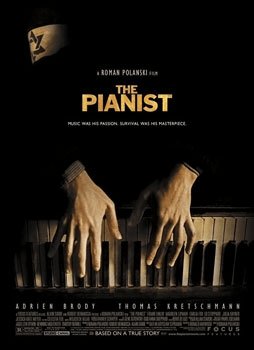
Bonus Review: The Pianist

One of the men who turned down Schindler’s List from Spielberg was Roman Polanski, who is of Polish-Jewish descent. Nearly a decade later, he made his own Holocaust film, The Pianist, a biographical film about Władysław Szpilman, a Polish-Jewish pianist and composer who survived the Holocaust. The film is certainly very personal for Polanski, who survived the Holocaust as well once he escaped the Kraków Ghetto. His father also survived; his mother did not. Polanski was just a boy at the time. For those who don’t know, Roman Polanski is convicted of unlawful sex with a minor. In the 70s, he raped a 13-year old girl. He is not a good person, and doesn’t warrant much sympathy despite surviving the Holocaust and his wife, Sharon Tate, being murdered by the Manson family while he was away filming a movie. But I’m also not gonna sit here and tell you shouldn’t watch this movie (or any of his movies, for that matter) just because of what he’s done outside of filmmaking. Plus, I think understanding what’s behind these films adds context and value to how we understand the movies themselves.

In 1939, Szpilman is performing live at a radio station in Warsaw when it’s besieged by Nazis as they enter Poland. Szpilman escapes and makes it home to his family. They rejoice when they learn that Britain and France have joined the war, but the German and Soviet fighting continues for some time. Germany takes over Warsaw as part of their General Government and the Jews in the area are made to wear armbands with the Star of David on them and are denied work and owning their own businesses. By the next year, Szpilman and his family are forced to live in the Warsaw Ghetto, where food becomes scarce and the SS are violent. Szpilman is able to secure work by performing in a cafe, but life in the Ghetto is not easy and he witnesses a young boy beaten to death by a guard and a family killed during a round-up. In 1942, Szpilman and his family are in a holding area, waiting to be sent to an extermination camp, but Szpilman is pulled away from his family by a member of the Ghetto Police who recognizes him. Szpilman becomes a laborer and helps smuggle weapons into the ghetto for a coming Jewish revolt. Szpilman escapes before the revolt happens and hides in an apartment provided by a non-Jewish friend of his. From the apartment, he can see the revolt – the Warsaw Ghetto Uprising – happen, but it fails. Later, he is discovered and must flee to another apartment to hide in. The new one has a piano in it, but Szpilman cannot play it for fear of being discovered.

Another uprising happens, this one spilling into the streets of Warsaw, and Szpilman’s hiding place is destroyed, forcing him to move again. Over the course of a few months, Warsaw is razed to the ground. On the verge of starving to death, Szpilman roams the ruins of Warsaw. He finds a can of pickled cucumbers in a house, but when he tries to open it, he is discovered by a German captain. The captain, Hosenfeld, learns Szpilman is a pianist and asks him to play on the piano in the house. Szpilman, despite his deterioration, he successfully plays a Chopin piece. Hosenfeld lets him hide in the attic of the house and supplies him with food. In 1945, the Germans are in retreat and so Hosenfeld must leave. He leaves a large amount of food and his coat for Szpilman and promises to listen to him on Polish Radio after the war. Warsaw is liberated, but Szpilman is nearly killed by the Polish People’s Army, being mistaken for a German officer because of the coat. As some former concentration camp inmates pass a Soviet POW camp, they take the opportunity to verbally berate the captured German soldiers, whom Hosenfeld is one of. Hosenfeld asks one of the Jewish men if they know Szpilman, and when the guy confirms he does, Hosenfeld begs him to bring Szpilman to rescue him. The man brings Szpilman, but when they arrive, the camp is abandoned. After the war, Szpilman returns to Polish Radio with another Chopin piece.

4. Seven Samurai

Seven Samurai may be perhaps one of the most influential films of all time. Not since Citizen Kane has one movie been responsible for so much that has come after it. I’ve already mentioned in other reviews some of the movies that have been inspired by or completely ripped off of Seven Samurai, so I don’t intend to do that here. Instead, let’s talk about some of the filmmaking techniques and storytelling devices this movie is responsible for. First, there’s the story’s setup: the recruitment of men for a job. In major ways, such as every heist movie since the 70s, and in minor ways, like the Marvel and D.C. cinematic universes, there is a far-reaching influence that Seven Samurai possess. Likewise, Seven Samurai is one of the earliest examples of a movie starting in the middle of an action scene involving the hero that is otherwise unrelated to the main story. It’s sort of an action-movie staple now. It’s been copied in The Matrix, Mission Impossible, Lethal Weapon, Kingsman, The Dark Knight trilogy, the films of John Woo, practically every James Bond film, The Other Guys and every Indiana Jones movie.

What’s another feature of action movies? Oh yeah. The big finales in the rain! Seven Samurai is responsible for that as well, without which there would be no major showdown between pirates and the East India Company in Pirates of the Caribbean, no sniper showdown in Saving Private Ryan (there also happens to be seven men in that group – coincidence?? I think not!), no final showdowns in The Matrix Revolutions or Blade Runner, and no Battle at Helm’s Deep in Lord of the Rings: The Two Towers. Akira Kurosawa was very gifted behind the camera and in the editing room. He had an eye to frame shots perfectly, and he always found a way to keep movement going onscreen (which is why you see the effects of wind in a lot of his movies). The value of movement onscreen cannot be understated. It keeps our attention on what the filmmaker wants our attention on and so it’s an effective tool to put focus on one point of the screen. Think of movement as the highlighter of film. Kurosawa basically created and perfected editing films based around movement. He will cut in the middle of action or movement to a new shot with similar action or movement, and our naked eye is so focused on the movement, we don’t register the cut, giving us a nearly-seamless transition between shots. It’s become a staple of Hollywood moviemaking, and I think you would be hard-pressed to find a movie coming out today that doesn’t use the technique outside of intentionally slow-paced drama. It’s also how movies that want to give the appearance of being one continuous shot get away with cutting.

In 1586, a gang of bandits discuss their plan to raid a mountain village after the harvest. Some of the villagers overhear the conversation and run to the village elder, Gisaku, who says they should hire samurai, but since they are poor, to find ones who will work for food. Some of the villagers go to a nearby town, and there they find Kanbei, an experienced but older rōnin, saving a boy from a thief. They ask him for help and he reluctantly agrees. A young samurai, Katsushirō, asks to become Kanbei’s disciple and Kanbei also recruits old friends, Shichirōji, Gorobei, Heihachi, and Kyūzō. A crazy wannabe samurai, Kikuchiyo, is also allowed to join after they unsuccessfully turn him away. They get to the village and trust between the samurai and villagers slowly develops. Katsushirō falls in love with Shino, the daughter of a farmer who has disguised her as a boy. Kikuchiyo finds armor and weapons that the villagers gathered from dying samurai and when the samurai show disgust, Kikuchiyo reveals he is the orphaned son of a farmer and understands the suffering the villager’s have faced.

The samurai train the villagers with bamboo spears, but in the middle of training, bandit scouts are spotted and killed after giving up their camp’s location. The samurai burn down the camp, but one of the villagers, Rikichi, sees his wife who had previously been kidnapped by the bandits, but when she sees him, she runs into one of the burning huts. Heihachi tries to stop Rikichi from pursuing her, but he shot and killed. At Heihachi’s funeral, Kikuchiyo raises a banner he had made to inspire the villagers. The bandits finally arrive, but are thrown off by a moat and high wooden fences, and many are killed when they try to besiege the village. The samurai learn that the bandits possess three muskets, and so Kyūzō tries and successfully steals one. Kikuchiyo, not to be outdone, abandons his group to get another one, but his absence allows for some of the bandits to sneak in and kill some of the villagers and also Gorobei. The next morning, the remaining bandits break through into the village and a fight ensues. The bandit chief hides in the women’s hut and shoots and kills Kyūzō, and also shoots Kikuchiyo, but Kikuchiyo survives long enough to kill him. After the battle, Kanbei, Katsushirō and Shichirōji stand in front of the graves of their friends and look on as the villagers cheer and plant their crops. Shichirōji tries to reach out to Shino but she ignores him, indicating the end of their relationship. Kanbei declares the victory belongs to the peasants, not the samurai.

I’m going to be honest with you: Seven Samurai is the movie in my Top 5 I’ve seen the least number of times. It’s also probably the newest one as far as when I saw it for the first time, but it has greatly impacted me and formed a significant amount of what I love about movies. I’ve only watched it a handful of times, but it gets better every time I do, and the three and a half hour runtime speeds by. I’ve never once looked at my watch or felt it drag. It feels so much shorter because of the quickness of the action. Everyone should watch this movie at least once, but I’d obviously recommend watching it more.

Bonus Review: Throne of Blood

There are very few instances of my wife showing me a movie for the first time. Even fewer instances of it being a Japanese film, but it happened with Throne of Blood. I had already seen a couple of Kurosawa films by this point – Rashomon and Ikiru come to mind – but I had never even heard of Throne of Blood until I came across a copy at Hastings (RIP). My wife and I would shop there when we were dating and really it was mostly me trying to sweet talk her into us picking up movies that I wanted to watch. I didn’t have to sweet talk her much, because I showed her the blu-ray (“Honey, doesn’t this look interesting?” It’s always best to lead with your questions) and she said, “Oh, I’ve seen this!” She had taken this class in college that covered different film adaptations of Shakespeare plays, making this anecdote a long way of saying that Throne of Blood is an adaptation of Macbeth. Kurosawa took the Scottish setting and dropped it in feudal Japan for the sake of his audience, and dipped in a style of Japanese theater called Noh (which is also the reason for the minimalist flute and drum score). He had worked on an adaptation of Macbeth off and on for a while when Orson Welles released his version, so he shelved it for nearly a decade. There are plenty outstanding visuals and fantastic scenes, but none compare to the ending where the Macbeth character, Washizu, is shot at with arrows. They are real arrows, shot by professional archers, and they land within inches of Toshiro Mifune’s skin. It’s intense to see it play out onscreen.

Washizu and Miki are samurai commanders under Lord Tsuzuki, who reigns in the castle of Spider’s Web Forest. They are on their way back to the castle after defeating the lord’s enemies when they run into a forest spirit, which predicts that Washizu will be given leadership of the Northern Garrison and Miki will become commander of the first fortress. The spirit also claims that Washizu will eventually become Lord of Spider’s Web Castle and Miki’s son will become lord. Back at the castle, Tsuzuki gives the men exactly what the spirit said he would. In conversation, Washizu’s wife, Asaji, convinces him to go ahead and get the ball rolling on the second part of the prophecy by killing Tsuzuki. He does so with the help of Asaji, and they pin the blame on a guard who Washizu kills before he can say anything. Tsuzuki’s son and advisor suspect Washizu, so they leave and go to Miki, explaining their thoughts, but Miki cannot believe his friend would do such a thing. Asaji reveals she is pregnant, so to prevent the part about Miki’s son become lord from coming true, Washizu has them killed.

At a feast, Washizu gets drunk and sees Miki’s ghost, but is brought around by one of his men returning with Miki’s severed head. The man explains that Miki’s son got away and is joining forces with Tsuzuki’s son and advisor, so Washizu kills him. Knowing his enemies are gathering themselves to prepare for battle, Washizu goes looking for the forest spirit. The spirit tells him that he will not be defeated in battle until the trees rise against the castle. This reassures Washizu and his men. The next day, Asaji has gone into a catatonic state and is trying desperately to clean a stain of blood from her hands that doesn’t exist. Before he can do anything about his wife, Washizu is told by a soldier that the trees in the forest have risen to attack them. Washizu’s troops turn against him and shoot arrows at him, killing him. Miki’s son and his army arrive, revealing that they used the trees to cover their advance.

5. Tombstone

Remember that quote from The Man Who Shot Liberty Valance? “When the legend becomes fact, print the legend.” The events that occurred in Tombstone, Arizona on October 26, 1881 have long since become legend. Many stories and myths have spun from that very real event and it’s become difficult to discern the fact from the legend. The movie, Tombstone, is very much about the legend. It trades in the truth for pure Western lore with larger-than-life characters, complete with real, homegrown mustaches. It shuffles timelines and players around for the sake of heightening the drama (to great effect, by the way). The production itself became a legend. Kevin Jarre wrote the screenplay and was adamant about period accuracy and an epic scope. Dialogue in particular is authentic to the “Wild West”. The studio was so impressed with the script, they gave Jarre his first chance to direct. However, just a few weeks in, he was already over budget. They brought in George P. Cosmatos to take over and rein it in. Depending on the account you believe, it’s also possible that Cosmatos became overwhelmed and walked off the set, and Kurt Russell (Wyatt Earp) took over in an uncredited role. It doesn’t matter what went on behind the scenes. The final result is nearly perfect.

In 1879, members of an outlaw gang known to wear red sashes called the Cowboys, led by “Curly Bill” Brocious, ride into a Mexican town and interrupt a wedding. They massacre the entire town, but just before being shot, the priest warns them that the town will be avenged, and references the fourth horseman of the Apocalypse. Wyatt Earp reunites with his brothers Virgil and Morgan and they travel with their families to Tombstone to settle down. Wyatt’s friend, Doc Holliday, who is seeking relief in the dry climate from his worsening tuberculosis, is already there. Actors Josephine Marcus and Mr. Fabian are also newly arrived with a traveling theater troupe. Meanwhile, Wyatt’s common-law wife, Mattie, is becoming dependent on laudanum. Wyatt and his brothers begin to profit from a stake in a gambling emporium and saloon when they have their first encounter with the Cowboys. Tensions rise and Wyatt is pressured to help rid the town of these Cowboys, though he is no longer a lawman. Curly Bill shoots Marshal Fred dead after coming out of an opium den and is forcibly taken into custody by Wyatt. The arrest infuriates cowardly Ike Clanton and the other Cowboys. Curly Bill stands trial but is found not guilty due to a lack of witnesses. Virgil, unable to tolerate lawlessness, becomes the new marshal and imposes a weapons ban within the city limits. This leads to the infamous gunfight at the O.K. Corral, in which Billy Clanton and the McLaury brothers are killed. Virgil and Morgan are wounded, and the allegiance of county sheriff Johnny Behan with the Cowboys is made clear.

As retribution for the Cowboy deaths, Wyatt’s brothers are ambushed; Morgan is killed, while Virgil is left handicapped. A despondent Wyatt and his family leave Tombstone and board a train, with Ike Clanton and Frank Stilwell close behind, preparing to ambush them. Wyatt sees that his family leaves safely, and then surprises the assassins. He kills Stilwell but lets Clanton live to send a message: Wyatt announces that he is a U.S. marshal and that he intends to kill any man he sees wearing a red sash. Wyatt, Doc, a reformed Cowboy named McMasters, Texas Jack Vermillion, and Turkey Creek Jack Johnson form a posse to take the Cowboys down. The posse is ambushed in a riverside forest by the Cowboys. Wyatt walks into the creek, miraculously surviving the enemy fire, and kills Curly Bill along with many of his men. Curly Bill’s second-in-command, Johnny Ringo, becomes the new head of the Cowboys. When Doc’s health worsens, the group is accommodated by Henry Hooker at his ranch. Ringo lures McMasters into the Cowboys’ clutches under the pretense of parley and then sends a messenger dragging McMasters’ corpse to tell Wyatt that he wants a showdown to end the hostilities; Wyatt agrees. Wyatt sets off for the showdown, not knowing that Doc has already arrived at the scene. Doc confronts a surprised Ringo, who was expecting Wyatt, and challenges him to a duel to finish their succession of previous standoffs, which Ringo accepts. Wyatt runs when he hears a gunshot, only to encounter Doc, who has killed Ringo. They then press on to complete their task of eliminating the Cowboys, although Clanton escapes their vengeance by renouncing his red sash. Doc is sent to a sanatorium in Colorado, where he dies of his illness. At Doc’s urging, Wyatt pursues Josephine to begin a new life.

There are so many characters in this movie that it can get rather confusing on a first watch. Even some of the important ones get only a line or two. That’s what happens when you try to condense years-worth of events into a two-hour movie. However, we cannot gloss over the cast so easily; not when there’s Val Kilmer playing Doc Holliday. Val Kilmer is a good actor who took on too many bad roles. Most of the time, it’s either a bad movie (Real Genius, The Island of Dr. Moreau, Red Planet) or he’s just not given enough to do (Heat, Masked and Anonymous, The Missing). But when he’s got a good role, he steals the spotlight (Kiss Kiss Bang Bang, Top Secret!, Heat, The Doors, Willow). Tombstone is the ultimate. He’s cool, he’s shifty, he’s sickly, and he’s drunk most of the time, but he so perfectly embodies the character, that if he had no other film credits, we would assume he was actually Doc Holliday raised from the dead just to do this movie. I’ve never seen someone be so smooth while being so sweaty. He gets all the best dialogue too. Even if you’re just a casual Tombstone viewer, you probably know at least three of his lines. It’s okay, there’s no one around. You can say it. “I’m your huckleberry.” Felt good, right? For the record, the phrase means “I’m the one you want” or some variation thereof. One last thing: I know for some people, the movie can start off kinda slow. First of all, that’s hogwash, but if you are so inclined to agree; power through. Once the O.K. Corral scene happens, it moves like lightning.

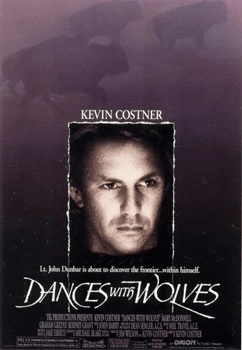
Bonus Review: Dances with Wolves

Kevin Costner is nothing if not authentic. So much detail was put into the Civil War-era costuming, location-filming and the use of the Lakota language. Dances with Wolves was just Costner’s first directorial effort, and what success it was. The original film was an award winner and made it on many critics best-of-the-year lists, but if you have watched the film on home media, you probably haven’t seen it. You’ve more likely seen the Extended Edition, which was released a few years later, marketed as an enhanced version of the film (not necessarily the “true vision” or “director’s cut”). It adds nearly an hour of footage that was left on the cutting room floor, making it a nearly-four hour epic. This extended cut is now considered the definitive version, although Costner has claimed he was not involved in it at all. Dances with Wolves holds a special place in my heart because it was the culmination to a perfect date with my wife. Back when we were dating, we took a day trip to a Native American cultural center, which had a museum and a replica village with demonstrations of the tribe’s customs. We finished a little early, so we went to a local Hastings store (R.I.P.) and decided we were going to purchase a movie neither of us had seen before. We didn’t pay attention to the runtime, so we walked away with Dances with Wolves. We went to my house with dinner and popped it in, and at least for me, those four hours flew by. I can’t speak for my wife, but she did marry me, so I think it was okay for her too. Dinner was pizza, I think, so maybe that’s how I got her to stay.

John Dunbar is a Union lieutenant who is wounded in battle in Tennessee. He is told his leg will probably have to be amputated. Preferring death, he hops on a horse and runs across Confederate lines. His distraction allows the Union to lead a successful attack. Dunbar receives care that keeps his leg intact and is given his choice in placement. He asks to be posted in the American frontier, hoping to see it before it’s gone. Major Fambrough gives him the furthest post in his jurisdiction: Fort Sedgwick. However, Fambrough kills himself shortly after Dunbar leaves for his post, which means no one else knows of Dunbar’s assignment. Fort Sedgwick is deserted, so Dunbar attempts to rebuild, and does not know that no reinforcements are coming. Dunbar tries to befriend his Sioux neighbors after a hostile introduction, and he gradually builds a rapport with them through the translation of Stands with a Fist, a white woman raised by the Sioux. Dunbar is accepted by the Sioux when he locates and participates in a hunt of buffalo. He also befriends a wolf with white forepaws that he names “Two Socks”. This is what gives him the name Dances with Wolves.

Dunbar learns the Lakota language, supplies the tribe with guns to defend themselves against the rival Pawnee tribe, and falls in love with Stands with a Fist. Chief Ten Bears decides to move the tribe to their winter camp, but Dunbar decides to retrieve his journal from Fort Sedgwick first, because he fears it would give away the Sioux’s location if it’s found. He arrives at the fort to find it preoccupied with the U.S. army who shoot at him and capture him for his Sioux clothing. After he tells his story, they believe he’s a deserter and decide to take him back east as a prisoner. When Two Socks tries to follow Dunbar, he is shot and killed by the soldiers. The Sioux follow the convoy, kill the soldiers and free Dunbar. However, Dunbar decides it best to leave the tribe with Stands with a Fist because his presence would endanger the tribe. The Sioux proclaim everlasting friendship with Dunbar and he, with Stands with a Fist, goes into hiding, never to be found.

6. O Brother, Where Art Thou?

How do you describe O Brother, Where Art Thou? It’s a retelling of The Odyssey by someone who has never read it and has only picked up on the story based on what has stayed in the pop culture. It’s the Three Stooges in a remake of The Wizard of Oz set in the Depression-era South. It’s a fantastical musical comedy adventure. It’s an infinitely-quotable colorful dialect-heavy masterpiece and just so dang fun. It’s the first collaboration between George Clooney (who said he loved the Coen brothers’ movies so much, he agreed to be in it without even reading the script) and the Coen brothers – the first of four roles where George Clooney plays against type as an absolute moron. It’s one of the Coen brothers’ most accessible films, and also its least violent. And according to Joel Coen, it really is the Odyssey without any real knowledge of the Odyssey. He claims the only person on set who had actually read the Odyssey to that point was Tim Blake Nelson, who majored in Classics in college.

Everett, Pete and Delmar escape from a chain gang in hopes of getting to buried treasure before it’s lost in a flood. They first make their way to Wash, Pete’s cousin, but Wash betrays them to Sheriff Cooley who is on their trail. Cooley burns Wash’s barn where the escapees are sleeping, but Wash’s son helps them escape. The men pick up Tommy Johnson, a black man who sold his soul to the devil to learn how to play the guitar well. To get some quick cash, they visit a radio station and record a song under the name, the Soggy Bottom Boys. Afterwards, the men separate from Tommy and fall in with Baby Face Nelson in the middle of a string of bank robberies. Meanwhile, their song is becoming a smash hit. Near a river, they hear singing and come across three sirens washing clothes. The sirens give them whiskey until they fall asleep. When Delmar awakes, he sees Pete’s clothes, but no Pete…just a toad nearby. He’s convinced the sirens turned him into a toad and so takes the toad with him. Everett and Delmar go to a restaurant and meet Big Dan, a one-eyed bible salesman. Big Dan robs them and kills the toad. Later, Everett and Delmar see the real Pete back on a chain gang. They get back to Everett’s hometown and so Everett tries to talk to his wife, but she refuses to talk with him and her new suitor, Waldrip, beats him up.

Everett and Delmar steal Pete away in the middle of the night, and Pete confesses to revealing the location of the treasure while being tortured. Everett comes clean and admits there’s no treasure, he just needed them to escape together since they were chained together. The three come across a KKK rally where they’re about to hang Tommy, so they disguise themselves as klansmen to free him, but they’re caught by Big Dan, another klansman. The leader of the meeting turns out to be Homer Stokes, a man running for governor of Mississippi on a reformation platform. To get away with Tommy, the guys cause mass confusion by knocking over their burning cross. They get to Homer Stokes campaign dinner because Everett’s wife, Penny, is there (Waldrip is Stokes’ advisor), disguised as the Soggy Bottom Boys. They go to perform their hit song, which causes an uproar in the venue. However, Stokes recognizes them and tries to shut them down. The crowd boos and Pappy O’Daniel, the incumbent in the governor race, takes advantage of the situation and endorses the Soggy Bottom Boys and grants them pardons. Penny agrees to remarry Everett if he can get her ring back. Everett goes to get it, but Cooley is there with three graves prepared for them. Just before he kills them, Everett prays and a flood comes through, saving them. The ring Everett was able to recover is the wrong one, and Penny stands by her statement that she will not remarry him until he gets the right ring.

O Brother, Where Art Thou? is a fascinating subject because the movie did well at the box office, but what did even better is the soundtrack. Made up entirely of folk songs from the Depression era, the soundtrack was a major throwback that just took off. I had a professor in college who talked about going to see O Brother, Where Art Thou? while living in Paris, France and was amazed at the reception the soundtrack in particular received from the French. It was a worldwide phenomenon. I mean, really, are there any other instances where the film’s soundtrack sells better than the film itself does? The soundtrack is also responsible for the existence of Mumford & Sons. Take that for what you will, but it’s still an interesting degree of impact. The fact that these old American folk songs could have such a powerful hold on our culture is beyond strange, but I’m here for it. Those “old-timey” songs have a certain foot-stomping vibe to them that’s impossible to shake. It’s a testament to the power of music and film, a partnership that cannot be denied.

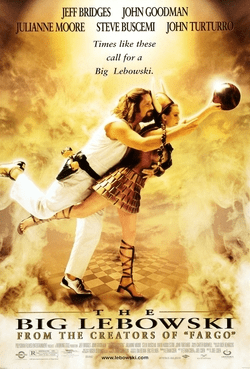
Bonus Review: The Big Lebowski

Due to some of the content, I can’t recommend The Big Lebowski to everyone like I can with O Brother, Where Art Thou?, but if you can handle the more adult-oriented content, The Big Lebowski is just as funny and just as quotable. Based on the crime novels of Raymond Chandler, The Big Lebowski has an overly complicated plot that ultimately is unnecessary, but it’s filled with off-the-wall characters that carry the film along. It’s so funny and ridiculous, that we don’t even notice the pointlessness of the plot. Jeff Bridges and John Goodman as the two loser best friends is perfect casting, especially when their friendship comes to a head at the funeral for their friend, Donny. The film’s cult status has exploded in confusing ways from Dude Fest, an annual weekend convention filled with trivia, bowling and showings of the movie, to Dudeism, a parody religion (like Pastafarianism) with over 200,000 ordained “Dudeist priests” based on the various philosophies presented in the film. It’s a wild ride, but so much fun. If you don’t like The Big Lebowski, then, well…you either know the quote or you don’t.

Jeff Lebowski, aka “The Dude”, is a bowler and slacker living in LA in the early 90s. Two enforcers for porn producer, Jackie Treehorn, break in to collect money that his wife, Bunny, owes. The crappy apartment and trash ones doesn’t alert the enforcers that they have the wrong Jeff Lebowski until one of them has already peed on the Dude’s rug. It’s unfortunate because that rug really tied the room together. The Dude consults his bowling team, Walter and Donny, on what to do, and Walter convinces him to get reimbursed for the rug by the other Jeff Lebowski, a wealthy philanthropist. Lebowski is angered at a bum’s attempt to get money out of him and refuses, but the Dude convinces his assistant that he is given permission to take whatever rug he wants. Before leaving, the Dude meets Bunny and her German nihilist friend, Uli. Later, Bunny is kidnapped and Lebowski hires the Dude to deliver the ransom to her kidnappers. That same night, the Dude’s apartment is broken into again, this time by thugs of Maude, Lebowski’s daughter who has a sentimental attachment to the rug he took. Walter shoehorns his way into helping deliver the ransom, but he is convinced Bunny wasn’t actually kidnapped, so he fakes the drop. They go bowling, leaving the briefcase full of money in the car. The car is stolen. Lebowski confronts the Dude about the botched drop and shows that the kidnappers have sent him Bunny’s severed toe. Maude also meets with the Dude and tells him to recover the money because her father pulled it from the family’s charity foundation.

The Dude gets the car back, but the briefcase is gone, which they track down to a teenager named Larry Sellers. Larry refuses to give them any info about the briefcase and Walter smashes a sports car outside in retaliation, thinking it’s Larry’s. However, it’s the neighbor’s and the neighbor smashes the Dude’s car in retaliation. The Dude and Walter get to the bottom of everything and confront Jeff Lebowski. Bunny has returned, having gone out of town without telling anyone. Her nihilist friends took the opportunity to blackmail Lebowski. Lebowski took the opportunity to withdraw money from the charity and blame the blackmailers, likely implying the briefcase never had any money in it to begin with. Walter is so upset, he knocks Lebowski out of his wheelchair, thinking he’s lying about being crippled. Turns out that’s very real. After bowling, the nihilists wait outside for the Dude, Walter and Donny and set fire to the Dude’s car, wanting the money they think they’re owed. They get into a fight, the nihilists lose, but Donny suffers a heart attack and dies right after. Because of their lack of funds, the Dude and Walter cremate Donny and take his ashes, in a Folger’s can, to the Pacific Ocean and spread them. However, the wind blows the ashes back into the Dude’s face. Between that and Walter’s eulogy that goes deep into the Vietnam War (which Donny was not a part of), the Dude blows up on Walter. Walter consoles him and convinces him to go bowling.

7. Raiders of the Lost Ark

Raiders of the Lost Ark is the axis of cinema history. Everything that came after it has been touched by it in some respect, and everything that came before it touched it in some way. There are specific examples of this: the first shot with the mountain where Indiana Jones walks into frame from behind is pulled directly from Kurosawa’s Yojimbo, the line going across a map to indicate Indy’s travels is a repeat of the same trick in Casablanca, the silhouettes fighting in Marion’s bar is homage to a similar scene in The Adventures of Robin Hood, Indy’s daring crawl underneath a Nazi truck while it’s moving is straight out of Stagecoach, the reveal of the contents of the Ark is almost a shot-for-shot replica of a scene from Kiss Me Deadly, and of course the final shot of the film, where the Ark is placed in a large warehouse, likely never to be seen again, is a direct reference to the ending of Citizen Kane. Even Indiana Jones’ mannerisms and appearance are equal parts Alan Quartermain, Humphrey Bogart in The Treasure of the Sierra Madre, and Charlton Heston in Secret of the Incas.

Uncanny, isn’t it?

That love and devotion to movies is part of what makes Indiana Jones so exciting to watch. They’re just so much fun and simple. Obviously, the Nazis are the bad guys, and it’s up to the good American guy to keep the holy relic out of their villainous hands. For proof that fun is the most valuable commodity of this movie, it must be mentioned that Steven Spielberg, George Lucas and Philip Kaufman came up with exciting scenes that would play out in the movie, and then hired Lawrence Kasdan to write a story around these scenes. Priorities, you know?

Everyone knows how this first scene goes. Indiana Jones recovers a golden idol in a temple in Peru. He survives multiple booby traps and his mercenary crew to escape, only for his rival, Belloq, to take the idol and send the natives after him. Back in the States, Jones learns that the military is aware that the Nazis are in Egypt, excavating for the Ark of the Covenant, planning to use it to make the German army invincible. It’s up to Jones to find the Ark and recover it first. Jones believes his mentor, Abner Ravenwood, holds the key to finding the Ark, so he travels to Nepal and finds Abner’s daughter, Marion, who was once romantically linked to Jones, and learns Abner is dead, but she has the medallion that can be used to find the Ark. Toht, a Gestapo leader, and his henchmen, attack Marion’s bar and set it on fire, but she and Jones kill them all (except for Toht) and escape with the medallion. They travel to Cairo and reunite with Jones’ friend, Sallah, but Nazis attack Jones and kidnap Marion, seemingly killing her. Jones is now more determined than ever to beat the Nazis, so he and Sallah infiltrate their digging site and use the medallion to discover the Nazis are digging in the wrong spot. They successfully uncover the Ark, but the Nazis intercept them and leave Jones and Marion to die at the site. They escape and take over the truck carrying the Ark as it leaves the digging site.

Jones gets the Ark on a boat headed for London, but it’s intercepted by a German U-Boat. The Germans take back the Ark and Marion, Jones stows away on the U-Boat, and they all head to an island where Belloq intends to test the Ark before delivering it to Hitler. Jones stops them and prepares to blow up the Ark before they can use it, but Belloq calls his bluff and argues Jones wants to see what it does as much as everyone else. Jones and Marion are restrained while Belloq performs a ceremony to open the Ark. The Ark unleashes the “power of God” and kills everyone except Jones and Marion because they refused to look upon it. Jones gets the Ark back to Washington, but they just put it away in a warehouse, never to see the light of day again.

There’s plenty to love about Raiders of the Lost Ark. That whole opening sequence is so iconic that it’s been referenced and parodied in several films and shows since then. The theme music is so well-known that you’ve probably been humming it while reading this (if you haven’t, go back and reread this review correctly). I don’t care what the Star Wars nerds say, this is Harrison Ford’s best role ever (and he agrees, you dumb Han Solo fanboys!). It’s also the greatest contribution to movies that George Lucas has had a hand in (if you expected a Star Wars movie in my Top 100, you are sorely mistaken). For the record, I have nothing against Star Wars, I’m just trying to goad my brother who for some reason expected me to have a Star Wars movie on here somewhere. Even though I enjoy those films, it’s pretty obvious where I stand: Indiana Jones is the king of throwbacks.

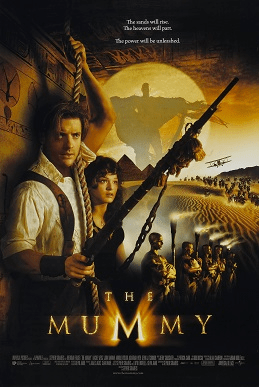
Bonus Review: The Mummy

The Mummy is an attempted remake of the 1932 horror film, but really it’s the love child of that original horror film and Raiders of the Lost Ark. There are some horror elements – the effects on the mummy, the man-eating scarabs, etc. – but it’s really an action-adventure with a slight romance. That’s thanks to a man named Stephen Sommers, who had long wanted to remake The Mummy, but wanted to incorporate the other kinds of movies he loved when he was younger, which included Indiana Jones. He almost never got his chance. Universal’s attempt to remake The Mummy mostly revolved around a faithful horror adaptation from horror icons like George A. Romero and Clive Barker until they had a string of failures and needed a hit. Then, and only then, did they entertain Sommers’ action thriller. Thank goodness they did. Like Indiana Jones, The Mummy spawned numerous sequels and elevated the rising star status of its lead actor. Maybe now that Brendan Fraser is having something of a comeback, they can do another one.

In 1290 BC in Egypt, the future bride of the Pharaoh, Anck-su-namun, is caught having an affair with the high priest, Imhotep. Anck-su-namun kills herself and Imhotep runs off with her body, intending to resurrect her with a ritual. However, when he goes to perform the ritual, the pharaoh’s guards, the Medjai, stop him, kill his men, and bury him alive beneath the statue of Anubis. Jump to 1926 AD, where Evelyn, a librarian and Egyptologist living in Cairo, receives a box and map leading to Hamunaptra, the site where Imhotep attempted his resurrection ceremony, from her brother, Jonathan. Jonathan stole the box from a man named Rick, who found it while a member of the French Foreign Legion some time ago. Evelyn and Jonathan find Rick in a prison and get him to agree to take them to Hamunaptra if they break him out. Rick gets her to Hamunaptra, but Rick’s cowardly acquaintance, Beni, is also leading a group there. Both parties are warned to leave by the current leader of the Medjai, but they continue on anyway. The parties discover the Book of the Dead, and the remains of both Imhotep and Anck-su-namun. As you can guess, they accidentally revive Imhotep.

They leave Hamunaptra, but Imhotep follows them and recovers his strength with the help of Beni. Rick’s group and the Medjai deduce that Imhotep intends to resurrect Anck-su-namun by sacrificing Evelyn, but if they can find the Book of Amun-Ra, they can kill Imhotep. They return to Hamunaptra as Imhotep is starting to conduct his ritual. Rick saves Evelyn, gets her to read from the Book of Amun-Ra, and kills the now-mortal Imhotep. Beni, who has been trying to gather treasure during the fight, sets off a booby trap that closes up the city and unleashes flesh-eating scarabs. Rick, Evelyn, Jonathan and the Medjai escape just in time.

8. The Magnificent Seven

The only difference between Westerns and Samurai movies is location, and this film is the proof. The three-hour epic from Akira Kurosawa, Seven Samurai, is the film The Magnificent Seven is based on, and the two are basically equal in their impact. Seriously, how often is a remake as good (or at least pretty close) as the original? Now, when it was released, the reviews were mixed. Most critics compared it negatively to Seven Samurai, but still recalled it as an entertaining Western. Reports on Kurosawa’s own reaction are conflicting. Some say he found it disappointing, but admitted its entertainment value. Others say Kurosawa was so impressed and pleased with the film that he sent the director, John Sturges, a sword. Luckily, over the years, critical analysis has only improved with most people drawing particular attention to its story, score and cast. That part is really impressive: this film is packed with an all-star cast. Yul Brynner (who also is the one who pursued the idea of remaking Seven Samurai), Steve McQueen, Charles Bronson, James Coburn, Robert Vaughn, Brad Dexter and Horst Buchholz are the titular seven, and Eli Wallach is their opposition, the leader of the bandit gang terrorizing the poor Mexican villain, Calvera.

Calvera and his team of bandits raid a Mexican village, taking what little food and supplies there are. While there, the bandits kill a villager. This prompts the villagers to send three men to barter what little they have for guns for the next time. Just inside the U.S. border, the villagers meet Chris, a Cajun gunfighter. Chris suggests trying to get gunfighters than just guns, and he offers to help them recruit. They get Vin, Harry, Bernardo, Britt and Lee to join because they’re all broke and need whatever they can get or they expect Chris knows of a great reward involved. A young hothead named Chico has been told he can’t join but he follows them anyway, and is eventually let it for persistence alone. They reach the village and help train them and build fortifications. However, the gunmen also learn that the village has been hiding their women for fear of the gunmen taking advantage of them.

Soon, Calvera and his gang return, but the gunmen and villagers take out eleven of them and they retreat. The villagers believe Calvera will not return, but Chico infiltrates his gang and discovers they intend to return, and soon. Some of the villagers want them to leave, fearing Calvera’s return, but Chris demands they stay. The seven ride out to go ahead and take care of Calvera, but when they arrive to his camp, they see its empty. They return to the village, but Calvera is already there, having colluded with some of the villagers, and the seven are captured. However, Calvera believes the betrayal is enough to keep the gunmen from coming back, so he lets them live, escorts them out of the village and returns their guns to them. The gunmen, however, have grown attached to the villagers and understand they only acted out of fear, so they return for a great shootout. Harry, Lee, Bernardo and Britt all die during the fight, but Chris kills Calvera and ends it. Chico decides to stay in the village and Chris and Vin leave, passing by the graves of their comrades as they go.

The Magnificent Seven is (one of) the best of what the Western genre has to offer. Great performances, a bittersweet ending, thrilling shootouts, quiet standoffs, a beautiful backdrop of American landscape, and one of the greatest film scores of all time are the pillars of this remarkable remake of a foreign film. It has influenced so many films in its lifetime, some of them rather surprising. It’s the same story as Pixar’s A Bug’s Life and is also a loose inspiration for the plot of the Western Comedy, Three Amigos. When a story transcends genre and medium, that’s how you know it’s a classic. The Magnificent Seven is a great testament to that story. It may not be the original, it may not be the latest thing, but it’s a classic all its own.

Bonus Review: The Good, the Bad, and the Ugly

I mean, what is there to say? You know the movie, you know the score, you know the Mexican standoff scene. Considered the ultimate Spaghetti Western, The Good, the Bad & the Ugly follows three men -the quiet Blondie, the venomous Angel Eyes, and the oafish, double-crossing Tuco – in search of a cache of Confederate gold. With bounty hunters and U.S. military hot on their trails, they must, at times, work with each other and against each other if they’re going to find the grave where the gold is buried. This film was an international success, making Clint Eastwood a mega star and introducing the United States to Lee Van Cleef and Eli Wallach. It also happens to be Sergio Leone’s masterpiece.

Angel Eyes interrogates a Confederate soldier about a man named “Bill Carson”, who allegedly stole a cache of Confederate gold. He kills the soldier and decides to go after the gold for himself. Meanwhile, a man named Tuco has a bounty on his head for $2000, and he struggles to keep the bounty hunters at bay. Blondie is finally the one to bring him and collect the money. However, when Tuco is about to be hanged, Blondie shoots the rope and the two escape together and split the bounty. However, Blondie grows weary of Tuco and abandons him in the desert. Tuco catches up to Blondie when a carriage passes by with dead or dying soldiers. One is Bill Carson, who asks Tuco for water in exchange for $200,000 in gold buried in Sad Hill Cemetery. When Tuco comes back with water, Carson is dead, but before he passed, he told Blondie which grave to dig up. Since each has a separate piece of the puzzle, they decide to work together again. They are captured by a Union patrol, and Tuco gives his name as Bill Carson. Angel Eyes is there, posed as a Union officer, looking for Carson. He tortures Tuco into giving the info he has and sets him to be hanged. Angel Eyes recruits Blondie’s help since he knows the rest of the info, and Tuco escapes hanging again.

The three, plus Angel Eyes’ gang, all come together in an abandoned town. Blondie and Tuco kill the gang, but Angel Eyes escapes. A bridge is being fought for between the Union and Confederacy, so to get by, Tuco and Blondie decide to blow the bridge up. Tuco suggests that, in case they die, they share what info they have so the other can get the gold. Tuco says the name of the cemetery, and Blondie gives the grave name, “Arch Stanton”. Tuco hops on a horse and races for the cemetery to get the gold for himself. Both Blondie and Angel Eyes show up while Tuco digs, only there’s no treasure. Blondie admits to having lied about the name. He places a rock at the right grave, challenging the others to a duel. Angel Eyes draws first, but Blondie shoots him. And Tuco discovers his gun is unloaded. Blondie admits to doing that the night before. Blondie gets Tuco into a noose by holding him at gunpoint after the gold is dug up. Blondie takes his half and rides away, but shoots the rope just before Tuco gives way, allowing him to live and take his half.

9. The Apartment

In the past couple of decades, there’s been an increase in oddball romantic comedies – a sort of successor to the screwball comedy and most commonly disguised at the Indie comedy. No matter what you call them, there’s one common thread between them. They share influence from one movie: Harold and Maude. But Harold and Maude is at least partially influenced by The Apartment, Billy Wilder’s film after Some Like It Hot. After working together on that film, Wilder and Jack Lemmon reteamed for The Apartment and several others after that. Jack Lemmon is the unsung greatest actor of all time. He had excellent comedic timing, but he was also a very dramatic actor and shined in films such as Days of Wine and Roses, Save the Tiger and Glengarry Glen Ross. That ability to handle both made him the prime star for The Apartment – a hilarious romantic comedy steeped in pathos. He and Shirley MacLaine star as the two leads with Fred MacMurray as the sleazy guy in between them. MacMurray, at this time, was known for family-friendly Disney films, so even though he had played another scumbag in Wilder’s Double Indemnity roughly 15 years prior, he received plenty of hate mail for the role of Sheldrake.

C.C. Baxter is a lowly office worker at an insurance company in New York City who wants to climb the corporate ladder. He does this by offering up his apartment to the managers above him for their extramarital affairs. He receives glowing reviews from his superiors, which then go to Jeff Sheldrake, the personnel director, who promises Baxter a promotion, but needs the apartment that very night. He gives Baxter two tickets to the theater that night and he invites an elevator operator he really likes, Fran Kubelik. She agrees to go but says she must first put an end to a previous relationship. Baxter waits for her outside the theater, but she doesn’t show. Her “former fling” is with Sheldrake who convinces her not to break up with him and promises that he intends to leave his wife. At the Christmas party, Sheldrake’s secretary, Miss Olsen, informs Fran that Sheldrake has had several affairs with coworkers including herself. Fran confronts Sheldrake, but he claims to love her and gives her $100 as a Christmas present before heading home for the holidays. Baxter realizes Fran is the woman Sheldrake meets up with and goes to a bar and spends way too much time there.

On his return home, he notices Fran in his bed, having taken an overdose of sleeping pills. Baxter hurriedly calls his neighbor, a doctor, over for help. The doctor, who already views Baxter as a playboy with all the women coming around, scolds him for being the cause of Fran’s suicide attempt. Baxter lets him believe it. While Fran recuperates, she and Baxter spend time together and grow close. He cooks spaghetti for her, but then her brother-in-law shows up demanding she comes home. Baxter takes the blame, and then a punch to the face, for why Fran hasn’t come home yet. Sheldrake learns Miss Olsen is the one who told Fran about his other affairs, and so he fires her, but she retaliates by spilling the beans to Sheldrake’s wife. Sheldrake is kicked out of the house, but is now “free” to pursue Fran. He demands access to Baxter’s apartment, but instead, Baxter quits, refusing to ever let him bring Fran over again. Sheldrake indignantly tells Fran all of this at a New Year’s Eve party, causing Fran to realize Baxter loves her. She abandons Sheldrake and goes to Baxter’s apartment where they bring the New Year in playing cards.

The Apartment seems rather tame compared to some of the romances that come out these days, but at the time it was released, it was considered taboo. The topics of sex, affairs, depression and suicide were definitely not common in the 50s and 60s. There’s even a scene where a character openly reads a Playboy. I guess maybe some of that would still be scandalous today. I don’t know. But the film at least uses these things in earnest, not as gimmicks. These are sad characters. These are cynical characters. They run right along the edge of being cartoons, but they’re surprisingly real. The comedy comes from just how real they are. Sheldrake truly believes he can do no wrong, so it’s funny to us just how selfishly delusional he is. Most of us know someone like Baxter, ambitious yet completely incapable of taking care of themselves, so when we see him strain spaghetti with a tennis racket, it’s funny to us. The Apartment, all around, is hilarious, charming, and surprisingly heartwarming.

Bonus Review: Four Weddings and a Funeral

Four Weddings and a Funeral is another one of those films that just hits at the exact right time and somehow becomes an overnight sensation. It made Hugh Grant a star and British sex symbol (in America), and it became Richard Curtis’ first majorly successful screenplay. Since then, the two have worked together on four other major films – Notting Hill, the two Bridget Jones movies, and Love, Actually, which was also Curtis’ directorial debut. Like The Apartment, Four Weddings and a Funeral is a quirky romantic comedy with some surprising deep and somber moments. I guess the title gives that away. But it also helped popularize British humor in America.

It’s the day of Angus and Laura’s wedding and a group of unmarried friends gather together. There’s Charles, Scarlett, Fiona, Tom, Gareth, Matthew, and David. Charles is the best man at the wedding and, as usual, he arrives late and without the rings. He borrows rings from people in the congregation to get by and gives a rather risqué speech at the reception. He sees an American woman, Carrie, and is immediately smitten. They spend the night together, but in the morning, Carrie reveals she’s returning to the US. The next wedding is Bernard and Lydia’s, who got together at Angus and Laura’s wedding. Charles is excited at Carrie’s return, but dismayed to meet her fiancée, Hamish. The third wedding is Carrie and Hamish’s, and Charles, trying to be a good friend, struggles at finding a gift for the couple. He runs into Carrie while shopping and they talk wistfully of their previous romances, including each other. At their wedding, Gareth has a heart attack and dies. Matthew, Gareth’s partner, is distraught and the friends listen to him read a poem. The last wedding is Charles’ own to Henrietta. Carrie arrives and confesses she and Hamish have split up, causing Charles to get confused. He admits to loving Carrie at the altar, which gets him punched out by Henrietta. Later, Carrie comes to apologize to Charles and Charles confesses his love for her and promises a life of happiness, but they don’t have to get married. Carrie agrees.

10. It’s a Wonderful Life

Oh my goodness, we finally made it! The Top 10! We’re almost done. Honestly, probably should have just done a Top 10. It would have saved me a lot of time. But then I think of all the joy and entertainment I would have deprived you of, and I just couldn’t forgive myself if I had taken that away.

It’s a Wonderful Life: the ultimate Christmas movie. Or is it? Let’s get philosophical for a second. What makes a Christmas movie? Is it how much of the movie takes place around the holiday? Is it the use of Christmas imagery in the background? Is it Christmas music playing throughout the film? If it’s any of these that make a Christmas movie, then It’s a Wonderful Life is hardly one at all. Less than half the runtime takes place during the holiday season. Outside of a tree, a wreath and some street decoration that we barely see, there is no other Christmas imagery in the film. The only two holiday songs in the film are “Hark! The Herald Angels Sing” and “Auld Lang Syne” (which is really more for New Year’s, anyway), and they’re both at the very end. Bookending the film around Christmas does not a Christmas movie make. And so, if these are the contributing factors, Die Hard is more of a Christmas movie than It’s a Wonderful Life, and it’s not even close.

However, what about the “Spirit of Christmas”? You know, that desire that people seem to get around the season to experience “peace on Earth and good will toward men”. It’s the “Spirit of Christmas” that makes Mr. Bogardus give his building up for the use of a Catholic school. It’s the “Spirit of Christmas” that makes the Grinch return the presents to Whoville. It’s the “Spirit of Christmas” that transforms Ebenezer Scrooge into a kind-hearted, generous and loving man who “knew how to keep Christmas well, if any man alive possessed the knowledge.” And it’s the “Spirit of Christmas” that makes George Bailey realize that life is worth living, even in the bad times, and makes the people of Bedford Falls pool their money together to help someone (temporarily) poorer than they are. The impact the “Spirit of Christmas” has on the ending of the film outweighs the broad timeline it covers and then some. It also helps that the short story It’s a Wonderful Life is based on is heavily inspired by A Christmas Carol. Therefore, It’s a Wonderful Life may not be the ultimate Christmas movie, since A Christmas Carol exists (in many iterations), but it’s certainly in the running. And besides that, it’s not just a great Christmas movie, it’s just a great movie in general.

On Christmas Eve, 1945, in Bedford Falls, George Bailey is at the end of his rope. Luckily for him, his friends and family are praying for him, and those in Heaven are listening. They intend to send Clarence Odbody, a guardian angel, second class, to help George and earn Clarence his wings. Clarence is given a crash-course on George Bailey’s life in flashbacks. At 12, George rescues his brother, Harry, from drowning, but in doing so, he goes deaf in his left ear. He also save Mr. Gower, the pharmacist he works for, from poisoning a customer due to neglect over the loss of his son in the war. Later, George decides he’s going to take an international trip and see the world before college. Before he leaves, he visits the school’s year end dance, where he is reintroduced to Mary Hatch – a woman who has loved George since they were kids. George learns after the party that his dad has died suddenly, and he postpones his trip to settle the family business, a building and loan company. Mr. Potter, the crusty old man who owns half the town and has shares in the business, seeks to dissolve it, but the other shareholders agree to keep it running…if George takes over. George does and gives his traveling and college money to Harry on the promise that Harry comes and takes over for George when he graduates. However, when Harry comes back, he’s married and has a job offer from his father-in-law. George resigns himself to stay at the business. He and Mary get married, but on their wedding day, there’s a run on the bank, and so they use their honeymoon money to keep the company solvent. George does well with the company by building a housing project that’s better than Potter’s slums. He’s doing so well that Potter tries to entice George to work for him to no effect.

On Christmas Eve, George’s uncle Billy, who works with him at the building and loan but is rather absent-minded, goes to the bank to deposit $8,000 for the business. However, he spends some time taunting Mr. Potter with the news that the town is having a celebration for Harry on his return from fighting in World War II. In doing so, he accidentally leaves the $8,000 with Mr. Potter and scrambles to find it. A bank examiner visits the building and loan and puts everyone on edge, and so they try to retrace Billy’s steps to find the money, but to no avail. At the end of his rope, George gets drunk and contemplates suicide, catching Clarence up to that moment in George’s life. Clarence jumps into the river below before George has a chance to, and therefore rescuing him. When George claims he wishes he had never been born, Clarence gets the idea to show him what that would look like. His family doesn’t know him, including Mary, who never married. Mr. Gower was jailed for manslaughter after poisoning that customer. Uncle Billy was institutionalized after the building and loan failed. And his housing complex is now a cemetery with Harry’s grave in it. When George returns to the bridge where he considered jumping earlier, he begs for his life to go back to the way it was, realizing its value. When he returns home, he learns Mary and Billy have rallied the townspeople to pull money together to cover the missing amount. Clarence gets his wings and George understands he’s not a failure because he has friends.

Bonus Review: It Happened One Night

Prior to taking a more cynical approach to his movies, Frank Capra was mostly known for his screwball comedies – significantly more lighthearted affairs than the dark It’s a Wonderful Life. It Happened One Night, which was released in 1934, basically created the genre, which is a satirical take on the romantic comedy. It went on to influence other screwball comedies, but it also left an impression on the rest of the film world. Laurel and Hardy parodied the famous hitchhiking scene in their film Way Out West, and Clark Gable’s character in the film was a strong inspiration for Bugs Bunny, including his affinity for talking with a carrot in his mouth. When It Happened One Night was released, it was not expected to be a success. Columbia Pictures did not promote it much and even the lead actress, Claudette Colbert, considered it one of the worst movies she ever worked on. However, once it reached middle America, the film took off. Sales went through the roof, and the film remained Columbia’s biggest hit until the 1980s. When awards season came around, It Happened One Night took home the “Big Five”: Best Picture, Best Director, Best Actor, Best Actress, and Best Writing – a feat that has only been duplicated twice with One Flew Over the Cuckoo’s Nest and The Silence of the Lambs. Something about this movie just struck a chord with everyone.

Heiress, Ellie Andrews, elopes with King Westley (that’s his name, not his title) against the wishes of her father, Alexander, who knows Westley just wants to marry her for her fortune. Alexander tries to keep Ellie and King away from each other until he can get the marriage annulled, but Ellie hops on a bus in Florida to get to King in New York. On this bus, she meets Peter Warne, a reporter without a job. He recognizes Ellie and tells her she has a choice: either give him an exclusive story and he will help her get to New York, or don’t and he’ll alert her father. Ellie takes the first option. At first, they hate each other, but their time together creates a loving bond between them. When the bus breaks down, they try hitchhiking, unsuccessfully, until Ellie shows a little bit of leg. The man who picks them up tries to drive away with their luggage, but Peter chases him down and comes back with the car and the luggage. As they approach New York, Ellie confesses her feelings for Peter. Without telling her, Peter leaves to sell his story so he can have the funds to marry Ellie, but since communication is non-existent in these types of movies, Ellie believes he has deserted her. Distraught, she calls her father and begs him to let her marry King properly, even though she now knows she doesn’t love him. Peter comes to Alexander’s home and learns of Ellie’s upcoming wedding. Alexander offers Peter a reward for his inadvertent help in bring Ellie home, but he refuses, only wanting to be reimbursed for expenses on their trip. He even admits that he loves Ellie. At the wedding, as he’s walking Ellie down the aisle, Alexander tells her about what Peter said and tells her that her car is around the back of the building if she changes her mind about the wedding. And as you may have guessed, she does.