Two American travelers, David Kessler (David Naughton) and Jack Goodman (Griffin Dunne), get attacked by a wolf out in the Yorkshire moors, leaving David bedridden for weeks and killing Jack. David appears to be healing up rather quickly according to Dr. Hirsch and the nurse, Alex, but he’s convinced he’s getting worse. He and Alex fall in love and sleep together at her apartment. When she goes to work for her night shift, David transforms into a werewolf in one of the most excruciatingly long scenes ever, and then attacks people night after night. His reign of terror on London is ended when the police corner him in an alley behind an adult movie theater. The movie is funnier than you might expect, but it’s also truly horrific, with jump scares and intense shadows. Quite frankly, it’s one of the best monster movies of all time.
An American Werewolf in London revived the monster movie subgenre of horror, which had been on the decline in the US since Creature from the Black Lagoon. Monster movies still had a following in the UK thanks to Hammer Studios, but the US was beginning to become infatuated with slasher films. An American Werewolf in London was so beloved by Michael Jackson, that he hired director John Landis and famed makeup artist Rick Baker to work with him on his “Thriller” music video. Baker’s effects in this movie, specifically the horrific transformation scene, have become points of reference for all future practical horror effects.
On my copy of the movie, it comes with a video essay from Jon Spira called, “I Think He’s A Jew: The Werewolf’s Secret”, which puts the film in the frame of Jewish identity in a foreign land. David’s jewishness was not something I really caught on to on my first watch of the movie, and this video (plus confirmation from the director) helped me to catch little references to the Londoners’ infatuation and fear that is buried in David’s subconscious. This angle elevates the movie from simple horror schlock to a movie worth investigating. I recommend An American Werewolf in London to anyone who can handle some gross prosthetics and slight nudity.
Bonus Review: The Thing
John Carpenter’s best film takes place in Antarctica, where an American research team witness a helicopter blow up in pursuit of a dog. R.J. MacReady (Kurt Russell) investigates and finds an unusual-looking body, which he brings back to base to have investigated. However, it soon becomes clear that the body is that of an alien creature taking the form of a human. As the revelations about the aliens abilities come to fruition, MacReady and the others realize, in their isolation, none of them are safe. The alien could be impersonating any one of them. That paranoia of who is who they say they are drives the movie to it’s explosive end. Kurt Russell’s performance and the special effects, which are still quite impressive if not disgusting, make this film a must-watch.
But that’s looking at The Thing through a modern lens. When it was originally released, the movie bombed at the box office, particularly because of the grotesque effects. I can’t sugarcoat it; the effects are excessively gory, and I know that can be a turnoff for some people. So, if you have an upset stomach, maybe avoid it. But for those of you who can handle it, the story is really what makes The Thing so great. Based on a novella written in the 1930s, Who Goes There?, The Thing is essentially a sci-fi horror reimagining of Agatha Christie’s And Then There Were None. Because the alien creature can imitate the form of anyone in the camp, no one is able to trust each other, and their attempts to prove who the alien is imitating are suspenseful to say the least. John Carpenter’s only truly-great film is a psychological masterpiece.
Casablanca is a movie that probably shouldn’t have worked as well as it did. It has a pretty star-studded cast, but it’s based on an unproduced play and the script was being written while filming was already underway. The script had three writers on it, and it was two against one the whole time. Paul Henreid, who played Victor Laszlo, apparently hated the rest of the cast. The movie is also more than the sum of its parts. The performances are good, the dialogue is mostly fine and full of famous lines, the story is decent but nothing special, but when it’s all put together and the movie fades to black, you’re left with a calming, resolute feeling in your heart.
Rick Blaine (Humphrey Bogart) owns and operates Rick’s Cafe in Casablanca, Morocco, and his door is open to everyone – French, American refugees, Nazis. He claims no loyalty to any political group, though he previously had a part in the Spanish Civil War. A thief named Ugarte (Peter Lorre) asks Rick to hold a couple of letters of transit he got from killing two German men until he can sell them, which Rick agrees to do. However, Ugarte is caught by local police captain Louis Renault (Claude Rains) and dies while in custody, taking the knowledge of the letters to his grave. Ilsa Lund (Ingrid Bergman), Rick’s former love, walks in and asks Sam, the piano player, to play “As Time Goes By”. Considering Ilsa ran out on Rick years ago, he’s less than happy to see her. It doesn’t help that she’s got her husband, Victor Laszlo, who is a fugitive resistance leader, with her. They could really benefit from some letters of transit. However, Rick isn’t too keen on parting with them after being spurned by Ilsa. Laszlo then convinces Rick to use the letters to take Ilsa to safety, knowing of their former romance while he was thought to be dead. Rick seemingly plans to do just that and have Laszlo framed for a crime in the process, but at the last minute, he sends Ilsa and Laszlo on the plane and walks away with Renault.
Everyone who sees it can admit that Casablanca is great, but what’s fascinating is that no one came seem to agree on why it’s great. At the time of its release, the United States had been involved in World War II for just over a year, so there was a heightened sense of patriotism in moviegoers that gravitated them toward Rick’s ultimate sacrifice. Over time, analysis of Rick’s sacrifice has shifted from the political to the personal, and a lot of emphasis gets placed on its status as a “classic”.
This sounds like I’m arguing why this movie doesn’t deserve to be on the list. It does. It’s a great story, a romantic drama with Nazi occupation in the background, but it’s a really good example of the effect time and culture has on the success of a movie. Casablanca received its accolades because it’s great. It exploded because of circumstance.
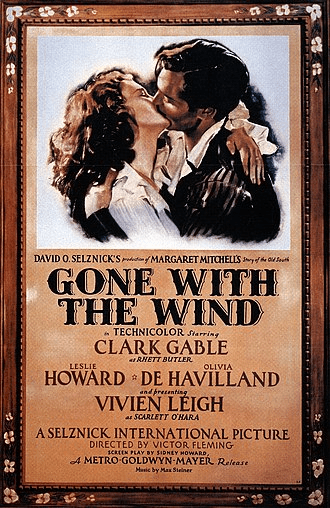
Bonus Review: Gone with the Wind
Gone with the Wind is a sweeping Civil War epic running just under four hours. But don’t worry your pretty little bladder, there’s an intermission, in case that’s a deterrent for you.
Gone with the Wind is the timeless tale of the love between a woman and her plantation. Scarlett O’Hara (Vivien Leigh, in the role she is rightfully known for) has the worst luck in the world. She loses her parents, three husbands, and two children (only one of these simply leaves, the others all die), she has to work and marry to keep her family’s plantation alive and in her possession, and the only person in the world who genuinely likes her is the wife of the man she loves (probably the worst of them all). Really, it’s the story of woman’s fight for survival at all costs, and despite her bad luck and the time in which she lives, she does it. It’s a romantic look at a very unromantic life.
Vivien Leigh puts in the performance of lifetime by bouncing between emotions, even within the same scene. She’s happy, sad, angry, distraught, flustered, excited and scared, all within the four-hour span. She and Clark Gable are obviously the focal point of the movie, but some of the supporting cast hold their own and keep themselves from being regulated to the background. Specifically, Olivia de Havilland and Hattie McDaniel. Hattie McDaniel even won an Academy Award for her performance, marking the first time an African American won the award. The film has a mixed reputation with the Black community for its portrayal of the slaves in personality and in perpetuating the “happy negro” myth. However, much has been said for Hattie McDaniel’s performance and subsequent win as some semblance of progress, though that’s still a point of contention. The head of the NAACP at the time referred to Hattie McDaniel as an “Uncle Tom” – a derogatory term that comes from the most egregious offender of the “happy negro” myth – but McDaniel replied, “I’d rather make seven hundred dollars a week playing a maid than seven dollars being one.”
Regardless of what’s outdated in the movie, it still holds up. It’s a story of determination and preservation, and should be viewed by everyone at least once. It’s a valuable piece of cinematic history and the highest grossing movie of all time, still, when adjusted for inflation.
When you’re as prolific a writer as Stephen King, they can’t all be winners (re: these reviews), but The Green Mile is one of his best, and the film version is honestly better. Despite being over three hours, it’s tighter and flows smoother than the book, which could have benefitted from an editor (like a lot of King’s books). Also different from other King novels, The Green Mile isn’t really a horror story. It has some horror elements and a very supernatural premise, but comparatively, it’s much more grounded than what you’d expect.
Paul Edgecomb (Tom Hanks) is the supervisor over the correctional officers at Cold Mountain Penitentiary: Brutal, Dean, Harry and Percy. Most of them are easy to work with, except for Percy, who takes sadistic pleasure in torturing the inmates and flaunts his connections as the state governor’s nephew to avoid punishment. He takes particular pleasure in breaking the fingers of one of the inmates, Del, and killing his pet mouse, Mr. Jingles. The new inmate, John Coffey (Michael Clarke Duncan), arrives and, despite being a towering black man, he has the meekest personality that Paul has ever come across. He’s a gentle giant who has a healing touch, and he shares that gift with Paul, by clearing up a bladder infection, and with Del by reviving Mr. Jingles. When John cures the warden’s wife from a brain tumor, Paul understands the impartiality of John’s gift. Once John has touched someone, he takes on their pain and has to find a way to release it or he will die. John releases the the energy of the brain tumor into Percy, which makes Percy walk up to the cell of the newest inmate, “Wild Bill” Wharton, and shoot him. John, who is in prison for allegedly raping and killing two little girls, touches Paul and shows him in a vision that Wharton committed the crime he is accused of. Paul, knowing the truth about John, offers to let him go free and suffer the consequences, but John admits that, as scared of being executed as he is, death would be a relief from the cruel world.
Michael Clarke Duncan portrays John Coffey with duality – a man so physically overwhelming and yet so timid that he’s afraid of the dark. He seems like such a natural that you can easily forget that this is only like his second movie where he doesn’t play a bouncer or bodyguard, which he had hands-on experience with. In fact, he was the bodyguard for Notorious B.I.G., though a friend was working in his place on the night Biggie was shot. Duncan quit being a bodyguard soon after the incident. He then had a string of great movie performances, including this one, and then sort of got regulated to direct-to-video and TV movies. I’m not sure why, since he was so clearly great, but my assumption is typecasting. Michael Clarke Duncan died in 2012. He was only 54.
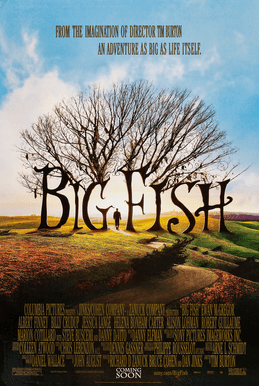
Bonus Review: Big Fish
Big Fish is the story of an estranged father and son who attempt to reconcile on the father’s deathbed. Will’s father, Edward, has a gift for storytelling, possibly with some embellishments. The fantastical nature of Edward’s stories convinces Will that they’re lies and so he decides he doesn’t want to raise his family around his father. However, just a matter of years after Will’s marriage, Edward develops cancer and slowly withers away. Will and his wife, Josephine, take care of Edward in his home in Alabama where he tells Josephine the stories Will has heard his entire life. Over the course of his life, Edward has supposedly come across and befriended witches, giants, ringmasters who are secretly werewolves, poets, and Siamese twins. He was a circus performer and fought in Korea. Quite a colorful life. Will decides to investigate his father’s claims and learns there may be more truth to them than he believed. Upon his return, Will learns his father has had a stroke and is in the hospital. Edward, who now cannot tell his stories, asks Will to tell him the story of how he will die. Will spins a yarn of their escape from the hospital to a lake where all of Edward’s friends are waiting. There, Will helps his dad into the water where he turns into a giant catfish. Satisfied, Edward dies peacefully. At his funeral, Will meets many of the characters from Edward’s stories and is surprised that they were only slightly embellished.
The father-son relationship is the core of Big Fish, but there are some other major themes at play too. It acts as an analysis of how we process death (which is why I paired it with The Green Mile), and also argues for the joy in storytelling – and that love for storytelling is certainly the key. Visually, it’s Tim Burton’s least-Tim-Burton-y movie, but at it’s heart, it’s probably his most genuine. Edward’s stories could each be their own Burton film, honestly, and that’s why the movie works so well. It’s a feel good movie with some meat on it, and is therefore, one of if not my most highly recommended Tim Burton movie.
For those who didn’t live through the decade, like myself, it’s an odd realization that Bill & Ted’s Excellent Adventure was released after the 80s teen comedy scene was already petering out, because it fits right in with the likes of Back to the Future, Weird Science, Better Off Dead, Ferris Bueller’s Day Off and Fast Times at Ridgemont High. And it’s a film that shouldn’t…I don’t know, work? Two Valley guys travel through time in a phone booth and steal celebrities throughout history for a school project? If I pitched that to you, you’d kick me out most expeditiously and find a doctor to prescribe me Olanzapine. Thankfully, the De Laurentiis Entertainment Group took a chance. Nevermind that they went bankrupt before the movie was released.
Bill S. Preston, Esq. (Alex Winter) and Ted “Theodore” Logan (Keanu Reeves) are on the verge of failing their History class most egregiously, and if they do, the two will be separated forever when Ted is shipped off to military school. This isn’t just bad for Bill and Ted, it’s bad for the future. In the year 2688, a council living in a perfect world founded on the music and philosophy of the Great Ones (Bill and Ted), decide to send their best man, Rufus, with a telephone booth that works as a time machine to help them with their project. Bill and Ted are at a local Circle K, racking their brains on what they’re going to do, when Rufus shows up. At first, they wonder if they can trust this man from the future, but then future Bill and Ted pop in with a booth-ful of historical figures on their way to their presentation and confirm that Rufus is a good dude. Reassured, present Bill and Ted take their empty phonebooth and begin to poach for their project. They pick up Billy the Kid, So-crates, Sigmund Frood, Beeth-oven, Noah’s wife, Joan, Genghis Khan, and Abraham Lincoln (there’s a joke about dodging a bullet somewhere in here). They arrive just in time to give the most triumphant presentation San Dimas High School has ever seen.
My love for Bill & Ted’s Excellent Adventure is admittedly strongly influenced by nostalgia. It was the first time I saw a movie about time travel and the first time I heard Valley speak – both things that had a large presence in other films of the decade, but because of when I viewed them, Bill & Ted’s Excellent Adventure feels like the blueprint rather than the curtain call. The premise is so ridiculous. When they go to ancient Greece to pick up Socrates, there’s an obvious language barrier, and so when encouraged to share their own philosophy, they point to themselves, grab a handful of sand and let be carried off by the wind while quoting Kansas. The mall scene is considered a favorite among fans of the movie, even if it is a little dated. Since there’s a little bit of time before their presentation, Bill and Ted bring the historical characters to the San Dimas mall and obvious hijinks ensue. Sigmund Freud tries to hit on women in the food court, Joan of Arc takes over a jazzercise class, Beethoven tries his hands at an extensive electronic keyboard, Genghis Khan rides a skateboard out of a sporting good store, and so on. It’s funny and charming in a way, and it’s a testament to how imaginative an idea the film really is. Thank goodness the producers convinced the screenwriters to remove the part where Bill and Ted bring back Hitler.
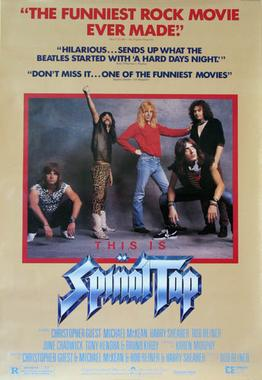
Bonus Review: This Is Spinal Tap
This is another one of those times where the two films I review could be interchangeable. This Is Spinal Tap is just as deserving of being in the Top 100 as Bill & Ted’s Excellent Adventure. In fact, I can openly admit, it’s the funnier of the two by a mile. Bill and Ted may have more heart and be more likeable, but Spinal Tap…well, let’s just say they deserve the movie they got. This Is Spinal Tap was the jumping off point for two important careers. Rob Reiner, who directed this as his first film, went on to make The Sure Thing, and then a string of five back-to-back hits: Stand By Me, The Princess Bride, When Harry Met Sally…, Misery, and A Few Good Men – all great movies for very different reasons. Christopher Guest would go on to write, direct and star in Waiting for Guffman, Best In Show, A Mighty Wind (his costars from Spinal Tap, Michael McKean and Harry Shearer, join him again as a folk music trio, The Folksmen), and For Your Consideration. Like This Is Spinal Tap, these other films feature very basic premises and a large amount of improvisation.
Filmed as a documentary, Marty Di Bergi (Rob Reiner channeling his best Scorsese a la The Last Waltz) follows the band Spinal Tap as they prepare for a nationwide tour to promote their newest album, Smell the Glove. Spinal Tap was originally a folk group called The Originals. They changed their name to the New Originals when they found out there was another group called The Originals. Then they were an early rock ‘n’ roll group, the Thamesmen. Their only hit was “Gimme Some Money”. They finally found some success after changing their name to Spinal Tap and releasing their hippie rock song, “Listen to the Flower People”. The next logical step was to pursue heavy metal. As their tour begins, things go from bad to worse. They lose another drummer to spontaneous combustion, they have to book smaller venues due to poor ticket sales, they’re late to a show because they can’t find the stage, one of their pods malfunctions and so one of them is unable to perform the entire show, when they order a large, grand Stonehenge for the backdrop of their show, someone writes the dimensions incorrectly and so the Stonehenge they receive is incredibly tiny, they get second billing to a puppet show, relationships interfere with the band’s dynamic, oh, and the album bombs. Things seem hopeless, and the members consider throwing in the towel, but then they find out they’re a surprise hit in Japan. They pack their bags and move their tour across the Pacific.
This Is Spinal Tap is situationally funny, sure, but it’s also incredibly quotable and true to life, especially for musicians. It’s become common vernacular in the music world to “turn it up to 11” when you want to get loud (guitarist Nigel shows off his custom amps, proud that they go up to 11 instead of the usual 10 on volume, and when questioned why he didn’t just make 10 a louder volume, he responds with, “But these go to eleven”). Many rock bands have admitted to pulling a “Spinal Tap” by blowing through drummers like candy. Even more rock bands have admitted to seeing themselves in Spinal Tap – particularly getting lost backstage. Members of Twisted Sister, Alice in Chains, Ozzy Osbourne, Talking Heads, Nirvana, Aerosmith, U2, Dokken, The Misfits, Metallica and Led Zeppelin have all praised This Is Spinal Tap and acknowledged comparisons between the fictional Spinal Tap and their own bands. If you’re into rock music or just in to a good satire, This Is Spinal Tap…well, we’ll just say it goes to 11.
I guess I have Italian films on the brain. What Bicycle Thieves and Neorealism did for the Italian movie industry in the 40s, Cinema Paradiso revived in the 80s. Considered one of the greatest films of all time, Cinema Paradiso is a movie about youth, realizing your destiny, nostalgia, and the power of movies. Basically, it’s a full-length version of that Nicole Kidman AMC ad, but actually good (Side note, but I need people besides just my wife to know this: Rewatch that ad sometime. She goes on about “we come to movie theaters to live, laugh, love, blah, blah, blah” and then she says, “and to go someplace we’ve never been before”, and when she says that, it shows a movie clip on the screen. Originally, it was a clip of Jurassic World, but recently, it changed to Avatar: The Way of Water. You know…places we’ve already been before! How are you going to say a line like that in all seriousness and then show clips from sequels?? End of rant).
Anyway, Cinema Paradiso is about young Salvatore, a boy in a Sicilian village post-World War II who gets into all sorts of trouble. By visiting the local theater, Cinema Paradiso, Salvatore develops a deep love of movies. Alfredo, the projectionist, encourages Salvatore’s passion and lets him sit in the projection booth with him as the movies play. Alfredo acts as a friend and father figure to Salvatore, who lost his father in the war, and lets him watch as Alfredo cuts out scenes of kisses and hugs from the films because the owner of the theater, the local priest, demands it despite audience reactions. One night, Cinema Paradiso catches on fire with Alfredo inside. Salvatore rescues him, but Alfredo is left permanently blind when reel of film explodes in his face. Cinema Paradiso gets rebuilt, and a teenaged Salvatore becomes the new projectionist, having been taught by Alfredo. He also purchases a camera and films random things around the village, including a girl named Elena. Salvatore falls head-over-heels for Elena, but her father does not approve, and eventually her family moves away. After a brief stint in the military, Salvatore is convinced by Alfredo to leave the village and never return, and instead become a filmmaker, and so he does. Thirty years later, he returns for Alfredo’s funeral and discovers a gift Alfredo left for him after he passed: a film reel of all the romantic scenes cut from movies being shown at Cinema Paradiso.
What a picture! The ending where Salvatore watches the film reel Alfredo left him is considered one of the greatest film endings of all time, and with good reason. It’s a montage of passion, love between man and woman, sure, but a love for how movies can make us feel. And it just goes to show that spying on people is creepy, but if you do it with a movie camera, it’s sweet and beautiful. I think that’s the message of the movie, but if that’s not it, then nostalgia for one’s childhood is. Nostalgia is a pretty hot commodity these days. It’s a selling point for movies and television, remakes of video games, increasing viewership on Facebook pages, and getting you to buy a cable plan with MeTV. Nostalgia brought back Dunkaroos from extinction, so I have surely benefitted from it. But it’s all surface-level, remember-the-good-ol’-days-type stuff. Cinema Paradiso begs you to look deeper. Yes, there’s the good, but there’s bad too in every childhood, and it’s up to you to make peace with the fact that both helped shape who you became.
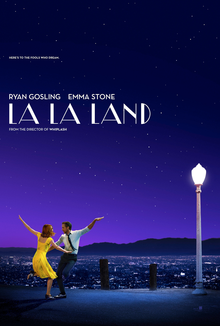
Bonus Review: La La Land
Another movie about nostalgia, just geared towards old Hollywood musicals, this time. La La Land was a surprise hit from the guy who made J.K. Simmons more than just the Peanut M&M – a jazz musical, with all original songs choreography, would be a tough sell in our modern days, but after the success of Whiplash, writer-director Damien Chazelle got carte blanche to make his dream project. La La Land is an ode to the Hollywood of old and an amalgamation of Singin’ in the Rain, An American in Paris, The Umbrellas of Cherbourg and The Young Girls of Rochefort.
Sebastian (Ryan Gosling) and Mia (Emma Stone) are two struggling artists that run into each other pretty frequently in one of the largest-populated cities in the country. Sebastian dreams of opening his own jazz club and tickling the ivories every night, while Mia wants to be a leading lady. They bond over their mutual lack of luck and quickly fall in love. While together, they push each other to pursue their dreams, but even with the added support, it doesn’t get any easier. Mia writes a one-woman play, which tanks, and Sebastian joins his friend in a pop band for the steady income but hates it. Their differing schedules keep them from seeing each other very much. After a fight, Mia goes home to Nevada, but after she leaves, a producer who caught her play wants her to audition for a role. Sebastian drives out to Nevada to convince her to come back and audition, and she successfully gets the part. Five years later, Mia is a successful actress and married with a child, but not to Sebastian. She and her husband go out for a date night and accidentally come across Sebastian’s jazz club. Between songs, Sebastian and Mia’s eyes meet, and for a brief eight minutes, they imagine what their lives could have been like together before returning to reality, briefly smiling at one another, and going their separate ways.
Sometimes, dreams don’t work out, and sometimes you have to choose which dream to make a reality. Not everything gets tied up in a neat little bow like in the movies. La La Land is a contradiction in how it fawns over movies and then demands you believe that things don’t always work out despite what the movies tell you, but it’s an enjoyable one to watch. It has all the flair and color of its inspirations, the music is surprisingly catchy, and Ryan Gosling and Emma Stone seep with chemistry (but if you’ve seen Crazy, Stupid Love, you already knew that). A love letter to a dead genre, La La Land fits right in on the shelf with the musicals that came before.
Italian Neorealism was a film movement that ran roughly from 1943 to 1952, but it’s influence carries on today. Italian Neorealism is easily recognizable by its characteristics – a focus on the poor and working class, filmed with non-actors, and filmed on location instead of in a studio. Except for maybe the use of non-actors, those traits are incredibly common these days, and it’s hard to imagine that they were practically unheard of prior to the Neorealist movement. That influence carried over to the French New Wave, Indian cinema, Iranian cinema, Cinema Verite documentary filmmaking, and even American cinema from the 1970s to now (we have Italian Neorealism to thank for both Martin Scorsese’s Mean Streets and Ice Cube’s Friday). What’s funny is that this film movement was so influential to the rest of the world, but not only was it not well-received in Italy, but the Neorealist filmmakers couldn’t agree on what the value of the movement was. Because of this, 1948’s Bicycle Thieves is considered the quintessential example of Italian Neorealism around the world, and is generally criticized by the other Italian Neorealists.
Bicycle Thieves is a movie where bad things keep happening to good people, and therefore, a movie I can’t get my wife to watch with me. In Rome, just after World War II, a man named Antonio is struggling to find work to provide for his wife and two children. When he does find a job putting up ad posters throughout the city, a bicycle is required to accomplish each day’s task in time, and Antonio has already pawned his off. His wife, Maria, offers the last of their valuables, her bedsheets, in exchange for the pawned bike. The next day, Antonio gets right to work, but while he is on a ladder putting up a poster, his bike is stolen. Antonio is unable to catch the thief on foot. He files a police report, but there is very little the police can do, so Antonio and his son, Bruno, search the city for the thief. Eventually, they do find him, but it’s in the thief’s home turf, and so while Antonio publicly accuses the man for stealing his bike, the man (maybe) fakes a seizure (it could be genuine, but come on, it’s pretty convenient timing) and everyone looking on at the spectacle blame Antonio for what happens. Dejected, Antonio and Bruno head towards home, but as they pass a football stadium, Antonio sees a bike just laying against the wall, ripe for the taking. He tells Bruno to go wait at the bust stop, and goes after the bike. Of course, when he takes a bike, the police and an angry mob are right there to grab him. As they carry him to the police station, Bruno watches from a safe distance and begins to cry. The bike owner sees Bruno crying for his father, and convinces the police to let Antonio go. As they walk through the hostile crowd, Bruno takes his father’s hand.
Sad, isn’t it? On the one hand, Antonio is back to being jobless and hopeless by the end of things, but on the other hand, he’s still alive and not in prison. The ending’s ambiguity may irk some people who want closure, but it keeps the film from falling over the edge of the cliff of saccharinity – something that films from other countries don’t usually run into anyway, but when you grow up on a lot of Hollywood productions, it’s hard to not expect it. Also, I don’t know if this needs to be said or not, but this is an Italian production, about Italian people, in Italian. That means subtitles for us English-speakers. But I wouldn’t recommend the film if I didn’t think it was worth it, and Bicycle Thieves is a powerful masterwork that deserves attention.
Bonus Review: Pee-Wee’s Big Adventure
The following was taken from a full-length review I wrote on this website on 08/02/2023.Pee-Wee’s Big Adventure is basically a modern Bicycle Thieves with a happy ending, anyway.
It feels weird, reviewing a movie that’s been with you since your childhood, and there’s a certain fear that comes with that: Is the movie as good as you remember it? More often than not, you go back to a movie from your past and you stare at the screen in horror over the idea that you ever enjoyed such a thing. And what’s worse, you told people recently that you liked that movie, before you sat yourself down to rewatch it. You have to hang your head in shame, now, around some of your friends because you spent several hours heatedly defending Space Jam. Life, as you knew it, is now over.
But there are other instances, where you return to a film through the eyes of your adult self, and it’s just as good as you remember it. Sometimes better. Pee-Wee’s Big Adventure is one of those movies. With the recent passing of Paul Reubens, a rewatch of the 1985 classic felt necessary. And I am thrilled to say that this film remains one of the best cinematic tales of young love, between a boy and his bike.
Pee-Wee Herman is your normal, everyday acid-trip-induced man-child version of Mister Rogers. He lives in a house with his dog, Speck, covered in gadgets and knick-knacks that overcomplicate the simplest tasks. His entire kitchen is rigged to where you can light a candle and your breakfast is made while you’re off doing something else. As a boy, I always wished for something similar in my future, but the logistics of having such a house seem insurmountable. But above everything else he owns, there is his most cherished possession: a red bicycle with a tiger’s head on the front. And there ain’t no one gonna come between him and that bike.
Paul Reubens saw Tim Burton’s original short, Frankenweenie, and personally requested that he direct this film. His fingerprints are all over the film, too. There are multiple dream sequences, some involving claymation, with black and white, German Expressionism-style set design. There’s a beautiful sunrise seen through the open jaws of a large T-Rex sideshow attraction, complete with jagged teeth framing it. There’s a fun, bouncing score from Danny Elfman, his first music-related project post-Oingo Boingo and his first collaboration of many with Burton. Burton’s style and attitude toward filmmaking are a perfect match for the character of Pee-Wee Herman.
The plot of the movie is hard to describe without sounding absolutely ridiculous, so I might as well just lean into it. All is wonderful in Pee-Wee’s world until he runs into the rich “kid” down the street, Francis Buxton. Buxton wants Pee-Wee’s bike more than anything at the moment and, to get it, he hires a greaser to steal it while Pee-Wee’s out doing a little bit of shopping. Pee-Wee soon realizes that no one is going to help him find his bike (after all, it’s “just a bike”) – not the police, not his friends – so he is on his own. With nowhere else to turn, he meets a fortune teller who tells him his bike is in the basement of the Alamo.
Pee-Wee hitchhikes to Texas with the help of a convict on the run for tearing the tags off mattresses, and a woman truckdriver named Large Marge. Although, this Large Marge lady may not be all that she seems to be. He gets dropped off at an unnamed diner in an unnamed part of the world, and he meets a friendly waitress named Simone. Simone encourages Pee-Wee to keep searching for his bike, and he encourages her to follow her dream of traveling to Paris. Simone’s boyfriend Andy is less understanding of her friendship with Pee-Wee, especially after he overhears them talking about her big “but”. He chases Pee-Wee with a dinosaur bone through a cornfield, forcing Pee-Wee to escape by jumping onto a moving train. He sings old songs with a hobo until he reaches his destination, San Antonio.
Pee-Wee is rightfully disappointed to find out that the Alamo doesn’t even have a basement, and so he’s back to the drawing board. While in San Antonio, he sets a national record in bull-riding. He also suffers from brief amnesia after being thrown from the bull. But don’t you worry, my dear Texans. Pee-Wee may not be able to remember his name, but he remembers the Alamo.
From there, he realizes he needs to get to a phone and call home, so he visits a bar that’s the local hangout of the biker gang, “Satan’s Helpers”. After he knocks over their bikes just outside the bar (which happens in any self-respecting road trip movie), Satan’s Helpers hold him down and debate how they’re going to kill him. He asks for a last request, and is granted it, so he borrows a busboy’s platform shoes and dances on top of the bar to “Tequila” by The Champs. As is expected, this wins over Satan’s Helpers and they offer him one of their bikes so he can travel home. He makes it to the edge of the parking lot before driving into the bar’s streetside signage.
Pee-Wee gets rushed to the hospital and sees a news report on TV that indicates his bike is in Hollywood on a film set. He makes his way to Hollywood, takes back his bike, and flees the Warner Bros. studio lot while being pursued by the entirety of the Warner Bros. security team. He travels through a beach movie, a Christmas movie, a Godzilla movie, a Tarzan movie, and a Twisted Sister music video before successfully escaping with his bike. Unfortunately, his freedom is short-lived. He stops to save all the animals inside a burning pet store, and it is there that he is caught and brought before Warner Bros. execs. Lucky for Pee-Wee, his story is interesting enough to where Warner Bros. wants to make a movie out of it! The film ends at the local drive-in, where all of Pee-Wee’s new friends show up to witness the premiere of this autobiographical movie.
Bonkers, right? Absolutely crazy, but it’s so much fun. The script is tight and throwaway lines earlier on make an appearance again later on. Pee-Wee’s retort to Francis (“I know you are, but what am I?”) is quoted by the film-version of Pee-Wee at the end. When making a police report, Pee-Wee is convinced that “the Soviets” are responsible for his missing bike, and in the fake film, Soviet ninjas are the main villains. It’s smart for knowing that it’s dumb and playing it up. Some scenes are terrifying, or at least were to the younger me – Large Marge, the dream sequences, one involving a T-Rex eating his bike, and another one involving three of a child’s biggest fears: clowns, doctors, and Satan. Pee-Wee’s Big Adventure is a joy to watch. It’s funny, quotable, feverishly ridiculous, and according to my wife, a little creepy, and we have Paul Reubens to thank for all of that.
I’m pretty sure I’ve mentioned this movie before, which makes sense, because I absolutely love it. C.S. Lewis happens to be on my short-list of favorite writers of all time, and so any biopic about him is at least going to grab my attention. However, I had a rather difficult time finding a way to watch it when I originally attempted to, years ago. It’s seemingly flown under the radar since its release, when it received wide-spread acclaim and award nominations, but I had never even heard of the movie until I was going through a phase where I wanted to watch not only every Academy Award Best Picture nominee, but nominees for several other categories as well. I have since come to my senses and believe the Academy Awards are about as valuable to cinema as your child’s graduation certificate for Kindergarten is to your friends. But thank goodness for a time when I felt differently, because it made me hunt down this 1993 Best Actress and Best Adapted Screenplay nominee.
Anthony Hopkins portrays C.S. Lewis in this film that focuses specifically on his relationship with Joy Davidman Gresham (who is played by Debra Winger from An Officer and a Gentleman and Terms of Endearment). C.S. Lewis was a bachelor until he was 47 years old, and he originally suspected he’d be one for his entire life because of an intolerance for cooties. But then, he met Joy. And he developed a friendship with Joy through their mutual intelligence and wide range of interests. And he was surprised by Joy because of her sharp wit and his developing affection for her. And he wished to show her charity by marrying her in a legal sense so she could remain in England instead of return to America and her abusive husband. Let’s see, that’s three of the…well, he had the eros kind of love for her too, but the movie is rated PG, so we don’t get to see any of that. Anyway, Joy is diagnosed with bone cancer and grows considerably weaker over the next few weeks. With the realization that he will soon lose her, Lewis is overcome and decides he doesn’t want just a legal marriage, but a Christian one…oh yeah, there’s the eros. They marry, and Lewis takes care of her until she withers away, leaving behind a son, Douglas, who Lewis continues to raise as his own.
This film, which adapted a stage play, which adapted a television film, which adapted the real story, is one of the most heart-wrenching romances out there. It’s so genuine in its portrayal of its subjects and treats this odd love story with the reverence it deserves. Both Lewis and Gresham were complicated people and so it makes sense that their courtship would be just as complicated. But, then again, all four loves can be complicated, can’t they? And the movie knows its subject so well and treats it so tenderly, that we can overlook the occasional fabrication of real events. For instance, Joy actually had two children, Douglas and David, but you don’t miss David in the movie. There’s also the slight detail that they vacationed in Greece before Joy’s passing, but in the movie, they sentimentally search for the inspiration of a landscape painting in Lewis’ office. It’s for the sake of sweet storytelling, and so all is forgiven.
Anthony Hopkins is an odd choice for Lewis, partially because he looks nothing like him, but also because he was still riding the wave of Hannibal Lecter from two years earlier. Hopkins does great, though, convincingly quoting Lewis in lectures and discussions. Debra Winger plays Joy with all the duality and conflict capable of a human. She shines as a woman that can go blow-for-blow with a “thinking” man, and, if you’ve seen Terms of Endearment, you already knew she was good and playing dying women. Spoilers, I guess. Also, Joseph Mazzello does an excellent job as Joy’s son, Douglas, who must grapple with what is happening to his mother. If you watch Shadowlands, you’ll see him and think, “Hey! It’s the kid from Jurassic Park!” But let me assure you, he does more than scream in this one. Speaking of Jurassic Park, Shadowlands was directed by Sir Richard Attenborough, who played Mazzello’s grandfather and creator of Jurassic Park, John Hammond (after working with Mazzello on Jurassic Park, he just had to get him on Shadowlands; he spared no expense). As an actor, Attenborough has an extensive filmography, including Brighton Rock, The Great Escape, The Flight of the Phoenix, Doctor Doolittle, And Then There Were None, Miracle on 34th Street, and Elizabeth, but as a director, I think you’ll find his best work: A Bridge Too Far, Gandhi, Cry Freedom, and Chaplin. Also, just a random bit of trivia, but his younger brother is David Attenborough. You’ll know David’s voice if you’ve ever seen any of the BBC Earth documentaries, such as Planet Earth.
Anyway, if you’re a fan of C.S. Lewis, or a lover of quirky love stories that don’t involve angsty teenagers, or you want to at least tear up, Shadowlands is the movie for you.
Bonus Review: Finding Neverland
For this bonus review, we’re going to look at another biopic about a famous author with two initials and a last name, who fell in love with a family, that’s based on a play, and involves a final scene where the author comforts the son of a dead mother. Finding Neverland is about J.M. Barrie (Johnny Depp), the creator of the original Peter Pan play. However, at first, he seems to be unsuccessful at his work. But when he meets Sylvia Llewelyn Davies (Kate Winslet) and her four sons, he develops a friendship with the family, acting as a second father to the boys and a close-but-platonic friend to Sylvia. His time spent pretending with the boys becomes the basis for Peter Pan. A producer, Charles Frohman (Dustin Hoffman), agrees to help Barrie make Peter Pan a reality, though he does not believe it will sell. Barrie decides to bring in some children from a nearby orphanage to sit throughout the theatre for the premiere. Their laughter is infectious to the other patrons and Peter Pan becomes an immediate success. Sylvia is unable to make the premiere because of an illness, and she soon dies. In her will, she requests that her mother and Barrie both raise her children.
Finding Neverland is basically Shadowlands without the Christian stuff in the background. It’s just as much a sentimental tearjerker, though, and I think makes a great companion film. Depp does some of his best work when he’s not covered in makeup or dreadlocks. Peter Pan, which I mostly know because of Walt Disney, is one of my favorite stories, so I easily gravitate towards a film about its creation. Again, you have to be in the mood to at least cry a little, but Finding Neverland is worthy of anyone’s time and tears.
“Who is Harvey?” I hear you ask. Well, to quote Elwood P. Dowd, “He’s a Pooka!” Pooka’s, according to Celtic folklore, are mischievous spirits who can shapeshift into different kinds of animals and assist the humans they come in contact with. Harvey happens to be a six-foot, three-and-a-half inches tall white rabbit, only visible to Elwood.
Elwood’s a simple and peaceful man. He has the demeanor of a monk, and his best friend is an invisible rabbit whom he tries to introduce to everyone he meets. His sister, Veta, and niece, Myrtle Mae, live with him at his estate, and tries throwing a party at their house. However, the guests get weirded out and leave when Elwood has a seemingly-one-sided conversation with Harvey in the corner. Veta is understandably upset with her brother, and decides to have him committed to a sanatorium, but at the sanatorium, when Veta is explaining Elwood’s “problems”, she accidentally lets it slip that she sometimes sees Harvey. The doctor who listens to her story decides that she’s the one who should be institutionalized, so he lets Elwood go free. The head of the sanatorium, Dr. Chumley, realizes the mistake and everyone goes searching for Elwood. Dr. Chumley finds him at Charlie’s, Elwood’s favorite watering hole. There, Elwood, Dr. Chumley and Harvey converse for several hours. When the others at the sanatorium realize how long Dr. Chumley’s been gone, they go to Charlie’s. However, Dr. Chumley is nowhere to be found, but Elwood is there. They bring him back to the sanatorium, believing he has in some way harmed Dr. Chumley, whom Elwood claims is off with Harvey. Dr. Chumley soon returns and privately admits to Elwood that he now fully believes Harvey is real. However, the others decide to still commit Elwood, and plan to inject him with a formula that will make him “stop seeing the rabbit”. Realizing the cab driver that brought them all back from Charlie’s is still waiting to be paid, Veta goes outside with her bag, looking for her coin purse. She is unable to find it, unsure of where she could have left it, and insists that the cab driver wait until Elwood has been injected, then he can come out and pay. The cabbie makes some comments about the injection – how it turns interesting people into boring ones – and Veta decides to not go through with the injection, and chooses to believe Harvey is real too.
In a long list of movies that celebrate quirky individualism, Harvey is near the top. It’s so sweet and, outside of the final conversation with the cab driver, it isn’t in your face with the message. James Stewart plays Elwood so earnestly, it has to be one of his most endearing performances – more bright-eyed than Mr. Smith Goes to Washington and more patient that Mr. Hobbs Takes a Vacation. Veta’s actress, Josephine Hull, won an Oscar for her performance, which Stewart helped push for by saying she had the hardest role in the film because she had to “not believe in Harvey and believe in Harvey at the same time.” Hull had a short film career, with only six credits to her name, but she did so much with so little. She’s also one of the aunts in Arsenic and Old Lace, so check that out too.
One of the smartest decisions for the filmmakers was to treat Harvey as if he is there and visible. There’s instances where the camera “follows” Harvey as he supposedly moves, and in general, the film is full of wider shots to ensure that Harvey is in the frame when he walks around with James Stewart. The camera treating Harvey as actually there helps the audience to do the same, and while the film never directly shows he’s real, it does enough to make sure that we believe he is. Harvey is great fun and a whimsical movie to spend an evening with.
Bonus Review: A Matter of Life and Death
Peter Carter is a British pilot in the Royal Air Force. His plane gets shot down and as he’s hurtling toward the ground, he realizes he doesn’t have a working parachute. He reaches out to make contact and gets ahold of US Air Force radio operator, June, and they converse for a time before Peter decides to go ahead and eject. However, in the thick English fog, his escort to Heaven is unable to find him, and so he survives. Peter meets June as she is biking her way back home after her shift, and they fall in love. Peter’s escort to Heaven, Conductor 71, finds Peter and tries to convince him to come to Heaven, but Peter wants to appeal his case. Conductor 71 goes to talk to his superiors, giving Peter and June more time together, and returns to tell Peter he has three days to prepare for his appeal. June is convinced that Peter is having visions and takes him to Doctor Reeves, who believes the visions are the result of a brain injury. Reeves then dies in a motorcycle crash, but it makes him eligible to represent Peter in his appeal. At trial, Reeves makes the argument that Peter, through no fault of his own, has been given more time on Earth and during that time has fallen in love and now has a obligation to stay on Earth. The Council question Peter’s and June’s love for one another, and so Reeves has June take the stand and tells her the only way to save Peter’s life is to take his place. She does so without hesitation. The Council then concedes and allows Peter more time on Earth.
This movie was made in order to help repair British-American relations after World War II. The British viewed the Americans getting involved in World War II as too little too late, and the American way of brashness didn’t sit well with the countrymen who had spent the last few years being bombed at and having to ration their food. This film acted as salve by letting the British man win the day and getting the American girl instead of the other way around. It lifts the British up without putting the Americans down by letting June’s willing sacrifice be the climax of the movie. In fact, the only negative portrayal of Americans in the film is the prosecutor for the appeal, named Abraham Farlan, who was supposedly the first man shot by the British during the Revolutionary War, so he has a little reason to not take kindly to Limeys.
I’ve got a joke for you. What happens when a brain, an athlete, a basket case, a princess and a criminal walk into their school’s library for Saturday detention? You get The Breakfast Club. Not a very funny one, I guess, but maybe it would have been funnier if the punchline was “The Lunch Bunch”? That was the original title of the movie, but I think, for the sake of legacy and longevity, it was a good change. “The Lunch Bunch” just sounds like a bad spinoff of Our Gang or something.
For those who don’t know, The Breakfast Club is about five teenagers who are forced to attend Saturday detention at their school. At first, they believe they have nothing in common, but over the course of the film, they reveal themselves and discover how similar they really are. They all find common ground in their home lives. Brian (the Brain, Anthony Michael Hall) is under so much pressure to make good grades from his parents that his F in Shop class drives him to consider suicide, and his possession of a flare gun gets him detention. Andrew (the Athlete, Emilio Estevez) is in Wrestling to win the love of his father and gets detention for taping another kid’s butt cheeks together to win the love of his teammates. Allison (the Basket Case, Ally Sheedy) is neglected at home and is a kleptomaniac and compulsive liar. She claims she’s in detention because she has nothing better to do. Claire (the Princess, Molly Ringwald) is caught in the middle of her parents’ constant arguments and is in detention for skipping school to go shopping. John (the Criminal, Judd Nelson) is physically abused by his father and has the cigar burns to prove it. He pulled the fire alarm at school. He’s also the most aggressive with the principal, who is there to keep an eye on them, and eventually gets locked in a closet to be kept separate from the others. Over the course of the day, friendships and romance blossom, but will it last when Monday rolls around?
John Hughes was really in tune with his childhood when he became an adult. His short stories about growing up in Michigan were the basis for his screenplays for National Lampoon’s Vacation and Christmas Vacation. A childhood nightmare inspired his script for Home Alone. His directorial efforts in the 80s were only as good as they were because he was so in tune with high school culture (Sixteen Candles, Weird Science, Pretty in Pink, and Ferris Bueller’s Day Off). And his love for John Candy, who was basically a really big child, gave us Planes, Trains and Automobiles and Uncle Buck. Unless you’re currently a child, you’ve probably seen at least one of his movies. He knew how to make movies economically, too, which meant significant returns on his work. The Breakfast Club used mostly child actors and was set mostly in a single room, and so it just had a budget of $1 million. It made over $50 million at the Box Office. That’s impressive for anybody.
To explain the impact this film had on pop culture, I have to address the “Brat Pack” (forgive me, Emilio Estevez). The Brat Pack was a group of young actors who collaborated periodically throughout the 80s in coming-of-age dramas. There are many actors who are inconsistently listed as members, including Tom Cruise, Charlie Sheen, James Spader, Robert Downey Jr., Sean Penn, Kiefer Sutherland, Matthew Broderick, Lea Thompson, Jennifer Grey, and John Cusack, but the core members – the ones who are consistently on every version of the list – come from just two movies: St. Elmo’s Fire and The Breakfast Club. The five kids in The Breakfast Club and Rob Lowe, Demi Moore, and Andrew McCarthy make up the core Brat Pack. Their names and faces were everywhere – on the big screen, on the small screen, on posters and magazines. They defined an entire decade of pop culture.
Anyway, back to The Breakfast Club. Is it outdated? Oh, yes. In multiple ways. Is it cheesy? More often than it probably should be. But does it also transport you to a place and time so specific that you could confidently say, “That’s what it was really like back then”? Also, yes. The Breakfast Club is an important piece of film history for how it changed the way films for teenagers were made and marketed, as well as being the 1980s in microcosm.
Bonus Review: The Outsiders
A precursor to the Brat Pack, The Outsiders featured what would eventually be considered an all-star cast. Patrick Swayze, Matt Dillon, Rob Lowe, Emilio Estevez, Tom Cruise, Ralph Macchio, and C. Thomas Howell make up “the Outsiders” – a group of greasers living in the poor side of Tulsa, Oklahoma in the 60s. Their rival gang, the Socs, are from the rich side and are just waiting to harass to the greasers whenever they have the chance.
Trouble starts when Ponyboy (C. Thomas Howell) and Johnny (Ralph Macchio) walk a couple of Soc girls home (Diane Lane is one of them) from a movie. Their boyfriends show up and threaten a fight, but the girls get them to leave, avoiding a conflict temporarily. In the middle of a rough night, the Socs return to do some damage and nearly drown Ponyboy, but Johnny rescues him by stabbing and killing the Soc pushing his head into a fountain. Ponyboy and Johnny flee with the help of Dallas (Matt Dillon), fearing retribution from police. While away, they hide out in a church, but unfortunately it catches fire with a bunch of children trapped inside. Ponyboy, Johnny and Dallas rescue the children, but Dallas and Johnny are significantly burned and are taken to a hospital. Meanwhile, the greaser-Soc relations are collapsing and tensions are mounting until the threat of a rumble permeates the air.
Francis Ford Coppola (The Godfather trilogy, The Conversation, Apocalypse Now, Peggy Sue Got Married, Bram Stoker’s Dracula, and a whole bunch of flops you can skip) is a filmmaker that demands authenticity, possibly to a fault, and The Outsiders is no different. They filmed on location in Tulsa, and now, a lot of the locations are sites you can visit, including the house that Ponyboy and his brothers lived in. It’s completely unrelated to value of the film, but it’s too interesting a story to not mention: The house that the movie filmed at was bought in 2016 by rapper and The Outsiders mega-fan, Danny Boy O’Connor (the leader of House of Pain, the rap group that did “Jump Around”). It was in a dilapidated state, and so O’Connor used GoFundMe to take donations for a massive renovation project. Some of the donors include Billy Idol and Jack White from The White Stripes (dude gave $30,000). Anyway, O’Connor received a key to the city of Tulsa for efforts on the restoration and turning the house into a museum. That’s the story. A New York rap artist who dated Punky Brewster has a key to the city of Tulsa. Oh, and an honorary diploma from Will Rogers High School, also in Tulsa. It’s bizarre to the point of being funny.
In conclusion, watch The Outsiders. Better yet, read The Outsiders and then watch The Outsiders – The Complete Novel. And if you already have, revisit it. It’s worth it.
The Little Shop of Horrors is a horror film from 1960 from director Roger Corman. But this is not the movie I’m reviewing. I’m talking about the 1986 movie musical adaptation. Little Shop of Horrors was originally an off-Broadway musical, before it was a movie – the second collaboration from lyricist Howard Ashman and composer Alan Menken. These two went on to work together on the music for The Little Mermaid, Beauty and the Beast and Aladdin. They went on to add two songs specifically for the film version at the request of the film’s director, Miss Piggy. The film adaptation comes with a fantastic cast consisting of Rick Moranis, Ellen Greene (who was in the original theatrical production), Steve Martin, Levi Stubbs (a member of The Four Tops, who provides the voice of the killer plant, Audrey II), with cameos from John Candy, Christopher Guest, Billy Murray and Jim Belushi.
Seymour (Rick Moranis) buys this intriguing plant one day and brings it to the flower shop where he works for some window decoration. He names the plant, Audrey II, after his coworker, Audrey (Ellen Greene), whom he is secretly in love with. Audrey suffers from an inferiority complex and cannot leave her abusive dentist boyfriend, Orin (Steve Martin). Audrey II doesn’t respond to regular water and sunlight to grow. It needs blood to live, and so the plant convinces Seymour that Orin’s got more than enough. Besides, Orin is only a job fair away from being a serial killer. However, Seymour doesn’t kill Orin like he intends to, but he does chop him up after the dentist accidentally kills himself on an overdose of laughing gas. Soon, Audrey II and Seymour are the talk of the town, but as far as blood and fame go, when will enough be enough, and can Seymour and Audrey navigate a future together with a Mean, Green Mother from Outer Space in between them?
Originally, the stage show and the film had the same tragic and hopeless ending, but when the movie was previewed for multiple groups in LA, the ending tested so negatively that the studio completely scrapped it. Yoda, the director, wrote a happier ending for the film that was filmed for an additional $5 million, making it the most expensive production from Warner Bros. at that time. That’s honestly a lot of faith to have in a movie that had to have a rewritten ending, so in some ways, it’s a wonder this film ever saw the light of day. Thank goodness it did, because it contains some of the best work from all parties involved. Cookie Monster never made a better film, except maybe Dirty Rotten Scoundrels. This is one of the few Rick Moranis performances that I like. The cameos are all superb, particularly the sequence between Steve Martin’s sadistic dentist and Bill Murray’s masochistic patient. And of course, the music. A musical is only as good as it’s music, and Little Shop of Horrors delivers a blend of doo-wop, Motown, and rock ‘n’ roll from the 1960s that, at the very least, will have you doing your best Ed Grimley. Highlights include “Skid Row (Downtown)”, “Some Fun Now”, “Dentist!”, and “Mean, Green Mother from Outer Space”.
It’s not difficult to get me onboard with a musical – I’d watch a musical on the human birthing process if the soundtrack was decent – but what really sells the film is the likeability of the characters, even when they’re doing unsavory things like chopping up dentists to feed their talking plant. It’s a wonder to find yourself rooting for Seymour, but it’s nearly impossible not to, such is the marriage of horror and musical. In fact, not since Rocky Horror Picture Show has there been such an energetic collision of the two genres, and not until my bonus review will there be another…
Bonus Review: The Phantom of the Opera
Come on, it was either this or Sweeney Todd. For this one, we transition from cult classic to just classic. Originally a serialized novel written in the early 1900s by Gaston Leroux, The Phantom of the Opera has been put to screen, then sung, then sung on screen. The film version of the stage musical was announced back in 1989, only three years after the musical was first reviewed, with both composer Andrew Lloyd Webber and director Joel Schumacher attached to it (apparently, Webber really liked The Lost Boys), but was left gestating for 13 years before scheduling could be worked out in 2002.
The Phantom of the Opera is the story of a love triangle inside an opera house in early-1900s Paris, between two childhood sweethearts and their socially awkward third wheel who is so pitied, he gets the movie named after him. In the beginning, Christine Daae is a backup dancer in the opera who has been getting secret singing lessons from her Angel of Music (don’t worry, it’s just the third wheel that lives under the opera house, nothing creepy). Through sheer luck, Christine is reunited with her childhood sweetheart, Raoul, who is the new patron for the opera house. They reignite their romance while the Phantom tries to win her heart by making her the lead in the opera and killing those who get in his way (again, socially awkward). The question becomes how far is the “like a brother to me” Phantom willing to go to get out of the friendzone?
Apparently, this movie could have looked very different from the finished product, as at one point, both Hugh Jackman and Anne Hathaway were in line to star as the Phantom and Christine Daae. Scheduling conflicts with Van Helsing and The Princess Diaries 2: Royal Engagement kept them from filming. I imagine Jackman at least has many sleepless nights over this sequence of events. But Gerard Butler and Emmy Rossum do a superb job and makes it easy to forget what could have been.



 Destined for Mediocrity