51. Gladiator

Are you not entertained? How could you not be when watching Gladiator? Russell Crowe became the talk of the town for his role of the father to a murdered son, husband to a murdered wife, Maximus Decimus Meridius. With direction from Sir Ridley Scott and a background of Hans Zimmer music, Crowe Spartacuses his way into our hearts and our dreams. There is nary a man in high school or college at the time of this movie’s release who did not want what they did in life to echo in eternity. Though a story of revenge, Maximus is made sympathetic and all too human, which is why we like him, but he is also superhuman when he needs to be, which is why we want to be him. We’ll see if our protagonist is half as likable in the sequel.

Maximus begins the film a Roman general on his way home from a victory over the Germanic tribes, but first he makes a stop at his boss’s house, Emperor Marcus Aurelius. Marcus Aurelius tells Maximus that his son, Commodus, is not fit to rule and so he intends to let Maximus rule as regent when he dies so he can restore the Roman Republic. However, after Maximus leaves, an obviously upset Commodus murders his father. Unfit to rule, indeed. Commodus proclaims himself Emperor and demands fealty from Maximus. Maximus refuses, so Commodus demands he and his family are to be killed, and he is immediately arrested by Quintus, leader of the Praetorian Guards. Maximus kills his captors, but is wounded in the fight. He ignores his injuries and grabs a horse, racing home to his family, but when he arrives, they are already dead. Maximus buries them and then collapses from his wounds. He is picked up by slave traders and sold to gladiator trainer, Proximo. Because of his training as a Roman general, Maximus easily wins his fights and is given the nickname, “the Spaniard”, by the people who cheer him on. He befriends Juba, another gladiator. Proximo learns that Commodus is planning a celebratory 150 days of gladiator fights in honor of his father (but really to gain the love of the Roman people), and so he tells Maximus that he can possibly win his freedom if he “wins the crowd”. Maximus disguises himself with a helmet so Commodus does not recognize him as he fights, but after a victory, Commodus demands that he removes it. Upon doing so, Maximus declares he will have his revenge. Commodus does not kill Maximus due to the love of the Roman people.

Commodus arranges to have Maximus duel an undefeated gladiator named Tigris, in hopes of getting him taken care of in the coliseum. However, Maximus defeats Tigris, and when he is ordered to finish him off, Maximus refuses. The crowd cheers him as “Maximus the Merciful”. Commodus fears that killing Maximus will turn him into a martyr. Maximus learns that his former legions remain loyal to him and he devises a plan with Lucilla (Commodus’ sister whom he has incestuous feelings for) and Gracchus (a Roman senator, who will be in power if the Republic is restored) to get out of Rome and rendezvous with his men. When word of the conspiracy reaches the ear of Commodus, he orders the Praetorian Guards to attack the gladiator barracks. Proximo and some others fight off the guards, giving Maximus the chance to escape, but Maximus is captured soon after. Commodus challenges him to a duel in the colosseum, hoping that a victory will regain the public’s favor. However, before the match begins, Commodus stabs Maximus to give himself an advantage in the fight. Surely that’ll win the public back. Maximus is still able to disarm Commodus in the fight, and when his own guards refuse to help him, Commodus pulls a knife on Maximus in a last-ditch effort to kill him. Maximus, however, successfully turns the knife on Commodus, killing him. Growing weak from his wounds, Maximus quickly demands the restoration of the Republic. As he dies, he envisions reuniting with his family in the afterlife. Lucilla gives him the honor of being carried out of the colosseum as a “soldier of Rome”.

I won’t say much about the film’s historical inaccuracies because Ridley Scott is indifferent to them and they never have any bearing over whether a film is good or not, but I will point out two things I discovered about gladiator stuff that I found interesting. First, the thumbs up/thumbs down thing Commodus does in the film is backwards. In real life, the thumbs up represented a ready blade, which meant to kill the defeated. The thumbs down represented a sheathed sword and meant the gladiator would be spared. Secondly, apparently gladiators had product endorsements, much like our athletes do today. They were originally going to make this fact part of the film, but decided against it, thinking it too unbelievable for audiences. Honestly, that was probably the right call.

Bonus Review: Ben-Hur
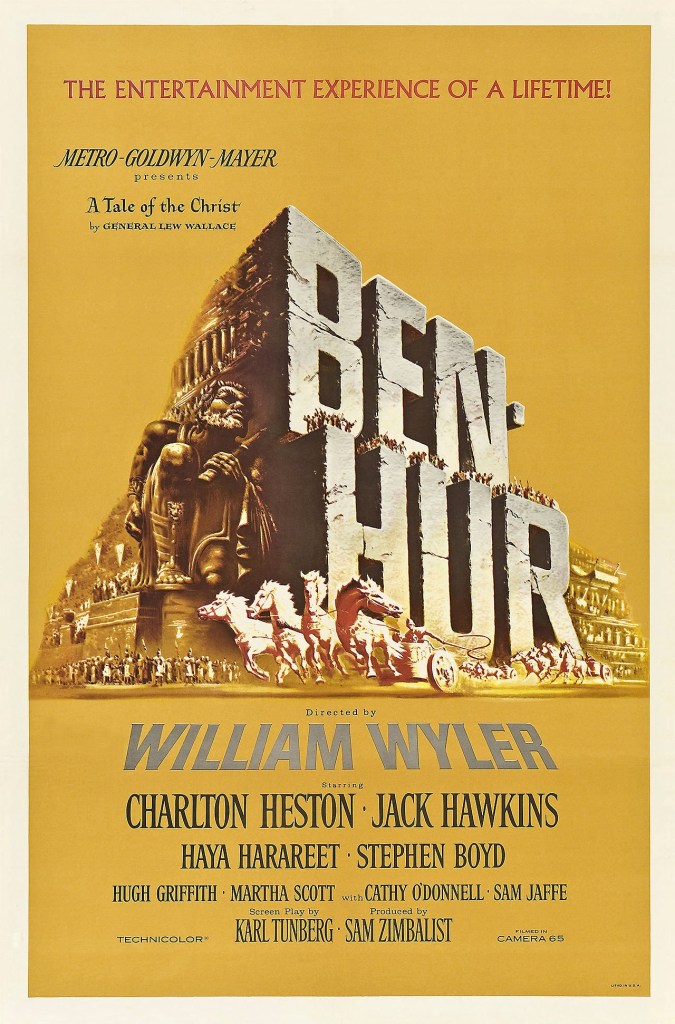
Ben-Hur is a four-hour epic about a man who just wants to get back to his family. Judah Ben-Hur spends time in prison, as a galley slave, and a charioteer before successfully returning home. Throughout the trials that Judah Ben-Hur endures, he grows increasingly angry, fueling his hate for the man who betrayed him until it consumes him. Jesus Christ appears four times in the story, mostly in the background – his birth, a scene at a well where he gives Judah a drink of water, when he preaches the Sermon on the Mount, and his crucifixion, where Judah recognizes him as the man who gifted him water so long ago and attempts to return the favor. It is the crucifixion where Christ comes to the forefront, and acts as the ending to the film. At seeing Christ on the cross, Judah Ben-Hur’s rage dissipates.

A lot has been said about the film’s exciting chariot race scene. The stunt work from Yakima Canutt is excellent and the scene is edited so quickly that it offers a rapid-fire delivery to the screen, and it has rightfully been analyzed by film students and critics everywhere. However, one of my favorite aspects about Ben-Hur is something that doesn’t appear on screen: the face of Christ. Art, for millennia, has concerned itself with the appearance of Christ, and Hollywood is no exception to this, despite what certain political pundits would tell you. Just look at other biblical epics from the same time period: The Robe, The Greatest Story Ever Told, and King of Kings. All of these – and then some – concern themselves with a depiction of Jesus. But Ben-Hur refuses to do it. It’s probably because Ben-Hur is as much a Jewish story as it is a Christian one, but I like to believe – even if it is a symptom of placating two different groups – that it’s intentional reverence.

52. The Fugitive

I think this is my first Harrison Ford movie on this list, so let’s do a double feature! In my younger years, I used to put a lot of stock in both the Oscars and the AFI, and I would look at winners and nominees on their lists and watch them to see what all the fuss was about. I’m glad I had this experience because it means I got to watch a lot of good movies (as well as some head-scratchers) because of it. One such movie was The Fugitive. An action-thriller nominated for Best Picture? Tommy Lee Jones only Oscar-winning performance? Color me intrigued. I wasn’t old enough to have lived through the show the film is based on, so my entire degree of interest was based on the above specs and the fact that it starred Indiana Jones (Han Solo, for all you plebeians).

Dr. Richard Kimble is falsely accused and convicted of his wife’s murder, and is sentenced to death. Tough break. On his transport to Death Row, his fellow inmates on the bus initiate an escape, causing the bus to fall down a ravine and on train tracks. Kimble rescues the corrections officer just before a train plows through the bus. Deputy Marshal, Samuel Gerard, arrives on the scene and learns that Kimble lives. They hurriedly begin a manhunt for Kimble, but Kimble sneaks in and out of a hospital to treat his wounds and alters his appearance. He makes his way down a storm drain, but Gerard follows him down, losing his gun in the process. Kimble picks the gun up and points it at Gerard, leading to the most famous exchange in the movie:

Kimble: I didn’t kill my wife!

Gerard (with his hands in the air): I don’t care!

Instead of shooting Gerard, Kimble jumps out to the spillway below, escaping. Kimble returns to Chicago and, through some financial help from his friend, Dr. Charles Nichols, begins his hunt for the real killer. Having witnessed the killer escaping, Kimble is aware that he only has one arm, and so he begins at the hospital, looking into patients who needed a prosthetic arm. While at the hospital, he corrects a misdiagnosis, saving a patient’s life. Kimble follows his leads, eventually checking out the apartment of Frederick Sykes – a former cop who now runs security for a pharmaceutical company that’s pushing a new drug called Provasic. Kimble had previously investigated Provasic, discovering that it caused liver damage…which would prevent it from getting FDA approved. He also finds evidence, proving Sykes as the killer, and that his friend, Dr. Nichols, switched the bad samples with good ones to get Provasic FDA approved and ordered Sykes to kill Kimble. It was merely circumstance that he killed the wrong Kimble. Now, Dr. Kimble must find a way to take down Nichols and Sykes while being pursued by Gerard.

Bonus Review: Witness

It’s another Harrison Ford thriller that I discovered through its recognition at the Oscars. Witness is a fantastic look at the clash between cultures. The majority of the film takes place in an Amish community and with a plethora of Amish characters, and much time is spent analyzing and admiring the Amish way of life. It’s a very informative film because of it, as well as a crime drama and romance. The performances are very visually focused with some scenes containing no dialogue at all but still saying so much, so while it still has its thrilling moments – especially the climax – the film is surprisingly quiet and subdued.

Rachel and her son, Samuel Lapp, temporarily leave their Amish community and travel to visit Rachel’s sister after her husband and Samuel’s father passes away. Their train stops in Philadelphia, and while they’re waiting for a connector, Samuel goes to the restroom and witnesses a murder. Sergeant John Book interviews the child and asks him to look at a lineup of suspects, but Samuel does not see the killer among them. While at the station, Samuel points out a newspaper clipping of officer James McFee and quietly confirms he’s the killer. McFee works in Narcotics and Book deduces that he stole police evidence to distribute to drug dealers. He goes to Chief of Police, Paul Schaeffer, who tells Book to keep it quiet until they figure out what to do. Book is shot by McFee in a parking garage soon after, confirming Schaeffer’s involvement and corruption. Book takes Rachel and Samuel home and decides to stay with them until his partner can destroy the Lapps’ files at the precinct and can get more info for him. Later, Book calls his partner and finds out he is dead. Schaeffer and McFee, as well as another cop, Ferguson, locate Book and go to the Amish community where he is hiding. Because of the Amish way, Book is unarmed and must sneak around and take out the corrupt cops one by one in order to survive and protect Rachel and Samuel.

53. Stagecoach

1939 was the year for John Ford. He directed three films that year – this one, Young Mr. Lincoln (a courtroom drama about a trial that Abraham Lincoln defended before he became president), and Drums Along the Mohawk (a Revolutionary War-era film about settlers encroaching on Indian territory in the Northeast). Of the three, Stagecoach is the probably the most enjoyable (though they’re all good films) and the most important. Stagecoach did more for the Western genre than any other film. It imbued John Ford with his love for wide shots in Monument Valley, it made John Wayne a superstar lead actor (through Ford’s stubbornness; his producer wanted Wayne replaced with Gary Cooper since Wayne, at the time, was a nobody), and it brought the Western out of B-Movie Hell and brought it to a place of prominence and prestige. After Stagecoach, Westerns became critically-acclaimed high art after nearly 40 years.

You’ve probably seen some variation of this movie before: A group of strangers meet on a stagecoach as they make their way from Arizona to New Mexico. They have a multitude of reasons to make the trip – a fresh start, meeting family, vengeance – and they have to brave through Apache territory to get there. Along the way, John Wayne’s Ringo Kid, who has busted out of jail to kill the men who murdered his father and brother, falls in love with Dallas (Claire Trevor), a prostitute that has been kicked out of town and must now find somewhere she’s accepted. In the end, Ringo Kid takes his revenge and the law, having spent time with him and realizing he’s not such a bad guy, lets him ride off into the sunset with his new gal.

Action, romance, and great characters – this movie has it all. While not the film’s climax, one of the most thrilling scenes in the film is when the Apaches charge and attack the stagecoach. The people on the stagecoach have to protect themselves and the Ringo Kid must leap from the coach to yolk to yolk to yolk to get to the front of the horse team. It’s an exciting piece of cinema, but I bring it up to bring up Yakima Canutt. Yakima Canutt did all the stunts in the film, including this one, and he deserves for his name to be known. He did these fantastic stunts, some of which had yet to be repeated, while stunt work in films was still in its infancy and was much more primitive and therefore much more dangerous. Canutt’s work has been imitated and referenced in numerous action films and Westerns. In fact, the aforementioned stunt on Stagecoach was given a nod in Raiders of the Lost Ark when Harrison Ford jumps from the top of a German truck to the front of it, then falls underneath and is dragged by it.

Bonus Review: The Gunfighter

Gregory Peck is Jimmy Ringo, the Gunfighter. Weary of his gunslinging lifestyle and tired of being viewed as an outcast or some kid’s ticket to fame as “the man who shot Ringo”, he decides it’s time to retire and become a respectable member of society. He returns to Cayenne, the town where his wife he hasn’t seen in eight years and the son he’s never met live. Through mutual friends, Ringo is given the chance to plead to his wife to join him in California, but she asks for a year to consider it and see whether he stays out of trouble. At the urging of the marshal, Ringo decides to leave town, but it’s too late. The brothers of a young man Ringo shot and killed in self-defense have arrived and are waiting to ambush Ringo. This film’s conclusion is a meditation on the price of fame and the circular perpetuation of an eye-for-an-eye mentality.

Hopefully you have or will watch The Gunfighter, but if you’ve never seen it and are a John Wayne purist, it’s very similar to The Shootist – Wayne’s swan song and the last film he made before his death. However, where The Shootist is a little bloated and dragged out, The Gunfighter is a tight hour-and-a-half. It’s a good thing, too, with such a simple plot, but the movie does not drag, and it really fits Gregory Peck’s personality as the deep-voiced, stoic, one-man powerhouse. It’s ironic, though, as John Wayne was originally wanted for the role of Jimmy Ringo before Peck was chosen. When the film failed to explode at the box office, two things were blamed for its bomb: the lack of John Wayne, and Gregory Peck’s era-authentic mustache.

54. The Treasure of the Sierra Madre

John Huston had such success with The Maltese Falcon, he was able to get any movie he wanted made. He began production in 1942 on a film called, In This Our Life, but was called away in the middle of production to go make propaganda films and documentaries for the war effort. After he returned stateside, Huston started work on The Treasure of the Sierra Madre, again bringing Humphrey Bogart along for the ride and directing his father, Walter Huston, whom you hopefully remember from All That Money Can Buy. The senior Huston was at first reluctant to play in a film directed by his son, as well as one where he was not the lead, but Junior convinced him to stick to it, and it paid off. Walter Huston received countless praise and accolades for his work. In more ways than one, The Treasure of the Sierra Madre has dug its way into the zeitgeist and refuses to leave. Bogart’s character in this film even makes an appearance in a Bugs Bunny cartoon involving a penguin. And of course, there’s the famous quote.

For the record, the actual quote is, “Badges? We ain’t got no badges. We don’t need no badges. I don’t have to show you any stinking badges.” Doesn’t roll of the tongue as well, I know, but I wanted to clear the air. Fred Dobbs (Humphrey Bogart) and Bob Curtin (Tim Holt) are down-on-their-luck drifters when they hear about gold prospecting in the Sierra Madre mountains. Considering their one-off employers seem to have a bad habit of forgetting to pay the two men for their work, they happily go in with a seasoned prospector named Howard (Walter Huston). When they successfully discover gold dust in the mountains, bandits and Federales are the least of their concerns. The real enemy to watch out for is their own unbridled greed. Yes, it’s an old morality tale you’ve heard thousands of times, but no retelling of that tale is as engaging as The Treasure of the Sierra Madre. Twists and turns, double-crosses, and parasites are around every corner, and you can never guess which direction the film will go at any given moment. It’s that kinetic spontaneity that will keep the film with you years down the road.

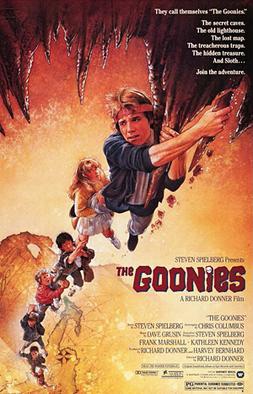
Bonus Review: The Goonies

Movies featuring a large child-actor ensemble rarely as well as The Goonies did, and absolutely none of them have retained the star power The Goonies had. Sean Astin, Josh Brolin, Corey Feldman, Martha Plimpton, Joe Pantoliano, and Anne Ramsey all had somewhat prolific careers before and after The Goonies. Heck, Ke Huy Quan is having a career resurgence as I type this. Did anyone in The Sandlot have a career besides the adults?

A group of kids who call themselves the “Goonies” hang out one last time before they all have to move because their homes are being torn down to make room for a country club. There’s Mikey, Chunk, Mouth and Data. Together, they tour Mikey’s attic and find a doubloon and a treasure map supposedly belonging to a pirate captain called “One-Eyed Willy”. They take the map to an abandoned restaurant on the coastline to begin their search. Mikey’s older brother, Brand, gives chase and is joined by a cheerleader, Andy, who has a thing for Brand, and her best friend, Stef. The Goonies discover that the restaurant is the hideout of the Fratelli crime family, and so they sneak around and find a secret tunnel that aligns with the map in the basement. Chunk gets caught trying to alert the police and after giving away where the Goonies are going, is thrown into a storage space with the Fratellis deformed brother, Sloth. The Fratellis chase after the Goonies, and after Sloth and Chunk become friends and Sloth breaks them out of their captivity, they follow as well. The Goonies must avoid booby traps at every turn until they reach a grotto where One-Eyed Willy’s ship is. The Goonies climb aboard and find that it’s filled with treasure. They stuff their pockets, but intentionally leave gold sitting on a scale in front of Willy’s skeleton. The Fratellis catch up to them and take the gold out of their pockets, and just as they’re about to make the Goonies walk the plank, Sloth and Chunk show up and distract the Fratellis long enough for the Goonies to escape. The Fratellis try to grab as much gold as they can, even that on the scales, which triggers another booby trap that makes the grotto cave in. All parties successfully make it out alive and resurface to the police and their parents. The Fratellis are arrested and Mikey’s marble bag, which was not taken by the Fratellis, is discovered to have gold inside; enough to save their houses.

Two movies about searching for treasure – one a critique on human greediness, the other a fun adventure film with a bunch of kids. Both have their merits, but there is one final thing about The Goonies that deserves a mention: the theme song from Cyndi Lauper. It appears at various points throughout the film and it seems like the filmmakers went all in on Lauper’s popularity to sell it. It’s a worthy endeavor and Lauper’s best song. Just thought it was worth bringing up because it belongs on everyone’s playlists.

55. The Seventh Seal

Ingmar Bergman spent the majority of his life in a state of limbo. He was plagued with philosophical questions that seemed void of answers, and as his filmography portrays, he would never find answers within his lifetime. Raised by his Lutheran minister father in a strict household, Bergman was surrounded by religion and the matters of the spirit. However, as many do in such an environment, Bergman claims to have lost his faith at a young age and spent the rest of his life reconciling that. Because of this, several of his films are plagued with attempts to reconcile a loving God with a cruel, cold existence – i.e. “Why would a loving God allow evil in the world?”, or maybe more emphatically, “Why would a loving God remain silent when there is so much evil in the world?” For The Seventh Seal, Bergman uses the backdrop of a time when religious themes were ever-present within art and literature: The Middle Ages.

The plague has made its way through Denmark when Antonius Block and his squire return home from the Crusades. Block is met by Death in a black cloak along the road and invites him to a chess game, in hopes to prolong his life. Block and his squire visit a church where an artist is painting a variation of the Danse Macabre (the Dance of Death) on the ceiling. While at the church, Block visits the confessional and tells the priest he views his life as pointless up to present and hopes to live long enough to perform one good deed. The priest tells Block of a chess move that will help him defeat Death, but Block realizes that it is actually Death on the other side of the confessional and leaves. A family of actors perform in the village, but there show is interrupted by a group of flagellants. The actors and Block flee the village and have a picnic in the countryside. When they see the effects the plague is having on the people, Block offers to let everyone shelter at his castle until it passes. At one instance, the husband in the acting troupe sees Block playing chess with Death and attempts to flee. Block uses the chess game to distract Death and knocks over the pieces while the acting family sneak away. Death resets the board exactly as they had it and finishes the game, winning. He asks Block if he has accomplished his good deed and Block says he has. Death appears again during supper as a storm is passing over the countryside. The acting family watch from their sheltering spot as Death leads Block and his other guests in the Danse Macabre.

The title of the film comes from Revelation, chapter 8 and verse 1, which says, “And when he had opened the seventh seal, there was silence in heaven about the space of half an hour.” Given the subject matter and themes of the film, it’s an apt title. The time of the plague was considered by those who lived through it a sign of the end times – the time of Revelation – and that “silence in heaven”, in the context of the movie, is attributed to God. There are some Bergman films that treat religion fairly cordially, and then there are others, like The Seventh Seal, that treat it with great disdain. All of the religious characters, except for Block, are incredibly wicked and are rapists, self-mutilators and witch hunters. Death, himself, assumes the role of the priest in the confessional. However, despite what I think was his intention, Bergman cannot help but portray some religious ideas in a positive light. The family of actors are viewed as innocent and are therefore allowed to escape Death, and along with that, Block’s way of saving the family is an act of self-sacrifice. It was his one good deed. On the whole, The Seventh Seal and much of Bergman’s filmography is hopeless and depressing, but it is specifically because of that fact that the moments of goodness and holiness shine as brightly as they do.

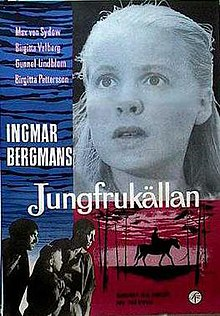
Bonus Review: The Virgin Spring

Another film from Ingmar Bergman set in the Middle Ages. The Virgin Spring, for me, is constantly in contestation with The Seventh Seal for the spot on this list. The Seventh Seal edges this one out mostly because of its iconic imagery and what it did for bringing attention to World Cinema in the United States. However, thematically, I prefer The Virgin Spring, which operates on two fronts: 1. A dissection of guilt within the individual, and 2. The battle between Christianity and Paganism for dominance in medieval Sweden. The film also draws heavy inspiration from another Bonus Review I did not too long ago – Akira Kurosawa’s Rashomon.

Based on a 13th-century Swedish ballad, The Virgin Spring is about the legend of a pious Christian man named Per Tore. Tore sends his daughter, Karin, to travel a day’s journey to church to provide candles for an upcoming service. Karin brings along Ingeri, one of the family’s servants who worships Odin and is pregnant out of wedlock. Ingeri becomes frightened when they approach a mill near a stream. Karin decides to press on without Ingeri, and runs into a trio of herders – two men and a boy – who ask Karin to sit and have lunch with them. Ingeri tries to meet up with Karin, but arrives on the scene as the two men rape and murder Karin, so she hides. The herders take Karin’s clothes and seek shelter at Tore’s house. After supper, one of the herders tries to sell Karin’s clothes to Karin’s own mother. She locks the herders in their room and tells Tore what she suspects happened. Around that time, Ingeri returns home, breaks down, and tells Tore everything she witnessed. She also confesses she had secretly prayed to Odin for Karin’s death out of jealousy. At the crack of dawn, Tore enters the room and kills all three of them, including the boy. Afterwards, Tore and his family follow Ingeri to where Karin lays. Tore cries out to God and promises to build a church at the very spot where Karin died. As he lifts her body to carry her home, a spring sprouts from the spot and flows downhill to meet the river. Ingeri washes herself in the stream.

The Virgin Spring loves to play with both Christian and Pagan imagery. At the mill, a one-eyed man appears to Ingeri – a likely reference to the Norse god, Odin – who in the film seems to act as a stand in for the Devil. Also, when Tore decides to take revenge and kill the herders, he tears down a tree with his bare hands to block the door so the men can’t escape. The tree, a symbol for Pagan worship, indicates Tore’s brief abandonment of his Christian faith and chooses vengeance over forgiveness. Ingeri’s bathing in the stream at the end is a clear reference to the act of baptism, a ritual that some Christian sects believe absolve you of your sins. That stream coming from where Karin lays, where she lost her innocence, is particularly poignant. The Virgin Spring is a beautifully told period drama that more accurately portrays the Middle Ages than most films and is atmospheric and absorbing for its audience.

56. Beauty and the Beast

Starting with The Little Mermaid in 1989, Disney hit a decade-long resurgence – a critical and commercial high that had been missing since the death of Walt Disney in 1966. The films of the Disney Renaissance took a different approach to production than their predecessors, and formed the films around the musical numbers rather than the other way around. Not to mention those musical numbers were spearheaded by lyricist, Howard Ashman, and composer, Alan Menken, who were really just coming into their stride as a team with the release of The Little Mermaid. You may remember my mention of them from my Little Shop of Horrors review. Chasing the success of The Little Mermaid, Ashman and Menken were instructed to halt their work on another project, Aladdin, to save the confused production of Beauty and the Beast. It is widely believed that the genius push for Calypso/Island music for The Little Mermaid was Ashman’s idea, and it was also supposedly his idea to make Beauty and the Beast a dramatic, Broadway-style production. Another stroke of genius that made Beauty and the Beast a worldwide success and critical darling, and holder of the distinction of being the first animated picture to be recognized by the Academy with a Best Picture nomination (back when there were only five nominees in the category), though it lost to The Silence of the Lambs (one of the few examples of the Academy getting it right).

An enchantress, under the guise of a beggar, seeks refuge at a prince’s castle. However, the unkind and grossed-out prince turns her away. The enchantress reveals herself and curses the prince and his castle, turning him into a hideous beast and his staff into household furniture, with a time limit: if the Beast is unable to find true love before the last petal of an enchanted rose falls off, he will remain a beast forever. And his furniture will remain furniture. Meanwhile, in a nearby village, Belle is the peculiar single woman who likes to read and think for herself. Eww. Her inventor father is also a pariah because he’s a little off his rocker. There is one man in the village who does desire Belle’s attention: Gaston – a hunter who uses antlers in all of his decorating and sees Belle as only a beautiful bearer of children. What a guy. Maurice leaves the village on a trip to show off his latest invention, an automatic wood chopper, and is attacked by wolves in the forest. Seeking refuge, he knocks on the door of the Beast’s castle and is promptly imprisoned for trespassing. When Maurice’s horse returns home, Belle fears the worst and goes out looking for her father. She finds him trapped in the Beast’s castle and offers to take his place, which the Beast, in surprise, cautiously accepts. Belle is allowed to live in a room in the castle, but is forbidden to approach the west wing where the rose is kept. She defies the rules of the house and the Beast kicks her out. In the forest, Belle is attacked by wolves, but the Beast rescues her, and they return to the castle where Belle nurses the Beast’s wounds. They fall in love, as you do in these types of situations, and end up dancing together in the ballroom, thanks to the help of the furniture. The Beast offers to let Belle use his magic mirror to check in on Maurice, but when she views the mirror, she sees he is in the forest again trying to find her and on the verge of death. The Beast releases Belle from the terms and conditions of her imprisonment so she can rescue her father, but lets her keep the mirror to remember him by. Belle brings her father home, where a mob led by Gaston is waiting to send him to an asylum. Belle uses the mirror to prove Maurice isn’t lying about the Beast, and the villagers, again led by Gaston, add torches and pitchforks to their mob, and march to the Beast’s castle to kill him. The furniture fights off the mob and Beast defeats Gaston, but lets him live – a rookie mistake. Gaston fatally stabs the Beast, but then falls to his death like an idiot. Belle holds the dying Beast in her arms and professes her love for him just as the last rose petal falls. They all live happily ever after.

Walt Disney had off and on tried to make Beauty and the Beast as early as the late 30s. It struggled to get off the ground and was considered DOA after the release of the 1946 French version. It was shelved until The Little Mermaid proved a return of the fairytale genre was in demand. Ashman died of AIDS just months before the release of Beauty and the Beast, and a lot of stock has been put into the idea that the film is full of allegorical references to the AIDS epidemic. It has been argued that Beauty and the Beast was in the right place at the right time and all the pieces just fit together so perfectly, but I believe that has been proved categorically false through the film’s longevity. This tale as old as time is timeless and it became the blueprint of every Disney animated film that followed it.

Bonus Review: Aladdin

Aladdin was released the year after Beauty and the Beast, and as I mentioned before, was a passion project of the late Howard Ashman. Tim Rice, collaborator with Elton John on The Lion King, The Road to El Dorado and Aida, replaced Ashman after his passing to help finish the project. Aladdin was not the first Disney production to use celebrities for the voice cast (The Great Mouse Detective had Vincent Price voice the evil Ratigan, and Oliver and Company included both Billy Joel and Bette Midler among its cast), but it made it the trend with the success of Robin Williams as the iconic voice of the Genie.

Princess Jasmine is unhappy dealing with suitors so she can be married to a prince before her next birthday, according to the law. She sneaks out of the palace to spend time among the commoners in the bazaar, and there, she meets Aladdin. Together, they steal away from the crowd, but are soon caught by the palace guards. Princess Jasmine reveals herself to the surprise of both Aladdin and the guards, and Aladdin is imprisoned for “kidnapping the princess”. In prison, Aladdin is met by Jafar (the Sultan’s royal vizier) in disguise, telling him of the Cave of Wonders and the treasure inside. If Aladdin will grab a lamp for Jafar, he is welcome to anything else within the cave, even though the cave clearly says to “touch nothing but the lamp”. Aladdin grabs the lamp, but his pet monkey, Abu, is a little too greedy and touches another jewel. The cave erupts into chaos and Aladdin and Abu are only able to make it back to the entrance with the help of a magic carpet. Jafar betrays Aladdin after being handed the lamp and is left in the now-enclosed cave to die. However, Abu reveals he got the lamp back just before the cave closed. Aladdin rubs it and the Genie appears, granting him three wishes with a few provisos. Without technically wishing for it, Aladdin convinces the Genie to get them out of the cave. Aladdin promises to use his third wish to set the Genie free, but in the meantime, he wishes to be made a prince so he can skirt around the law and woo and marry Jasmine. Without the lamp, Jafar’s plan to take over as Sultan is ruined, but his pet parrot, Iago, comes up with the plan for Jafar to marry Jasmine and then kill both her and her father so he can rule uninterrupted. Prince Ali arrives in Agrabah to great fanfare and immediately woos the Sultan, but struggles to do so with the Princess. However, he uses the magic carpet to his advantage and takes her anywhere she’d like to go. During the night out, she deduces that Prince Ali is Aladdin, but Aladdin doubles down and says he’s really a prince and only imitates a commoner to get away from palace life. Jafar has the guards kidnap Aladdin and throw him into the sea, and he ends up having to use his second wish to be freed. Upon his return, he reveals Jafar’s evil plan, but Jafar escapes. Iago steals the lamp and brings it to Jafar, who uses his first wish to become the Sultan. His second wish is to be made a sorcerer, and with his new powers, he sends Aladdin to Siberia. Thanks again to the magic carpet (who is doing the real leg work here, let’s be honest), Aladdin returns and fights with Jafar who turns himself into a snake. Aladdin tricks Jafar into using his third wish to be made a Genie, knowing the confines of the whole Genie gig. Freed from the reign of Jafar, the Sultan changes the rule so that Jasmine can marry who she wants. She chooses Aladdin (duh), and Aladdin makes good on his promise to set the Genie free for his third wish.

“Aladdin and the Magic Lamp” is part of the One Thousand and One Nights – a collection of Middle Eastern folktales compiled together through the framing of Scheherazade, a woman who is married to a ruler named Shahryar, who hates women and decides that every time he marries, he will kill his bride the following morning. Whatever, dude. Scheherazade circumvents her fate by telling Shahryar a story at night, but leaves it unfinished. Shahryar’s desire to see the story through to the end is forced to postpone killing his new wife until the following day. However, that next night, Scheherazade finishes the story, only to start a new one and leave it as a cliffhanger as well. Smart chica. Each tale she tells becomes part of the One Thousand and One Nights, or Arabian Nights, as it is later called by us Westerners. Probably the three most well-known stories from One Thousand and One Nights are “Aladdin and the Magic Lamp”, “Ali Baba and the Forty Thieves”, and “The Voyages of Sinbad the Sailor”, are not original to One Thousand and One Nights. They were added later, during the first European translation in the 1700s by French archaeologist, Antoine Galland, who heard them from Hanna Diyab, a writer from Syria who frequently visited Paris. I’m sure there’s something to be said about these stories’ appeal to Western readers versus the original tales, and plenty has already been said about the contrast between the appearances of Aladdin and Jasmine and the other Arabian characters in Disney’s Aladdin, but I would like to at least mention my own views on these subjects: drawing attention to stories that are which in history and culture from other countries, even through a bastardization of those stories, is still a net positive if it pulls us to explore those histories and cultures.

57. Monty Python and the Holy Grail

Incredibly quotable, deeply irreverent, and absolutely hilarious, Monty Python and the Holy Grail was the first original film from the Monty Python troupe after several successful seasons of their Flying Circus show. Come on, you know the movie, and can probably quote parts of it on your own. The Pythons are capable of getting a laugh out of everything – including subtitles for opening credits. Famously, the production was so low budget, they were unable to rent horses for the characters to ride and so imitated the act of horseback riding while their patsies follow behind, banging coconuts together, which has since become one of the go-to gags to reference or discuss among lovers of the film. It also prevented them from coming up with an actual ending to the film, which is funny because abrupt, nonsensical endings are the epitome of what is considered “Pythonesque”. Because no studio wanted to finance the film for some reason, it meant that the members of Monty Python would have to find a way to secure financing on their own. Because of this, the majority of the film was financed by members of Led Zeppelin, Pink Floyd, Jethro Tull, and Elton John.

The film plays out like a series of sketches from their tv show, just with the tying theme of King Arthur and his Knights of the Round Table. First, King Arthur and his squire, Patsy, arrive at a castle and debate with the guards whether or not swallows are capable of carrying coconuts. Then, they pass a town where the plague runs rampant, though not everyone in town is dead and some even feel happy. Then, Arthur tries to justify his right to rule to a couple of peasants by explaining how he received Excalibur from the Lady of the Lake, but the peasants want to argue politics. He defeats the Black Knight, though the knight proclaims to be “invincible”. And he helps a town prove a woman with a fake nose and the power to turn people into newts is a witch. This is also where he meets Sir Bedevere the Wise and successfully recruits him to his circle of knights. Off screen, Arthur also recruits Sir Lancelot the Brave, Sir Galahad the Pure, Sir Robin the Not-Quite-So-Brave-As-Sir-Lancelot, and Sir Not-Appearing-In-This-Film. Arthur leads them to Camelot only to decide against it after a brief musical number. God then speaks to them and tells them to search for the Holy Grail. The next castle they ride to is owned by French people who claim they have a grail already. To sneak into their castle, Sir Bedevere suggests they build a Trojan Rabbit, however, he forgets to tell the knights to hide in it, and it gets flung back to them via catapult. Randomly, a modern-day historian who is recounting the events of the story is killed by an unknown knight, which starts a police investigation. The Knights decide to split up in order to search for the Grail. Arthur and Bedevere attempt to gain information from the Knights Who Say “Ni!”, but “it” proves difficult. Sir Robin bravely runs away from a three-headed giant. Sir Galahad is misled to Castle Anthrax, which is filled solely with young women who demand punishment for their misbehavior. Sir Lancelot answers the letter of who he thinks is a distressed young maiden who is being forced into a marriage she does not want, only to find that the letter is from an effeminate prince who just wants to sing, despite his father’s protests. The Knights regroup and find Tim the Enchanter, who tells them of a cave where the location of the Grail is written. However, upon arriving at the cave, they learn it is guarded by the most vicious creature imaginable: the Killer Rabbit of Caerbannog. Arthur is only able to successfully destroy the Rabbit by using the Holy Hand Grenade of Antioch. They enter the cave only to face a horrific animated monster. Luckily, they escape the cave when the monster’s animated dies of a heart attack. They attempt to cross the Bridge of Death, but must first answer three questions each in order to not be flung into the Gorge of Eternal Peril. Lancelot makes it through without any trouble. However, Robin and Galahad are thrown into the Gorge. Arthur causes the bridge-keeper to be thrown in when he questions whether the bridge-keeper’s question about the air speed velocity of an unladen swallow is an African or European swallow. After a brief intermission, Arthur and Bedevere successfully cross the bridge and reach Castle Aarrgh, but cannot find Lancelot. They discover that Castle Aarrgh is maintained by the Frenchmen from earlier in the film. Arthur summons an army of knights to charge the castle, but they are stopped mid-charge by the police, who arrest Arthur and Bedevere for the murder of the historian.

Monty Python and the Holy Grail is bad on purpose. That’s part of the joke. It flaunts its lack of budget, and uses canned music for scenes in order to give it that cheap feel. But even though some of these gags feel stupid and silly, they are actually smart and well-versed in Arthurian legend. Subtle nods to the religious backdrops of the Arthurian stories, like the reference to Joseph of Arimathea, make a movie that is so purposely low-budget feel so rich and full. It adds another layer to the humor. And it’s that devotion to the source material that makes the movie such a good parody. The same could be said for the films of Mel Brooks. The concept of parody is only successful when it’s in love with its subject. That’s why political humor in recent years has faltered so drastically. It doesn’t help that the actual state of our political climate is beyond parody already, but it’s the attempt to parody with a mean spirit that makes it forgettable and lackluster. Monty Python and the Holy Grail is more than it’s visual gags, quotable dialogue, and killer bunnies. It’s timeless.

Bonus Review: Airplane!

Only five years after Monty Python and the Holy Grail made its debut on the big screen, another parody came along to take the crown. Airplane! is a love letter to the disaster film genre and specifically pulls from the Airport franchise, but even more so, steals the entire plot of a long-forgotten movie from the 50s called Zero Hour! The comedy team of Zucker, Abrahams and Zucker were no strangers to parody from their years performing skits in the comedy troupe, Kentucky Fried Theatre, which they founded. After accidentally recording and watching Zero Hour! one evening, ZAZ (as the trio is collectively known) were inspired to take the unintentionally hilarious movie and repeat it with a knowing wink. This included one of the aspects that make Airplane! so funny, which is making serious actors say these ridiculous lines as the punchline. Actors such as Lloyd Bridges (a 40s-50s era leading man and the star of Sea Hunt), Peter Graves (star of the television series, Mission Impossible), Robert Stack (Eliot Ness in The Untouchables), and Leslie Nielsen (Forbidden Planet, The Poseidon Adventure) used the weight of their star status to turn random lines of dialogue into the quotes you repeat today.

Ted Striker, a fighter pilot in the war who now suffers from PTSD runs into his ex-girlfriend, Elaine Dickinson, at the airport where she is preparing to board a flight as a stewardess. In an attempt to win her back, Ted gets a ticket for the same flight, but Elaine continues to reject him, prompting him to recount his memories of the two of them together to the people sits next to, causing them to commit suicide. Some time after the in-flight meal, passengers, as well as staff begin to get sick. Dr. Rumack deduces that the fish is giving people food poisoning. Eventually, the entire flight crew succumbs to the food poisoning, leaving no one to fly the plane. Elaine and Dr. Rumack convince Ted to take control, but his lack of confidence and PTSD interferes. The control tower gets his former commanding officer, Rex Kramer, to come and talk Ted through landing the plane. Ted successfully lands and his heroism helps him rekindle his relationship with Elaine.

Now, based on that summary, Airplane! feels like a normal action film, does it not? All I’ve left out are the visual gags (which are numerous, but do not interfere with the plot) and specific quotes. That’s the beauty of Airplane!. The story is surprisingly endearing, coming from a madcap comedy, but the real gems of the film are the inclusion of Kareem Abdul-Jabbar as one of the co-pilots (including a reference to his basketball career), and Leslie Nielsen. Nielsen’s turn in Airplane! into comedy is so drastic and complete that it is nearly forgotten now that he was previously solely a dramatic actor and occasional leading man. Now, he is known for Airplane! and The Naked Gun films (and the underrated, and honestly funnier, television precursor, Police Squad!). Very rarely does a dramatic actor make a total career change into comedy that actually works, but apparently Nielsen referred to himself before his turn in Airplane! as a “closet comedian”, who constantly pranked his costars on other films he worked on. I wonder how many other serious actors are closet comedians, just waiting for the right role to come along?

58. Ikiru

Akira Kurosawa is known mostly for his samurai films – Yojimbo, Sanjuro, Seven Samurai, The Hidden Fortress, Throne of Blood, Ran, Kagemusha – but while you will see some of these mentioned films on the list at some point, it is Ikiru (Japanese for “to live”) that shows the range and wisdom beyond his years that Kurosawa has always had. While the film focuses on an elderly man seeking passion in his life after receiving the news that he has less than a year to live, it also touches on issues that plagued Japan in the 1950s, particularly the decline of the family and bureaucratic wastefulness.

Watanabe has had the same job for 30 years – an unnamed office job where he handles paperwork and complaints by shifting responsibility to coworkers (which they all do, so no one is particularly offended). Watanabe cannot wait to be done with his job as the monotony is weighing on him heavily, and he is excited by the thought of his upcoming retirement. At home, his wife has since passed on, so he lives with his son and daughter-in-law, but there is little love between them, and his son seems to concern himself solely with his inheritance from his father. One of his cases that he keeps passing around at work is a group of parents’ attempt to get a cesspool near their houses cleaned up and replaced with a playground for their children. One day, Watanabe receives the news that he has stomach cancer and has less than a year to live. He struggles to accept it, but even after he does, he does not find opportunity to tell his son the news because of his son’s visible disdain for him. Watanabe grows depressed and looks for joy in the Tokyo nightlife. At a club, he requests a song from the piano player and sings along. The song’s lyrics and Watanabe’s singing make his sadness clear to the other patrons, and he determines there is no joy to be found in the nightlife. Later, one of his coworkers, a young woman named Toyo, requires his signature on her letter of resignation from the office. He sees in Toyo’s youth the enthusiastic love for life that he’s been seeking and orchestrates ways to spend as much time with Toyo as possible. Toyo becomes concerned that Watanabe has romantic feelings for her, but agrees to one last meeting between the two of them. At this meeting, Watanabe asks directly what makes Toyo so happy, and she tells him of her new job making toys. Her happiness comes from the idea of making the children of Japan happy. Energized, Watanabe remembers the parents wanting a playground, and he lobbies hard for it. His coworkers notice the change in Watanabe’s attitude. Watanabe finally dies, and at his wake, his coworkers talk amongst themselves about the change in Watanabe just before he passes and are inspired to change as well. However, when they return to work, they cowardly return to their routines. Someone who claims to have seen Watanabe just before he passed away says he sat in a swing at the playground he successfully got built. As the snow fell around him, Watanabe sang the same song he sang at the club with newfound joy and love for his life.

Kurosawa’s love of Western literature comes through in Ikiru, which is partly inspired by the Leo Tolstoy novella, The Death of Ivan Ilyich. It also showcases a similar sadness for the post-World War II state of Japanese family life that Tokyo Story presents – a lament of the older generation regarding the carelessness of the younger generation. The thematic attention to weightier issues is what puts Ikiru on the list over the likes of Rashomon or Kagemusha. I also think the more modern timeframe of the story might make it more accessible to others. The scene at the end with Watanabe on the swing is one of the most iconic images of all time.

Bonus Review: Rashomon

Rashomon is not necessarily a whodunit, but a who’s telling the truth about whodunit. Based on a couple of short stories by Japanese author, Ryunosuke Akutagawa, Rashomon is a story within a story about an event that takes place in a bamboo grove from four different perspectives – a samurai, his wife, a bandit, and a woodcutter. Their contradicting stories of the same event have since become a rather common storytelling device, called the “Rashomon Effect”, and you can find its influence throughout film and television – Hoodwinked!, Courage Under Fire, JFK, The Usual Suspects, Gone Girl, Witness for the Prosecution, Gigi, The Last Jedi, The Last Duel, Harry Potter, and episodes of The Dick Van Dyke Show, 30 Rock, Everybody Loves Raymond, All in the Family, ER, House, CSI, The Fresh Prince of Bel-Air, Northern Exposure, The X-Files, Seinfeld, and Supernatural. The film was incredibly low budget, even for its time, and is considerably minimalist because of it. There are only three sets in the entire film and only eight actors.

The present story begins with a woodcutter and a priest as they shelter from a terrible rain under the Rashomon gate. As a commoner joins them, the woodcutter begins to tell the priest of a recent assault and murder that was brought to trial. However, the first perspective comes from the now-captured bandit. The bandit tells how he found a samurai and his wife walking through a bamboo grove. He tells the samurai of a burial pit with rare artifacts nearby and gets them to follow him off the trail. He then ties up the samurai and attempts to rape his wife. The wife fights the bandit off with a dagger, but then the bandit successfully seduces her. She is ashamed of her deed and convinces the bandit to fight her husband so that she may leave with the victor. The bandit kills the samurai during their duel, but when he turns back, the wife is gone. The wife gives her version of the events next, claiming the bandit left after assaulting her. After she frees her husband, he looks at her with contempt, and thinking he will kill her for being assaulted, uses the knife to defend herself. However, in a panic, she faints, and when she wakes up, her husband is dead with the knife in his chest. The samurai’s perspective is told through a psychic. In his version, the bandit asks his wife to marry him after he assaults her. She agrees, but demands that first the bandit must kill her husband. The bandit is disgusted by this, and gives the samurai the option to let her go or kill her. The wife runs away after hearing this, and the bandit follows but loses her. He returns and sets the samurai free before leaving. The samurai, ashamed of the turn of events, kills himself with the dagger. He also adds that he later felt the dagger leave his chest, but does not know who took it. The woodcutter then reveals that he himself witnessed the events and that all three stories are lies. He then reveals the “truth”: The bandit does ask the wife to marry him, but instead, she uses the dagger to free her husband, expecting him to kill the bandit. He does not feel like risking his life for a now “tainted” woman, and the bandit also rescinds his proposal. The wife berates both of them for not being men of their words, and so the two reluctantly duel. The bandit wins, killing the samurai and taking his sword. He and the wife flee in opposite directions. The woodcutter, priest and commoner then hear the sound of a crying baby. They find a baby in a basket, with an amulet and kimono. The commoner takes the kimono and amulet and also claims he believes the woodcutter’s story is also at least slightly false and that the woodcutter himself took the dagger so he might sell it for food. The commoner runs away, and while the priest soothes the baby, the woodcutter asks to take it and raise it as his own. The storm quits and the sun comes out.

Because the main events take place in a bamboo grove, the film plays with light a lot. The sun peeks through the stalks and trees, lighting the characters in patches. No one is completely in the light or darkness. In fact, the only time the sunlight is unobstructed is at the very end, when the rain stops and the woodcutter takes the baby home. The beginning of the film, during the credits, the camera is pointed directly at the sun, but through the canopy of the bamboo grove, so the sunlight peeks through in spots – an interesting shot in its own right and an odd filmmaking milestone (Kurosawa is considered the first filmmaker to point the camera directly at the sun because it was originally feared that the sun’s rays would burn the filmstock), it further emphasizes the unreliability and murkiness of the narrators. No one is completely lying or telling the truth. The entirety of the film, and therefore the use of sunlight, is ambiguous.

59. Fiddler on the Roof

Originally a stage musical, Fiddler on the Roof was released in 1971 already a success. I like musicals, don’t get me wrong, but this nearly-three-hour movie is the only musical that’s this long that I can tolerate. The Sound of Music? I’ll watch it if I’m being held at gunpoint. My Fair Lady? Eww. Paint Your Wagon? Double eww. But Fiddler on the Roof? That one just flies on by. The music is great, sure, but really it’s a genuinely good story set in a Jewish town in Tsarist Russia about a poor man who struggles to marry off his five daughters.

Tevye is a Jewish milkman in the town of Anatevka. He explains to the audience that danger is all around his Jewish brethren as they’re surrounded by those hostile to them and the only way they can cope is to stick hard to their traditions. Tevye meets Perchik, a student of modern thought, and invites him to live with his family providing he tutors his daughters. The town matchmaker matches Tzeitel, Tevye’s oldest daughter, to marry a wealthy butcher with the coolest name in town: Lazar Wolf. However, Tzeitel is in love with the tailor, Motel, and so Tevye breaks tradition and allows Tzeitel to marry Motel, much to Lazar Wolf’s embarrassment. At the wedding, the guests argue over whether girls should be allowed to choose their husbands. Perchik throws in his two cents and also crosses an imaginary barrier between the men and women guests to ask Tevye’s daughter, Hodel, to dance. As the wedding finally becomes a joyful occasion, a group of nearby gentiles come to the wedding and begin to riot. Later, Perchik decides to join the revolution, but before he goes, he and Hodel agree to marry. They tell Tevye, and he is furious that they did not ask permission before deciding, but he softens after understanding their love for one another.

Tevye finds the line he will not cross when his next daughter, Chava, asks permission to marry Fyedka, a young gentile. Tevye flat out refuses to condone the marriage as he believes Chava will be effectively walking away from the Jewish faith. Chava and Fyedka elope anyway, in the Russian Orthodox Church. Chava returns ask forgiveness and a blessing on her union, but Tevye rejects her. Later, the entire Jewish population of Anatevka is notified they have three days to pack up their things and leave. They accept their fate and some make their way for the United States, some to Israel, and beyond. A fiddler who had been on the roof for metaphorical purposes is invited by Tevye to join them.

Fiddler on the Roof is a product of the counterculture movement that emphasized new over tradition and encouraged the youth to make their own decisions instead of relying on the wisdom of the aged. Tevye sits in the balance. He puts more stock in young love than tradition allows, but he refuses to allow his family to completely break from that tradition. I imagine that’s a hard place to be for any parent, but especially a father to daughters. I’d say that’s why I love it so much, but I’ve loved it for years. Instead, I’ll say it’s because of the great songs, particularly, “If I Were a Rich Man”, and Topol’s second greatest performance as Tevye, behind his role in Flash Gordon.

Bonus Review: Days of Heaven

Terrence Malick released his first film in 1973. The movie, Badlands, was a fictional retelling of the Charles Starkweather killings across the Great Plains in 1958. It’s a slow, dreamy fairy tale with no explanation for the reasoning behind the murders, and it was an emphatic debut. His next film, Days of Heaven, was proof that the filmmaking style behind Badlands wasn’t a fluke. Days of Heaven is light on story. In 1916, Bill, his girlfriend, Abby, and his sister, Linda, leave Chicago for the Texas Panhandle after Bill kills his boss at a steel mill. They get work at a farm where the owner is dying with an unnamed disease. Bill and Abby claim to be brother and sister to avoid scandal, and, thinking that she’s single, the farmer shows affection for Abby. Bill convinces Abby to marry the farmer, knowing he will die soon, so they can inherit his wealth. The farmer’s health maintains and as time goes on, Abby starts to fall in love with him. A locust swarm destroys the farmer’s wheat fields around the time he discovers the true nature of Bill and Abby’s relationship.

Days of Heaven was filmed almost entirely at golden hour – that time around both sunrise and sundown where the sun itself is not actually visible but its light splays the sky with beautiful hues of red, orange and yellow. Golden hour is a misnomer, unless you count the two as one, because it’s really around 20-30 minutes before the sun comes up or after it goes down. To film entirely at Golden hour means to get a max of one hour each day for exterior shots. This caused a prolonging in the project to the point where some of the crew quit and others had to leave because of other commitments, including Nestor Almendros, the cinematographer. On top of all of that, at the end of filming, the movie took another two years to edit because there wasn’t enough footage that flowed well together. To make it flow better, Malick added narration throughout the film from Linda. The production was so stressful that Terrence Malick did not make another film for twenty years.

60. The Wages of Fear

The most intense movie I have ever seen is this French thriller from 1953. Henri-Georges Clouzot was a French writer/director who became so renowned from the international success of this film that he was able to make any film he wanted and even successfully outbid Alfred Hitchcock for the rights to his next film, Diabolique. Clouzot and Hitchcock, in fact, were cut from the same cloth and both directors specialized in heart-pounding, edge-of-your-seat excitement.

The Wages of Fear is about two Frenchmen, a German and an Italian (Mario, Jo, Bimba and Luigi) who are stranded in a South American town called Las Piedras. The town is completely surrounded by desert and the only communication to the outside world is an airstrip on the edge of town, but the four men are too poor to buy plane tickets out of the town. The only form of employment in town is the Southern Oil Company, but they overwork and underpay their employees and ignore local law enforcement. One day, a large fire develops at one of the oil fields and the only way to contain it is through an explosion of nitroglycerin. The quickest way to transport the nitroglycerin is in jerrycans transported on two large trucks, however, the roads are mountainous, rugged and unkempt, making the trip extremely dangerous. Mario, Jo, Bimba and Luigi take the job for $2000 per person, making this their ticket out of Las Piedras. Luigi and Bimba are in one vehicle and Mario and Jo are in the other, paced 30 minutes behind in case of disaster. To get to the site, the drivers must cross a rotten platform over a ditch, an extremely rough patch of road known as the “washboard”, as well as other natural obstacles.

I refuse to reveal anything beyond that in case you have interest in watching it. Much like the film below, you have to go into the film with no knowledge of how it ends to get the full experience. Suffice to say, if anything, I think I’m underselling it.

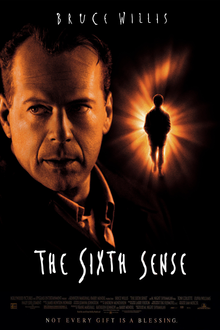
Bonus Review: The Sixth Sense

Another film where the director was basically given carte blanche following the incredible success of one film. The Sixth Sense is also a movie that is best seen with little to no information prior, so unfortunately, I’m gonna keep this one short and sweet. Watch this movie.