41. The Thin Man

The comedy-mystery is a surprisingly successful and enduring subgenre of the mystery film. Movies like Murder by Death, Clue, and more recently Knives Out and Hail, Caesar!, as well as television shows such as Monk, Psych and Only Murders in the Building. One of the earliest examples of the comedy-mystery, The Thin Man, was so popular upon its release that it spawned five sequels. Like most sequels, they gradually deteriorate as they go along, but the first three or so are outstanding, and even the sixth one is a good watch. The constantly-drinking married couple, Nick and Nora Charles are endearing and fan-favorite characters to all who watch these movies.

Clyde and his daughter, Dorothy, discuss her upcoming wedding. After Clyde bids Dorothy adieu, he goes to his office and looks for a collection of bonds worth $50,000 that he intends to gift Dorothy for a wedding present. However, when he checks the safe, they are missing. He speaks to his secretary who admits to cashing them out, and currently only has $25,000 left. Clyde threatens to call the police if she does not come up with the remaining $25,000, and storms out. Dorothy approaches Nick Charles because he had previously worked a case for Clyde. Nick is now married to Nora, a wealthy heiress, and has given up the detective life for her sake. However, Nora is eager to watch her husband in action and helps convince him to take the case. When Clyde’s secretary is found dead, the case officially becomes a murder investigation. Nick interviews an informant named Nunheim, but when Nunheim briefly excuses himself, he makes a break for it to meet up with the murderer. When he arrives at the meeting place, Nunheim is shot and killed by a mystery man.

Nick goes to Clyde’s office at night to snoop around and discovers a fully-dressed skeleton under the floor. He calls the police and they assume the body is a man named Rosebreen, but Nick has another theory, so he invites several people, mostly suspects, to an elegant dinner party. At the dinner party, Nick explains that the skeleton is actually Clyde, killed because he discovered the murderer was embezzling from him. He then killed Julia, his accomplice, and then Nunheim, who had accidentally witnessed Julia’s murder. As Nick recounts his story, Herbert, Clyde’s attorney, grows increasingly nervous and pulls a gun on Nick, but Nick, expecting it, knocks Herbert out. He is arrested for all three murders.

The mysteries in this series take a significant backseat to the dynamic between Nick and Nora and their banter. The couple are so fun and charming that you don’t even care that the suspects have little screen time. William Powell and Myrna Loy have great chemistry and they’re one of the few married couples in cinema that are genuinely happy and in love with each other. Not to mention, their dog, Asta, often steals the show.

Bonus Review: The Pink Panther series

A woman named Dala, who is the owner of the biggest diamond in the world called “the Pink Panther”, is staying at a ski resort. A debonair Englishman, Sir Charles Lytton, is also at the resort and he just so happens to be a renowned jewel thief called “the Phantom”. George, Charles’ American nephew also shows up the resort. French detective, Inspector Jacques Clouseau, is on the Phantom’s trail, though he’s not doing a good job, because his wife is having an affair with the man and acting as a fence for the jewels he steals. At a costume party, both Charles and George attempt to steal the Pink Panther, but the diamond is not in its case. Clouseau finds both men near the diamond case and arrests them. At the trial, Clouseau is called as the sole witness and is asked a series of questions that imply that he is the Phantom. When he nervously pulls out a handkerchief to wipe his brow, the Pink Panther falls out. Clouseau is carried away to prison, but his newfound fame as the Phantom makes him a hit with the ladies.

Look, I’m gonna level with you, this is the plot line for the original movie, The Pink Panther. It’s without a doubt the worst one in the series that features Peter Sellers as Inspector Clouseau, but being the original and the fact that I can’t pick my favorite between the others, I thought I’d present it for my review. What makes the series so funny is all Peter Sellers. He plays the role of Inspector Clouseau a sort of endearing haughtiness that feels like it shouldn’t be possible. His ridiculous French accent and his equally ridiculous disguises make each one a laugh riot. The three best films in the series are The Return of the Pink Panther, The Pink Panther Strikes Again, and Revenge of the Pink Panther. I’d recommend any of the three to anyone, but if I had to give you just one to start with, The Return of the Pink Panther is the least cartoony of the three and the least convoluted plot.


42. BlacKkKlansman

I wish Spike Lee did more with comedy. I think he has a knack for it. Maybe it’s just the somewhat humorous situation of the film’s premise, but I view BlacKkKlansman as a genuinely funny movie. Now, don’t go into it expecting an all-out comedy – it’s definitely not – but it’s better than most of his films that don’t ease up on the tension to allow breathing room. I’m also a sucker for true stories, the stranger the better, and this is a very strange, true story. Another high point for the film is the introduction of John David Washington, Denzel’s son, who plays Ron Stallworth. Hopefully, his star status continues to rise because he’s great in the film.

Ron Stallworth moves to Colorado Springs in 1972 and gets hired on with the police department, becoming the city’s first Black police officer. After spending time in the records department, he asks for a transfer to be an undercover cop. His first assignment is to attend a Kwame Ture lecture and report his observations back. At the rally, Ron meets Patrice, leader of the Black Student Union at the local college. After the rally, Patrice and Kwame Ture are pulled over and aggressively manhandled by a racist officer in Ron’s precinct. Later, Ron reads an ad in the paper that seeks to revive the local chapter of the Ku Klux Klan and calls the number listed, posing as a White man interested in joining. After the call, he realizes that he used his real name on the phone and he will have to meet these people in person, so he recruits a Jewish coworker, Flip, to pose as him for the in-person meetings. At the meeting, Flip is introduced to Walter, Felix and Ivanhoe, the three current members of the chapter. In an attempt to push his membership paperwork through faster, Ron calls the KKK headquarters in New Orleans and speaks with the Grand Wizard, David Duke. The two begin regular phone conversations and David personally sees to his application. Ron and Patrice begin a romantic relationship, but Ron does not disclose that he is a cop. It is later announced that David Duke is coming to Colorado Springs for Ron’s induction into the KKK, and while Flip will be playing Ron’s part for the induction, the real Ron is put on security detail for David Duke. During the ceremony, Ron notices Felix’s wife, Connie, leaving the ceremony. Realizing that she is going to plan a bomb at a nearby civil rights rally, Ron follows her and alerts the local police. Connie notices heavy police presence at the rally, so instead, she puts the bomb under Patrice’s car. Ron tackles her before she can flee, but some nearby policemen witness the situation and beat Ron despite his claims that he’s an undercover cop. Felix, Ivanhoe and the guy who made the bomb, Walker, park right by Patrice’s car, unaware that is where the bomb is instead of at the rally, and detonate it, killing themselves. Flip arrives at the police station, releases Ron and arrests Connie. Sometime after the induction, Ron calls up David Duke and very emphatically reveals that he is a Black man.

Spike Lee received flack from some in the Black community for showing some of the cops in the film as good guys (I’m sure he received flack from others for making some of them bad guys, too), but Lee responded with the comment that while he has made films criticizing police, he would never say that all police are corrupt or that they all hate people of color. I’m sure it’s a struggle to present a nuanced film about such a sensitive topic, but I think Lee succeeds with this film. Having said that, Spike Lee is also very good at propaganda. He ends this film with a montage of footage from the Unite the Right rally that happened in Charlottesville, Virginia back in 2017, specifically the footage of the person that ran over protestors of the rally with their car. There is also footage of David Duke around the time of the rally, making a speech praising what President Donald Trump will do for the White community. It intends to stir up certain emotions in the viewer and it does so well. There’s a much more subtle scene in the film earlier where Harry Belafonte (in his final film role) recounts a lynching of a 17-year-old Black man named Jesse Washington that occurred in 1916. The two scenes work in contrast to point out the past of the Black struggle as well as the present, which to some, looks just as bleak. I know the topic of politics in film is a point of contention for some, but anyone who read my previous review on My Man Godfrey should know that politics have always played a role in the film industry. Spike Lee’s not subtle about it, but he does it better than most.

Bonus Review: Malcolm X

John David Washington’s father is also an actor. His name is Denzel Washington and he collaborated with Spike Lee on four films over the course of over a decade. A film about a controversial figure is bound to be controversial itself, and Malcolm X certainly was controversial. The original director, Norman Jewison (the guy who did In the Heat of the Night, if you recall), left the project because he felt like he could not make it work. There was also significant public outcry that a White man was going to direct a film about Malcolm X, so Spike Lee took over. Then there was public outcry because Lee was too middle-class to direct a film about Malcolm X, but he stayed with the film as it had always been a passion project of his. The budget was an even greater issue. Warner Bros. was incredibly stingy with the budget for a sweeping epic like this and demanded that the film be no longer than 2 hours and 15 minutes. These restrictions caused the film to be temporarily shut down during post-production. However, many prominent figures in the Black community, including Oprah, Prince, Michael Jackson, Michael Jordan, Magic Johnson and Bill Cosby, donated funds to complete the film and give Lee the reigns to make the film as he saw fit, which included an over-three-hour runtime.

Malcolm Little is a young boy when his father is killed by the local Black Legion. The death is registered as a suicide, so the family receives no compensation. Malcolm’s mother’s mental health deteriorates dramatically and she is put in a mental institution and Malcolm and his siblings are put in child care. When Malcolm is a teenager, he and his White girlfriend, Sophia, become thieves to earn money. Malcolm goes by the name Detroit Red during this time. However, they are arrested and while Sophia is given a two-year sentence as a first-time offender, Malcolm is given 8-10 years. In prison, Malcolm becomes attracted to the Muslim religion and follows the teachings of Elijah Muhammad. After he is released from prison, he travels to Chicago to meet Muhammad, who tells him to change his last name from “Little” to “X”. Malcolm goes to New York City to preach the teachings of Islam and praises the idea of the separation of White and Black Americans. He also meets a nurse named Betty Sanders. The two quickly fall in love and marry. During this time, Malcolm discovers that Elijah Muhammad has had numerous children outside his marriage, actively contradicting his teachings and the beliefs of Islam. Malcolm loses his faith in Islam and decides to create the Organization of Afro-American Unity, which promotes tolerance rather than separation of the races. He is exiled from the Nation of Islam, and one day in 1965, when he goes to speak in Harlem, he is gunned down by some of their members. The movie ends with Martin Luther King Jr. reading a eulogy at his funeral.

I imagine this film was difficult to make because so many of Malcolm X’s views turned a 180 over the course of his life. I’m sure it was difficult to reconcile these changes in viewpoint, but I think it makes the movie better. People are contradictory, almost by nature, and the characterization of Malcolm X in the movie feels genuine. It’s not only about the times when he was right, and it’s not only about the times he was wrong. It doesn’t downplay his petty criminal days and it doesn’t over-exaggerate the worship he receives by many in his community. Malcolm X was a man, first and foremost, and Malcolm X is thorough representation of that man.

43. Princess Mononoke

Studio Ghibli is world cinema’s greatest contribution to animation. Since the rise of foreign animation in the early 2000s, Studio Ghibli has been competition for American animation, specifically Disney, and has been critically revered for more adult thematic material. One of the top animators/filmmakers for the company, Hayao Miyazaki, has basically confirmed this intention. Miyazaki’s own work started off with a younger audience in mind. Movies like Castle in the Sky, My Neighbor Totoro and Kiki’s Delivery Service are all definitely children’s films. However, even they deal with somewhat mature themes (there’s an intentionally ambiguous plot line in My Neighbor Totoro that implies that the two main characters’ mother is dying). But, even Miyazaki’s first original film, Nausicaa of the Valley of the Wind, is considerably more adult than its contemporaries.

Princess Mononoke is similarly more adult in nature. It deals with more adult concepts such as environmentalism, and also plays on the ambiguity of its characters. There are no clear heroes or villains, outside of the main character, Ashitaka. It also deals with distinctly Japanese themes, as the story is formed around a medieval Japan and deals with forest spirits and gods associated with the Shinto religion. Because of this, I certainly wouldn’t recommend the film to anyone under the age of a teenager. However, for the age appropriate, there isn’t a better film to showcase what possibilities animation as film is capable of.

The film begins with a village under attack by a large, squiggly demon. The village’s own Ashitaka successfully kills it before it does too much harm, but before it dies, the demon curses Ashitaka by grabbing his arm. The curse is painful and will eventually kill him, but in the meantime, his arm has superhuman strength. As the demon dies, the curse slowly melts away from its body, revealing that it was a boar god corrupted by a bullet in its skin. Ashitaka is shunned from his village because of his curse, but is told he might could find a cure in the land to the west. Ashitaka meets up with a caravan led by the leader of nearby Iron Town, Lady Eboshi, but is soon interrupted by an attack by a wolf goddess. With the wolf goddess is a young woman named San. In the attack, two men fall of a cliff side, but Ashitaka saves them and has to carry them back to Iron Town. He carries them through the forest and while there, he glimpses the Great Forest Spirit, who has taken the form of a giant deer. Ashitaka and the two men arrive in Iron Town – a city built in the middle of the forest to mine the iron there in order to make weapons. It is also home to outcasts and lepers, as Lady Eboshi deeply cares for the people who cannot help themselves. Eboshi freely admits to shooting the boar god, turning him into a demon, and also lets Ashitaka know that San was raised by wolves and hates humankind.

That very night, San infiltrates Iron Town to kill Eboshi, but Ashitaka intervenes, subduing both of them, and carries San out of the town, though he is shot by one of Iron Town’s citizens. When San wakes up, Ashitaka is in a weakened state and so she sees her chance to kill him, but she witnesses the Great Forest Spirit remove Ashitaka’s bullet and heal him, and so decides to trust Ashitaka. Eboshi decides to find and take the head of the Great Forest Spirit, thinking if she gifts it to the Emperor, he will grant her protection from her enemies. A battle ensues between the wolves, the boars and Eboshi’s fighters. At night, the Great Forest Spirit becomes a giant nightwalker, but mid-transformation, Eboshi decapitates it. They make off with the head, and the body continues to grow and walks around in search of its head. As it does so, its neck oozes blood that kills everything it touches and the forest starts to die. Ashitaka and San take back the head and return it to the Great Forest Spirit, effectively healing the land and Ashitaka’s curse. As all is restored, Eboshi decides to rebuild Iron Town elsewhere and San returns to her forest home.

Bonus Review: The Breadwinner

Ireland’s Cartoon Saloon is a steadily growing animation studio known mostly for a trio of Irish-themed films: The Secret of Kells, Song of the Sea, and Wolfwalkers. However, in 2017, they also took on The Breadwinner, a story of a young girl in Afghanistan based on the book of the same name. Much like the acclaimed work from Studio Ghibli, The Breadwinner is a story of children but with very adult themes, particularly the violent nature of the Taliban and the difficulties of womanhood in an Islamic state.

Parvana is an 11-year-old girl in Kabul just as the War on Terror is beginning. She lives with her father, Nurullah, and mother, Fattema, as well as her two sisters and baby brother. One day, Nurullah is arrested because a young Taliban jerk felt slighted by him in the market. With Nurullah arrested, Parvana’s family is unable to provide for themselves since the Taliban forbids women to go outside without a male relative. Parvana and Fattema try to go to the prison to appeal Nurullah’s arrest, but Fattema is severely beaten and threatened to be arrested if she returns out without a male relative. Parvana comforts her baby brother by telling him a story of a boy who seeks out the Elephant King to take back his village’s seeds so they can grow things.

To circumvent the Taliban’s rule, Parvana cuts her hair and wears boy clothes so she can pass for the family’s nephew, Aatish. Her plan works and so is able to provide for her family. She is told that she might be able to bribe a guard to see her father again, so she takes on hard labor jobs in an attempt to earn extra money for a bribe. She also befriends an illiterate man named Razaq, who asks Parvana to read a letter he received claiming his wife was killed by a land mine. Meanwhile, Fattema writes a letter to a relative outside of Kabul, offering her eldest daughter’s hand in marriage in exchange for the family’s protection. When Parvana comes home, Fattema forbids her from going out as a boy anymore as their relatives will be there the next day to pick them up. Parvana demands the chance to see Nurullah to let him know where they’re going. However, while she’s away, Fattema’s cousin arrives early to take them away, and demands they leave Parvana behind since the war is starting and soon there will be no way out of the city. Fattema stands up to her cousin, so the cousin leaves the family on the side of the road. Razaq helps Parvana find her father and bring him out of the prison after she reveals her true identity, and as they escape, Parvana witnesses some of the weaker prisoners being executed. She returns home with her father and the family is reunited.

44. Rebecca

Alfred Hitchcock is, even now, a household name. He is the film director. With over 50 films to his name, he had a long, distinguished career. So it often comes as a surprise when people find out that Hitchcock never won a Best Director Academy Award, and the only film of his to win Best Picture was Rebecca, which for most people, doesn’t even crack a Top 10 list of Hitchcock films (these are main arguments when I suggest the lack of value in the Academy Awards). However, I don’t point this out to say Rebecca is undeserving of the attention. On the contrary, it’s on this list because it is at the very least a Top 5 Hitchcock film for me.

A young woman traveling along the French Riviera meets and falls in love with a widower named Maxim de Winter. Their whirlwind romance leads to wedding bells, and the woman comes home with Maxim to his home, Manderley. Maxim’s first wife, Rebecca, seemingly still haunts Manderley because everyone at the house speaks of her in hushed and reverent tones, especially the house keeper Mrs. Danvers, who has also kept Rebecca’s old room exactly how it was with monogrammed decorations everywhere. The new Mrs. De Winter believes Maxim to still be in love with Rebecca, so to cheer him up, she decides to host a ball. Mrs. Danvers convinces her to wear a dress similar to one that one of Maxim’s ancestors is seen wearing in a painting. She does, but Maxim is distraught when seeing her in it, because Rebecca wore the same one to the last ball they had before her death. Mrs. De Winter confronts Mrs. Danvers about this and Mrs. Danvers tells her she will never take Rebecca’s place and she should just kill herself by jumping from Rebecca’s second-story window. Rebecca and Mrs. Danvers were apparently very close. Like very, very close. Like very, very, very close. Anyway, Maxim then confesses to Mrs. De Winter that Rebecca had no intention of keeping her marriage vows and implied that she was pregnant with her lover and cousin, Jack’s, baby. During an argument, Rebecca “fell” and died from hitting her head on a rock. Maxim and his wife seek to once and for all prove Maxim’s innocence, and succeed, Rebecca’s death ruled a suicide. Upon returning to Manderley, Maxim sees that Mrs. Danvers has set the whole mansion on fire. She is the only one who doesn’t make it out.

This was Hitchcock’s first film to be made in America. He had been courted by Hollywood for years, but only agreed to a contract from independent producer, David O. Selznick, with the promise of Rebecca as his first project and much more freedom than from anyone else. The freedom thing may be true, but it wasn’t enough for Hitchcock. Selznick was a bit of a control freak and edited all the films he produced himself. So, it made him rather mad when Hitchcock would edit as he filmed and only filmed what he wanted in the final film. This prevented Selznick from getting what he wanted from the ending, which was a giant, smoky “R” coming from Manderley as it burned. Selznick’s only other demand was that the film be incredibly faithful to the source novel, which was an easier sacrifice for Hitchcock, though it does mean the film lacks his trademark humor. Rebecca may not be Hitchcock’s most suspenseful work, but it is still rather terrifying.

Bonus Review: Notorious

Notorious is more of a romance than any other Hitchcock film with the exception of maybe Mr. and Mrs. Smith. Cary Grant, Ingrid Bergman, and Claude Rains make up an interesting love triangle, indeed. The leads have fantastic chemistry and do a great job of carrying the suspense not only in the deeply serious times, but throughout the romance as well. The film also uses the love triangle to great ironic effect, but maybe you’ll pick up on that in the synopsis. Here we go!

In 1946, Alicia, the daughter of a convicted Nazi spy is recruited by American agent, Devlin, to infiltrate a group of Nazis hiding out in Brazil now that the war is over. Devlin receives word that Alicia is to seduce Alex, the leader of the Nazi group as well as one of Alicia’s father’s friends who has always loved her. Devlin, despite his growing love for Alicia, tells her of the mission with no hint of personal feeling. Alicia interprets this as Devlin never having loved her in the first place. Devlin forces a chance meeting between Alex and Alicia and Alex invites her to his house for dinner, where he will be hosting his business associates. Devlin tells Alicia to get names from the dinner, and during her observation, she watches a guest’s horrified reaction to one of the wine bottles. Alex proposes to Alicia and when she tells Devlin, he coldly tells her to do whatever she wants. She reluctantly marries Alex. Alicia realizes that Alex is hiding something in the wine cellar and so she hosts a big party and invites Devlin so he can investigate. Devlin and Alicia search the cellar, and when Devlin accidentally breaks a bottle of wine, they discover it is filled with uranium. Alex comes down to the cellar for more wine, and so Devlin and Alicia clean up quickly and they come up with a story where Devlin is drunk and Alicia brought him down to the cellar so he doesn’t make a scene. Alex becomes suspicious and later investigates the cellar to find the broken bottle with uranium. Alex cannot silence his wife without alerting the other Nazis to the fact that he married an American agent, so his mother convinces him to slowly poison Alicia. He does so, and Alicia becomes bedridden. Devlin, worried over Alicia’s absence, sneaks into the house and into her room where she admits that she believes Alex is poisoning her. Devlin confesses his love for Alicia and carries her out of the house, demanding to take Alicia to a hospital. Alex begs Devlin to take him with them, but he is left behind to deal with the other Nazis who now know the truth.

45. My Man Godfrey

Franklin D. Roosevelt described the concept of a “forgotten man” as “at the bottom of the economic pyramid.” The lower class. The derelict. Basically, the “forgotten man” is whom society has left in the dust because they are unable to take care of themselves. During the Great Depression, this applied to a lot of people throughout the country. Roosevelt claimed his “New Deal” would fix some of these problems, but that would take time to implement, which meant a lot of forgotten men and women would remain forgotten for quite some time. My Man Godfrey, released in 1936 and based on a book released in 1935, is a screwball comedy about one such forgotten man.

Godfrey, along with several other homeless men, live in a dump on the edge of New York City during the Great Depression. The NYC upper crust are playing a city-wide scavenger hunt and so that night, a socialite named Cornelia Bullock approaches Godfrey, offering him $5 to be her forgotten man for the scavenger hunt. Godfrey is insulted by the offer (and likely the game as well) and refuses. Cornelia’s sister, Irene, is there as well, and Godfrey finds her to be much kinder and honest, and so he offers to be her forgotten man, if it means she’ll beat Cornelia. At the Ritz, Godfrey is presented and verified as a forgotten man, giving Irene the victory, but Godfrey takes a moment to berate everyone playing the game. Irene apologizes for the game and decides to make Godfrey her protégé – hiring him on as the family butler. In his first day on the job, he is informed by the maid that butlers don’t last long at the Bullock house. Godfrey, however, goes above and beyond the call of duty, proving his staying power, but also inadvertently causing Irene to fall in love with him. He tries unsuccessfully to outline the boundaries of their employee-employer relationship.

Later, Godfrey runs into an old friend of his, Tommy, and so he makes up a story of their relationship, saying he used to be Tommy’s valet. Tommy plays along, adding a wife and children to the story. Irene, after hearing this, impulsively announces her engagement to a young man named Charlie, who is just as shocked as everyone else, but she breaks down into tears when Godfrey congratulates her. Godfrey and Tommy meet for lunch on his day off, and we learn that Godfrey has loved and lost and found the enduring spirit of the forgotten men a comfort to him. Cornelia plants a pearl necklace under Godfrey’s mattress and calls the cops, claiming it’s been stolen, but when the police investigate, the necklace is not there. Irene breaks off her engagement and goes on a trip to get over it, but when she returns, her love for Godfrey is unwavering. She faints and swoons into Godfrey’s arms and so he carries her up to bed, but when he realizes she’s faking it, he throws her in a cold shower. This, according to Irene, only proves that he loves her as well. Godfrey quits at the same time that Mr. Bullock tells his family that he is financially ruined, but Godfrey has one last trick up his sleeve. He pawned the pearl necklace, and used the money to buy Bullock’s stock that he sold short back, and used the remainder to go into business with Tommy opening a nightclub called “The Dump” and hiring the homeless people. Irene argues that since he doesn’t work for her anymore that they can get married, and Godfrey finally has no reason to say “no”.

The film somewhat struggles to balance the romance and the commentary on the effects of the Great Depression to the point where the ending feels very rushed and the resolution to the romance feels shoehorned in. Despite that, however, My Man Godfrey is very funny, charming and uses its two leads to great effect. William Powell and Carole Lombard were married for a time, a few years before the film, and their chemistry really does a lot for the movie. It’s also surprisingly mild for a screwball comedy, compared to some others. In Bringing Up Baby, Katherine Hepburn has a pet leopard that she treats like a child. In His Girl Friday, the lengths Cary Grant and Rosalind Russell go to keep hidden their juicy front-page story is borderline cartoonish. Arsenic and Old Lace has Cary Grant balancing new married life while hiding the fact that his aunts kill men and keep them hidden in a chest. But that’s okay. Where My Man Godfrey lacks in zaniness, it makes up for with pure fun.

Bonus Review: Ball of Fire

Another screwball comedy classic. Ball of Fire was written by Billy Wilder and his longtime-collaborator, Charles Brackett, and directed by the great Howard Hawks. Wilder was growing tired of studio and director interference with his scripts, and so Hawks offered to let him study directing under him on this film to learn the ropes. Wilder never let someone direct a script of his again.

A group of single professors live together in a house where they are compiling an encyclopedia of all human knowledge. Professor Potts is researching modern American slang for his contribution, but is made aware that he is way behind the times for it. He meets a nightclub performer who calls herself “Sugarpuss”, and asks for her help in his research. Sugarpuss is reluctant at first, but agrees after the cops coming knocking on her door to ask questions about her boyfriend, Joe Lilac, a local mob boss. Sugarpuss comes to stay with Potts and the other professors to avoid the police and helps him in his slang research. Meanwhile, Joe decides to marry Sugarpuss because, as his wife, she will not be allowed to testify against him in court. Sugarpuss teaches the professors slang terms as well as how to conga, and slowly falls in love with Potts. He reciprocates her feelings by proposing to her. She does not give an answer right away, hesitant by the sudden request, and agrees to have the professors drive her to New Jersey to marry Joe. Once there, she realizes how much she loves Potts, but she is forced to marry Joe or his henchmen will dispatch the professors. The professors, however, outsmart Joe and his henchmen, and run off with Sugarpuss and she and Potts profess their feelings for one another.

Gary Cooper and Barbra Stanwyck make a great pair in this film, but my favorite part about this film is the other professors. They were modeled after the seven dwarves from the Disney film, Snow White and the Seven Dwarves, and they are the funniest part of an already hilarious movie. Especially with the slang, the movie feels incredibly dated, but honestly, I think that just makes it funnier.

46. All Quiet on the Western Front

Erich Maria Remarque was a German man who fought in World War I for the Imperial Army. Like most veterans, he returned to his home shellshocked and completely disgusted with the nature of war. He turned his time in the War into the novel All Quiet on the Western Front – one of the first examples of a veteran writing about conflict. All Quiet on the Western Front was released in 1929, and just four years later, in 1933, Joseph Goebbels, the minister of Nazi propaganda, declared Remarque’s books as unpatriotic and banned them from the country. Remarque took the opportunity to get out of Germany just as World War II was ramping up in earnest. Over the course of his life after coming to America, he continued writing novels set in wartime, much to Germany’s dismay. Remarque’s sister, Elfriede Scholz, remained in Germany with her husband and children and was arrested by the Nazis and accused of undermining morale. However, a comment made by the judge at her trial hints at an ulterior motive for the arrest, saying, “Your brother is unfortunately beyond our reach – you, however, will not escape us.” She was beheaded in December 1943. Remarque was not notified until World War II had ended. Think this little history lesson is too depressing for a film review? Wait until we get to the movie.

Through encouragement at school, several young German men decide to enlist in the army to help the war effort. They are, however, quickly disillusioned to the Great War between their time in bootcamp and their venture to the front lines. The veterans already positioned there are unwelcoming and the constant bombardment rakes against their nerves. When they attempt to gain ground against the French, the casualties are so numerous that they can afford a double-helping of rations at the end of the day. One of the young men, Paul, successfully stabs a French soldier behind enemy lines, but is forced to hide in a shell-hole with his dying enemy. He breaks down and tries to help the man, but when that is unsuccessful, he begs him for forgiveness. Paul is later wounded behind enemy lines and is sent to an infirmary that is notorious for a low survival rate. He makes a speedy recovery, but his fellow soldier, Albert, must have his leg amputated. Paul is allowed to visit home and is taken aback by how ignorant and optimistic everyone is regarding the war effort. He returns to his old schoolroom and is allowed to share his experience so far, but he instead expresses his disillusionment, causing the students to label him a “coward”. Paul is disgusted by everyone’s unabashed excitement about the war and returns to the front lines to be with those who knows what he’s going through. However, upon his return, most of his troop has been replaced with newer and younger recruits. He learns that most of his comrades have died. One of the few who remain, Kat, is killed by an explosion while in Paul’s arms. While hiding behind the sandbags on the frontline, Paul sees a butterfly floating nearby. He reaches out to the butterfly and is shot and killed by an enemy sniper. He falls back and dies, and the butterfly floats mere inches from his hand.

War is somewhat a catch-22 (hmm…I wonder if there’s a book about this topic). Those who instigate don’t fight in it and those who do fight in the war have to be manipulated into doing so (at least in America where, outside of a draft, no one is required to join the cause) because if the army were upfront about the nature of war, no one would volunteer. I’m not so anti-war that I don’t understand the pros to it (overcoming an oppressor, helping someone else overcome their oppressor, maintaining balance), but even more so, I understand and believe that if those in power weren’t so greedy and power-hungry, then less wars would occur and that would certainly be ideal. A lot of times, we are blinded by a sense of patriotism – which is typically encouraged heavily by the government, so I cut the everyman a break on it – that joining the effort is a personal source of pride and glory. However, that same everyman is the one who is forgotten and left out in the cold. If you want proof of how America feels about those who fight for their country, take a look at the state of their veterans programs. All Quiet on the Western Front was dismissed as unpatriotic upon its release, and I can certainly see some folks reading this coming to the same conclusion, but All Quiet on the Western Front is a beautiful film and an important story, because it does not forget the everyman.

Bonus Review: 1917

World War I doesn’t get as much attention in film as World War II does. The only reason I can think of for this is the fact that film as a medium was less established at the time of World War I. Also (I guess there’s two reasons), the patriotic spirit within the film industry during World War II meant that movies of a patriotic nature were being churned out like the offspring of rabbits. It’s kind of sad, honestly, because World War II feels much more similar to our modern way of warfare but World War I has a foot in both the modern and the primitive.

British reconnaissance has discovered that the German forces who have seemingly retreated from fighting France are now in a position to ambush the British with artillery. Two corporals, Blake and Schofield, are instructed to travel into dangerous territory to relay the message to the troops that are scheduled to attack the next morning. Blake and Schofield cross no man’s land and get to the now-abandoned German trenches where an explosive boobytrap has been laid. The two survive, though Schofield does get injured, and they continue on to a farmhouse. There, they see a German plane get shot down and it lands near the farmhouse. Blake insists on rescuing the pilot and so they do, and Blake tells Schofield to get the man some water. While Schofield is away, the pilot awakens and stabs Blake. Schofield returns in time to shoot the pilot and comfort Blake as he dies. Schofield makes it to a town that seems abandoned, but he is soon under sniper fire, and the two have a shootout. Schofield kills the sniper, but he is hit by a bullet to the helmet, knocking him unconscious. When he wakes up, it is now night before the morning’s attack. The town is now overrun with German soldiers and so Schofield must now sneak his way out of it, but this is unsuccessful. He kills a German soldier and runs from several others, jumping into a river as the early morning light shines through. The river leads to a waterfall, which Schofield survives falling from, and when he reaches the bank, he is in the midst of the last wave of British soldiers of the scheduled attack. He tries to make his way to the colonel, but the trenches are too crowded, so Schofield goes up to the battlefield and sprints along the trenches as the infantry begins its charge. He makes it to the colonel, giving him the message, and the colonel calls off the attack. Schofield was earlier informed that Blake’s brother would be in this group and so he seeks him to tell him his brother is dead and to give him his dog tag. Schofield is given his permission to write their mother a letter about Blake’s bravery.

Sam Mendes, the director, wanted to write a film about the exploits of his grandfather during the War and so began his work on 1917. And in doing so, he made a film about the dangers that even simply carrying a message can entail. It’s the ultimate wartime Everyman. Mendes also, to give the film a sense of urgency (the mission has to be completed in less than 24 hours), constructed the camera work to appear as if it’s made up of only two shots, the break being when Schofield is knocked unconscious and the screen goes black. This required extensive choreography for the camera to follow the main action and the extras to work around it. The film is impressively shot, and the scene where Schofield runs along the trenches as the infantry comes over the top for their charge will surely be considered an iconic scene of cinema in the near future.

47. Fargo

Fargo is a crime drama set in the northern states of Minnesota and North Dakota. It inhabits the world – a world the Coen brothers grew up in – with a fervor and passion that rarely comes through in their other films, which is probably because the Coen brothers typically keep their films at an arm’s length, preferring to analyze their characters under a microscope rather than emoting through them. The two biggest factors at play here is the snow and the accents. The snow makes Fargo look like one of the most beautiful things ever put to film. The opening shot of the movie is one of my favorites in all of cinema. It’s just snowy white as the camera waits for a car to come into view (though it’s so covered in snow, that until you see the car, you can’t even be sure you’re looking at a road). All that is visible prior to the car is a bird flying across the screen, however, you can’t even be sure that it is a bird – the image is so dark – except for how it moves. That image, plus Carter Burwell’s score that is based on a Norwegian folk song called, “Den bortkomne sauen”, or “The Lost Sheep”, sweeps you up into the story. You have no idea where you’re going, but you’re all in for the ride. The accents is the other key factor. Most of the characters speak with what is called the “Minnesota nice” dialect – think, “Yah, you betcha” and “Aww, geez”. It’s very grounded in the geography and culture in the north, very Scandinavian in its attempt to sound self-deprecating and understated. It also makes the film surprisingly funny that there are murderers running around talking this way – a little off-kilter, maybe, but that’s why you watch a Coen brothers movie.

Jerry Lundegaard (William H. Macy) is in deep, financially. He’s been fudging the numbers of vehicles sold at the car dealership he works at. His solution is to bring a real estate deal to his father-in-law, hoping he’ll finance it for him. His backup plan, however, is to hire a couple of guys, Carl Showalter (Steve Buscemi) and Gaear Grimsrud (Peter Stormare), to kidnap his wife so his father-in-law will pay the ransom and Jerry, Carl and Gaear can split it. Carl and Gaear do their part and kidnap Jerry’s wife, but as they make their escape to Moose Lake, they kill a Highway Patrolman and a couple of witnesses. This puts Brainerd police chief, Marge Gunderson (Frances McDormand), who is seven months pregnant, on the case. Unfortunately for Jerry, Carl and Gaear, Marge is the best there is, and she catches little details that her fellow officers easily miss, putting her hot on their trail. Carl calls Jerry and demands the entire sum they were intending to split because of the murders. Jerry tells his father-in-law that the kidnappers want a million dollars and will only deal with him, however, his father-in-law refuses to let anyone other than himself handle the money. Carl meets with Jerry’s father-in-law in a parking garage and the two shoot each other. Jerry’s father-in-law dies and Carl is bleeding from his jaw, but makes it out. He investigates the briefcase full of money, discovers it actually has a million in it, and pulls off to the side of the road where he takes out $80,000 to share with Gaear (the amount they originally agreed on with Jerry) and buries the rest in the snow, hoping to come back for it. When he returns to their cabin at Moose Lake, Gaear has killed Jerry’s wife because “she wouldn’t shut up”, and the two argue, leading Gaear to kill Carl with an ax and dispose of the body using a woodchipper. Marge shows up during this, already having the state police arrest Jerry in a motel after he fled from work, and shoots Gaear in the leg and arrests him. Marge returns home to her husband and they cuddle and talk about his day.

“This is a true story. The events depicted in this film took place in Minnesota in 1987. At the request of the survivors, the names have been changed. Out of respect for the dead, the rest has been told exactly as it occurred.”

Sorry to burst anyone’s bubble, but no, it’s not. Fargo is entirely fictional, even though some viewers speculated that the story was based around T. Eugene Thompson, an attorney from St. Paul, Minnesota who hired a hitman to murder his wife. Thompson’s story is not well known outside of the Twin Cities area, however, the Coen brothers were raised in the same area, where it is in fact a local historical fascination. The Coen brothers originally said there was a true crime story that inspired their story, though the story itself was completely made up, but since then, they have gradually admitted that there is no particular crime they looked to for inspiration and that Fargo is completely original. They have also denied even knowing Thompson’s story at all. So, then why put a fake disclaimer at the beginning of their movie? Something that Joel Coen said in an interview with Time Out may shed some light on this. He is quoted as saying, “If an audience believes that something’s based on a real event, it gives you permission to do things they might otherwise not accept.” Okay, fair, but then what do the Coen brothers want us to accept that’s so otherwise outlandish? Is it the image of a leg hanging out of a woodchipper? Perhaps. Is it the tenacity of seven-month pregnant police chief amidst unspeakable evil? Less likely. Or is it the outright ineptitude of every single character in the film outside of Marge? More than likely, it’s this. There is a Yiddish word for the types of characters that make up Fargo: “schlemiel”, not to be confused with “schlimazel”, and for those who don’t know the difference – “a schlemiel is somebody who often spills his soup and a schlimazel is the person it lands on.” The Coens have made a career of making movies about schlemiels (and schlimazels, though less often are their characters not responsible for their misfortune), and Fargo is no different. But where other Coen brothers films have a comical air about them, Fargo is taken rather seriously (though you can surely still find things to laugh about in the film) because of a few short sentences before anything appears onscreen.

Bonus Review: In Bruges

Like Fargo, In Bruges is a black comedy disguised as a crime drama. Director Martin McDonagh made his debut with this film, having previously made a career in theatre as a playwright. As such, his films feel very play-like, as in they’re relatively contained in regards to location, and the characters are (perhaps intentionally) overdramatic. He is also known for a very Irish form of absurdist humor in his works, and his collaborations with Colin Farrell, Brendan Gleeson, Sam Rockwell and Woody Harrelson. Besides In Bruges, he has also made Seven Psychopaths, Three Billboards Outside Ebbing, Missouri, and The Banshees of Inisherin – all of which have received critical acclaim and are lauded for their characters and sharp blend of humor and drama. Being a playwright first and foremost, his characters are beautifully painted and complex, which also means that under his direction, his stars shine. The chemistry between Farrell and Gleeson in In Bruges and The Banshees of Inisherin is more than enough proof of that.

Ray and Ken are two hitmen that are instructed to travel and wait in Bruges for further instructions. Ken loves Bruges and the peacefulness and beauty the city bears, but Ray is bored and complains frequently about how awful Bruges is. We soon find out that the reason for their sabbatical in Bruges is because of a hit gone wrong for Ray. He was required to shoot and kill and priest, and in doing so, also killed an altar boy. Ray befriends Jimmy, a dwarf working on a movie set nearby along with Chloe, the film’s production assistant. Ray and Chloe go to dinner where Ray gets into an argument with a Canadian couple whom he mistakes for Americans and beats them up. Harry, their boss, calls Ken and tells him to kill Ray, claiming that even though it was an accident, killing the boy was unforgiveable. Ken attempts to carry out his task, but when he finds Ray, Ray is about to kill himself over his guilt, so instead, Ken stops him by taking his gun away and tells him what Harry wanted him to do. Then, he gives Ray some money and tells him to get on a train and go somewhere to make a fresh start. Ken then reports back to Harry the truth, infuriating Harry, who is then immediately on his way to Bruges. Ray gets on the train, but it doesn’t get very far as the police have caught up to him regarding the assault on the Canadian couple. Chloe bails him out of jail and the two go for drinks near a church. Harry meets with Ken and tells him, almost boastingly, that if he had killed a child he would have killed himself right then and there. Ken argues that Ray deserves a chance at redemption. They continue their conversation as they make their way up the belltower at the same church that Ray is near, but when they reach the top, Ken says he will take whatever punishment Harry wishes to administer. Harry shoots him in the leg for his insubordination and leaves him up in the belltower while he makes his way down to kill Ray. Ken, seeing no other way to alert Ray to what is coming for him, jumps from the belltower to his death. Ray and Harry have a chase and shootout through the streets of Bruges, ending near where that film is still under production. Harry shoots Ray multiple times, but one of the bullets ricochets and hits Jimmy who is dressed for a scene as a schoolboy. Thinking he just killed a child, Harry turns the gun on himself despite Ray’s protests. Ray is carried to an ambulance, though he had been shot several times, and his fate is left unanswered.

48. Yojimbo

At one time, when I thought I’d really try with this blog, I was going to make double-feature reviews for movies that were foreign remakes of others to show the impact one culture could have on another as well as emphasize where those cultures differed. If I had gone that route, Yojimbo would certainly have been one of them. Yojimbo is a loose remake of a US noir called The Glass Key, based on a novel by Dashiell Hammett. It would have been an interesting to look at the intersectionality between early crime dramas in America and the samurai films of Japan. However, the even greater spiritual connection to the samurai film is the Western. Yojimbo was remade by Sergio Leone as A Fistful of Dollars – the first film in a trilogy that ended with The Good, the Bad and the Ugly. Leone’s film was so close to Yojimbo that Toho (the studio that made the film) successfully sued Leone for a failure to license his film as a remake. Not only are the plots between the two nearly identical, but Clint Eastwood, who stars in Leone’s trilogy as a man with no name, has admitted to impersonating Toshiro Mifune’s character in Yojimbo.

An unnamed ronin wanders along the Japanese countryside. He enters a small, quiet town and stops at a tavern. He learns from the tavern owner that two different gang leaders (Ushitora and Seibei) are each trying to take control of the town and have each claimed one of their “friends” as the town’s mayor. The tavern owner encourages the ronin to get out while he can. Instead, the ronin convinces Seibei to hire him after killing three of Ushitora’s men easily. The ronin stays the night at Seibei’s house as he prepares to take down Ushitora in the morning. The ronin eavesdrops on a conversation between Seibei’s wife and son and learns they intend to kill him after they take care of Ushitora so they don’t have to pay him. As the battle begins, the ronin resigns from the fight supposedly because of Seibei’s deceit. Just before the battle commences, a government official enters the town, causing both Seibei and Ushitora to withdraw. The ronin then becomes a liaison between the camps as they try to find a one-up on the other. After the ronin is discovered to playing both sides, Ushitora has him captured and beaten, but he escapes as the two gangs meet in the center town to finish their fight. However, he returns to the town when he discovers the tavern owner who helped him escape undetected is captured. Singlehandedly, the ronin dispatches both sides, freeing the town from gang control.

Akira Kurosawa is most famous for his samurai films, even though they don’t make up even half of his filmography. Most likely, this is a revisionist history due to the influence of the genre on Western films (both the Western genre, and more broadly, Western culture). I already mentioned the influence of Kurosawa and Yojimbo, specifically, on the spaghetti westerns of Sergio Leone, but Kurosawa’s samurai films have also been a source of inspiration for George Lucas. The first Star Wars film pulls some from the plot of Yojimbo, but even more so, Kurosawa’s The Hidden Fortress. The entire series pulls a lot from samurai films. The Jedi is basically a space samurai, and the influence was so strong that Lucas originally tried to get Toshiro Mifune (Kurosawa’s most famous collaborator who appeared in most of his samurai films) for the role of Obi-Wan Kenobi. If you have any interest in world cinema, I’d recommend Kurosawa to everyone. He’s easily the most accessible for Americans, and he’s definitely the most fun.

Bonus Review: Sanjuro

Sanjuro was originally its own film, but after the explosive popularity of Yojimbo, it became an official sequel. Mifune’s nameless ronin again comes to a town to help its people with their problems. However, Sanjuro is considerably less influenced by western films than its predecessor. And, unlike other sequels, there is significant discourse regarding whether Yojimbo or Sanjuro is the superior film, which proves that Sanjuro can stand on its own if nothing else.

A group of samurai fear their local chamberlain is corrupt and notify the superintendent who tells them he will take care of the situation. As they discuss the situation at a shrine, our favorite ronin overhears them and tells them they shouldn’t trust the superintendent. Sure enough, the ronin helps the samurai fend off an ambush. Though about to leave, the ronin decides against it, realizing that means the chamberlain is in danger. The ronin and the other samurai learn that the chamberlain has been abducted and his wife and daughter are being held prisoner in their own house. The ronin rescues them and they all hide out in a house next to the superintendent’s compound. The ronin decides to get closer to the superintendent and so makes friends with his right-hand man, Hanbei, who is impressed with the ronin’s skill. The ronin realizes that the chamberlain is being held at the superintendent’s compound, but cannot win the day in a frontal assault, so he tells Hanbei that the samurai are at a temple nearby. The superintendent immediately takes his men to the temple, but Hanbei becomes suspicious and ties him up, preparing to kill him. However, through the ronin’s ingenuity, the samurai arrive and fight off the remaining forces. The chamberlain is restored to his palace, the superintendent commits hara-kiri and Hanbei, in his anger, forces the ronin to duel with him. The ronin tries to dissuade him, but seeing its foolish, agrees.

49. Thelma & Louise

From the director of Alien, Blade Runner, Legend, Gladiator, Black Hawk Down, The Martian, The Last Duel, and Napoleon comes something very different. Thelma & Louise is the ultimate ride-or-die buddy road trip movie. Geena Davis and Susan Sarandon portray Thelma and Louise, respectively – two women in Arkansas who are getting tired of the banality of their daily lives. Ridley Scott originally intended only to produce the film, but was convinced to also direct by Michelle Pfeiffer. Callie Khouri won awards and great praise for her whip-smart first screenplay.

Thelma is a housewife, married to the controlling Darryl. Louise is a waitress in a diner who dates a musician named Jimmy, off and on. Thelma leaves a note for Darryl letting him know that she is going with Louise to a weekend getaway at a cabin in the mountains. They stop at a roadside bar and Thelma dances with a stranger. That stranger takes her out to the parking lot and attempts to rape her, but Louise intervenes with a gun. Thelma and Louise get the heck outta Dodge. At the motel they stay the night at, they discuss their options. Since the rape ended up not happening, Louise figures they’ll be charged with murder, and so they decide to escape to Mexico, though Louise refuses to travel through Texas to get there. Louise contacts Jimmy, asking him to wire her life savings to her, but he appears in person. Thelma meets and takes a liking to a young drifter named J.D., who is actually a convicted robber who is breaking his parole. Overnight, he sneaks off with Louise’s life savings. Thelma takes it on herself to get them some money, so she robs a convenience store using non-violent techniques that J.D. taught her.A

rkansas State Investigator, Hal, leads the investigation with the FBI and is sympathetic to Thelma and Louise’s situation. In several phone conversations with Louise, Hal attempts to make it clear that he’s genuine in his desire to help them and encourages them to give up and let the law do its work, but is unsuccessful. Thelma and Louise continue on their way, and in New Mexico, they are pulled over for speeding. Thelma holds the state trooper at gunpoint and gets him to get in his trunk. Later, they get a skeevy truck driver who has been making obscene gestures at them along the road to pull over, and they shoot his fuel tank, making the truck explode. Finally, Thelma and Louise are caught between the FBI and the Grand Canyon and…well, if you’ve seen the movie, you know what happens. If you haven’t, you should watch it.

Thelma & Louise toes the line of comedy and drama better than most films, and even though the plot is undeniably feminist in nature, it isn’t aggressive in the presentation of the message – something most modern films can’t, or otherwise refuse to, do. It puts the story first, instead of working a story around a message, and it’s so much better for it. Thelma and Louise are realized characters, three-dimensional, and fun to watch. They’re women you’d want to hang out with, so it’s so easy to sympathize with them from the outset. The way the film plays with the road trip subgenre is just a fun bonus.

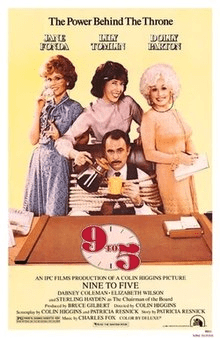
Bonus Review: 9 to 5

Even if you haven’t seen the movie, I’m sure you’ve heard the Dolly Parton song. But if you haven’t seen 9 to 5, you should. It’s a charming, hilarious movie that’s a throwback to a lot of screwball comedies from the 1930s and 1940s. The tag team of Jane Fonda, Lily Tomlin and Dolly Parton (in her first film role) play off each other so well, and has led beyond the movie to a lifelong friendship between the three.

Violet is a widow working at Consolidated Companies. She actually trained her boss, company vice president, Mr. Hart. Judy is a recently divorced woman who is now forced to work after her husband left her for his secretary. She is put under Violet for training. Doralee is Hart’s secretary, married, but Hart has spread a rumor that they are having an affair. The three women end up hanging out, griping about Hart and discussing how they would get revenge on him if given the opportunity. Violet mentions poisoning Hart’s coffee. The next day, Violet accidentally puts rat poison in Hart’s coffee, and only discovers it when Hart falls out of his chair, hits his head, and blacks out, thinking the rat poison is the cause. After several misunderstandings, the three women believe Hart is dead from poisoning and so Violet steals the dead body to avoid there being an autopsy. Later, they discover the body is not Hart and quietly return it to the hospital.

When Hart shows up to work the next day, the women are shocked. Doralee discovers the truth from all the misunderstandings and explains it to Violet and Judy in the bathroom. Hart’s assistant, Roz, hears the entire conversation and reports back to Hart. Hart gives Doralee an ultimatum: sleep with him or he’ll report the three of them for attempted murder. Doralee refuses and ends up hogtying him to his chair and stuffing a scarf in his mouth. The three women also discover that Hart has been selling the company’s inventory and pocketing the profits. However, the invoices that will prove his crimes won’t arrive for 4-6 weeks, so the women take Hart to his home and keeps him confined in his bedroom until they come in. While Hart is unavailable, the women implement favorable programs in the office including flexible hours, in-house daycare, job sharing and equal pay for men and women. Hart’s wife returns home from a trip and frees him, giving him the time to purchase back the inventory he sold. He’s about to report the women to the police when there’s a surprise visit from Consolidated’s chairman. He praises Hart for the programs at the office that has led to significant increase in productivity and offers Hart to join him in Brazil for a multi-year project, which Hart basically cannot refuse. At the end, it is revealed that he was kidnapped by Amazons and never heard from again.

50. All the President’s Men

In the summer of 1972, the United States experienced a scandal it never had before. The President had betrayed the trust of the nation that elected him and attempted to cover it up. Good thing nothing like that happens anymore. To avoid the black mark of impeachment on their career, the President resigned. Sarcasm aside, that truly doesn’t happen anymore, apparently. But I’m not here to deride the current state of our political world, I’m here to talk about the past state of our political world.

After a security guard at the Watergate complex calls the police about a break-in, the authorities arrest five men in the Democratic National Committee headquarters in the building. Bob Woodward, a reporter for The Washington Post, covers the story. They are revealed to have ties to the CIA and Woodward connects them to Charles Colson, part of Richard Nixon’s White House counsel. As the story grows, Carl Bernstein is assigned to work with Woodward on covering it. Initially, their investigation reveals no evidence, but their editor, Benjamin Bradlee, encourages them to continue. Woodward contacts an anonymous senior government official who goes by “Deep Throat”, who encourages Woodward to “follow the money” for his investigation. Woodward and Bernstein connect the five men to campaign contributions in Nixon’s Committee to Re-Elect the President, but Bradlee still believes the information is circumstantial. Why would Nixon break the law when he’s practically guaranteed to beat his opponent, George McGovern? The investigation goes deeper and deeper, connecting to H.R. Haldeman, the White House chief of staff. They look for sources to confirm the connection, but while they do so, the White House issues a non-denial denial. Woodward meets with Deep Throat again and gets confirmation for everything. They’re given the go-ahead from Bradlee and the two reporters type up their story as Nixon is inaugurated for his second term.

Alan J. Pakula directed three movies that made up what he called his “paranoia trilogy” – Klute, The Parallax View and All the President’s Men. Klute is pretty good, and The Parallax View is tolerable, but All the President’s Men is the best of the three, and the only one based on true events, making it the most terrifying. Robert Redford and Dustin Hoffman are excellent as Woodward and Bernstein, and do a good job of performing with an intensity despite being in a dense, dialogue-heavy film. I didn’t live through the time of the Watergate scandal, so I don’t know what it’s like living in a time of journalistic integrity, but thank goodness for their tenacity and thoroughness. Politicians need pressure on them so they are held accountable and kept honest. Since journalism nor the American public no longer do this, we’re stuck with the politicians we have. All the President’s Men is a time capsule and a sad reminder of when a country lost its innocence and integrity was the expectation.

Bonus Review: Mr. Smith Goes to Washington

Another film critical of government. However, where All the President’s Men was acclaimed by the politicians of its day, likely because it was hard to deny the truth, Mr. Smith goes to Washington was heavily criticized as displaying a pessimistic and villainous look at Congress. Which makes sense, since the government was never corrupt prior to Watergate. The movie accomplished two things: 1. It made James Stewart a star (look at the poster above, he’s not even top billing here) and 2. It showed a dramatic shift in tone for Frank Capra’s films. Earlier Capra films like It Happened One Night, Mr. Deeds goes to Town, and You Can’t Take It With You are known for their relentless optimism and rosy-cheeked characters. Starting with Mr. Smith goes to Washington, and most famously in It’s a Wonderful Life, the optimistic main character is still there, but they’re surrounded by corruption, greed and selfishness. It gives the movies a darker tone, but still redemptive.

Jefferson Smith is elected to the U.S. Senate because he’s naive and hopefully easy to manipulate. A fellow senator, Joseph Paine, takes Smith under his wing, as he was Smith’s father’s good friend. Smith takes a liking to Paine’s daughter, Susan. The press aggressively berates Smith as a naive country bumpkin, tarnishing his reputation. Paine suggests Smith propose a bill to repair his reputation and so he comes up with one, using the help of his streetwise secretary, that will use a federal loan to buy land for a national boys’ camp near his hometown. The idea is loved by the public and donations immediately start pouring in. However, it is revealed that the proposed campsite is already the location for an underhanded dam-building project, supported by Paine. Paine urges Smith to keep quiet because Paine’s power comes from the influence of senator Taylor, who spearheaded the dam-building project. Paine accuses Smith of trying to profit from his bill proposal to get the smoke away from his own dealings and Smith runs away, too hurt to defend himself. His secretary, Saunders, convinces him to delay the vote to expel him from the Senate through filibuster. He speaks on the Senate floor for 25 hours, disclosing the true motives of the dam project and appealing to American ideals. Taylor uses his influence to get the newspapers to report falsely on what Smith said on the floor in an attempt to get the public against him. In the end, Smith collapses on the floor, but Paine, racked with remorse, makes a confession to the truth of the dam project and demands he be expelled from the Senate instead of Smith.