11. The Godfather

Sometimes, a movie just hits the zeitgeist and it develops a whole other persona that follows the movie like a shadow. That other persona is made up of fandoms, accolades, pop culture status and often our faulty memories. The Godfather might be the ultimate example of this phenomenon. For some, The Godfather is the movie. More “it’s not just a movie, it’s a way of life”. The Godfather, and its sequel (Part II, not Part III), both won multiple awards, including some of cinema’s highest honors. The first one was #3 on the American Film Institute’s original list of 100 American-made films and #2 on the revised list a decade later. How often is The Godfather quoted? “I’m gonna make him an offer, he can’t refuse.” “Luca Brazi sleeps with the fishes.” “Leave the gun. Take the cannoli.” “It’s not personal. It’s strictly business.” T-shirts with Marlon Brando’s face on them sell at places like Spencer’s. Lookalikes and wannabes abound. A study of film ranging from 1914-2014 concluded that 98 films prior to The Godfather were made featuring Italian-American mobsters. Since The Godfather, there have over 430 such films. It was precursor to Goodfellas and what some consider the greatest television show of all time: The Sopranos. Film Bro culture obsesses over the culture to the point where it got a shout-out in last year’s hit, Barbie. There is no conceivable way to overestimate the influence this film has had on cinema and our culture.

On the day of his daughter’s wedding, Don Vito Corleone listens to requests from “friends”. Vito’s youngest son, Michael, is a war hero and has done his best to keep out of the family business, and he introduces his girlfriend, Kay, at the reception. One of the requests Vito entertains is from Johnny Fontane, Vito’s godson and a singer, asks Vito to help him get a movie role. Vito sends Tom, his Irish consigliere, to convince the studio head, Jack Woltz, to give Johnny the role. Woltz refuses, but changes his mind when he wakes up the next morning with the head of his prized horse in his bed. Later, a man called “The Turk”, whose real name is Sollozzo, asks Vito to invest in his drug business, but Vito declines for the sake of his political connections. Vito is also suspicious of Sollozzo’s ties to the Tattaglia family, so he sends Luca Brasi to gather information. However, Brasi is killed right away. Vito is shot in the street, which puts the eldest son, Sonny, in charge, and Sollozzo tries to convince him to join the business since Vito wouldn’t. Vito survives but is in the hospital, and one night, Vito’s guards are made to leave by the police captain, McCluskey, who is on Sollozzo’s payroll. But Michael shows up in time to realize his father’s life is at stake and saves him. Michael convinces Sonny to let him have a meeting with Sollozzo and McCluskey to “settle the dispute” with the intention of killing them both with a gun left for him in the bathroom. This triggers an all-out war between the Five Families of New York City, and Michael is sent to hide in Sicily and the middle son, Fredo, is sent to Vegas under the protection of casino owner, Moe Green.

Connie, Vito’s daughter who was married at the beginning of the film, is beaten by her new husband, Carlo Rizzi. Sonny learns of this and beats Rizzi and threatens to kill him if he does it again. Rizzi does it again, and Sonny rushes over to confront him, but he is ambushed and murdered on the way over. Meanwhile, Michael falls in love with a woman named Apollonia, but loses her shortly after their wedding by a car bomb intended for him. Vito, back to health mostly, sets a meeting with the Five Families and vows to not avenge Sonny’s murder or prevent their drug business if the war stops and Michael is allowed to safely come home. Michael does so and takes on the family business and marries Kay. With Vito’s guidance, Michael figures out who killed Sonny – man named Barzini – and two possible Corleone men who betrayed them – Clemenza or Tessio. Michael demotes Tom, claiming he’s not a “wartime consiglieri”, and also travels to Las Vegas to forcefully buy out Moe Green’s casinos. Vito dies, leaving Michael fully in charge. As Michael stands in as Connie’s baby’s godfather on the day of their baptism, he carries out hits on the dons of the Five Families, Moe Green and Tessio (who accidentally revealed himself as the betrayer). Michael also gets Rizzi to confess to having a hand in Sonny’s death and has him killed. Connie confronts Michael about killing her husband in front of Kay, but Michael denies it to both of them. Kay is relieved, but then watches as Michael is shown reverence as “Don Corleone” by his men, just before the door is closed in her face.

The Godfather is one of those films where you might need to watch it a couple of times just to understand what is going on, especially if you don’t have an Italian background. A lot happens in this movie, and most of it is explained in quick lines of dialogue. The names can blur together sometimes too, or at least they did for me. Francis Ford Coppola has been criticized for being indulgent in his filmmaking, but The Godfather is not one of those films. It is tightly constructed and Coppola’s own Italian ancestry informed a lot of the culture depicted onscreen, making it both authentic and natural. Some of the decisions in filmmaking are particularly fantastic, such as the montage of Michael violently tying up all loose ends juxtaposed with the baptism and christening of Connie’s baby. The gangster genre, since the 30s, has always focused on bad people – it’s just kind of the nature – but The Godfather took those gangsters and made them complex. They’re family men and have their own twisted moral code as to what they will and won’t do. That depth and almost-contradictory attitude hadn’t really been explored much until that point. The characters are still bad people, but you somehow almost want to root for them anyway,

Bonus Review: The Godfather Part II

The Godfather Part II is a rare example of a sequel that is just as good as its predecessor, if not better. It’s also a rare example – the only example, in fact – of a sequel to a Best Picture winner also winning Best Picture. Originally, Part II was viewed as any other sequel – without the impact of the original and retreading of familiar territory. And although it received its share of accolades when it came out, it’s only in recent years that the second film has been considered, along with the first, one of the greatest films of all time. The first one makes my list because it can stand on its own. Part II requires having watched Part I first. But there are some who argue Part II is superior and I can’t fault anyone who feels that way. It has the exact same energy as the first one. And while I called it a sequel earlier, it is also a prequel. While the sequel storyline continues to follow Michael Corleone as the new don, the prequel storyline features a young Vito (Marlon Brando replaced with Robert De Niro) as he moves to America and creates his empire. It juxtaposes Vito’s rise with Michael’s fall, which makes it fresh instead of just a rehash of the first one. Just don’t mention The Godfather Part III.

As I mentioned before, the film tells two storylines at the same time. Vito’s story starts when he’s a boy and he witnesses his family murdered during a funeral procession by a Sicilian mobster, Ciccio, because Vito’s father did not pay him tribute. Vito escapes to New York and grows up and gets married to Carmela, and the two have an infant son, Sonny. When Vito loses his job, his neighbor, Clemenza ropes him in to a fencing operation. The two add Tessio to their “business”, and their success attracts the attention of Don Fanucci who threatens to expose their work to police if they don’t pay him $600. Vito says he’ll take care of Fanucci, and pays him $100 only to later shoot him and take the $100 back. Vito travels back to Sicily to begin an olive oil importing business, but his partner, Don Tommasino, tells him they will have to get Ciccio’s approval first. Vito takes the opportunity of Ciccio’s age and health to avenge his family.

Now, Michael’s story is much more convoluted. At the family property at Lake Tahoe, there is an attempt on Michael’s life. He confides in Tom that he suspects a traitor within the family. He spends the rest of his time trying to blackmail powerful people into getting what he wants, like a senator he tricks into believing that he killed a prostitute to coerce him into getting a gaming license in Vegas. He also tries to set up business operations in Cuba with a Jewish mobster, Roth, who he suspects might have been the one responsible for the assassination attempt. His suspicions are confirmed and he discovers his own brother, Fredo, is the traitor when Fredo and Roth’s right-hand man, Ola, very clearly know each other. Michael orders hits on Ola and Roth, but Roth survives and everyone gets out of Cuba as quickly as they can. Michael reveals his knowledge about Fredo’s betrayal to some of his men, but tells them not to dispose of him while their mother is alive. Kay makes her intentions known that she plans to leave Michael and take their kids, but Michael keeps the kids and kicks her out. Soon, Carmela dies. At the family home, Fredo and one of Michael’s men, Neri, go out on the lake for a fishing trip, but Neri shoots Fredo and dumps him in the water instead. Michael looks on at the scene from the window and reminisces on his father’s 50th birthday. That day, Michael announced he was quitting school and joining the Marines, and Fredo was the only family member who supported his decision.

12. Blazing Saddles

What kind of comedy do you like? Unless you’re looking for something high-brow, Blazing Saddles has it. It may not be the top comedy on my Top 100, but it is without a doubt the funniest. The movie is so rapid-fire and vicious with its jokes, the viewer is likely to get whiplash, and I certainly wouldn’t recommend trying to keep track of all the gags. From racially-charged satire, to film and genre parody, to anachronism, to fourth-wall breaks, to blue humor, to simple toilet humor – Blazing Saddles has something for everybody. In fact, in my years of polling people, I have only come across one person who could say with a straight face that they didn’t find Blazing Saddles funny, and their epitome of humor is Gus Johnson videos on YouTube…so I’m pretty sure their opinion doesn’t count. I also know that the film has come under more scrutiny in recent years (not that it was free from it when it was released) for its offensive portrayal of stereotypes and use of the n-word. I’m not going to sit here and bemoan that comedians can’t be funny anymore or whatever, or “you could never make Blazing Saddles today” blah blah blah, but there is something to be said of nuance in regards to these offensive jokes – it’s not all black and white (a pun, I think? Kinda?) And I would argue that the people who make such claims regarding the race-related humor miss the point entirely. There’s more to it than this, but I can safely say part of the reason for the frequent use of the n-word is to make you uncomfortable and sick of hearing it, and I’m unsure how anyone could see that as anything but an absolute positive. Dang it. I bemoaned and I said I wasn’t going to. Anyway, for those who can admit something is funny even when it’s inappropriate, Blazing Saddles is the film to see.

It’s the Old West and the town of Rock Ridge is in danger of being demolished to make room for a rerouted railroad. To get the townspeople gone, Hedley Lamarr gets his flunky, Taggart, and his men to raid the town and kill their sheriff. The townspeople hold a town meeting and decide the governor should send them a new sheriff. Lamarr intercepts the idea and convinces the governor to send them Bart, a Black railroad worker who was about to be hanged, thinking a Black sheriff will so offend the people of Rock Ridge that they’ll leave on their own. The townspeople are immediately hostile to Bart upon his arrival and so Bart holds himself hostage to get away and into the sheriff’s office. With the help of the Waco Kid, an alcoholic gunfighter who had been sleeping off a hangover in a jail cell, Bart earns the town’s respect and subdues Mongo, one of Lamarr’s hired thugs, and Lili von Shtupp, a sexually-charged saloon singer. Through Mongo, Bart learns of Lamarr’s plan to take the railroad through Rock Ridge, and so Lamarr recruits an army of criminals, including motorcyclists, Nazis, KKK members and Methodists to wipe out the town. Bart devises a plan to build a replica of Rock Ridge laced with dynamite to get rid of the army. The fight between the two groups literally breaks the fourth wall and spills out into another movie set where a song-and-dance number is being rehearsed. The fight then moves to the commissary and turns into a food fight. Lamarr escapes and goes to Mann’s Chinese Theater and sits in on the premiere of Blazing Saddles. Through the movie, he sees Bart arriving at the theater. Lamarr tries to escape again, but Bart guns him down. Bart and The Waco Kid decide to catch the ending of the movie, which is Bart saying goodbye to Rock Ridge and riding off with the Waco Kid, in a limousine, into the sunset.

Blazing Saddles has to be one of the few instances where a comedy is just as funny in production as in the viewing. So many anecdotes associated with this movie are off-the-wall hilarious. First, there’s the casting. Richard Pryor (who was working with Mel Brooks on the script) was the original choice for Bart, but was uninsurable. Probably for the best since Pryor, while hilarious, tends to overact. Brooks’ original pick for the Waco Kid was John Wayne! But Wayne declined because it didn’t fit in his family-friendly image. The role was given to Gig Young, who was fired after his first scene because he was too drunk to get it right. Honestly, dodged a bullet there. Hedy Lamarr – sorry, that’s “Hedley” – was originally supposed to Johnny Carson, but Harvey Korman is hands down the better pick. What a different movie this would have been if the original casting choices went through. Mel Brooks made sure he had final cut on the production before he took it on, and thank goodness he did, otherwise, the studio would have cut it to shreds or just not release it. Brooks put himself in a position to ignore all suggestions made by executives across filming. Brooks was looking for a “Frankie Laine-type” to sing the theme song, and got the actual Frankie Laine to do it. If you hear the song, you know just how much passion Laine gives…probably because he was not informed the film was a parody. I imagine if he had heard all the random whip-cracking throughout the song, he would have picked up on it.

It’s that parody that gives the movie its heart, though. Parody is the sincerest form of flattery. You have to love something deeply to successfully parody it, otherwise, you just come off as mean. And there’s parody galore in Blazing Saddles. There’s the opening theme song. There’s Madeline Kahn’s impression of Marlene Dietrich in Destry Rides Again. There’s the name-dropping of Randolph Scott and Cecil B. DeMille. There’s the casting of Mel Brooks as a Jewish Indian chief (check out Chief Scar in The Searchers). There’s the character of Gabby Johnson (a reference to Gabby Hayes, who appeared in nearly 200 films, most of them westerns). There’s the opening shot of the film mirroring the final shot of Once Upon a Time in the West. And there’s the campfire flatulence scene. Honestly, there is so much attention to detail in this movie, it’s a shame that people – even those who enjoy it – can see it as less of a movie for being a comedy. Blazing Saddles is more than a lot of other movies can claim to be. Blazing Saddles is infinite possibilities.

Bonus Review: Young Frankenstein

1974 was the year for Brooks and Wilder. While working on Blazing Saddles, Gene Wilder came up with a story idea about a young Frankenstein who hates his grandfather’s work and legacy. He presented it to Brooks, who thought it was hilarious, and used his affinity for the old monster movies to springboard another parody into existence. Young Frankenstein was filmed and released that same year. Just like Blazing Saddles parodies the Western genre, Young Frankenstein parodies the Universal Monster movies of the 30s and 40s, focusing particularly on the different remakes and sequels to the original Frankenstein. Like with Blazing Saddles, Young Frankenstein pays attention to the details for its parody, whether it’s by parodying specific scenes (the girl at the well scene or the hermit scene with a Gene Hackman cameo), or getting the aesthetic just right by filming in black-and-white and using old school film transitions like swipes, fade outs and irises. Many of the gags in the film have gone beyond the film itself, such as Igor’s forever-changing hump placement (“What hump?”) and the “walk this way” joke (Aerosmith even wrote a hit song after watching it), but the single-greatest bit in the movie is when Dr. Frankenstein displays the monster’s cognitive abilities for a crowd with a duo performance of “Puttin’ on the Ritz” with matching canes, top hats and coats with tails. Originally, Mel Brooks thought it was too goofy a scene to keep in the final film (if you can believe that), but Gene Wilder fought hard for it, and won. Thankfully.

Dr. Frederick Frankenstein (pronounced “Fronk-in-steen”) is a professor at a medical school giving a lecture. He flies into a fury whenever his grandfather, Dr. Victor Frankenstein, is brought up. However, a man from Transylvania comes to America to see him and inform him he has inherited his grandfather’s estate. Frankenstein bids his girlfriend, Elizabeth, goodbye and somehow takes a train from America to Europe. At the Transylvania station, Frankenstein is met by Igor (“Eye-gor”), who is to be his assistant, as well as Inga, another assistant. They travel to the estate and are met by the housekeeper, Frau Blücher (“Neigh!”). At night, the playing of a violin wakes everyone up and they follow the sound through a secret passageway and into the laboratory. After reading his grandfather’s journals, Frankenstein believes reanimating the dead is possible and decides to continue his grandfather’s work. Frankenstein and Igor steal a corpse from the cemetery, and Frankenstein has Igor steal the donated brain of a great scientist named Hans Delbrück. Frankenstein puts the brain Igor gives him into the corpse and brings the monster to life during an electrical storm, but when the creature is spooked by fire, he goes into a rage and has to be sedated in order to not choke Frankenstein to death. Only then does Frankenstein find out that Igor dropped and ruined the brain of Hans Delbrück and replaced it with one labeled “Abnormal”.

The townspeople grow restless at the thought of a Frankenstein in town, so Police Inspector Kemp visits him to get his assurance that he will not create another monster. After he leaves, Frankenstein goes back down to the lab and sees Frau Blücher setting the monster free. The monster escapes the castle and runs across a little girl and a blind hermit. Frankenstein gets the monster back to the castle with violin music and promises to train him to function in society. They put on an exhibition for the town so they can witness for themselves that the creature is not a killing machine, but during a performance of “Puttin’ on the Ritz”, a stage light explodes, scaring the monster and making the townspeople run away. The police capture the monster, but he escapes and kidnaps Elizabeth who has shown up for a surprise visit. Frankenstein again lures the monster home with music and transfers some of his brain power to the monster before a mob of villagers can get to him. And that’s where I’m gonna end it.

13. The Silence of the Lambs

The Silence of the Lambs did a bad, bad thing. It ignited a love affair between American audiences and serial killers. Before this film, serial killers were a slasher exclusive like Michael Myers, Leatherface, and Jason Voorhees – masked or disfigured monsters who killed without purpose. But The Silence of the Lambs introduced two new types of serial killers – the genteel and soft-spoken Dr. Hannibal Lecter and Jame Gumb, or “Buffalo Bill”, who Jonathan Demme (the film’s director) is quoted as labeling “a tormented man who hated himself and wished he was a woman because that would have made him as far away from himself as he possibly could be.” Maybe some of those other slashers felt the same way, but in The Silence of the Lambs, we are given that look into the man behind the monster, so to speak, that these other movies just don’t give us. They aren’t intended to.

Clarice Starling is a young FBI agent that gets involved with a string of murders by being asked to interview known cannibal, Dr. Hannibal Lecter, to get a profile on the alleged culprit, Buffalo Bill, a serial killer that only attacks women and takes some of their skin before disposing of the bodies. At first, Lester rejects her questions, knowing Starling’s superior’s true motive, but when another inmate at the Baltimore State Hospital for the Criminally Insane flings his bodily fluids at Starling, Lester changes his mind, gives her a clue, and somehow convinces the other inmate to swallow their tongue overnight. Lecter agrees to profile Buffalo Bill in exchange for a transfer to another hospital because he hates the administrator at this one. Starling’s supervisor tells her to go along with the idea, but it’s a fake deal. However, when a senator’s daughter is Buffalo Bill’s next victim, she uses her power to get Lecter out to Tennessee where he gives her an accurate description of Bill, but calls him “Louis Friend”, which is another code for Starling to decipher. Starling visits Lecter in Tennessee and he confirms her deduction of the clue and also returns the case files with his notes. Later that evening, Lecter escapes his containment by cutting the face off one of his guards to use as a mask. Starling follows Lecter’s notes to Bill’s first victim, whom he apparently knew. She realizes Bill is Jame Gumb and tells her superior who leads a team to his listed address. However, the house is empty. But Starling follows the notes to a different address and realizes the man who answers is Buffalo Bill. She tries to arrest him, but Bill shuts the power off in the house and uses night-vision goggles to stalk Starling. She’s completely blind in the dark, but hears Bill cock a pistol and successfully shoots him first. She also finds the still-alive senator’s daughter.

This Oscar-winning film keeps you on the edge of your seat throughout and only heightens its intensity in its climax. When the lights go out, you will be clenching cheeks without question. Anthony Hopkins as Hannibal Lecter is a force of nature. He’s the most recognizable and influential part of the movie, and he’s only onscreen for 16 minutes. This has to be in part due to the contradictory nature of the character, inspired by the “criminal doctor”, Alfredo Ballí Treviño. Buffalo Bill also uses some real-life inspiration. Both Gumb in this movie and Norman Bates in my previously-reviewed Psycho take a lot of inspiration from real-life serial killer, Ed Guinn, as well as a few other similar killers, all of whom were known to use the skins of their victims to make body suits or furniture. It’s horribly grotesque and disturbing, but that’s partially what makes it so fascinating. And in recent years, the obsession with true crime stories has skyrocketed to new heights. Just check your local bookstore or the popular content of a streaming service. We’re fascinated with the macabre, especially when it’s real. That true-life comparison and its proximity serve to inflame our fear, making The Silence of the Lambs truly terrifying.

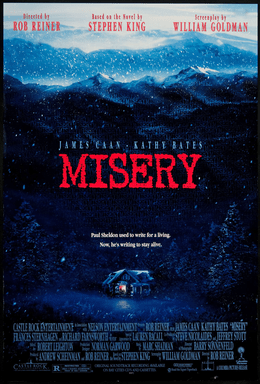
Bonus Review: Misery

From the director of This is Spinal Tap, Stand By Me, The Princess Bride, and When Harry Met Sally… and the screenwriter behind Butch Cassidy and the Sundance Kid, Marathon Man, All the President’s Men, and The Princess Bride, comes a movie unlike of those others: Misery. This adaptation of the Stephen King novel is considered one of the best, even from the author himself (he famously despised Stanley Kubrick’s The Shining). The movie also introduced the world to Kathy Bates (she had been in films for nearly 20 years prior, but always in small bit roles; after Misery, she was a household name). The premise is simple: an author is rescued by his number-one fan and is kept at their house and forced to write a novel he doesn’t want to. Kathy Bates’ Annie Wilkes is simultaneously a personification of drug and alcohol dependency and fandom’s ability to pigeonhole creatives. Again, simple, but powerful and personal – not just to King, but probably to everyone involved in the film adaptation too, since Bates was not a star and Reiner and Goldman were not associated with the horror genre up to that point.

Paul Sheldon is a famous author who has spent most of his career on a series of romance novels following a character named Misery Chastain. He hopes to break away from the Misery series by killing her character in one final novel. After he finishes the manuscript in a secluded Colorado cabin, he begins to drive home. However, a blizzard knocks him off the road and he falls unconscious. When he awakes, he is in a bed with two broken legs and a dislocated shoulder. Annie Wilkes comes into his room and explains that she found him and is nursing him back to health until the roads and telephone lines reopen. She also just happens to be his number-one fan. Annie displays odd behavior throughout their conversations, but it comes to a head when Paul lets her read his manuscript and she learns of Misery’s fate. She unleashes a verbal fury on him and admits that no one knows he’s at her house. Annie makes him burn the manuscript and begin writing a new Misery novel with a better ending. After finding a bobby pin, Paul is able to sneak out of his room when Annie’s not around. He finds a scrapbook of newspaper clippings that indicate Annie was put on trial for the deaths of several infants at the hospital where she worked. She was acquitted for lack of sufficient evidence, but Paul reads where she quoted Misery during her trial. Annie notices a figurine out of place from Paul’s wondering, and to prevent him from sneaking out again, breaks his ankles with a sledgehammer. The local sheriff comes snooping around as he investigates Paul’s disappearance, but Annie kills him. She will let Paul finish the new novel and then she plans to kill them both. During a brief stint in the basement, Paul hides lighter fluid on his person and then uses it to burn the finished manuscript in front of Annie before she can read it. They fight, but Paul is able to kill her using a metal doorstop. Some time later, Paul enters a restaurant to meet his agent. A waitress comes by, recognizes Paul, and claims to be his number-one fan.

14. To Kill a Mockingbird

The #1 courtroom drama has surprisingly little courtroom drama in it. To Kill a Mockingbird is really about a young girl named Scout, who watches the world around her take shape. She witnesses the horrors of the unknown, the evils of mankind, and what kindness can do through the wisdom and example of her widower father, Atticus Finch. The courtroom scene in this film lasts roughly 35 minutes – 35 minutes of a 129 minute movie; barely a quarter of the runtime – but it’s the most iconic part of the film. It’s what everyone remembers when they talk about it. That 35 minutes is perhaps why To Kill a Mockingbird is so famous. The weight of life in southern Alabama before the Civil Rights Movement comes crashing down when the all-white jury convicts Tom Robinson despite sufficient evidence that he could not have committed the crime. It’s a turning point for Scout. She is innocent to the point of ignorance in the first half of the movie, but after the trial, she understands more of how cruel and unfair people can be and why it’s a sin to kill a mockingbird. It’s a turning point for the audience as well. No longer are we just focused on Scout or the relationship she has with her brother or dad. Now, we see the bigger picture, perhaps even better than Scout does. And it’s absolutely tragic.

Scout and her brother, Jem, live in Maycomb, Alabama with their father, Atticus Finch, and their African-American housekeeper, Calpurnia. Scout and Jem spend the summer playing with their friend, Dill, and contemplating the mysteries of a neighbor, Boo Radley, who is never seen coming out of the house, but leaves things for the children inside a tree knothole, including dolls carved out of soap that look like Jem and Scout. Atticus, a lawyer who accepts payment for his representation in trade for those who otherwise can’t afford it, is asked by the local judge to represent Tom Robinson, a Black man accused of raping Mayella Ewell, a White woman and daughter of town White trash, Bob Ewell. Because he agrees to rep Tom, Scout and Jem receive persecution at school. Atticus goes out the night before the trial and Jem, Scout and Dill quietly follow him to the jailhouse. Atticus sits outside it to protect Tom from a lynch mob, and the mob disperses when the kids show up and Scout talks to one of the mob about his son who is in her class.

The trial begins. Scout, Jem and Dill show up but aren’t allowed in, so they sit with the other Black people in the balcony. Over the course of the trial, Atticus proves not only that Tom couldn’t have been the one to beat Mayella (who was beat on her right side) because of an injury that leaves his left arm unusable, but that it’s more likely that her own father, Bob, who is left-handed, did it. However, during Tom’s testimony, he admits to helping Mayella with things around the house because he felt sorry for her, which turns the all-White jury against him. So, despite the clear-cut evidence, Tom is found guilty. Atticus assures Tom that they will appeal, but when he gets home, he learns that Tom was killed on his transfer to prison for trying to escape. Atticus goes to Tom’s house to notify his family, and while there, Bob shows up and spits in Atticus’ face. The school year begins, and along with it, a school pageant. Scout plays the ham, but after the show, she can’t find her other clothes and so must travel home with Jem in a full ham costume. While cutting through the woods, the two are attacked, but Scout can’t tell by who. She sees Jem unconscious and being carried off by someone, so she follows. Scout returns home and together, with her father and the sheriff, figure out what happened: Bob Ewell attacked the children, but Boo Radley saved them by killing Bob and carrying Jem home. To avoid giving Boo unwanted attention within the town, the sheriff and Atticus agree that Bob Ewell fell on his knife.

To Kill a Mockingbird is faithful to its source novel, more so than a lot of adaptations are. It’s one of the few instances of a film coming close in comparison with the appeal of its source. What I think most people appreciate about it is that the nuances in the book are not neglected, thus keeping the characters well-rounded. It’s clear the Finch’s aren’t rich and Atticus more often than not doesn’t get paid for his work with money. It’s clear that the Ewells and a lot of Maycomb are victims of poverty and ignorance rather than painting them as pure evil (Bob comes close, but that’s the case in the novel too). Boo Radley and Tom Robinson are still both possible references to the titular mockingbird. It’s one of the most powerful and touching films ever made, and I pray we reverse course on removing the movie and the book from school curriculums. It’s a rare instance of fiction teaching our history greater than nonfiction, because it also teaches our humanity. To stamp this story out would be a sin, like killing a mockingbird that just wants to sing.

Bonus Review: My Cousin Vinny

Here’s some more lighthearted fare for you. My Cousin Vinny is more of a courtroom drama than To Kill a Mockingbird based solely on the amount of time spent in a courtroom. Obviously, Vinny is no match for Mockingbird in the drama department, but it has not been since 1936’s Disorder in the Court (it’s a Three Stooges short) that there was such a funny courtroom film. And even since then, there’s only been a couple of comedic courtroom movies: Liar Liar, Legally Blonde and Intolerable Cruelty. What makes My Cousin Vinny so good is its setup. Screenwriter Dale Launer came up with the film’s premise after learning a lawyer acquaintance of his finally passed the bar after his 13th attempt and decided to put someone in a situation where they’d need such a lawyer. If my understanding is correct, a lot of this movie wrote itself.

Two college students on a road trip, Bill Gambini and Stan Rothenstein, stop for snacks at a convenience store in Alabama. Bill realizes he had accidentally not paid for a can of tuna just before they are pulled over. They are arrested and brought and only after some confusing testimony do they learn they’re suspected of murdering the store manager. Unable to afford a personal lawyer, Bill calls his cousin, Vinny, a personal injury lawyer in New York, for help. Vinny agrees and makes his way to Alabama with his fiancée, Mona Lisa Vito, but what he does not reveal is that he only just passed the bar after multiple attempts and has yet to witness a trial. Vinny’s inexperience gets him into trouble in the courtroom. For multiple reasons, from his lack of decorum in the courtroom to the way he is dressed, Vinny is held in contempt on several occasions. He even fails to cross-examine the witnesses presented by the prosecution during the preliminary hearing, causing Stan to choose a public defender instead.

Vinny also shuts Lisa out when she offers to help, but she is the one who discovers Vinny is allowed to see the prosecutions files and interview their witnesses. During the trial, the public defender is a stuttering failure, but Vinny quickly pokes holes in every witness’s testimony, making Stan rehire him. The prosecution calls a surprise witness, an FBI analyst who specializes in tire markings. Vinny requests a full day’s continuance to adequately prepare for the witness, but only gets a lunch break. Stressed beyond belief, Vinny lashes out at Lisa when she tries to show him some of the photos she has taken during their trip. However, after she leaves in a huff, Vinny discovers the key to winning the case is in those photos. He gets a reluctant Lisa on the stand to prove that the tire marks at the scene do not much those on Bill and Stan’s car with her encyclopedic knowledge of automobiles and gets the prosecution to drop all charges.

When it comes to a movie like this, you look at it and think, “Why does this have so much lasting power?” Well, for one, Marisa Tomei. Her performance as Mona Lisa, especially during her time on the witness stand, is immaculate. But beyond that, there’s a lot of truth to the film’s contents. I talked about this some in my review of Anatomy of a Murder, but likewise, My Cousin Vinny is a surprisingly accurate representation of courtroom proceedings, and is therefore taught in some law schools across the country. Not only that, but it has been cited by U.S. federal judges Richard Posner, Joseph F. Anderson, Merrick Garland, and Supreme Court Justice Antonin Scalia in essays and decisions. It also inadvertently predicted the Supreme Court decision Kumho Tire Co. v. Carmichael. It’s a pretty impressive rap sheet for a movie, a comedy especially, and that’s what gives it lasting power.

15. Rear Window

Rear Window is the entirety of Hitchcock’s whole career in microcosm. It’s got the suspense and terror. It’s got morally-shaky characters. It’s got the voyeurism. It’s got the sex. It withholds information from its audience. It’s not just a nearly-perfect film, it’s a perfect Hitchcockian film. The fact that it’s so tightly contained – nothing in the film leaves the apartments facing the courtyard – means the excitement of the movie comes from what is not seen just as much as the seen. When characters are offscreen, the audience is left to wonder where they are. And even when they are onscreen, if they’re not visible from a window, it’s still suspicious.

Jeff is stuck inside his apartment with a broken leg. All the professional photographer can do to pass the time is roll around in his wheelchair and use the lens on his camera to spy on his neighbors, including Lars Thorwald, a traveling salesman with a bedridden wife. Jeff is cared for by a nurse named Stella and his girlfriend, Lisa. In the middle of the night, Jeff hears a woman scream and glass shatter. The next morning, Jeff notices Thorwald’s wife is gone and sees him cleaning a knife and handsaw, as well as prepping a large trunk to be taken by some movers. Jeff is convinced that Thorwald has killed his wife and tells Lisa and Stella. He also alerts his friend, Tom, who is a detective with the police, but Tom investigates and finds nothing suspicious about Thorwald. Later, a dog is found dead in the courtyard and its owner screams from the window, alerting everyone in the apartments to come to their windows…everyone, that is, except Thorwald. Jeff calls Thorwald to get him out of the apartment, and Lisa climbs in through his window to investigate. Thorwald returns and catches Lisa, but when the police question her, she signals to Jeff that she has Thorwald’s wife’s wedding ring. Thorwald sees this and is now aware that Jeff is watching him. Jeff calls Tom but Tom doesn’t answer. Stella goes to bail Lisa out of jail, leaving Jeff alone in his apartment. Thorwald finds him and attacks. Tom arrives just in time to grab Thorwald, but Jeff falls from his window, breaking his other leg.

The relationship between Jeff (James Stewart) and Lisa (Grace Kelly) receives a lot of criticism for the age gap between them. Stewart was 46 at the time of filming and looked even older because of his time in World War II, and Kelly was 25 and was the definition of youthful beauty. I don’t believe the relationship is supposed to sit right with the audience. In fact, Rear Window spends ample attention on the incompatibility of their relationship. And besides that, to hear Hitchcock himself tell it, the audience is supposed to see Jeff as a “good” guy by the end of it. He’s a voyeur and a menace and self-absorbed, but because Jimmy Stewart is in the role, we excuse a lot more than maybe we should. But then again, no one could manipulate an audience quite like Hitchcock.

Bonus Review: Psycho

Many would argue that Psycho is actually Hitchcock’s best film, and it’s hard to disagree. I do, but it’s still difficult. Psycho could just as easily be #15 as Rear Window. It’s just impossible to condense a thousand movies into a Top 100, and so the fat had to be trimmed somewhere. And here is where I did some cutting. I will argue that Psycho is perhaps more influential than Rear Window – I mean, how many times has that score alone been referenced elsewhere? What about the entirety of the famous shower scene? – but as I explained in my opening paragraph above, Rear Window is actually a good retrospective of Hitchcock’s entire career up to that point. Psycho is a fantastic film, but it’s certainly an outlier to the majority of his movies.

Look, if at this point you still haven’t seen Psycho, then just what are you doing with yourself? This is a movie that just about everyone knows or at least should know, and so perhaps there’s nothing wrong with me spoiling the plot or twists in the film at this juncture, but I will not do it. Hitchcock ran a marketing campaign where the movie had a warning at the end to not reveal what happens to anyone who hasn’t seen the movie and made movie theaters close off access to viewing the movie after a screening had started. So, to follow in his footsteps, and keeping to his passion for secrecy, I will not share a synopsis or any further information. Watch the movie for yourself or read a synopsis on Wikipedia or something. Just know that you have to watch this movie before you die, and it truly is better to go in as blind as possible.

16. True Grit

This is for the 2010 remake of True Grit, by the way. I have to specify the year because I imagine some of you would erroneously believe that the original 1969 film would be the one getting reviewed. If you can handle Glen Campbell and Kim Darby’s acting, more power to you, but for me, the 2010 Coen Brothers version is infinitely superior. Even if you believe that John Wayne is Rooster Cogburn (everyone’s entitled to their opinion, even dumb ones), you can’t deny that Jeff Bridges is the better actor. The Coen Brothers version leans into the quirkiness of the original novel by Charles Portis, and toes the line between humor and action, while keeping the intensity and theme of fruitless revenge intact. It’s full of unusual characters that make small appearances and give the movie plenty of color and character. Portis and Coen is a perfect fit, if ever there was one.

If you don’t know the story, Mattie Ross (Hailee Steinfeld) is a strong-willed girl who doesn’t have the time or patience to leave justice against the man who killed her father to anyone else. She handles the business of returning her father’s body home, and then pursues Tom Chaney (Josh Brolin) herself, and seeks the assistance of Marshal Rooster Cogburn (Jeff Bridges) to help bring him down. Cogburn is a drunken shell of the man he once was and so doesn’t appear to be much help, but he makes the attempt anyway, finding Mattie to be persuasive and perhaps intriguing in her headstrong ways, and they add Texas Ranger LeBoeuf (Matt Damon) to the mix since he’s wanting to take Chaney back to Texas to stand trial there. At every turn, every person including Cogburn and LeBoeuf tell Mattie that this is no venture for a young girl, but she’s determined. They meet outlaws and trappers out in the wild, as they conduct their search. Once they find Tom Chaney with the Ned Pepper gang, Mattie and Cogburn both get the chance to prove their mettle. Cogburn deals with the Ned Pepper gang and Mattie deals with a rattlesnake.

The last twenty-to-thirty minutes of True Grit are some of the most powerful scenes to ever grace the screen. The shootout with Pepper’s gang, Mattie’s snakebite, and Rooster’s relentless drive to get Mattie to a doctor conveys a rollercoaster of emotion throughout. And even when the smoke clears, you wonder if you’re about to go for round two at any given moment. I love practically everything the Coen brothers do, but I particularly love their work with the Western and its adjacent genres. The eye for the look of the West and their ear for dialogue make them some of the best fit for the revival of the genre. Beyond those things, what sets True Grit apart is the score which is mostly comprised of hymns reworked with simple piano and strings, specifically the ironically used “Leaning on the Everlasting Arms” and “Hold to God’s Unchanging Hand”. It’s understated, but powerful, particularly during that desperate ride to find a doctor. There’s no other way to describe it: what a movie.

Bonus Review: Unforgiven

Here’s another Western that I wish I had room for in my Top 25 Westerns list, but it just barely missed the cut. Unforgiven is a lot of things. It’s a last hurrah into the genre that made Clint Eastwood famous. It’s one of only three Westerns to win the Academy Award for Best Picture. It’s an anti-violence movie that portrays gun violence and death in the most inglorious way possible. It’s the blending of classic Westerns and the revisionist Western and spends significant time deconstructing the tropes of the Western genre as a whole without completely voiding them. It’s quite a tightrope act, but Eastwood, on and behind the camera, makes it look effortless. He also throws in several references to some of his other Westerns, particularly Pale Rider and High Plains Drifter. Eastwood bought the rights for the film in the 70s and sat on it for nearly twenty years just so he could make it at the perfect time.

In a town in Wyoming, a cowboy cuts up a prostitute’s face. The local sheriff, “Little Bill” Daggett, forces the cowboy and his partner to give some of their horses to the brothel owner for his loss of revenue on the woman as punishment. Enraged at the events, the prostitutes pull their money together and offer a $1000 bounty on the cowboys. Will Munny struggles to keep his farm afloat in Kansas. A widower with two children, Will is a former outlaw and ruthless killer, now ashamed of his past and hoping to stay quiet on his farm. A bounty hunter called the Schofield Kid approaches him about helping him with the $1000 bounty. To save his farm, Will reluctantly agrees and recruits his old friend, Ned Logan, to help. The three of them arrive in town during a rainstorm and Kid and Ned go speak with the prostitutes while Will drinks in the saloon, nursing a fever. Little Bill doesn’t realize who Will is but guesses he’s in town for the bounty, and so he enforces a strict no-gun policy in town to deprive Will of his gun and beat him. Ned and Kid take Will out to a barn and nurse him back to health. Once he’s better, the three of them ambush one of the cowboys and Will shoots him when Ned fails to do so, prompting Ned to return home. Will and Kid find the other cowboy and kill him, but Kid shows great remorse and reveals he had never killed anyone before. When the prostitutes deliver the money, they reveal that Ned was captured on his way home and flogged to death by Little Bill in an attempt to get their location. Hearing this, Will takes the Kid’s gun, tells him to go back to Kansas with the money, and marches back into town. Ned’s body is displayed in a coffin just outside the saloon. Will walks into the saloon and kills several of the men inside, including Little Bill. Afterwards, he leaves town and supposedly takes his kids somewhere far away. They are never seen again.

17. Jurassic Park

I don’t know of very many instances where the movie rights for a book were sold for over a million dollars before it’s even written, but when your concept is one of those once-in-a-lifetime ideas – like scientifically reproducing extinct dinosaurs to create the ultimate zoological park – you can afford to name your price. Michael Crichton sold the rights for $1.5 million after alerting Spielberg of the idea, and he received an additional $500,000 to write the original draft of the script. It was worth every penny. Spielberg was the best man for the job because of his experience with creature features and technological advancements in film, as well as his knowledge of what the audiences want.

John Hammond has created the theme park, Jurassic Park, on Isla Nublar, but when a velociraptor kills one of its handlers, the investors for the park get nervous. To prove the safety of the park, a lawyer representing the investors, chaos theorist Ian Malcolm, paleontologist Alan Grant, and paleobotanist Ellie Sattler are invited to visit the park and give their comments. All four are in shock and awe when they see a brachiosaurus on their drive to the visitor center. At the center, they learn how the dinosaurs are bred and genetically controlled to be female only and prevent breeding. Malcolm warns Hammond that their control won’t last because “life, uh, finds a way”. Lex and Tim, Hammond’s grandchildren, arrive and go on the tour of the park with everyone else while Hammond watches them from the control room. On the tour, none of the dinosaurs appear causing Grant and the others to step out of their vehicles and go looking for them. They come across a sick triceratops and Sattler stays behind to take care of it while the others return to the cars as a storm comes in. Dennis Nedry, the computer programmer for the park, uses the storm as an opportunity to restart the computer and security systems so he can go steal embryos and send them to a competitor. When he tries to get to the dock during the storm, he gets lost and is killed by a dilophosaurus.

While the system is down, the tyrannosaurus escapes its pen and terrorizes the tour vehicles that are stalled. The tyrannosaurus eats the lawyer, injures Malcolm, but Grant, Lex and Tim are able to escape. Sattler and Robert Muldoon, the game warden, searches for survivors and find Malcolm just as the tyrannosaurus returns and chases them away. Grant, Lex and Tim survive the night in the park, and the next morning, discover hatched dinosaur eggs, proving Malcolm’s theory from earlier. Hammond and Ray Arnold, another computer programmer, decide to reboot the entire park system to get things back online. Hammond, Sattler and Muldoon hole up in a bunker while Arnold goes to reset things, but when Arnold doesn’t return, Sattler and Muldoon go out to do it. They are attacked by velociraptors and Muldoon is killed, but Sattler successfully resets things and escapes. Grant, Lex and Tim get back to the visitor center and Grant goes back out to find Sattler. The raptors attack Lex and Tim but they make it to the control room with Sattler and Grant. Lex is able to reboot the system and get the park back up and running, but the raptors pursue them. The group is eventually saved by the tyrannosaurus and they, along with Hammond, escape the island.

Anyone who knows me knows I have a deep love of film scores. It’s impossible to enjoy film scores and not have John Williams on your playlist, but on the whole, I’ve never been the biggest Williams fan. Having said that, the score for Jurassic Park is some of his best work next to Indiana Jones and deserves all the recognition it gets. The models, puppetry and computer-generated graphics to create the dinosaurs were innovative at the time of the film’s release. The computer technology was a precursor to Pixar and if it weren’t for the success of Jurassic Park, there would be no Titanic or Lord of the Rings. There would be no increased infatuation with dinosaurs or paleontology. Ross on Friends would have had some other boring career. The Toronto Raptors wouldn’t exist. It cannot be overstated the impact Jurassic Park has had on our culture. It also cemented Spielberg’s status as one of the greatest filmmakers of all time.

Bonus Review: Twister

Spielberg and Crichton created on another movie just a few years after Jurassic ParkTwister, a disaster movie following storm chasers as they follow after some incredibly destructive tornadoes. Spielberg was originally attached to direct, but instead only produced and let Jan de Bont (who had just had major success with Speed) take the wheel. The production was plagued with difficulties. The script went through several rewrites and production halted briefly after the Oklahoma City bombing occurred on April 19, 1995. De Bont was either too inexperienced or otherwise too erratic to handle the intense filming and made some of the lighting crew walk off set. A week of no work went by until another crew could come in to replace them. The changing of the scenes on location in Oklahoma caused filming to have to move to Iowa toward the end of production. However, all’s well that ends well, I guess, because the movie is an exciting thrill ride and you wouldn’t know it was a difficult process if I didn’t spoil it for you.

A young girl named Jo and her family take shelter from a tornado in their Oklahoma home. Their farm is destroyed and Jo’s father is dead before it passes. 27 years later, Jo is a meteorologist who leads a team of storm chasers. Bill, Jo’s former husband, arrives with his new fiancée, Melissa, to receive Jo’s signature on their divorce papers. Jo shows Bill a completed “Dorothy” a device Bill came up with that contains and releases hundreds of small weather sensors to get a more accurate visual of the inside of tornadoes. A forming tornado forces Jo to get to chasing, and Bill and Melissa follow since she has yet to sign the papers. Another storm chaser, Jonas, has stolen Bill’s idea and created his own “Dorothy” and intends to take full credit for the idea if it’s successful. Bill is enraged and decides to help Jo launch her “Dorothy” first. The team visits Jo’s aunt Meg for food and to rest amidst their chases and Melissa learns more about both Bill and Jo. Another tornado develops and the team chases after it, but Melissa is in a second vehicle while Jo and Bill ride together. They separate from the others following an unpredictable tornado path and unsuccessfully try to launch a “Dorothy”. After their failure, Bill confesses he still loves Jo, but Melissa overhears the confession on a communication radio. While at a drive-in theater, a surprise tornado hits and forces everyone into a garage pit to stay safe. The tornado destroys several vehicles and injures several individuals. The tornado heads toward Aunt Meg’s place, but before the team goes after it, Melissa breaks up with Bill and convinces him to reunite with Jo. The tornado destroys Meg’s house but the team rescues her. Another tornado develops and they attempt to release a “Dorothy” one last time, and this time, they’re successful.

18. Goodfellas

Martin Scorsese is no stranger to my Top 100 movies, and it honestly took great restraint to not put the majority of his filmography on this list. But where’s the fun in that? Anyway, taking up spot #18 of my top 100, and the top Scorsese film on the list is Goodfellas. Goodfellas has everything you could want from Scorsese film, mobsters, New York City, influence of French New Wave (but done better), brutal violence, tracking shots, characters you love to hate, the greed of man and the enticement of sinful lifestyle, and Italian stereotypes. Seriously, this movie has it all.

A young Henry Hill becomes enamored with the Mafia lifestyle and takes a job working for local Mafia head, Paulie Cicero. His first job is acting as a fence for Jimmy Conway and he works his way up alongside Tommy DeVito to more serious work. Henry, Jimmy and Tommy spend their free time together at the Copa (Copacabana – the hottest spot north of Havana). Henry starts dating a woman named Karen, and though she has misgivings about his criminal ways, she is enticed by the glamor, and they get married. Billy Batts, a member of the Gambino crime family harasses Tommy, inciting Tommy and Jimmy to kill him, and with Henry’s help, they bury the body. Jimmy and Henry travel to Tampa to collect a debt from a gambler, but are arrested and given a 10-year sentence. While in prison, Henry has Karen smuggle him drugs to sell, beginning a cocaine empire. Once out, Henry expands his empire with Jimmy and Tommy’s help, against Paulie’s wishes. Jimmy organizes a raid of the Lufthansa vault at JFK Airport for six million in cash and jewelry. However, their getaway car is discovered by police and some of the crew make expensive purchases, and so Jimmy has them all killed, except Henry and Tommy. Tommy is led to believe he will become a made man for the family, but at the supposed ceremony, he is ambushed and killed for the murder of Batts. Henry’s own drug habits make him paranoid and he is arrested. Karen bails him out, but flushes the rest of their product down the toilet to avoid the cops finding it. Between these two events, they are left penniless. Karen and Henry both go to Jimmy for help on separate occasions, and both rightfully assume they’re about to be killed, so they leave. They turn to being informants, getting Paulie and Jimmy arrested and going into witness protection. Henry laments how boring his life has become.

Goodfellas is not for the crowd who has to find a character to root for. This movie doesn’t have one. Tommy DeVito, in particular, is one of the worst characters in all of cinema, and Joe Pesci is perfection in the role (he received significant praise for it). Scorsese has also commented, in regard to the irredeemability of the characters, that his goal was to make the audience angry with them by the end of it. He succeeds. Goodfellas has been lauded as the “greatest mob movie of all time”, with comparisons made with The Godfather, and has been a major inspiration for television shows such as The Sopranos and Breaking Bad. It is also considered such an accurate portrayal of the mafia by actual members, including the real Henry Hill. Oh, yeah. In case I didn’t make it clear before, this wild and violent movie is based on true events.

Bonus Review: The Irishman

Another Scorsese film about the mob, based on a book, based on true events, starring Robert DeNiro and Joe Pesci. The Irishman, instead of being at the height of Scorsese’s career, is from what is expected to be near the end, and finds Scorsese in a very reflective and mortal mood. It covers fifty years in the life of Frank Sheeran aka “The Irishman” – the man who took credit for the murder of Jimmy Hoffa. Much has been said of the long runtime and the use of CGI to de-age Robert DeNiro, Al Pacino and Joe Pesci. The de-aging looks good, in my opinion, but while you can use CGI to change the look of an older person, you can’t change the walk or voice of an old person. So, there are instances where it’s just not believable but it’s still an interesting experiment for the future of film. Now, the runtime, which is 209 minutes long and Scorsese’s longest film to date, does not feel that long. It moves at a leisurely pace, but it also has a lot to cover and is a reflection on what little there is left at the end of a long life spent in sin.

The majority of the film is told through flashback as an old Frank Sheeran recounts his life while in a nursing home. In the 50s, Sheeran is a union delivery truck driver who starts selling some of his meat to a Philadelphia crime family. The delivery company accuses Sheeran of theft, but because he refuses to name who he sells the meat to, union lawyer Bill Bufalino gets the case dismissed. Bill’s cousin, Russell, recruits Frank to work for him, including “painting houses”, which is code for carrying out a hit. Frank is introduced to Jimmy Hoffa and they develop a fast friendship, Frank even becomes his bodyguard. Hoffa goes to prison for jury tampering and when he gets out, he attempts to work his way back to the top of the Teamsters by any means necessary. His cavalier ways worry Russell and the other crime family leaders and they agree he should be done away with. Frank is made the triggerman to avoid him warning Hoffa in advance. Originally, Hoffa is to have a meeting with some others at a restaurant but Frank shows up and tells him the meeting place has changed. He drives Hoffa over to an empty house, shoots him in the head and leaves while others come to take the body to be cremated. A grand jury is unable to connect Frank or the mob leaders to Hoffa’s murder, so they’re all arrested on lesser, unrelated charges. Most of them die in prison. Frank is eventually released and enters a nursing home. He is alone, his family estranged and his daughters unwilling to reconcile. He is absolved by a priest, and asks the priest to leave the door cracked open to let in the light when he leaves.

19. When Harry Met Sally…

Romantic comedies, by their very nature, are unrealistic. Not to be a downer, but perfect relationships don’t exist and the typical conflict between the couple is usually more serious than what the movies portray. However, every so often a rom-com comes along that feels authentic and genuine. Definitely, Maybe, Roman Holiday and (500) Days of Summer come to mind when I think of more realistic romances or movies that at least have a grounded take on love. But then there’s one movie that stands above the rest – one movie that feels more true to life than just about any other and has also in some way inspired every rom-com that has come after it: When Harry Met Sally…

Just as the title suggests, When Harry Met Sally… begins with Harry and Sally being introduced by their mutual friend, Amanda, and agree to carpool from Chicago to New York. Along the way, they discuss their views on relationships and Harry claims men and women can never just be friends. In New York, they part ways intending to never see each other again. However, five years later, they end up on a flight together. Sally is dating Harry’s neighbor, Joe, and Harry is engaged to a woman named Helen. Harry also disagrees with his former statement and says he and Sally should try and be friends, but Sally disagrees. Another five years pass, and Harry and Sally run into each other at a bookstore. Over coffee, they each reveal that their partners have left them. They agree to be friends and end up having late-night phone conversations, dinners together and more discussions on their respective love lives. They share a kiss at a New Year’s Eve party as their attraction grows for one another, but they intend to remain just friends and at each other up with their best friends, Jess and Marie. Over dinner, Jess and Marie fall in love with each other, leaving Harry and Sally alone again. Sally calls Harry one night in tears because her ex is now getting married. Harry comes over to comfort her and the two end up sleeping together. Harry leaves early in the morning, feeling regret for overstepping their friendship line. They stop talking for awhile and when they see each other again at Jess and Marie’s wedding, they end up arguing. At another New Year’s Eve party, Sally admits she misses Harry. Meanwhile, Harry is at home watching tv when he decides to go out. He arrives at the party just as Sally is about to leave and confesses his love for her.

For research for the screenplay, Nora Ephron interviewed couples she knew to get their love stories. She ended up putting some of these interviews into the movie in between scenes. The stories are sweet and poignant, and it beautifully culminates in the final interview with Harry and Sally just before the end credits. It’s an unusual device but a smart one because it helps keep the movie grounded. This is a dialogue-heavy film. It gives Richard Linklater’s Before movies a run for their money. But it’s a perfect fit for the two leads. Meg Ryan and Billy Crystal play off each other so well and there’s room for improvisation between both of them. The pairing of Ryan and Crystal is a bit unusual. It’s hard to see Billy Crystal as a leading man, though he does give off the Everyman vibe quite well, but he feels out of place next to the gorgeous Meg Ryan. Other than that, there is very little to complain about this movie. If you never have seen it, give When Harry Met Sally… a watch. If you have, well, maybe it’s time to revisit it.

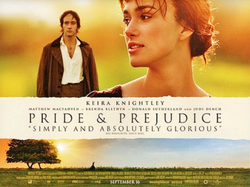
Bonus Review: Pride & Prejudice

Before anyone tries to come and strip me of all credibility here, the Colin Firth BBC adaptation is a miniseries, so it doesn’t count. Besides that, Joe Wright’s 2005 adaptation of the greatest romance ever written is an exemplary piece of filmmaking. The camera constantly moves, it’s kinetic and full of youthful energy that some of the other adaptations don’t have. This direct contrast to the other adaptations, as well as the time period the story is based in, sets this version of Pride & Prejudice apart. This also happens to be Joe Wright’s feature film debut and I can only assume he had something to prove which accounted for the surprising confidence that his work exudes. A particular scene at a ball contains a single, nearly-three-minute shot that moves and changes perspectives a total of 17 times before cutting. The amount of care and choreography that goes into filming a scene that complex is astounding to say the least. Honestly, the camera work in the film is one of the biggest highlights. The English landscape is breathed in as deeply as possible. Characters may be in the foreground of such scenes, but it’s the background that draws us into the shots. This fact makes Pride & Prejudice one of the most beautiful movies to look at.

The Bennet family (Mr. and Mrs., and daughters Jane, Elizabeth, Mary, Kitty and Lydia) live in a quaint house in rural England. Mrs. Bennet’s entire concern is securing suitable marriages for their daughters and is thrilled to learn that a wealthy young bachelor, Mr. Bingley, has moved in nearby. At a ball, Mr. Bingley, his sister, and his friend, Mr. Darcy, are introduced to society. Mr. Bingley and Jane are smitten right away, but Elizabeth and Mr. Darcy seemingly have great disdain for each other. Jane visits the Bingleys, but gets sick while there and must stay and recoup. Elizabeth comes to check on her sister and verbally spars with Miss Bingley and Mr. Darcy. When Jane is better, the sisters return home just in time to meet Mr. Bennet’s cousin, Mr. Collins – a pompous and aloof clergyman who is set to inherit the Bennet household since Mr. Bennet has no male heirs. Lieutenant Wickham also introduces himself and seemingly connects with Elizabeth and confides in her that his father died in the service of the Darcy family and Mr. Darcy denied Lieutenant Wickham his inheritance.

At the same party, Elizabeth dances with Mr. Darcy after he asks, but their time together is strained. The next day, Mr. Collins proposes to Elizabeth but she rejects him outright. Mr. Collins instead marries Elizabeth’s friend, Charlotte, and later, Elizabeth visits them and meets Mr. Collins’ benefactor, Catherine de Bourgh. She unexpectedly runs into Catherine’s nephew, Mr. Darcy. It is revealed that Mr. Darcy is the reason Jane is rejected by Mr. Bingley, but Elizabeth is taken aback when Mr. Darcy proposes marriage to her. They fight and later, Mr. Darcy delivers a letter explaining his reasoning for his actions as well as the truth about Lieutenant Wickham. Later, Elizabeth tours parts of London with her aunt and uncle, and they end up at Mr. Darcy’s estate, Pemberley. Mr. Darcy is there and invites them to dinner, which they accept. But while there, Elizabeth receives a letter saying Lydia and Wickham have run away together. To avoid ruining the Bennet family, Mr. Darcy pays for Lydia and Wickham’s wedding as well as her dowry but does not tell Elizabeth. Lydia herself lets the information slip. Later, Bingley and Darcy return to the countryside and both propose to Jane and Elizabeth respectively. Realizing Elizabeth’s true feelings for Darcy and learning of what he did to prevent their family from ruin, Mr. Bennet gives his permission for them to marry.

20. The Man Who Shot Liberty Valance

“This is the West, sir. When the legend becomes fact, print the legend.”

If you’ve read any of my blog up to this point, you know I have an unhealthy infatuation with John Ford. What can I say? He’s one of the first American directors to be considered an auteur (a filmmaker with a unique style and approach to filmmaking that is distinguishable from others), and his filmography can boast for itself: his trilogy of Will Rogers films – Doctor Bull, Judge Priest, Steamboat Round the Bend, his 1939 trifecta – Stagecoach, Young Mr. Lincoln and Drums Along the Mohawk, The Grapes of Wrath, How Green Was My Valley, Fort Apache, She Wore a Yellow Ribbon, Rio Grande, The Quiet Man, The Searchers, Sergeant Rutledge, Two Rode Together, How the West Was Won, and Donovan’s Reef, just to name a few. The man was nothing if not eclectic. There’s plenty to praise, but there’s also plenty to criticize. Whether it was because of all these successful films, his time in the military, the auteur appraisal, or whatever; the man was a tyrant by all accounts and according to those who worked on the film, The Man Who Shot Liberty Valance, there wasn’t a worse movie set to be on. Ford did not like studio interference with his work, but since he couldn’t get into fights with the studio heads, he took his anger out on his actors, John Wayne in particular. Ford was the man who made Wayne a star, and so out of loyalty, Wayne would never fight back with Ford (which probably made Ford all the more venomous). Woody Strode recounts that Ford constantly ridiculed Wayne for his failed time as a football player (Strode was a successful player in college) and avoiding active military duty during World War II (James Stewart served in WWII, and Ford himself filmed documentaries at battle sites). Wayne became bitter towards Strode and Stewart (which was probably intentional for the sake of their characters in the movie) in particular and took some of his rage out on the former. So, while apparently The Man Who Shot Liberty Valance wasn’t much fun to make, it sure is fun to watch, and on that note, we move on.

The movie begins with a senator and his wife returning to a town called Shinbone for the funeral of a friend. The senator is asked by a reporter why he would come to this small town to a funeral of a random rancher, and the senator recounts events that occurred 25 years before. Upon entering the town of Shinbone for the first time, Rance Stoddard (James Stewart) is immediately attacked by the outlaw, Liberty Valance (Lee Marvin), and his gang. Rance is discovered by Tom Doniphon (John Wayne) who carries Rance in to be treated for his wounds by his girlfriend, Hallie (Vera Miles). Rance works in Shinbone, hoping to set up a law practice, befriends the local newspaper editor, Dutton Peabody, and decides to build and teach a school when he discovers Hallie and a good portion of the town are illiterate. Meanwhile, Valance’s tirades on Shinbone and the surrounding area are getting worse, and Rance decides he better learn to use a gun. Tom attempts to teach him, but soon their time together turns into a competition for Hallie’s affections. Valance challenges Rance to a gunfight after Rance defeats Valance in being elected as a delegate to the upcoming statehood convention. When the newspaper reports that Valance has killed a local farmer, Valance and his gang beat Peabody and burn the newspaper office. When Rance finally confronts Valance, Valance quickly disarms him and aims to kill. Rance reaches for his gun and fires and Valance goes down. Unbeknownst to everyone else, Tom is standing in the bushes with a rifle, and he later reveals to Rance that he was actually the one to kill Valance. But he also tells Rance to take responsibility for the shooting and give Hallie the life she deserves. Back in the present, the newspaper reporter burns his notes from Rance’s story, deciding the truth would ruin Rance’s legacy.

This is the first time John Wayne and James Stewart ever worked together on a film project – thirty-ish years after both actors became huge stars. By this point, both men were in their 50s and honestly too old for the roles they took on (their costar and the desire of both of their affections, Vera Miles, was roughly twenty years their junior). They only appeared in two other films together, How the West Was Won and The Shootist (James Stewart had already retired from acting by the time The Shootist was being made, and he only came back as a favor to John Wayne, for whom The Shootist would be his last movie before dying of stomach cancer). Meanwhile, Lee Marvin was still an up-and-comer at this time, but at least had the fame to get looked at for the part of Liberty Valance. This was only his second film made after he starred on the television show, M Squad, for four years. It’s very rare that a film can have so many heavy-hitters in it, and it still be mostly remembered for its plot and not just who is in it. Such is the legend of The Man Who Shot Liberty Valance.

Bonus Review: The Searchers

More acclaimed than The Man Who Shot Liberty Valance, The Searchers is one of the best John Ford – John Wayne collaborations. Quite frankly, Ethan Edwards is the best acting of John Wayne’s prolific career. This isn’t to say there aren’t better movies with John Wayne in them, but Wayne is so perfect as the cynical, racist uncle to Natalie Wood’s Debbie, that no other performance comes close. When Debbie is kidnapped by Comanche, Ethan leads a small group to look for her and bring her home, or kill her if she’s been “tainted”. The most harrowing scene in the film comes when Ethan attempts to do just that after five long years of searching. Once he returns Debbie home, we watch through the doorway as Ethan Edwards walks out into the sunset. Not as a hero, reveling in his success, but as a bitter man refusing to accept that the world is changing without him. Much can be said of Ford’s attempts at dark undertones in the film. There’s Ethan’s blatant racism, and mistreatment of Native Americans in general, but also there’s at least a hint that Debbie is actually Ethan’s daughter, having cuckolded his own brother. Yeesh.

Ethan Edwards returns to West Texas after eight long years. He visits his brother, Aaron, and his wife, Martha, and their children, Ben, Lucy and Debbie. Aaron’s neighbor freaks out because his cattle are stolen, so Captain Clayton leads Ethan and a troop of Texas Rangers to get them back. The men learn that the theft was the Comanche’s plot to get the men away from their families and rush back home, but it’s too late. Aaron’s house is in flames, Aaron, Martha and Ben are dead, and Lucy and Debbie are missing. The same group goes hunting the Comanches but have little luck, so most turn back. Only Ethan, Martin – Aaron’s adopted son – and Brad, Lucy’s fiancée, keep hunting. They find Lucy’s body in a canyon and, in a rage, Brad rides into the Comanche camp and is quickly killed. Ethan and Martin lose the trail when winter comes and return home. They are welcomed in by Aaron’s neighbor, and Ethan learns a man named Futterman has info on Debbie’s whereabouts. He leaves alone, but Martin catches up, and they learn Debbie has been taken by a ruthless Comanche named Scar. Eventually, they find Debbie, now thirteen, as one of Scar’s wives and she refuses to come home. Ethan tries to shoot her, preferring her dead to being an Indian, but Martin shields her with his body. They return home without Debbie before the Comanches get to them. They try again to locate Debbie by attacking Scar’s camp. Martin rescues Debbie and kills Scar. Ethan comes up behind him and scalps Scar. They all return home, Debbie welcomed once again, but Ethan stands in the doorway and walks away.