Oppenheimer

“Prometheus stole fire from the gods and gave it to man. For this he was chained to a rock and tortured for eternity.” This quote, surrounded by the flames produced by an atomic bomb, begin a three-hour analysis of the complicated scientist, J. Robert Oppenheimer. The movie, inspired by the biography on Oppenheimer, American Prometheus, will never let you forget that comparison. Thankfully, it’s the only clue the film presents on where its opinion of its subject lies.

Instead of taking a stance on the long-running debate over whether Oppenheimer was a good or bad person, the film smartly keeps its namesake at an arm’s length. Christopher Nolan does this with most of his movies, with varying degrees of success, but with this one, it works. Film, like any art form, can show skill, produce emotion, and change perception, and you can see it within the work and style of any auteur. Nolan, however, sees himself less as an artist, and more as a scientist. In this regard, Nolan’s films are more like textbooks. They are a cold and distant presentation of facts, events and theories. Sure, there is art there, but it comes in the form of figures and illustrations of those theories. You can see this in the slight-of-camera work in The Prestige, or the three-tiered dreaming climax of Inception, or how The Protagonist is just as confused about the plot of Tenet as the audience is. In Oppenheimer, images of light, stars, blackholes, and apocalyptic pillars of fire engulf the screen, showcasing their vastness by covering every inch of the IMAX filmstock on which it was produced. See Figure 1.

Speaking of which, Oppenheimer is the first film ever to require black and white IMAX filmstock, which brings me back to the movie itself. From the beginning, we are presented with two timelines, Fission and Fusion. For those, like myself, who need a refresher on high school science, Fission splits a larger atom into smaller pieces to create energy. Fusion joins smaller atoms into a larger one to create even more energy. The Fission timeline is in color, following Oppenheimer’s rise to prominence, while the Fusion timeline is the breakdown of his power and influence, and is in black and white. A contradiction to add to the list. Oppenheimer: the man who can both agree and disagree with his country, bringer of fire and destroyer of worlds, punished by the gods and a god, himself.

Running these two timelines simultaneously, we know from the start that not all ends well for Oppie (as he is referred to by his colleagues) – perhaps a pro to covering a historical figure with whom so much is already written about – and with that information out of the way, Nolan is free to explore that contradictory nature. And in here lies what makes the film great. The moment the bomb drops, and you think, “this is what it was all leading up to”, you realize you still have an hour left of this movie, and there are still many twists and turns in the road ahead.

The cinematography is gorgeous. Again, “vast” is the word. Los Alamos is a beautiful desert setting surrounded by mountains as far as the eye can see. The colors are vibrant. After the bomb is dropped, and Oppenheimer realizes the gravity of what he’s created, the background behind him shakes violently. A bomb is going off in his mind. A vision of the crowd of scientists applauding his leadership and work ignites into pure desolation – an image of the carnage the atom bomb will inflict. Those cheers, a cacophony of sound, rise in their intensity until that mental bomb drops and it all dissolves into the scream of a single woman. My words can’t do it justice. This sequence is the best in the entire movie.

Cillian Murphy does well as J. Robert Oppenheimer. He has always been good at playing subdued or distracted characters, and he gets to lean into that here. But for me, the great standout is Robert Downey Jr., who shines as Lewis Strauss. To avoid spoilers, I won’t say too much here, but I will concede that he outperforms anyone he shares screentime with. He should have won an Oscar for Chaplin, but the least the Academy could do is give him one now. Together, Murphy and Downey Jr. are like two scorpions in a bottle.

Ultimately, there is little to complain about with Oppenheimer. Nolan treats the Father of the Atomic Bomb with the respect the title deserves – not worthy of sympathy, reverence or disdain; simultaneously incredible and horrible, much like the fire he brought down to the world.

Rating: 8/10
No Hard Feelings

No Hard Feelings is a Raunch Com starring Jennifer Lawrence and Andrew Barth Feldman. Lawrence plays Maddie Barker, a 32-year-old who makes her money bartending and driving an Uber, who loses her car over unpaid property tax. Desperate for transportation (you can’t Uber on rollerskates very well), she responds to an ad on Craigslist that conveniently offers a car to any young woman who is willing to date their son and give him some good “life experience” before he goes off to college. Helicopter parents who want their son to get laid before he leaves the house. That makes sense.

Maddie has a tough road ahead, however, because Feldman’s Percy Becker is antisocial, a stickler for the rules, and afraid of the beach because of what might be in the water. She’s going to have to use more than just her body to seduce Percy. She’s going to have to actually get to know the man inside the awkward boy. Lucky for her, he’s irresistibly charming once you get past the shy, nerdy exterior and you also randomly open up about your daddy issues. The movie speedruns the falling-in-love portion of the movie, moving at a breakneck pace, only to come to a halt and give the audience severe whiplash in the transition to the third act.

Beneath the surface of this superficial comedy, there is a tender, beating heart. The cliches haven’t changed. You still shouldn’t judge a book by its cover and get to know and love someone for who they are instead of what you can get out of the deal. Sweet sentiments, if all too familiar.

I’m noticing a trend in Hollywood lately. There are a lot of movies coming out that are “Based on a True Story” (or, in this film’s case, almost Based on a True Story), that are not really worth having made. Just this year alone, we have Cocaine Bear, Tetris, Flamin’ Hot (a movie about the creation of Hot Cheetos), and The Beanie Bubble. It’s a dark time we live in when the people behind Beanie Babies get their own movie. If you like stuff like that, or are really into sex comedies, No Hard Feelings might be for you. The one thing it did for me was reminding me that there is nothing funnier than awkward humor for its own sake…except for any other type of humor.

Rating: 2/10

Top 10 Cold War Era Films

The Cold War was a time of great paranoia. Was Russia going to blow everyone up? Was your next door neighbor a spy? Were the people teaching your children or making your movies Communists? Unfortunately, over 30 years after the Cold War officially ended, some of these questions still remain. But instead of talking politics, let’s talk about movies. These are the Top 10 Cold War Era Films…according to me.

10. North By Northwest

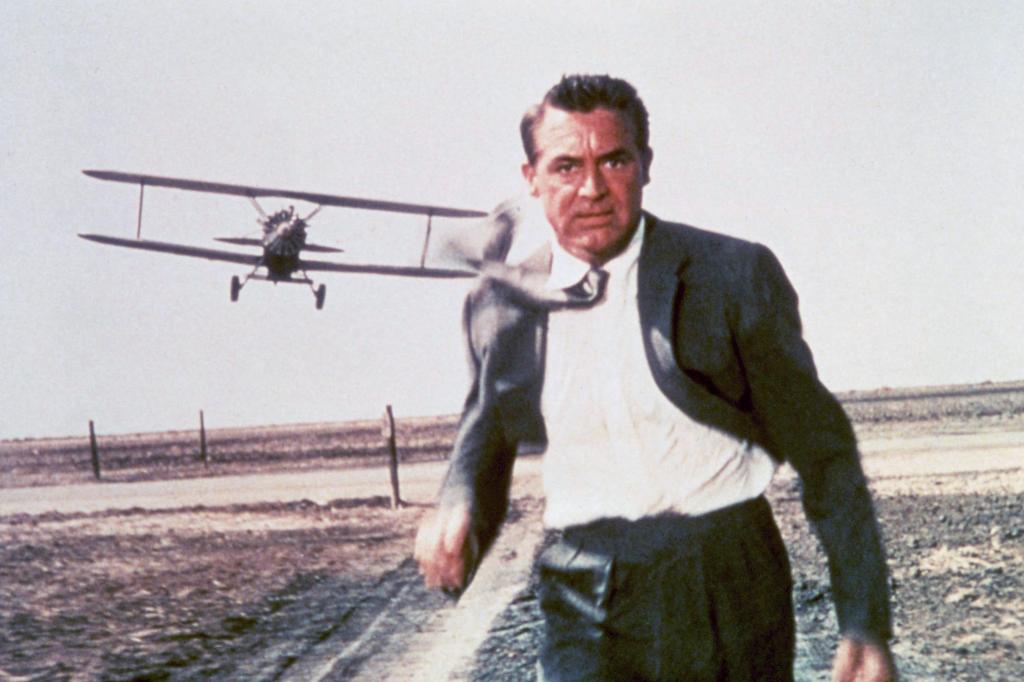
Not Hitchcock’s best by a long shot. Not Cary Grant’s best by a longer shot. But it is the best film involving Mount Rushmore. It’s a classic thriller – a story of mistaken identity where our hero is in the wrong place at the wrong time, where a perfectly-timed photo might not be as it appears, where government agencies willingly put individuals at risk for the “greater good”. It’s hokey, but it’s a lot of fun, and it’s got that iconic shot of Cary Grant running from a plane.

9. The Courier

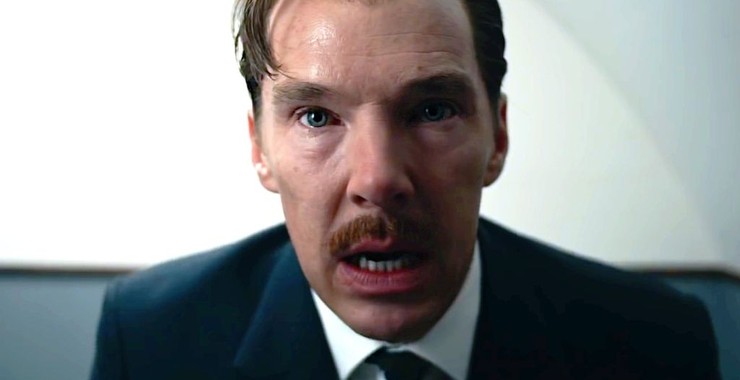
Benedict Cumberbatch is the British electrical equipment salesman, Greville Wynne, who serves his country by acting as a courier between England and Russia. He befriends his Russian correspondent and learns that not all comrades are bad, but the ones that are bad, are really bad. Merab Ninidze claims the screen as Oleg Penkovsky.

8. The Hunt for Red October

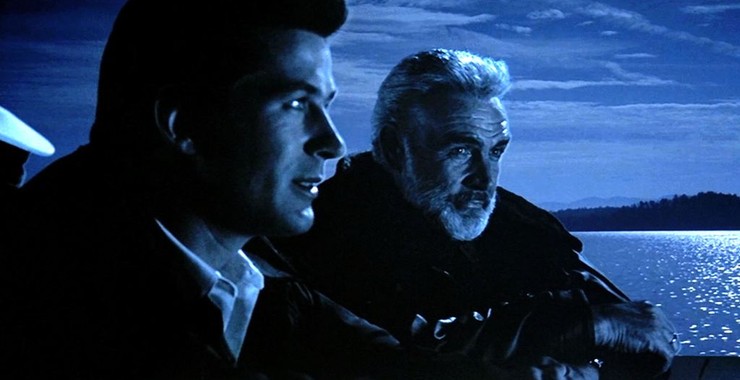
Alec Baldwin plays CIA analyst, Jack Ryan, before Harrison Ford came along and played it better. Tensions build and claustrophobia looms large as Ryan must work out negotiations between defecting Soviet naval captain, Marko Ramius – Sean Connery’s best role, and I’ll fight anyone who disagrees – and the United States before the U.S. and Russian navies come to blows and destroy one another.

7. Rocky IV

“If I can change, we all can change,” Rocky yells at a crowd of Russians after he has knocked out their favorite boxer, Ivan Drogo, and turned an arena full of boos into cheers. It’s a rallying moment for the audience too, since we’re all relieved that he not only won, but avenged his rival and friend, Apollo Creed. This movie features not one, but two training montages set to cheesy 80’s tunes that should definitely be on everyone’s workout playlist.

6. The Iron Giant

Hogarth Hughes is your typical nine-year-old boy. He loves comic books and riding his bike – oh! – and he befriends a 50-foot robot from outer space. Having a giant, iron robot for a best friend is tough enough, but it’s even tougher when you have a U.S. government agent staying at your house, investigating the mysterious goings-on in the town of Rockwell. Luckily, Hogarth knows Dean McCoppin, a beatnik artist, who helps hide his new alien friend.

5. Hail, Caesar!

Like some of the other films on this list, the Cold War is really just the backdrop of this Coen Brothers ode to Hollywood. A group of blacklisted Communist screenwriters are pulling the strings of some of the film’s major events, but this movie is mostly about Eddie Mannix, the studio fixer who is tasked with keeping the stars’ improper personal lives out of the hands of the gossip columnist. He’s got a lot on his plate when his big movie star, Baird Whitlock (George Clooney playing another classic Coen doofus), goes missing in the middle of filming the studio’s big sword and sandals picture.

4. The Lives of Others

Simply one of the best spy movies of all time. Gerd Wiesler, or HGW XX/7, is a captain of the Stasi who has been instructed to bug and survey the apartment of Georg Dreyman, a playwright whose sole crime is the fact that he’s dating an actress who has caught the eye of the Minister of Culture. Wiesler wrestles with the morality of his position after learning the true reason for his assignment, and decides to play the role of Dreyman’s guardian angel. A traitor with a moral compass makes for the best character studies.

3. Tinker Tailor Soldier Spy

Based on the novel by Le Carre, this star-studded British spy drama leaves you guessing until the very end. George Smiley must investigate within his agency to find who of the higher-ups in British Intelligence is a mole for the Soviets. Red herring after red herring gets in his way until he finally gets down to the bottom of it. And by then, what has Smiley lost in the process? Gary Oldman leads a cast of heavy-hitters that include Colin Firth, Benedict Cumberbatch, Mark Strong, and Tom Hardy.

2. Dr. Strangelove or: How I Learned to Stop Worrying and Love the Bomb

Slim Pickens riding a missile like a horse, Peter Sellers (in one of his three roles) wrestling with his own artificial hand, Sterling Hayden’s rant about what the Communists are going to do to everyone’s bodily fluids, the phone call with Dmitri – there are too many great scenes in this film to list them all. Satirically skewering national relations during the Cold War, Stanley Kubrick left none alive in one of the funniest movies of all time.

1. The Third Man

This film is nearly perfect and certainly one of the best Noirs of all time. Impeccably acted and supremely shot, this movie withstands all tests of time. Holly Martins comes to Vienna at the request of his old childhood friend, Harry Lime, only to discover upon his arrival that Lime is dead. Conflicting accounts on who was present at Lime’s death lead Martins on a twisted ride through the streets of Vienna and down into its sewers for one of the most exciting endings to any film, ever. Joseph Cotten and Orson Welles are at their absolute best in this masterpiece of cinema.

The Courier

The Courier is a based-on-a-true-story, Cold War-era, spy drama. Bet you’ve never seen one of those before. This well-tread, trope-riddled film stars Benedict Cumberbatch as the true-life electrical equipment salesman, Greville Wynne, who is recruited by MI6 to act as a courier (hence the clever film title) between England and Russia, carrying secret documents back and forth between the countries in an attempt to prevent nuclear war. His Russian contact is Oleg Penkovsky, a high-ranking GRU officer, brilliantly played by Merab Ninidze who also played an interrogator in the similar Spielberg film, Bridge of Spies. And it wouldn’t be a war film without the U.S. getting involved, so Rachel Brosnahan fills out the cast as the fictitious CIA agent, Emily Donovan.

Many comparisons to other Cold War spy films, especially Bridge of Spies, are easy to make, but where this one sets itself apart from the rest of the pack is that The Courier is not boring. Of course there’s still plenty of roundtable dialogue in this movie, and intrigue disguising itself as decent plot, but it’s a tightly-edited feature (running at under 2 hours, unlike the majority of others in its subgenre) that only drags a little in the third act.

Greville is constantly looking over his shoulder for any Russian bogeymen out to get him after he agrees to be a courier, and his paranoia keeps him from being able to relax, even when he returns home to London throughout the picture. Oleg fairs little better, but feigns confidence in their secrecy for Greville’s sake. The bond between these two men carry the film, as there is plenty of time spent on them getting to know one another, experiencing what their respective countries have to offer, and spending time with each other’s families. Even small things like Greville’s emotional reaction to a Russian ballet would make you roll your eyes in a lesser movie, but here it’s given just the right amount of weight to avoid tipping over into shmaltzy.

And in this lies what makes the movie truly enjoyable to watch: while other spy films have played the “there’s good and bad on both sides” angle ad nauseum, The Courier doesn’t overdo it. It lets scenes play and allows the audience to collect what it wants to as it builds toward its melancholic climax. I won’t spoil it here, but suffice to say, “War is Hell.”

The Courier is not without it’s problems. While the script is decent, the dialogue is a little on the nose at times. One early scene is Oleg bringing the CIA and MI6 initial information regarding Premier Nikita Khruschev’s nuclear plans, and Emily Donovan comforts him with a speech about how scared he must be to betray his country, and Oleg nods and says, “Khruschev frightens me. He is impulsive, chaotic – a man like that not have nuclear commands.” Perhaps a true statement, but it sounds like something a 16-year-old Twitter user would say about a certain former American President. A small stumbling block in an otherwise enjoyable historical spy thriller.

Verdict: I think I’m going to keep this one. It may not be one I return to very frequently, but I believe it deserves a spot on any movie collector’s shelf.

And you can add it to your shelf with a copy <a href="http://<a target="_blank" href="https://www.amazon.com/Courier-Blu-ray-Benedict-Cumberbatch/dp/B0914QSRGC/ref=sr_1_7?keywords=the+courier+blu+ray&qid=1692304432&sprefix=the+courier%252Caps%252C230&sr=8-7&_encoding=UTF8&tag=destinedforme-20&linkCode=ur2&linkId=f93270044fe798e782abf4bb29115d4f&camp=1789&creative=9325">the courier blu rayfrom Amazon.

Ant-Man and the Wasp: Quantumania

Ant-Man’s back, baby! Or at least that’s what he tells himself in his internal monologue as the theme song to Welcome Back, Kotter plays in the background. The film really wants you to believe that Ant-Man is really and truly “back”. Unfortunately, Quantumania is as much an Ant-Man movie as Civil War is a Captain America movie with it’s need to bridge the gap between the other, bigger events in the MCU, and it causes Scott Lang/Ant-Man to shrink down to microscopic levels in his own title in order to make room for one very interesting villain and two very uninteresting side characters.

Let’s start with the good: Jonathan Majors – a still-on-the-rise star who is talented enough to fill the Thanos-shaped hole in Marvel’s overarching villain department as Kang the Conqueror. Kang is menacing and seemingly powerful until he gets trapped in a Marvel third act, where he is devolved into a hard-hitting boxer that has difficulty getting his opponent to stay down (maybe this was preparation for his upcoming role in Creed III). I realize the reason Kang is so terrifying is because there’s an infinite number of him, all more evil than the last, but it’s difficult to see him as such a threat when he’s been defeated rather easily twice now (If you missed Loki, or any other Disney+ MCU content, I can hardly blame you). Majors does a remarkable job with what he’s given, as does the ever-charismatic Paul Rudd, but to the film’s detriment, they are both given very little.

On to the bad: Besides trying to setup the next two phases of the MCU, Quantumania has to try and give us a reason for it’s own existence. To do this, they give the majority of the screentime to Michelle Pfeiffer’s Janet Van Dyne (not a problem under different circumstances) and Kathryn Newton’s Cassie Lang. Janet gets to spend the majority of the film in fear of the inevitable third act and talking incessantly about how there’s no time to talk. I guess explanations of her time in the Quantum Realm would make several of the movie’s events unnecessary and would shave off significant runtime – an alternative I would have greatly appreciated. The greater offense, however, belongs to the new Cassie. She’s a rebellious, teenage ne’er-do-well who has to be bailed out of prison for…helping homeless people. Her only real crime is caring too much and spouting off self-righteous and clunky dialogue (“Just because it’s not happening to you doesn’t mean it’s not happening”). She also gets to wash her hands of her own actions because her dad wasn’t around for the five-year “Blip”. Just because it’s eye-rolling in order to set up a mediocre father-daughter reconciliation doesn’t mean it’s not eye-rolling.

Now, for the ugly: I realize there’s a lot of talk lately about the working conditions of visual effects artists, especially ones working on Disney content, but the CGI in Quantumania is absolutely horrendous and cannot be left unmentioned. The Quantum Realm backdrop is incredibly dark and looks like a Jackson Pollock made with only the dullest of browns, violets and reds, but the real offender here is our live-action M.O.D.O.K. Corey Stoll returns after nearly seven years since the first Ant-Man to play the now-deformed Darren Cross, who has been reconstructed by Kang into a pathetic and goofy metal Igor that looks eerily similar to George Lopez’s Mr. Electric in The Adventures of Sharkboy and Lavagirl in 3-D. It’s a pointless addition to an unnecessarily jam-packed movie, and the laughs M.O.D.O.K. brings aren’t the laughs the creators are going for. The ones they are going for fall flat, like an attempt to redeem him at the last minute (“I got to be an Avenger”).

The bottom line is that Ant-Man has come a long way from the exciting fight aboard a toy Thomas the Tank-Engine, but unfortunately, it’s in the wrong direction. Long gone are the contained adventures of the littlest Avenger and his quirky sidekicks (the absence of Luis is particularly felt), and here to stay are high-stakes battles for all humanity and lifeless characters here to punch their way into your hearts. Those who still go to the first showing for each formulaic Marvel showstopper off the production line will enjoy this one and what it sets up for the future, but for the rest of us, even a Bill Murray cameo can’t salvage this one.

Rating: 3/10