What if Brian DePalma tried to make a family dramady…and was French? That’s 2022’s The Innocents. It’s equal parts comedy, romance and heist. It has moments where it’s totally grounded, and others where it’s off-the-walls.
Sylvie, who teaches prison inmates theater, falls in love with one of her students, a convict named Michel. She drags her son, Abel, to the prison for their wedding ceremony. Abel is understandably hesitant, especially considering his mother has a history of being romantically involved with prison inmates. Once Michel is out of prison, much of the early film is him trying to connect with Abel, while Abel resists and instead tails Michel, with the help of his best friend, Clemence, convinced he’s setting up another robbery. Classic setup for one of those “we’ve got to learn to get along”-type movies.
Where the film goes off the rails (in a good way) is when Abel’s suspicions prove correct. Michel, fresh out of prison, called in a favor from one of his former buddies to secure a building so he and Sylvie can open up a flower shop with no rent attached. The problem, now, is Michel can’t get something for nothing, and now has to pay for the shop by robbing a semi carrying crates and crates of caviar in order to flip them for a profit. Michel scopes it out and its seems like a perfect setup – the driver stops at the same roadside bar at the same point in his deliveries and always orders the same meal and dessert. After timing the rest stop multiple times, Michel has it down to a science on when and how to extract the caviar. The only problem is that he needs to stall the driver for about 10-15 minutes to ensure a clean getaway, so he asks Abel’s help for a little father/son bonding. When Clemence calls him a chicken for not doing anything exciting in his life after the tragic death of his wife, Abel agrees.
Clemence gets roped in as well, and she and Abel take a crash course in acting, courtesy of Michel, in order to learn how to play a fighting couple convincingly. Once they add a little bit of true life to their performance, they’re ready to go. The heist nearly goes off without a hitch, but is busted by the double-cross of Michel’s work associate. A mad-cap escape sees Abel rush Michel to the hospital and Clemence makes off with the goods. Once things settle down, Abel, in order to prove himself to Michel, Clemence, and, well, himself, goes to make the deal for the caviar. It’s a setup, and Abel is arrested. Michel and Sylvie are no longer on speaking terms for roping Abel into his schemes, but things are looking up. Abel moves past the feeling of self-loathing over his wife’s death and confesses his love to Clemence. They are married in a scene mirroring his mother’s wedding at the beginning of the film.
The Innocent is a good film. Cute, surprisingly tender, and funnier than it probably should be. But the convoluted plot weighs it down, and it doesn’t have enough room to breathe. Really, I think it just tries to do too much, to the point where the ending feels lacking. I wanted more. I wanted crazier. And the ending, while acceptably silly, is just too mild for my tastes. There’s a nod to the DePalma influence in the use of split-screen for a scene, but it doesn’t add much to the scene, and in fact detracts from its focus a bit, and then it never shows up again, so I’m left wondering what was the point. If you can handle subtitles and have some time on your hands, The Innocent is short and charming, and different enough to hold your attention.
It’s been awhile since I’ve done a list. I wanted to just stick to “Top 10’s”, but between this and my Top Westerns, I’m finding that to be a limit that I can’t stick to. Anyone who knows me will not be shocked by that fact. Anyway, enough about my shortcomings. Here are the Top 20 Christian Films, the criteria of which is simply whether it has a positive Christian message to it and whether or not it’s good. My apologies in advance to anyone expecting anything from PureFlix on here. Maybe when I do a Bottom 10?
20. Bruce Almighty
Bruce Almighty might be a head-scratcher for some. I remember when it came out it received some flack from Christian circles for making a mockery of God and Christianity, but I assume people who argued that didn’t watch past the first five minutes or didn’t watch the film at all. Bruce may be skeptical at first, and there’s no denying he’s intending to mock God when he decides he could do a better job, but the film is sincere in its take on faith and what Christian humility and service can do for one’s own spirit. The climax of the film is the most beautiful “field moment” (thank you, Say Goodnight Kevin) of any Christian movie ever – a “field moment” is that part of a Christian movie where the main character, at their wit’s end, walks out into a field, hands held high, and cries out to God in total surrender. The only difference is that, in Bruce Almighty, it takes place in the middle of a busy intersection.
19. First Reformed
Paul Schrader has never shied away from religious themes in his scripts, but First Reformed is one of his more obvious ones, as well as a blatant homage to another film on this list, Winter Light. We follow the pastor (Ethan Hawke) of a Dutch Reformed church in upstate New York as he struggles through a crisis of faith. His church attendance dwindles, death and suicide linger around him, others are concerned with the political climate rather than Christian stewardship. It’s enough to drag anybody down, and the reading of classic Christian authors, such as G.K. Chesterton, isn’t helping. It’s hopeless in Hawke’s mind, and he lingers so deeply in despair that his only solution is to go out with a bang. Much like Hawke’s pastor, by the end of the film, we are left with more questions than answers.
18. The Tree of Life
The first of two Terrence Malick films on the list. The Tree of Life is Malick at his most visually stunning. From the opening history of the earth sequence, to the above image towards the end of the three-hour film, there is not a wasted shot. Jumping between timelines, the film loosely follows the life of a boy growing up in Waco, Texas, as he grapples with the contending harshness of his father and the abounding grace of his mother – a personified battle between the Old and New Testament. Philosophical questions plague the boy, Jack, as he grows through his parents dichotomy and the loss of his innocence, until his adult life presents him a vision of the dead coming back to life, giving him a chance to say a final goodbye to his family. Brilliantly performed and unforgivingly experimental, this movie is all at once confusing and beautiful.
17. Sergeant York
Sergeant York was a conflicted man. He saw it as his patriotic duty to serve in the War, but it was his Christian responsibility to “not kill”. His solution, in the film, is to capture his enemies alive and march them all back to his camp…after he’s killed several. Made in 1941, Sergeant York is clearly American propaganda, encouraging everyone to do “the right thing” and get involved in the current war effort despite Christian misgivings, but it’s good propaganda. Gary Cooper is in perfect form as the “aw, shucks”, good ol’ boy, who’s a sharpshooter when it comes to turkeys, but the message of country-over-self keeps this from being higher on the list.
16. Ordet
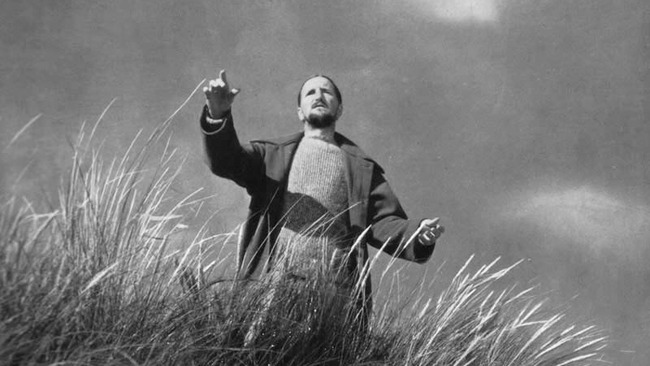
Morten is a devout man who is struggling. He has lost his wife, his eldest son has no faith at all, his middle son thinks he’s Jesus Christ, and his youngest son is in love with a Lutheran – things couldn’t be worse. Weaving themes of self-righteousness, loss of faith, conflicts amongst different Christian sects, and the desire for faith when everything around you is crumbling into one film is a masterwork of one of the Danish greats, Carl Th. Dreyer. Ordet feels grander in scope and significantly more complicated, which is why it’s on this list over his more well-known film, The Passion of Joan of Arc.
15. Ben-Hur
Ben-Hur is a four-hour epic about a man who just wants to get back to his family. Judah Ben-Hur spends time in prison, as a galley slave, and a charioteer before successfully returning home. Throughout the trials that Judah Ben-Hur endures, he grows increasingly angry, fueling his hate for the man who betrayed him until it consumes him. Jesus Christ appears four times in the story, mostly in the background – his birth, a scene at a well where he gives Judah a drink of water, when he preaches the Sermon on the Mount, and his crucifixion, where Judah recognizes him as the man who gifted him water so long ago and attempts to return the favor. It is the crucifixion where Christ comes to the forefront, and acts as the ending to the film. At seeing Christ on the cross, Judah Ben-Hur’s rage dissipates.
14. Leap of Faith
In Rustwater, Kansas, Jonas Nightengale’s Travelling Salvation Show pulls into town. Accidentally. Their tour bus breaks down and they’re stuck in the dusty town for a few days. Nightengale (Steve Martin) decides to bring his big tent revival to the people in order to raise the money they need for parts. The town is ready to receive the Word. The only catch is Jonas isn’t a preacher- he isn’t even a Christian – he’s a conman out of New York City looking to make the big bucks with his faith healing shtick. Once he witnesses a true, honest-to-God miracle, his faith (or lack thereof) will be shaken to its very core. Slowly realizing the error of his ways, Jonas leaves town in the middle of the night, not wishing to feed the town anymore false gospel. On his way out, he witnesses another miracle and laughs, overcome with the joy of the truth he has discovered.
13. The Last Temptation of Christ
If you’re looking for a movie on the life of Christ, steer clear of this one. In fact, I don’t know if this is a film I’d recommend to most Christians. I’m sure you’ve heard the controversy surrounding The Last Temptation of Christ, so I won’t go into the details, but whatever you’ve heard of this film is probably true. The criticism from the Christian crowd tends to miss the point of it all, though. In the novel this film is based on, the author, Nikos Kazantzakis, prefaces it by saying that his intention was to play with the dual-nature of Christ. Yes, He was all God, but that means He was also all Man, and to think that Christ had to deny himself the life of a normal man – the life we all get to enjoy – makes his sacrifice all the more incredible, and that is something worth considering, even if both the novel and the film stray too far from the all-God side of Christ to emphasize their point.
12. A Man Escaped
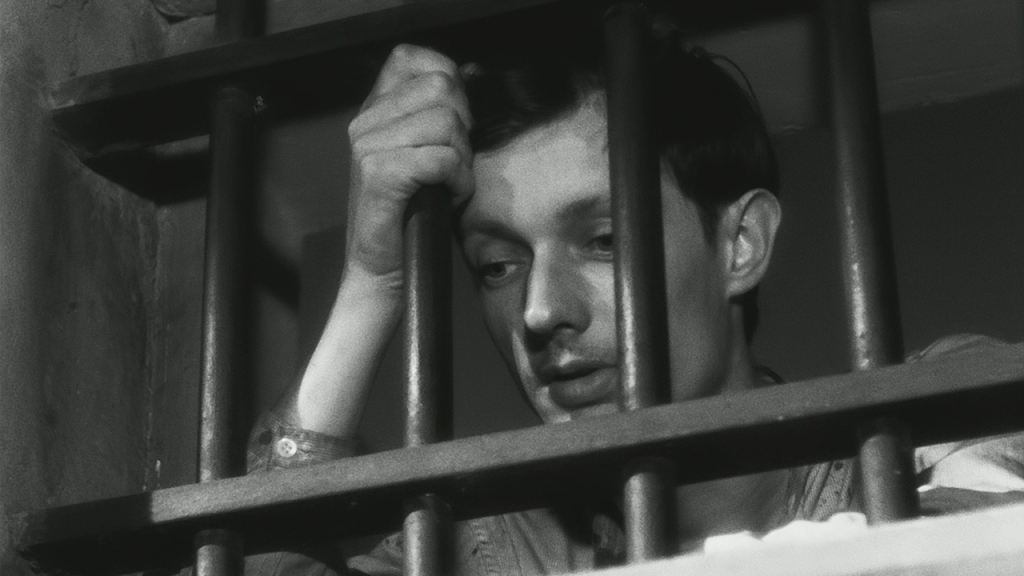
A Man Escaped is a POW film by the French director, Robert Bresson. Fontaine is a member of the French Resistance who has been captured and imprisoned by German soldiers towards the end of World War II. His days are spent mostly in solitude, occasionally chatting with one of the lucky prisoners who gets outdoors-time outside Fontaine’s window, or communicating with his neighbor in the next cell over. Fontaine has two things keeping him sane – the hope he has in his eventual escape and the hope he inspires in others, and both come from his unwavering Christian faith. He knows God will make a way for his escape, and it’s his fellow prisoners’ lack of faith that keeps them from joining him. This film is minimalist at its core, which may make the film seem boring to some viewers, but it’s deeply moving and its triumph is inspiring.
11. The Passion of the Christ
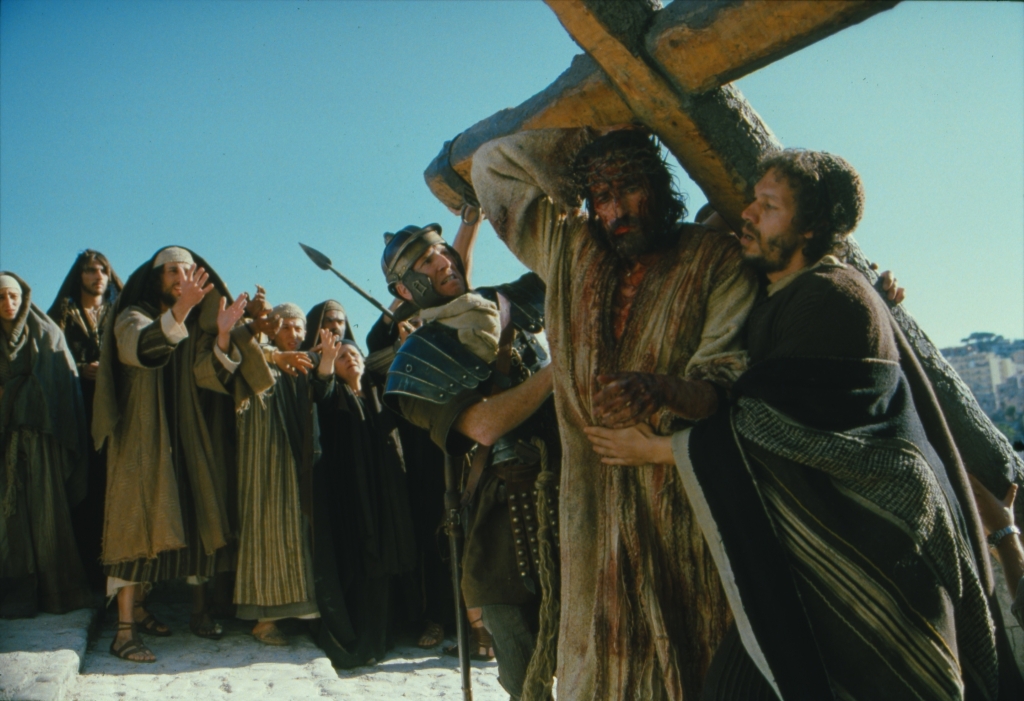
The main criticism of The Passion of the Christ is that it’s gore porn. I understand how that could be the view from an outsider, but I think the majority of Christians would agree that the violence showed on screen is the tip of the iceberg for what Christ endured during his trial and crucifixion. Displaying that horror in all of its gruesomeness is compelling and convicting, and necessary, if you want to do this part of the Gospel justice. More praise can be given for Mel Gibson’s use of unknown actors or the original languages used in the film (a particularly bold choice when most Americans are averse to subtitles by default). The film is a lot to take in, and it has a purpose in going to the extremes it goes to. Personal views of Gibson or Jim Caviezel aside, the message conveyed in this film is very basic and very Catholic, but it’s no less important for it.
10. Andrei Rublev
In the mood for a three-hour Russian biographical epic made by one of the most methodical film directors of all time? Understandable if you aren’t, but you’d be missing out on a beautiful piece of cinematic history. Which is not to say that it’s enjoyable to watch, but that’s more up to the individual. Andrei Rublev is set in the 15th century, and follows the titular painter through eight segments. Andrei witnesses horror and pagan violence, but also beauty on the handiwork of God in his trek across the Russian countryside. The film’s director, Andrei Tarkovsky, claimed the purpose of this film was to show “Christianity as an axiom of Russia’s historical identity”, and decides to end the film with a lengthy montage of Rublev’s work, showcasing the beauty in the religious experience.
9. Winter Light
The middle part of a spiritual trilogy from one of the greatest filmmakers of all time, Winter Light finds Ingmar Bergman at his most existential. This film is the clear inspiration for First Reformed, as it follows a preacher of a dying church as he seeks to console what remains of his flock, all the while having abandoned his faith, himself. This film is bleak and cold like the Swedish landscape it was filmed across, but it poses some very thought-provoking ideas, like the idea that the betrayal and confusion of his disciples and the silence of God while Jesus was on the cross is a harsher burden to bear than the physical torture he received. Bergman’s own history with faith (his father was a minister) gets put under the microscope for us to analyze. More vulnerable than wearing his heart on his sleeve, Bergman bears his soul to us.
8. Hacksaw Ridge
Hacksaw Ridge is Sergeant York without the propaganda. And involving a different war. Desmond Doss is drafted to fight in World War II, but his Christian morals prevent him from taking the life of another man. His goal is to become a medic so that he can comply with his country’s demands and stick to his moral code. His seeming self-righteousness makes him several enemies among his fellow soldiers, but he sticks to his beliefs in the face of such adversity and ends up saving those who hated him. He becomes a hero. It’s a little simple and straightforward, and most of the conflict is manufactured, but that doesn’t detract from what makes it great. The movie is a testament to unrelenting faith and a lack of compromise when trials come.
7. The Prince of Egypt
I don’t think anyone who has seen it needs to be convinced of how great this movie is. The animation is gorgeous, the voice acting is superb, and of course, the music is beyond amazing. A relatively faithful adaptation of the Exodus story, we follow Moses from his youth under the Egyptian Pharaoh to his time in the desert, and to his return to Egypt to lead God’s chosen people to their freedom. Sure, it pulls from The Ten Commandments about as much as it does from the Bible, but it tells its story without any compromise on the involvement of God or the harshness of His judgments. In fact, those judgments – the plagues – make for the best segment of the film.
6. Au Hasard Balthazar
When director Robert Bresson wanted to portray a character of pure innocence, he cast a donkey. This will make some people roll their eyes, I’m sure, but it’s accurate to the foundation of the Christian faith to say that, sometimes, people can’t cut it. Besides that, the personification of a donkey is scriptural, as is the opinion that the donkey is a humble beast of burden. The film revolves around Balthazar and the only human to ever show him any kindness, Marie. It’s a tragic story of sin’s abuse of innocence, and it culminates in one of the most beautiful final shots in a film ever. Au hasard Balthazar is not for everyone, and that’s okay, but you can’t do better than this film if you’re looking for a picture of the desolation of innocence in a sinful world.
5. The Mission
Rodrigo Mendoza is the worst kind of human being. He sells people into slavery, and he’s a Cain. He killed his own brother. He finds salvation through conversations with a Jesuit priest named Gabriel, who is in Paraguay, attempting to convert the natives to Christianity. He is successful with Mendoza, and somewhat successful with the natives, until political realignments in Spain and Portugal condemn the mission they call home and demand they move. Mendoza defends his newfound faith and home the only way he knows how – with a sword. The Mission is a testament to the strength of faith when it’s genuine and the detriment a wayward believer can have on a new convert or the overlap of politics and religion can have on entire groups of people.
4. Shadowlands
Based on a play, based on the true story of C.S. Lewis and his marriage to Joy Davidman, Shadowlands is an interesting perspective on romantic love and the plans of humans. It’s also a wonderful story of faith amidst tragedy. Lewis – “Jack” to his friends – meets Joy and immediately finds an intellectual equal. He’s intrigued by her, infatuated with her (in a sense), and when faced with reality that he will lose her, realizes he’s in love with her. It’s an unconventional love story and an excellent portrayal of all four types of love that Lewis ascribed to. It also contains one of my favorite quotes of all time. When questioned by one of his friends as to why he prays when he knows that the future is inevitable, Lewis says, “Prayer doesn’t change God; it changes me.”
3. A Hidden Life
Another film by the wonderfully poetic Terrence Malick, A Hidden Life is another true-story World War II film about a soldier that cannot reconcile his faith and his country’s demand that he fight and kill. The only difference between this film and Hacksaw Ridge – and it is a big difference – is that Franz is Austrian, meaning his country’s authority is Adolf Hitler, and Hitler’s less forgiving of defiance against country than Americans. The film covers a lot of ground, and even though it moves slowly, it earns its three-hour runtime. The film is a meditation on faith under God’s deafening silence and that is a theme that I think should be explored more.
2. Silence
One of Martin Scorsese’s absolute best films, Silence also explores the idea of God’s silence. However, in A Hidden Life, Franz never waivers in his commitment to his faith; in Silence, the Jesuit priest to Japan, Rodrigues, fails. He apostatizes when he is given the ultimatum from Japanese officials to either do so or witness the torture of innocents for his refusal. While Rodrigues does deny Christ to the Japanese government, he dies and is buried with a crucifix in his hand. The film proposes a very interesting thought: Is it okay to deny Christ (even in word only) if it means others will be spared? I don’t have an answer for that, but I don’t believe it’s as cut-and-dry as others might argue, and that’s what makes the movie so incredible.
1. The Gospel According to Matthew
What do you get when you give a copy of the New Testament to an atheist, socialist, homosexual Italian filmmaker? You get the most accurate film portrayal of a biblical story ever. This is not hyperbole. Whereas other films on the subject of Christ add dramatic embellishments or combine portions of the other gospels, Pier Paolo Pasolini’s The Gospel According to Matthew is purely from its source. The dialogue is taken directly from the gospel account, and there are no “Hollywood” additions. To avoid the confusion of celebrity, Jesus is played by an unknown Italian man, and he is played with all the stoicism of a man uncomfortable with being in front of a camera. Pasolini’s motivation for the film is totally nostalgic for a belief he no longer has, if he ever did to begin with, and that distant desire for closeness frames the movie perfectly.
I recently watched this film again, also through the Criterion Channel, after not having seen it since college. I remember when I watched it that first time and thinking, “This movie looks cheap. New York City looks so grimy, and the camera is all over the place.” At that time, I naively considered these flaws of the filmmakers, and enough to make me dismiss the film as a whole. Obviously, I have since changed my tune. Those things still remain, but some are due to budgetary restrictions and therefore cannot affect the merit of the movie as a whole, and some are stylistic choices. Most Scorsese gangster movies have a crisp look to them. NYC isn’t the problem, it’s the people who are grimy. Mean Streets informs us that it’s both, and that, in part, was the intention.
Charlie (Harvey Keitel) is a good boy – he works for his mafia-connected uncle, and therefore has to do some unsavory things, but he’s very concerned with his sense of morality and the salvation of his immortal soul. So concerned that, every time he sees fire, he tries to touch it in hopes he can withstand the heat. Anyone who has ever touched a hot stove knows that doesn’t go well for him. Since the Catholic Church will not absolve him of his sins without him actually confessing them, he attempts to earn his salvation another way.
Enter Johnny Boy, played by a nearly brand-new Robert De Niro. Johnny Boy is the cousin of Charlie’s epileptic girlfriend, Teresa, but more importantly, he’s a ne’er-do-well on the path to eternal damnation. Charlie sees Johnny Boy as his ticket to Heaven. If he can get Johnny to walk the straight and narrow, there’s no way Saint Peter would turn him away. The only problem is that the more Charlie interferes with Johnny Boy’s erratic way of living, the worse it gets. Johnny Boy feels coddled. Some people just don’t want to be saved. His antics not only set his life on a downward spiral, but he begins taking everyone else down with him – particularly Charlie. It all comes to a head in a drive-by shooting in those mean streets. Johnny Boy, Teresa and Charlie are all hurt, but Johnny Boy walks away into an alley where the red, flashing lights of a police car hint at his final destination, and Charlie walks out into the street, baptized in the waters of a broken fire hydrant. Only Teresa is unable to get out on her own, more damaged than the others, requiring the EMTs that get to the scene first to help ease her out of the car. Teresa and Charlie will survive, but while he kneels in the street, and images of the sinful life he is potentially leaving passes before his eyes, Charlie doesn’t even acknowledge the condition Teresa is in. And in that moment, that final scene, we understand how selfish Charlie’s quest to earn his own salvation truly is.
As I said before, my views on this film have changed significantly. Where as once I held Mean Streets with slight disdain, even considering it lower-tier Scorsese, I have now nearly flipped that completely. Mean Streets isn’t just a great film, it’s also pure Scorsese, through and through. It’s full of Catholic guilt, religious imagery (a chat between Charlie and Johnny Boy in a graveyard, where Johnny lays on a grave and Charlie leans against a cross, is particularly excellent), an internal wrestle between saint and sinner, a killer 60s pop soundtrack (one of the first examples of a jukebox soundtrack; the infamous bar brawl scene is set to the Marvelettes’ “Please, Mr. Postman”), tracking shots (that same bar brawl), and a whole lot of New York City.
I read that Scorsese wrote the screenplay for this film (not something he does often) after a talk with actor/director John Cassavetes, where Cassavetes criticized his previous film, Boxcar Bertha, for being uninspired. His advice to a young Scorsese was to make films he’s passionate about. You can feel the passion in Mean Streets. I argue you will not find a film so near and dear to Scorsese’s heart again until 2019’s The Irishman. It’s reflective and thoughtful. It’s genuine. It’s a filmmaker in the middle of insecurity, discovering his voice and, somehow, confidently firing on all cylinders. Martin Scorsese’s third film is, dare I say, a masterpiece, and sits alongside Taxi Driver, Raging Bull, and GoodFellas in the discussion for his best.
At the time of my writing this, Martin Scorsese’s latest picture, Killers of the Flower Moon, is roughly three months away from release. Early buzz for the film ranges from “Scorsese’s masterpiece” to “a fantastic film, if a little too long”. Between the collaborations (Scorsese, De Niro and DiCaprio, not to mention Lily Gladstone), and my own personal interest in the story (I read the book, I’m from Oklahoma, and I have an unhealthy obsession with Native American history and culture), it’s preemptively my most-anticipated release of the year. What better time, then, to take a deep dive into Scorsese’s hefty filmography? This is an odd starting point, considering what Scorsese’s famous for, but it was available on The Criterion Channel for the month of July. So, here it is: Alice Doesn’t Live Here Anymore.
Martin Scorsese’s fourth feature film puts the director into uncharted waters of his oeuvre: the romantic comedy. Apparently, this film wasn’t even on Scorsese’s radar at the time. Ellen Burstyn, who plays the titular Alice, and won an Academy Award for Best Actress to show for it, received a copy of the script from her agent after being tasked with finding a complicated woman for her to play. After reading the script, she went on the hunt for a young, visionary director to helm it. It was Scorsese’s previous film, Mean Streets, that was garnering all the buzz at the time, and after viewing a screening, Burstyn decided he was the man for the job. Warner Brothers agreed, and so began Scorsese’s journey into major studio filmmaking.
Alice is a stay-at-home mom caught between her needy and verbally abusive husband and her preteen boy who is discovering that “brat” is a viable personality. Alice doesn’t have to keep the peace very long when her husband dies in a work-related accident. His death, however, leaves Alice and her son without any prospects or security, so they hit the road, heading towards California, so she can realize her dream of being a singer – a dream that was completely derailed by married life.
Her financial straits demand they stop in Phoenix to earn enough money to make the rest of their trip. Initially, she can only get work as a waitress, but through her determination, she is able to secure a job as a lounge singer. She captures the heart of the young cowboy, Ben (played by a young Harvey Keitel), and he sweeps her up into a whirlwind romance that is going great until she discovers he’s also abusive. Oh, and also, he’s married. Yikes! In the middle of a confrontation between her, Ben, and Ben’s wife, Alice decides it’s time to continue to Monterey. They get as far as Tucson before they are forced to stop again.
In Tucson, Alice gains employment as a waitress at Mel’s diner, working alongside the outspoken, headstrong Flo, and timid-to-the-point-of-collapse Vera. The chaos in the diner leads to some of the funniest scenes in the film, especially when Vera’s involved. Alice also meets a divorced rancher, David (Kris Kristofferson), and they fall in love. “Oh, sweet mystery of life, at last I’ve found you!” It’s days of wine and roses until David finally does the seemingly unforgiveable: he spanks Alice’s son. Trust me, over the course of the movie, I spent more time with Alice’s son than David did, and he’s lucky a spanking is all he got. When he runs away after his reprimanding, Alice frantically searches all of Tucson for him, determined to find him and get him to Monterey. However, when she finds her son, they have a heart-to-heart, and Alice realizes that she’s happy in Tucson with David, and so is her son, so they make the decision to stay.
The script and Burstyn’s feminist take on the character makes Scorsese an interesting choice when considering modern criticism of his filmography (i.e. the sidelining of his female characters). I suspect her decision to choose a man over her dreams won’t sit as well with the most recent wave of feminists as maybe it did in the 70s. However, I think one of the things this movie does well is show growth in Alice’s character. At the beginning, she doesn’t have a choice in the direction of her own life, or at least she doesn’t believe she does, but at the end of the film, it’s completely her decision to stay or go. The other thing this movie does well is lean into the shmaltzy look and feel of older soap operas and 1940s melodramas. It gives the movie character and a charm that it’s mostly lacking.
This brings me to my biggest criticism of the film: it’s surprisingly bland. Without its color and occasional cutesy attitude, I doubt I would have made it to the end. Ellen Burstyn does great, but it’s far from her best performance (I suspect the Academy gave her the award for this film because they realized their mistake in not giving it to her for The Exorcist), and with the exception of Flo and Vera, all the other actors are wooden. I’ve never considered Kris Kristofferson a good actor and he doesn’t change my mind here. The kid is the most frustrating part of the entire film, though that may not be the actor’s fault. The character is insufferable, and I have never wished for a worse end to a kid in a movie since Mildred Pierce.
In the end, the movie is passable, and cute enough to give a look if you have the time, but don’t go out of your way to make time for it unless you’re doing a Scorsese marathon like I am. Mean Streets was a glimpse of what Scorsese could become, but Alice Doesn’t Live Here Anymore is someone else’s movie tossed into his lap.
Did you know this movie is based on a true story? I was unsure how to address the title of my review because all of the posters for this movie say “GRAN TURISMO” in big white or black letters across the top, and in much smaller letters, somewhere below that, it says “Based on a True Story”. Like it’s a tagline or an afterthought. But when I went to purchase my ticket, it lists the title as “Gran Turismo: Based on a True Story”, as if that were the full title. They really want you to know that this movie is (somewhat) based on a true story, and who can fault them for that? It’s an excellent piece of marketing. I wish other movies were that forthright with their origins. Titanic: Inspired by True Events.Schindler’s List: Based on a Book Based on a True Story. Braveheart: Total Male Fantasy, but William Wallace was a Real Guy.
This movie was fine, and more like the kind of “fine” your significant other is when you ask them how they’re doing, knowing full well they’re not doing “fine”, than actually fine. Which is a bummer, because the fact that this film is “Based on a True Story” makes it such an interesting idea for a film. The basics, for those not in-the-know, is a young man who is really good and obsessed with the Gran Turismo video game series, gets the opportunity to put his gaming skills to the test by becoming a real racecar driver, through a training academy set up by Nissan and PlayStation. It’s the story of a group of outsiders that have to prove they belong in a world where no one wants them. The premise is fine – actually fine – but that’s the best it can do.
There are some positives to be sure. The movie editing is tight and quick, all gas and no breaks, which keeps the movie exciting and suspenseful. I was certainly on the edge of my seat the whole time. It felt like a rollercoaster or like a game of Gran Turismo (I can only presume, since I’m not really a fan of racing games – not even Mario Kart), but at the very end, as I was walking out to my car, I wondered how I could have spent the entire movie so enthralled and yet walk away so nonchalant. Then, it dawned on me that I didn’t care how the movie turned out, I didn’t care about the characters, and it merely gave me an adrenaline rush. So, I guess I got my money’s worth.
It’s a struggle when talking about film sometimes, because film is sometimes highly artistic, and sometimes it’s solely mindless entertainment. I love a good rollercoaster, but the thrill is certainly a fleeting one. Likewise, Gran Turismo: Based on a True Story is fun and exciting, but it’s not going to linger with you unless you buy another ticket. But I’m digressing.
Some of the acting performances are worth mentioning. David Harbour, of Stranger Things fame, remains the highlight of anything he’s in. He plays Jack Salter – a former racer who lost his mojo and now works as a lowly mechanic until he gets roped into teaching these gamer losers how to be winners. And while we’ve seen his type of character thousands of times, Harbour ignites in every scene he’s in. Djimon Hounsou, who plays Steve Mardenborough, does the best with what he’s given, playing another stereotype – the father to our main character, Jann (it’s a soft “J”), who just doesn’t believe his son’s silly dreams until a tearful reunion makes him see the light. And then, there’s Orlando Bloom. Orlando Bloom is…there. In the movie. Seriously, what happened to that guy? I guess I just don’t love him if he’s not defying physics as an elf archer or the dull pirate of a two-pirate crew.
The two biggest things I have against Gran Turismo: Based on a True Story, are our main character and an emotional detour or pit stop that’s supposed to set up and lead into a triumphant final race. Whatever you want to call it, it pumps the breaks on the whole thing.
*Spoilers beyond this point. If you don’t want to be spoiled, scroll down to where you see a message similar to this.*
Okay, so everything is going great for Jann. He’s got his racing license, he’s coming up fourth and fifth place in races consistently, and he’s looking to get onto the victory podium. And then, suddenly, in the middle of a race, his car goes over a hill and gets too much air, causing him to flip the car and go crashing through the track and into some spectators. One of them dies, and Jann is informed of this when he wakes up from his mini coma. Realizing what has happened, he is understandably sad, and he may never race again. Racing is dangerous, after all.
My problem with this portion of the movie is two-fold. One, it’s so out-of-nowhere. Jann is cruising down the track, making a name for himself, and then boom! People die! And you know you should be sad because the music that plays in the background is sad. If you’ve been enjoying the movie so far, you’re going to get whiplash. And maybe you can say that’s the intention of the filmmakers, but I don’t think it is, at least not entirely. My second problem is that this crisis is completely unnecessary to the film. It adds a bit of internal conflict for Jann (which doesn’t work, and I’ll get to that in a minute), that’s resolved five minutes later. The movie had enough conflict to keep people engaged without the crash. You get the sense that the filmmakers felt they had to include it just because it was such a tragic accident that really happened. They rush through it, telling Jann and the audience that it was a freak accident and no one’s fault (again, this is Sony and Nissan making this movie about Sony and Nissan), and there’s no real closure. It just goes away as quickly and jarringly as it came.
*Spoilers over with. You may continue.*
My other main gripe with this movie is our main character, Jann. First of all, I don’t think the actor, Archie Madekwe, is particularly good. Granted, he seems fairly new, and maybe he’ll keep growing and improving. However, I really feel like he was fighting a losing battle in this movie. Jann is a real person, and so Archie has to pass for someone you can easily find videos online to compare to, but the filmmakers also want you to see yourself as Jann. He’s a self-insert for all the gamers and dreamers out there, and so it becomes difficult to give Jann any personality. The most we get is his love of Kenny G and Enya, and that he’s sad when tragedy strikes, but he appears sad most of the time, so it’s hard to tell the difference. This idea of the main character as a stand-in for the viewer seems to be a newer trend in movies, and it really has its origins in video games, so it kind of makes sense here, but it gets in the way of storytelling and character development, causing both to suffer.
In the end, Gran Turismo: Based on a True Story does most of what it sets out to accomplish. And again, it is a white-knuckle thrill ride for the majority of its 2 hour and 15 minute runtime. It’s an enjoyable way to spend an afternoon. But that’s all it is. Don’t let that “based on a true story” moniker rev you up too much. If you do, you’re likely to crash and burn.
This collection of five films from the Criterion Collection showcases the bulk of collaborations between under-the-radar B-Western director, Budd Boetticher, and longtime Western hero, Randolph Scott. The films included are The Tall T, Decision at Sundown, Buchanan Rides Alone, Ride Lonesome, and Comanche Station. All five films feature Randolph Scott as the lone wanderer with his own moral code to live by, and relatable villains. We’ll take them one at a time.
The Tall T This one is based on a story from Elmore Leonard, the writer of many classic Western tales, such as 3:10 to Yuma, Valdez is Coming, and Last Stand at Sable River. Scott plays Pat Brennan, a rancher with a “place of his own” that he hopes to build up into something great. We see him wandering through the opening credits and stopping at a way station to begin our story. The place is operated by a man and his little boy, and Brennan promises to bring the little boy back some candy when he returns from visiting the nearby town. Unfortunately, after leaving the town, Brennan loses his horse and is forced to hop on a stagecoach with the daughter of a rich mining baron and her new husband. The coach stops at the way station where three men, Frank Usher, Billy Jack, and the unfortunately-named, Chink, have taken over and murdered the man and his boy. Richard Boone plays Frank Usher, and while his young henchman are a little too trigger happy, Usher has a code of ethics similar to Brennan, only he’s willing to let innocents die to get what he wants. Through their conversations, they both realize that, in another life, they might have been friends.
Usher is looking for a big payout so he can live the life he wants, and he seems to have stumbled into it when the newlywed husband turns out to be a craven, self-serving piece of trash. He admits his wife’s father is rich and is willing to go and deliver a ransom note to the baron in exchange for his own freedom. Once the plan is set in motion, and the husband is no longer needed, he gets a bullet in the back, courtesy of Frank Usher. The justification being that the husband was no-good for abandoning his wife, and at that point, it’s hard for the audience to disagree.
The film has a tight runtime of 78 minutes, and Burt Kennedy’s script is an economic tension-builder that matches the best of them and shows us what makes the post-World War II Westerns such a joy to watch.
Decision At Sundown The second film in this set takes the tropes of these Westerns and turns them on their head. Scott, this time, plays Bart Allison, a man who rides into the town of Sundown with one thing on his mind: vengeance. He’s after the man he blames for his wife’s suicide, Tate Kimbrough, and he’s not leaving until he kills him. Lucky for Allison, Kimbrough has the entire town of Sundown in a vice grip, and they aren’t too happy with the way he’s running things.
Once Allison arrives in town, the movie jumps right into the action. Allison stops Kimbrough’s wedding and a shootout ensues. The rest of the movie is a true Western standoff – the town is completely quiet, all doors are shut, and the heroes and villains yell at each other from around the corners of buildings. However, in that time, we learn that Bart Allison is far from the hero we expect from Randolph Scott. He is fueled and blinded by his hatred. He refuses to believe his good friend, Sam, when he is told that his wife was not a good woman to begin with and never loved him. His code of ethics has been swapped for revenge, and revenge alone. And when even the sheriff of Sundown gets in his way, well, that’s just too bad for the sheriff.
Kimbrough is obviously not a good guy, so we’re happy at the thought of him getting his comeuppance, but it doesn’t happen. Kimbrough is allowed to escape as Allison deals with the loss of his friend, Sam, and the realization that what he said about his wife was true. In the end, multiple people are dead, Allison fails in his mission, and the town of Sundown is freed. The town, of course, is happy to celebrate, but for Allison, there is nothing to do but mourn his losses. He leaves Sundown, refusing their thanks, and alone once more.
Buchanan Rides Alone In this film, Randolph Scott is Tom Buchanan, and you guessed, he rides into town alone. Agry is not a town you want to ride into and stay very long, even the townspeople say so. As soon as Buchanan passes the bridge from Mexico into Agry, he is greeted by a suspicious sheriff who aggressively gets Buchanan off his horse and patted down. Buchanan soon finds that Sheriff Lew Agry isn’t the only unfriendly soul in town, nor is he the only one the town is named after. Lew has two brothers, and while he is sinister, scheming one, his brother, Amos, is too dimwitted to do anything beyond run the hotel, and his other brother, Simon, is the most respected of the brothers and the town judge.
When Simon’s son, Roy, the town hothead and drunk, is shot and killed by Juan de la Vega, a Mexican who had a personal vendetta against Roy, Tom Buchanan gets roped into the town’s politics, and it’s up to him to get de la Vega out of trouble. The brothers Agry’s war amongst themselves sucks in the entire town, as well as the lives of Buchanan and de la Vega, presenting several twists and turns along the way. It all culminates in a nail-biting shootout involving hostages on both sides of the same bridge Buchanan crossed when he entered the town and a saddlebag with $50,000 smack dab in the middle.
Because of how this movie zig-zags throughout and the intense finale, Buchanan Rides Alone may be my favorite out of the Ranown films I’ve watched so far. This one clocks in at 80 minutes, so again, it’s short and sweet, tightly-paced, with several interesting, flawed characters to keep viewers invested. A great film to show those who are skeptical of the Western genre.
Ride Lonesome Randolph Scott stars as Ben Brigade, a bounty hunter who is after more than just the money when he tracks down and captures wanted criminal, Billy John. In his attempt to get Billy to Santa Cruz, Brigade runs in with a couple of outlaws with their own motivations and a woman who is all alone in the harsh western country. Together, they have to outrun Indians and a band of outlaws (the leader of which is Billy’s brother, Frank), until Brigade’s true intentions are made known.
The film consists of many twists and turns, and the entire time, it’s hard to keep track of the alliances and loyalties between the characters. The film banks on misdirection. Even one of the outlaws, Sam Boone (Pernell Roberts), at the end of the film, claims to Brigade, “Ain’t it funny how a thing can seem one way and turn out another?” Brigade can’t help but agree. Neither can we. Even as the ending comes, and all loose ends are tied, and all the good guys have gotten what they wanted, the film still plays on this misdirection. It was a comedy in the classic sense, right? The happy ending? And then the final shot of the film happens, and you realize what a truly cold revenge story this was.
Burt Kennedy’s script sense shines once again, as the characters are mostly fleshed out, except for the villain, Frank. Even though he’s played by the great Lee Van Cleef, he remains forgettable. The woman and Native American characters are treated the same, but that’s at least a bit more common of the genre. Ride Lonesome is certainly not the best film in this collection, but it is an entertaining one, and probably carries a lot more rewatch value than some of the others.
Comanche Station In the final film between Scott and Boetticher, Scott plays Jefferson Cody, another man alone on his own personal mission. He rescues a woman from a tribe of Comanches, and rides off with her only to be waylaid by a trio of outlaws – the evil Ben, the scheming Frank, and the dimwitted Dobie. They all ride together for a time, and during that time, Ben and Frank come up with separate plans for how to make off with the woman and a $5000 reward for her safe return. Dobie, of course, follows along but doesn’t come up with any plans of his own or really approve of Frank or Ben’s methods. Cody, meanwhile, claims to know nothing about the reward; he is rescuing the woman, Nancy Lowe, for his own reasons.
Similar themes run rampant in Comanche Station as does through the others in this collection – loyalty, personal honor, the fine line between hero and villain, and it’s chockfull of a few twists and turns along the way. Why is Cody risking his life for Nancy without a thought of the financial reward? Can Nancy believe him when he claims to have no prior knowledge of the reward? What secret is Nancy hiding herself? Are any of the outlaws to be trusted? The finale is as much shocking as it is endearing.
This film and the previous one, Ride Lonesome, were both filmed in CinemaScope, so you get some beautiful wide landscapes of the open range, as well as that sunburned color look, so they look best in the 4K format on the biggest screen you can handle. Scott is often framed to reflect his larger-than-life hero image. The script is once again precise and tight, even if, at this point, it’s familiar territory.
Looking back on the whole collection, I don’t think I would marathon these films in one or two sittings. They benefit from being allowed to breathe. As I alluded to in the paragraph above, by the end of the series, it begins to feel repetitive. The same basic premises, with just enough of a twist to justify being their own releases, and Randolph Scott basically plays the same character in each one (except for Decision At Sundown).
Having said that, I still recommend this set or at least these movies to anyone who likes Westerns, early Revisionist cinema, or wants something to watch under an hour and a half. They look great, especially in Criterion’s new 4K release, and they’re an excellent cap to Randolph Scott’s impressive career. He retired after Comanche Station, only to come out of retirement for Sam Peckinpah’s Ride the High Country before retiring again, for good, but in my opinion, these films are the better closure for his lifetime of moviemaking.
“When I was a child, I spake as a child, I understood as a child, I thought as a child: but when I became a man, I put away childish things.” – 1 Corinthians 13:11
God is not directly mentioned in Wim Wenders’ film, Wings of Desire. Neither is the specific passage from the Bible I’ve quoted above. However, both permeate the film as our main character, an angel named Damiel (Bruno Ganz), spends his time staring down at humanity from the top of the Berlin cityscape, contemplating what it means to be human. A poem that he frequently quotes, called “Song of Childhood”, sticks in his mind while he passes through the mortal world, unnoticed…except, of course, by children. Children can see angels, even if they don’t fully comprehend what they’re seeing. Even a girl with glasses – a girl who cannot see on her own – is able to see Damiel as he stands in her house, watching her family live.
Angels are voyeurs in Wenders’ film. They can watch you without you noticing them, and they can hear your thoughts and prayers. Angels know everything about you, and yet, they can do nothing. As Cassiel, another angel that Damiel frequently poses his psychospiritual questions to, basically says, their job isn’t to live or help humans live. Their only responsibility is to observe. Because of this, the life of an angel is very fact-oriented. It’s very black-and-white. Literally. The only time Damiel can see color is when he gets too close to humanity. He goes beyond his responsibility and helps humans feel and change emotionally, and because he has crossed a line, he now is gifted with the knowledge of human limitations.
The movie touches on several themes throughout the film, but one it continually refers back to is this: the untethered freedom the angels have is, ironically, confining. There is joy and pleasure in being limited beings because there is then a mystery to what is beyond those limits. Because their mind, bodies and souls are limited, humans have capacity to experience. Angels are not so lucky. They are distant, as we can see from their point-of-view throughout the film.
Damiel is content to think and ask questions until he sees the trapeze artist, Marion. Once he has seen true beauty as only a human can contain, his black-and-white world is shattered. There is no merely observing any longer. It’s live or die, despite his immortality. Luckily, he also has a brush with the actor, Peter Falk (yes, Peter Falk plays Peter Falk in this movie), who turns out to be a former angel who grew tired of immortality and decided to leave it for the human experience, like a selfish Jesus Christ. Damiel follows in Peter Falk’s footsteps, and abandons his angelic responsibility and immortality to become a human, waking up to a now-colorful Berlin. He meets Marion at a Nick Cave concert, and finally has a knowledge and understanding that no angel ever could.
Wings of Desire is a beautifully shot and thought-provoking film; a staple of the New German Cinema. Wenders manages to dive deep into spiritual questions and somehow, like an angel, keep it at an arm’s length for better examination. The poem, “Song of Childhood”, says, “When the child was a child, it didn’t know it was a child.” Wenders pulls back that curtain, and allows us to see that we are just children, and considering how children are portrayed in the film, isn’t necessarily a bad thing.
For anyone considering watching this movie, I would to emphasize that the film is unapologetically artistic in its expression – it’s meditative – and so it has a rather slow pace. Since the pace is intentional, I can’t really call it a flaw, but slow-burners aren’t for everyone. If you find yourself getting bored with slower films, would rather “turn your brain off and enjoy” a movie (a concept I disagree with entirely, but now’s not the time for that discussion), or you can’t handle subtitles, then you may want to skip this one. And I don’t say that to be pompous or snobby. I just think many people miss out on great cinema because they aren’t willing to challenge themselves. With that said, I encourage any and all who are willing to watch this deeply personal and moving film, whether you are religious, or not, or some ecclesiastical wanderer in the middle.
It feels weird, reviewing a movie that’s been with you since your childhood, and there’s a certain fear that comes with that: Is the movie as good as you remember it? More often than not, you go back to a movie from your past and you stare at the screen in horror over the idea that you ever enjoyed such a thing. And what’s worse, you told people recently that you liked that movie, before you sat yourself down to rewatch it. You have to hang your head in shame, now, around some of your friends because you spent several hours heatedly defending Space Jam. Life, as you knew it, is now over.
But there are other instances, where you return to a film through the eyes of your adult self, and it’s just as good as you remember it. Sometimes better. Pee-Wee’s Big Adventure is one of those movies. With the recent passing of Paul Reubens, a rewatch of the 1985 classic felt necessary. And I am thrilled to say that this film remains one of the best cinematic tales of young love, between a boy and his bike.
Pee-Wee Herman is your normal, everyday acid-trip-induced man-child version of Mister Rogers. He lives in a house with his dog, Speck, covered in gadgets and knick-knacks that overcomplicate the simplest tasks. His entire kitchen is rigged to where you can light a candle and your breakfast is made while you’re off doing something else. As a boy, I always wished for something similar in my future, but the logistics of having such a house seem insurmountable. But above everything else he owns, there is his most cherished possession: a red bicycle with a tiger’s head on the front. And there ain’t no one gonna come between him and that bike.
Paul Reubens saw Tim Burton’s original short, Frankenweenie, and personally requested that he direct this film. His fingerprints are all over the film, too. There are multiple dream sequences, some involving claymation, with black and white, German Expressionism-style set design. There’s a beautiful sunrise seen through the open jaws of a large T-Rex sideshow attraction, complete with jagged teeth framing it. There’s a fun, bouncing score from Danny Elfman, his first music-related project post-Oingo Boingo and his first collaboration of many with Burton. Burton’s style and attitude toward filmmaking are a perfect match for the character of Pee-Wee Herman.
The plot of the movie is hard to describe without sounding absolutely ridiculous, so I might as well just lean into it. All is wonderful in Pee-Wee’s world until he runs into the rich “kid” down the street, Francis Buxton. Buxton wants Pee-Wee’s bike more than anything at the moment and, to get it, he hires a greaser to steal it while Pee-Wee’s out doing a little bit of shopping. Pee-Wee soon realizes that no one is going to help him find his bike (after all, it’s “just a bike”) – not the police, not his friends – so he is on his own. With nowhere else to turn, he meets a fortune teller who tells him his bike is in the basement of the Alamo.
Pee-Wee hitchhikes to Texas with the help of a convict on the run for tearing the tags off mattresses, and a woman truckdriver named Large Marge. Although, this Large Marge lady may not be all that she seems to be. He gets dropped off at an unnamed diner in an unnamed part of the world, and he meets a friendly waitress named Simone. Simone encourages Pee-Wee to keep searching for his bike, and he encourages her to follow her dream of traveling to Paris. Simone’s boyfriend Andy is less understanding of her friendship with Pee-Wee, especially after he overhears them talking about her big “but”. He chases Pee-Wee with a dinosaur bone through a cornfield, forcing Pee-Wee to escape by jumping onto a moving train. He sings old songs with a hobo until he reaches his destination, San Antonio.
Pee-Wee is rightfully disappointed to find out that the Alamo doesn’t even have a basement, and so he’s back to the drawing board. While in San Antonio, he sets a national record in bull-riding. He also suffers from brief amnesia after being thrown from the bull. But don’t you worry, my dear Texans. Pee-Wee may not be able to remember his name, but he remembers the Alamo.
From there, he realizes he needs to get to a phone and call home, so he visits a bar that’s the local hangout of the biker gang, “Satan’s Helpers”. After he knocks over their bikes just outside the bar (which happens in any self-respecting road trip movie), Satan’s Helpers hold him down and debate how they’re going to kill him. He asks for a last request, and is granted it, so he borrows a busboy’s platform shoes and dances on top of the bar to “Tequila” by The Champs. As is expected, this wins over Satan’s Helpers and they offer him one of their bikes so he can travel home. He makes it to the edge of the parking lot before driving into the bar’s streetside signage.
Pee-Wee gets rushed to the hospital and sees a news report on TV that indicates his bike is in Hollywood on a film set. He makes his way to Hollywood, takes back his bike, and flees the Warner Bros. studio lot while being pursued by the entirety of the Warner Bros. security team. He travels through a beach movie, a Christmas movie, a Godzilla movie, a Tarzan movie, and a Twisted Sister music video before successfully escaping with his bike. Unfortunately, his freedom is short-lived. He stops to save all the animals inside a burning pet store, and it is there that he is caught and brought before Warner Bros. execs. Lucky for Pee-Wee, his story is interesting enough to where Warner Bros. wants to make a movie out of it! The film ends at the local drive-in, where all of Pee-Wee’s new friends show up to witness the premiere of this autobiographical movie.
Bonkers, right? Absolutely crazy, but it’s so much fun. The script is tight and throwaway lines earlier on make an appearance again later on. Pee-Wee’s retort to Francis (“I know you are, but what am I?”) is quoted by the film-version of Pee-Wee at the end. When making a police report, Pee-Wee is convinced that “the Soviets” are responsible for his missing bike, and in the fake film, Soviet ninjas are the main villains. It’s smart for knowing that it’s dumb and playing it up. Some scenes are terrifying, or at least were to the younger me – Large Marge, the dream sequences, one involving a T-Rex eating his bike, and another one involving three of a child’s biggest fears: clowns, doctors, and Satan. Pee-Wee’s Big Adventure is a joy to watch. It’s funny, quotable, feverishly ridiculous, and according to my wife, a little creepy, and we have Paul Reubens to thank for all of that.
Verdict: There’s no way I’m getting rid of this movie. Not only am I nostalgic for it, but it really is a great film. Everyone should own a copy.
One False Move is the second film directed by Carl Franklin, and the first to feature themes of the Black experience front and center. The film was co-written by Billy Bob Thornton, who portrays Ray, a criminal who, along with his partner, Pluto, and girlfriend, Fantasia, murder six people in a single night in LA as they seek a hidden stash of cocaine and cash. Ray and Pluto are willing to murder innocent neighbors just to cover their tracks. Fantasia is seemingly along for the ride. From LA, they make their way down to Houston to sell the cocaine to an acquaintance of Pluto’s.
Two LA detectives are investigating the case, and discover their suspects might be heading toward Star City, Arkansas, so they reach out to the local authority, Dale Dixon (though everyone calls him “Hurricane”), played by Bill Paxton. Dixon might be crazy, but he’s a good ol’ country boy, and he’s thrilled at the opportunity to do what he considers “real” police work. Dixon’s giddiness at working with the big boys provides the first half of the film with some comic relief. One particular scene involves Dixon trying to interrogate a local chicken farmer who is getting too old and deaf to be properly interrogated. It’s a little slice of Southern charm amidst the blood and carnage.
Ray, Pluto and Fantasia stop at a convenience store in the middle of nowhere, where their likenesses can be seen via security footage and a highway patrolman can get a good look at them. The patrolman pulls them over on their way out, and as things get heated, Fantasia shoots him. No longer an innocent bystander, Fantasia panics and takes off to Star City on her own, hoping to reunite with her son while she still has time. Dixon also sets out on his own in an attempt to catch Fantasia, whose real name is Lila, before the detectives do. He finds her in a little house in the middle of nowhere, and there, it is revealed that Lila’s son, Byron, is Dixon’s from an affair some years ago. Lila, at the time of their affair, was young, only 17, and criticizes Dixon for taking advantage of a young, Black woman who can’t say no to a cop. I guess Dixon is not as good as, and more country than we previously expected.
The tension builds as a montage set to a lone bluesy harmonica plays. We see Ray and Pluto driving toward the house where Lila and Dixon are waiting; Dixon’s deputy, Byron, and the two LA detectives are hunting for Dixon and Lila; Dixon’s wife and daughter are at home, anticipating Dixon’s safe return. Then, the shooting happens, and it’s all over too quickly.
This film, despite some of the names attached, was originally intended to be released straight to video. However, through word of mouth, it developed enough of a following to come out in theaters in 1992. It didn’t fair well at the Box Office, but through home video, it has survived. It’s unfortunate that a film like this flew under the radar. It’s an excellent crime drama, keeping you on the edge of your seat the entire time, and drawing attention to the disparity between Whites and Blacks in a Southern Rural town. Paxton turns on a dime when it’s revealed that the happy-go-lucky police chief isn’t what we thought he was. Cynda Williams shines as both killer and victim. Michael Beach is terrifying as the ruthless Pluto, who keeps his weapon of choice, a knife, up his sleeve at all times. Billy Bob Thornton is a little unbelievable as the earring-wearing, cocaine-addicted Ray, but he got better as an actor as time went on.
One False Move is a near-perfect Neonoir. It’s character-focused, multilayered, the violence is intentional and necessary, and it moves with purpose. Franklin proves his talent that he later perfects with Devil in a Blue Dress, which I’m sure I will review at some point, and this film acts as Exhibit A as to why he is one of the underrated masters. Do yourself a favor and watch this movie.
Barbie has all the subtlety of an atomic bomb, but maybe that’s a good thing. It wants to make a statement on so many things – identity and humanity, womanhood in a patriarchal society, manhood in a matriarchal society, corporate branding and influence, superficiality versus substance, and quite a bit more – and for the most part, it does well, relying on its intelligence to circumvent its need for eloquence.
This is a movie for modern times. It’s feminist, it’s self-referential and breaks the fourth wall frequently, and it overuses or misuses words like “patriarchy” and “fascist”. Despite your personal views on some those things, Barbie is a lot of fun. It’s beautiful to look at, vibrant and very pink. Think of Set Design and Cinematography come Oscar season. The introduction to Barbie Land, complete with an opening song from Lizzo (because, duh) that describes the jokes we’re seeing onscreen, is so cute and bubblegum-pop, it might make you nauseous, like the kid who eats all their candy and then gets on the loopiest of rollercoasters. But, hey, wasn’t that cotton candy delicious?
The very beginning of the film includes a parody of the opening scene of 2001: A Space Odyssey, replacing the apes for little girls with baby dolls, and the obelisk with a giant Margot Robbie that is sure to give the film’s detractors some very weird fantasies. From that introduction, we’re introduced to our lead character, Barbie, or “Stereotypical Barbie”, as she is sometimes referred to. Her life is perfect. Everyday, she gets up, and goes to the beach with the other Barbies and all of the Kens, and then every night is Girl’s Night. Though, maybe all is not as it seems, because in the middle of a nationwide dance party, Barbie asks the question, “Do any of you ever think about dying?”
From here, the movie becomes a blend of The Lego Movie (Will Ferrell even plays another CEO of Business-type), A Matter of Life and Death, and Wings of Desire (the Wim Wenders film about an angel who just wants to be human – if you haven’t seen this one, you may have seen the John Travolta-led, romcom remake, Michael). Barbie must find out why she’s having this existential crisis by traveling to the Real World and confronting the girl who is playing with her. Ken, whose entire existence is made on acknowledgement from Barbie and whose occupation is simply “Beach”, sneaks into her car and joins her on her venture of self-discovery.
Ryan Gosling as Ken is the highlight of this film. He’s so funny and charming, even when he’s tiptoeing towards misogynistic or incel behavior. In the Real World, he discovers that a world dominated by men can be fun and exciting, and you can’t help but love him, even as he gleefully returns to Barbie Land and transforms it into Kendom, or explains the necessity of referring to his takeover of Barbie’s Dreamhome into his “Mojo Dojo Casa House”.
Meanwhile, Stereotypical Barbie has to get back to Barbie Land and fix what Ken is doing with the help of a mother-daughter duo that have their own problems to work out. The director, Greta Gerwig, whose other films include Lady Bird and the most recent remake of Little Women, usually shines with the mother-daughter dynamic, but in Barbie, it gets lost amid the jokes and winks to the audience. They really don’t bring much to the table until the mother, Gloria (played by America Ferrera), has an epiphany and monologues all the well-trodden issues that women face in a male-dominated society, thus breaking all the other Barbies out of their patriarchy-induced trance. This is where the lack of subtlety actually works in the movie’s favor. In another movie, this speech would have completely stopped the film. The things Gloria says are true, but they are delivered in the most awkward, parent-scolding-their-child-way possible.
In the end, Barbie is nothing like its critics have described it. It is not antithetical to its feminist grounding, but it is also not man-hating “woke” garbage. The film is smart enough to be critical and understanding of both sides – maybe too understanding at times to be overly critical (Stereotypical Barbie apologizes to Ken for not giving him enough attention at one point). Legally Blonde maybe did it better, but that doesn’t diminish the enjoyment of this movie. It has a little something for everybody. It’s cool, it’s fun, it’s hilarious. It’s cotton candy. Closer, it is, to “fine” than “great”, but that still means it’s “good”, and sometimes, that’s Kenough.






 Destined for Mediocrity