After my last review, I thought it might be fun to explore a few other goofy Sci-Fi movies. It’s like it’s own subgenre. These movies have notoriously horrible acting, even worse visual effects and the most paper-thin plotlines imaginable. That’s what makes them fun, and it’s turned into somewhat a phenomenon to watch terrible movies for the irony – something I believe we have Mystery Science Theater 3000 for. These ten films are some of the worst out there, and they’re that much better for it.
10. The Mole People
The audacity this film has for hiring an actual college professor to explain the scientific theories that inspired this premise. A couple of archaeologists dig a little too deep and discover an entire civilization of underground albinos, who use these mole people to dig their tunnels and find them food. The albinos worship Ishtar and believe the mole people are sent from Ishtar to provide for them. However, when one of the mole people kills an archaeologist, the albinos decide the mole people are not from Ishtar. Before they can do something about it, an earthquake buries the civilization. Do with that what you will.
9. Attack of the 50ft Woman
When a woman comes in contact with radiation by a giant humanoid space alien, she becomes a giant herself. As if her life wasn’t already difficult enough. Her husband is seeing another woman and intends to kill her so he and his mistress can inherit her massive estate. However, killing her proves difficult when she becomes a giant. Now, it’s her turn to get revenge on those who have wronged her, while the original alien uses the diamonds from her necklace as a source of power to get his ship off the ground.
8. Them!
Them! precedes Godzilla by five months, making it one of the earliest examples of a normal animal coming in contact with radiation. Instead of a single lizard, however, it’s an entire colony of ants that has grown in size due to the testing of an atomic bomb. When bodies turn up dead and full of acid, the local authorities are forced to confront the ant threat. It becomes such an infestation that the National Guard is called in to dispatch the ants with flamethrowers. The giant ants are hilarious to watch as they terrorize the New Mexico town.
7. Teenage Zombies
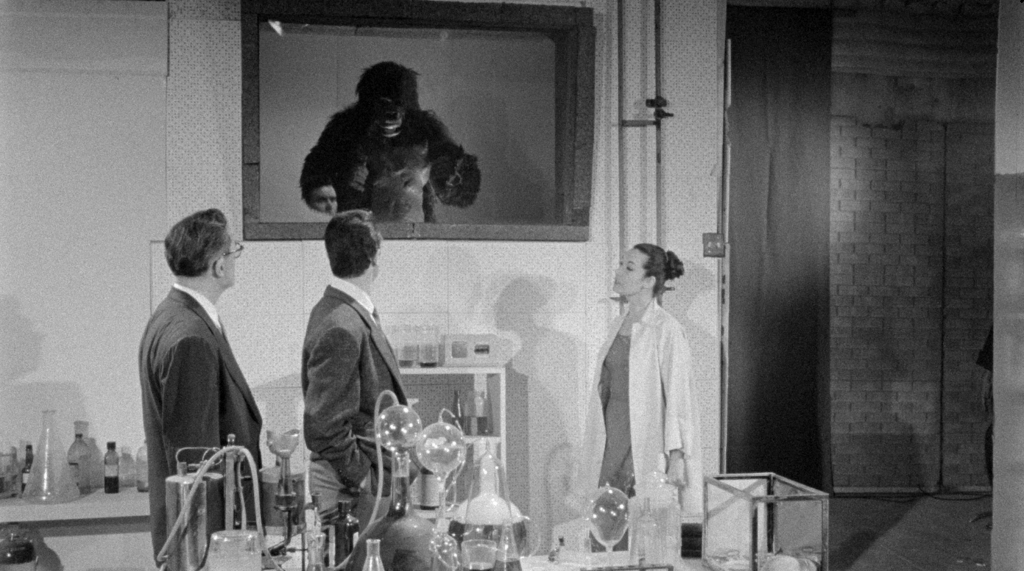
A group of teenagers discover an island inhabited by a woman mad scientist, her pet gorilla, and her zombie slave. She has the teenagers captured and plans to zombify them in order to test a drug she’s developing on behalf of an unknown country. A few of them escape and run to get the local authorities, but it turns out he’s in cahoots with the mad scientist. It’s up to the most unlikely hero – the gorilla – to save the teenagers before they can become zombies themselves.
6. King Dinosaur
A group of scientists are sent to a new planet to see if it’s possible for humans to live there. Pretty soon after they arrive, they discover a plethora of animals, many of which are extinct on Earth. Before too long, they discover the apex predator of the planet: a Tyrannosaurus Rex (played by the iguana in the picture above). The king dinosaur chases the scientists to an island and their only escape is to unleash a nuclear power that effectively wipes out all animal life on the planet and radiating the land. Guess it’s not inhabitable, after all.
5. Robot Monster
Ro-Man, the robot monster, has a mission: wipe out all life on planet Earth. And it’s a mission he’s perfectly capable of acting out, except for one little snare. He falls in love with a human woman. His infatuation with the woman derails his entire purpose, and he’s already been told by The Great One, the one who sent him to Earth, that there’s no coming home until his purpose is completed. Mass destruction and chaos ensue until one of the surviving humans wakes up from their horrible nightmare. All is right with the world. That is, until Ro-Man emerges from his cave and marches right towards the audience. He’s coming for you!
4. The Blob (1958)
Beware of the Blob! It creeps, and leaps, and glides and slides across the floor! There you go. You have the entire premise of the movie in the opening theme song. Steve McQueen’s first starring role is Steve Andrews, a teenager who witnesses a crashing meteorite while making out with his girlfriend in his car. It’s going to be up to him to stop the Blob – an alien creature that grows as it devours citizens of the town, until he’s even bigger than a building. It’s the most terrifying wad of gum you will ever see.
3. Plan 9 from Outer Space
Aliens invade the Earth to enact the mysterious “Plan 9” – an attempt to resurrect the dead in order to prevent humanity from creating a weapon that can destroy the entire universe. Because that makes sense. Considered one of the worst movies ever made, Plan 9 from Outer Space is responsible for a few things in our modern cinema history: the infamy of director Ed Wood, the resurgence of appreciation for Bela Lugosi, and the phenomenon of wrestlers becoming actors. It was not as successful an attempt for Tor Johnson as it was for Dwayne.
2. Santa Claus Conquers the Martians
Martians are sent to Earth to kidnap Santa Claus for the sake of their own children, but can’t distinguish the real one from the fake ones at the mall, so they kidnap a couple of children to help them. Now, it’s up to Santa Claus to sort it out, but fret not, there’s no actual conquering involved. This movie is hilarious for two reasons: 1. The worst attempt at a polar bear costume ever put to film, and 2. Holding the distinction of being the first representation of Mrs. Claus on screen. The fact that the Martians are implied to represent Jewish people make it a little cringey by today’s standards.
1. Teenagers from Outer Space
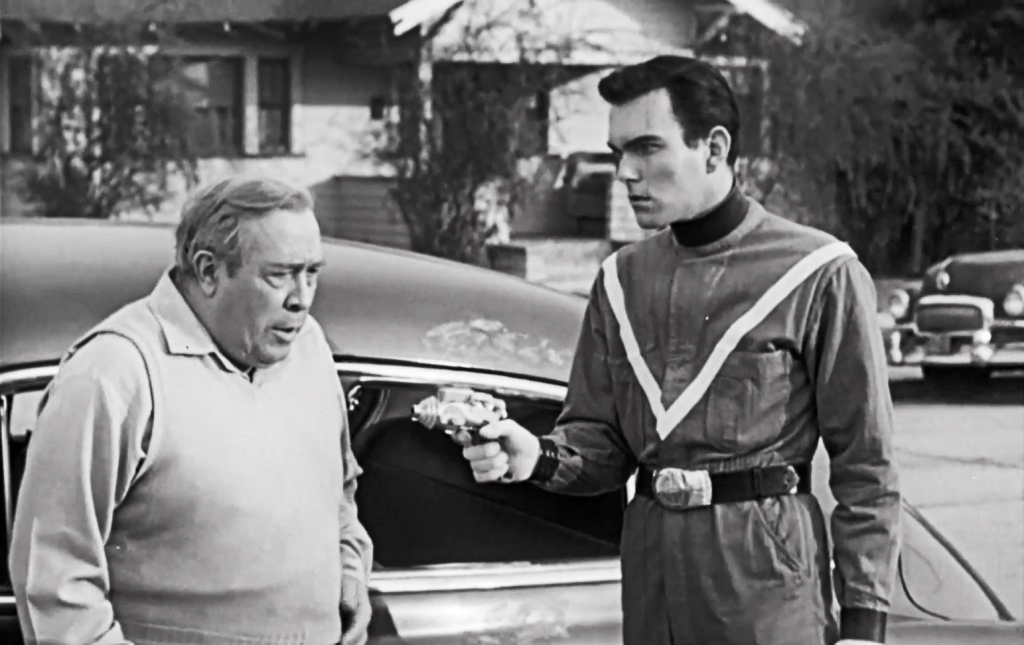
An alien, sick of his alien lifestyle, attempts to live anonymously among the human race. However, some of his fellow aliens are tasked with not only retrieving their defected comrade, but also annihilating the entire planet Earth. To do so, they unleash their alien creatures of destruction, the Gargons. Boasting the worst acting of any movie on this list, it’s hilarious for the performances alone. However, the cherry on top is that the Gargons are portrayed by giant lobsters. This movie is, in my opinion, the definitive “so bad it’s good” movie.
When I think of the slew of 1950’s Sci-Fi movies that were released on shoe-string budgets, a few things come to mind. Terrible acting, ridiculous special effects, and the most basic plots known to man. It Came from Outer Space is no exception to these things, but with one interesting twist. What if the aliens aren’t here to destroy or enslave us?
John Putman and his fiancee, Ellen Fields are out stargazing one night when John notices something shooting across the skyline from his telescope, watching it crash off in the distance. The two go investigate and, just before it sinks beneath the dirt of a landfill, John sees a spaceship. John tries to convince the town of what he saw, but no one believes him until the sheriff starts to notice some people going missing and returning with a strange air about them. The sheriff decides they have to kill the aliens before they themselves are killed, but John believes a peaceful solution can be reached. He discovers that the aliens aren’t killing anyone, they’re merely shapeshifting into humans they see in order to get ahold of supplies they need to repair their busted ship. Once they have all the parts they need, they will get out of Earth’s hair. It’s up to John to keep the sheriff and his posse from getting to the aliens before they can leave.
Most of the time, these Sci-Fi movies from the 50s are reactions to the Red Scare. The aliens are malicious and vindictive and out to conquer our planet, just like the Soviets. However, this movie, based on a treatment from one of the greatest Sci-Fi authors, Ray Bradbury, depicts the aliens as sympathetic. Not necessarily human, but deserving of a chance for peace. Just that tiny change elevates the movie above many of its peers. It still has the cheesy special effects, but they’re more subdued and used sparingly. It’s not like there’s a giant lobster off in the distance, ready to attack.
Credit can be given to the film’s director, Jack Arnold, for the intelligence behind the camera. Arnold’s other credits include Tarantula, Creature from the Black Lagoon, The Mouse That Roared, and a personal favorite, The Incredible Shrinking Man – all much smarter than their contemporaries. It will still make you laugh when you aren’t supposed to, but It Came from Outer Space is an enjoyable Sci-Fi romp, worth a look during the month of Halloween.
Since I’ve already said that I’m not much of a fan of Horror movies, I expect some of you won’t give my reviews of the genre much credit, and rightfully so. To attempt to give you a way to gauge your interests compared to mine, I’ve decided I should do another controversial list. So, here it is: The Top 15 Horror Movies.
15. The Wolf Man
The son of the Man of a Thousand Faces, Lon Chaney Jr. stars as Larry Talbot – a man who returns home for the burial of his brother. His father, John (Claude Rains), is a difficult man to be be around, but Larry’s return is an opportunity for reconciliation. Larry’s life changes when he’s bitten by a werewolf – a Romani Bela Lugosi. Now, he transforms into a werewolf every night, killing a villager and waking up without remembering. The terror of the town is eventually brought down by John Talbot, who looks on in horror as the wolf he’s just beaten with a silver cane turns back into his son. Sad-eyed Chaney Jr. does his father proud with his work in this classic monster movie, and Claude Rains proves yet again that he can literally act in anything.
14. The Lighthouse
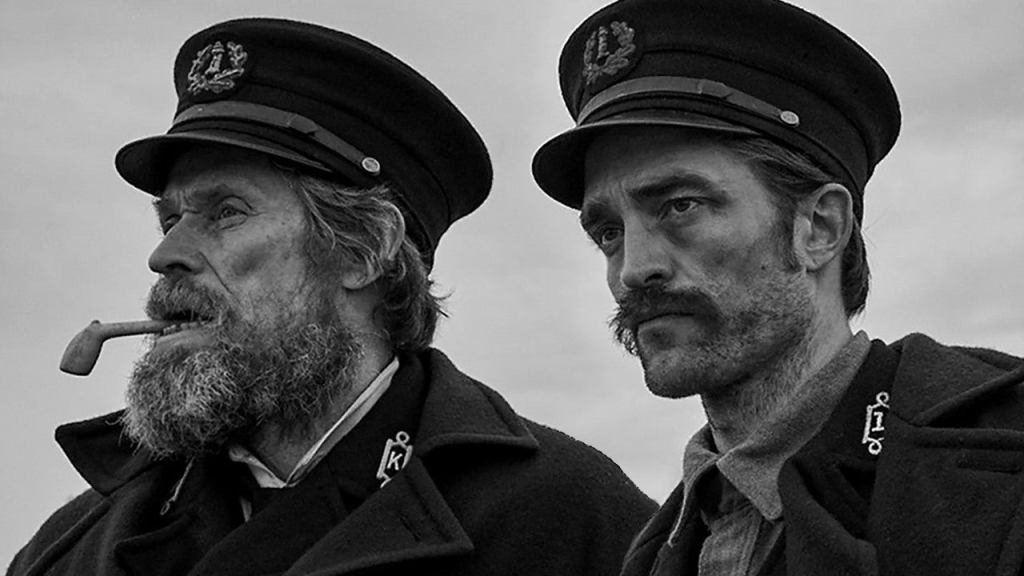
Inspired by an unfinished story by Edgar Allen Poe and a myth about the mysterious deaths of a couple of lighthouse wickies in Wales, The Lighthouse follows two wickies as they spend their time in isolation. Over the course of the film, the two slowly descend into drunken madness. That descent ramps up ever more when Robert Pattinson’s Ephraim kills a one-eyed seagull, something that Willem Dafoe’s Thomas superstitiously warns him against doing. This film is filmed in black and white and contains frequent use of period-accurate maritime dialogue, which gives it a greater sense of historical and mythological presence. Robert Eggers’ previous film, The Witch, also notoriously keeps it’s depiction accurate to the period in which it is based, making Eggers an interesting new-ish director to watch.
13. The Others
Nicole Kidman stars as Grace Stewart, a mother who lost her husband in World War II and now spends her time taking care of her children who are sensitive to light by keeping the house as dark as possible. However, before too long, many inexplicable thing happen, convincing Grace that her house is haunted. Things take an even stranger turn when her husband she was convinced is dead returns home. Eventually, Grace uncovers the truth of what is going on in her home, and it’s honestly probably not what you think. Kidman’s performance and the beautiful look of the film carry it. And while everyone loves a good twist, there’s more to keep you invested in the movie than just that. Perfectly creepy in tone, The Others is a thrilling supernatural horror mystery just waiting to be solved.
12. Donnie Darko
Donnie Darko (Jake Gyllenhaal) is a troubled youth in the late 1980s. He sleepwalks and has visions of a man in a creepy rabbit costume named Frank, something that saves his life from being crushed by a crashing airplane that no one can account for. Frank convinces Darko to cause a flood in his school and burn down the house of a motivational speaker (Patrick Swayze in an unusually sinister role), all the while trying to get him to understand something about time travel and explain that the world is going to end on Halloween night. Things come to a head mere moments before the end of the world in an absolutely bonkers finale. Donnie Darko is a complex and twisty independent horror film that is probably to blame for Horror’s recent-ish fascination with 1980s nostalgia, but that’s not a mark against it.
11. Cat People
This film is sort of the female version of The Wolf Man. Simone Simon plays Irena, an immigrant from a village in Serbia who believes she is descended from a group of people who turn into black panthers when aroused. We’ve all been there, am I right? (I’m so sorry, mom) She falls in love with Oliver, who doesn’t believe Irena’s superstitions, and they get married. However, Irena becomes increasingly concerned with turning into a cat, and Oliver convinces her to see a psychiatrist. Irena and Oliver’s marriage gets rocky and Oliver finds solace in the arms of his coworker, Alice. Irena is suspicious of their relationship and ends up stalking Alice, but is it as human or as a panther? I have a difficult time getting people to take my recommendation on this movie. I guess because it’s a kinda-goofy concept, but let me tell you this: no other Horror movie draws from the fear of what you don’t see more than Cat People, and that includes most Hitchcock films.
10. A Nightmare on Elm Street
Wes Craven was the Slasher director, and his talent and thoughtfulness for the subgenre were at their peak with A Nightmare on Elm Street. When some of the promiscuous teens in town start having weird dreams about a man in a red and green sweater and hat, who walks around with steak knives on his gloved hand, the line between dream and reality get blurred. What this man, the one and only Freddy Krueger, does in their dreams, follows them into their awakened lives, including death. Nancy, one of the girls plagued by these nightmares, slowly uncovers who Freddy is (or was) and in the end, it’s up to her to stand up to him. The premise of being unable to avoid Freddy because he attacks your dreams is a wonderfully frightening thought, and it separates A Nightmare on Elm Street from other movies of the genre.
9. The Exorcist
When Chris MacNeil’s (Ellen Burstyn) daughter, Regan (Linda Blair), starts exhibiting strange behavior, Father Karras (Jason Miller) is convinced it’s demon possession. However, he is currently experiencing a crisis of faith and feels unfit for the task, so they call in Father Merrin (Max von Sydow) who is quite experienced with exorcisms. Together, Fathers Merrin and Karras attempt to extract the demon from Regan, but unfortunately, they are not capable of doing it. It’s not until Father Karras makes a Christ-like sacrifice that the demon leaves poor Regan alone. Most Horror films, especially newer ones, are very antagonistic towards religion, but The Exorcist treats it’s Catholic origins with respect and therefore, it makes it’s story more believable.
8. The Thing
John Carpenter’s best film takes place in Antarctica, where an American research team witness a helicopter blow up in pursuit of a dog. R.J. MacReady (Kurt Russell) investigates and finds an unusual-looking body, which he brings back to base to have investigated. However, it soon becomes clear that the body is that of an alien creature taking the form of a human. As the revelations about the aliens abilities come to fruition, MacReady and the others realize, in their isolation, none of them are safe. The alien could be impersonating any one of them. That paranoia of who is who they say they are drives the movie to it’s explosive end. Kurt Russell’s performance and the special effects, which are still quite impressive if not disgusting, make this film a must-watch.
7. Diabolique
Michel runs a boarding school with an iron fist. He mistreats his wife, Christina, and his mistress, Nicole. Fed up with his abuse, Nicole and Christina agree to murder Michel and make it look like an accident, so they drown him in a bathtub and throw his body in the pool. However, the next morning, there is no body. Several mysteries surrounding Michel’s body and ghost plague Christina to the point of sickness. As her sanity unravels, the film presents so many twists, it’ll make your head spin. There’s a reason there was a warning before the movie was shown in theaters telling audiences not to spoil the ending for others. This French film is tense from start to finish, and thrilling to watch. It’s no wonder Alfred Hitchcock wanted the rights so badly. However, the film is nearly perfect in the hands of Henri-Georges Clouzot.
6. Jaws
The ultimate summer blockbuster. Only Steven Spielberg’s third film, Jaws shot him to the stratosphere as well as revitalized the Monster movie genre. When a great white shark terrorizes the beach of a coastal town, the new police chief, Martin Brody (Roy Scheider), closes the beaches. The heartless mayor is on his case about keeping the beaches closed, as he fears the town’s economic suffering for the summer months. Instead, a bounty is placed on the shark, and when the many would-be bounty hunters fail at bringing the shark down, it’s up to Brody, Matt Hooper (Richard Dreyfuss), and Quint (Robert Shaw) to save the local waters. You know the movie. You know the soundtrack. The movie and specifically the image of just a shark fin gliding across the water has been parodied and referenced to death, but that just proves it’s longevity.
5. An American Werewolf in London
Two American travelers, David Kessler (David Naughton) and Jack Goodman (Griffin Dunne), get attacked by a wolf out in the Yorkshire moors, leaving David bedridden for weeks and killing Jack. David appears to be healing up rather quickly according to Dr. Hirsch and the nurse, Alex, but he’s convinced he’s getting worse. He and Alex fall in love and sleep together at her apartment. When she goes to work for her night shift, David transforms into a werewolf in one of the most excruciatingly long scenes ever, and then attacks people night after night. His reign of terror on London is ended when the police corner him in an alley behind an adult movie theater. The movie is funnier than you might expect, but it’s also truly horrific, with jump scares and intense shadows. Quite frankly, it’s one of the best monster movies of all time.
4. The Cabinet of Dr. Caligari
Considered the first true horror film, The Cabinet of Dr. Caligari has all the makings of a classic. The German Expressionist set pieces, the creeping shadows, the twist ending – it’s all there. The story is recounted in a discussion between two men. The one telling the story, Francis, relays his personal experience with the eponymous doctor to an older man. Dr. Caligari is a hypnotist with a somnambulist under his spell. He uses the somnambulist to murder and kidnap people. When Caligari has his somnambulist kidnap his fiancee, Jane, Francis attempts to put a stop to Caligari’s misdeeds, but Caligari escapes into an insane asylum, where, it turns out, he’s the director. I won’t spoil the ending, but this 1921 German silent film is a movie that has to be seen to be believed.
3. Dracula
The original Universal monster movie. Dracula started the explosive era of monster movies in America in the 1930s. Bela Lugosi stars as the famous Count Dracula, who recruits the easily-persuaded Renfield into his services. Renfield secures passage for the Count on a boat traveling from Transylvania to London, England. There, he meets Dr. Seward and John Harker, as well as his next two victims, Mina Seward and Lucy Weston. Harker becomes suspicious of Dracula after Lucy dies and brings in the famous Dr. Van Helsing to investigate. Together, they have to take down Dracula before Mina becomes completely under his spell. Bela Lugosi had a struggling career after this movie because of how well he embodied Dracula, and it’s no wonder. There has never been a better monster performance or movie.
2. Psycho
Marion Crane (Janet Leigh) steals from her boss in order to pay her boyfriend’s debts. Immediately feeling regret and paranoia, she decides to return the money, but the rain on the road is impossible to see through and she finds haven at the Bates Motel. But things aren’t all as they seem at the motel or with its proprietors. The unsuspecting Marion will never finish her shower. (Is this a spoiler? Come on, you all know the scene.) From there, the movie shifts focus to Marion’s boyfriend and sister as they investigate Marion’s mysterious disappearance. Hitchcock turned the audience’s expectations completely on their heads by casting the headliner Leigh in a role that disappears after the first third of the movie, but that’s just the beginning of what this movie has in store.
1. The Silence of the Lambs
Along with the above film, The Silence of the Lambs ignited a love affair between American audiences and serial killers. Clarice Starling is an FBI agent that gets involved with the case of the Buffalo Bill murders by being asked to interview known cannibal, Dr. Hannibal Lecter, to get a profile on Buffalo Bill. Lecter complies but only if Starling lets him psychoanalyze him as well. At each of their meetings, he offers a nugget of information about Bill in exchange for personal information about her. Starling follows Lecter’s clues, pursuing Bill, and Lecter is transferred to a different prison facility, where he successfully breaks out. This Oscar-winning film keeps you on the edge of your seat throughout and only heightens its intensity in its climax. Both this movie and Psycho take a lot of inspiration from real-life serial killer, Ed Guinn. That true-life comparison and its proximity serve to inflame our fear. The Silence of the Lambs is truly terrifying.
It’s October – spooky month – and that means I plan to focus my reviews on the Horror genre. I’m not really a fan of Horror movies, so I’m probably rather unqualified to do this, but what can I do? I gots to review. There are some great Horror films out there, don’t get me wrong, but the majority of them are too indulgent on what gets audiences – jump scares, gore – to the point where their stories are diluted.
This is my first foray into reviewing Horror, and I thought I should start with one of the oddest films I’ve seen in the genre. Bubba Ho-Tep.
The one-line pitch for this movie is as follows: A geriatric Elvis (still alive and hiding as an impersonator of himself) and a black man who is convinced he’s John F. Kennedy have to save their nursing home from a southern Mummy. Think about that for a second, reread it if you have to. Come on, you know you want to see it.
Maybe it’s because of that crazy hook that the movie felt more disappointing while watching it. It had so much going for it, in theory. I love the totally bonkers premise. I love Bruce Campbell and Ossie Davis (Elvis and JFK respectively). I honestly love the soundtrack. But when it comes down to it, Bubba Ho-Tep is not a good movie. Not even in the campy-sorta way. I’m sure this comes as a shock to all of you.
The biggest issue with the movie is a subplot explaining how Elvis came to impersonate himself and why he has another name, Sebastian Haff. It takes up way too much time and derails the pacing of the movie, all for a joke that needed maybe two sentences to set up. While watching these scenes, I contemplated what could have made them seem necessary to the filmmakers. Really, what I suspect it is, is there isn’t enough story involving the mummy to warrant a full-length movie, so they had to pad the runtime with this backstory. We don’t even get a backstory for JFK’s transformation to a Black man, which would have been much more interesting.
I also don’t care for the director, Don Coscarelli. Other films to his credit are the Phantasm movies and The Beastmaster. If you’ve seen those movies, surely you understand what I’m getting at. Coscarelli is good with minimal budgets, but he’s less consistent with pacing and editing. It makes his films hard to watch and Bubba Ho-Tep is no exception to those tendencies.
A scene where a lady is confronted by a scarab and the last 15-20 minutes (the confrontation with Bubba Ho-Tep) are quite well-done and enjoyable, especially seeing Campbell’s Elvis coming to JFK’s rescue in a motorized wheelchair, but it’s not enough to rescue the film. If you’re a fan of schlock or enjoy watching bad movies for the irony, maybe give Bubba Ho-Tep a try. I’m sure some of you will find something in the movie to latch onto. Otherwise, you’re better off watching something – anything – else. In fact, you’re probably better off not watching anything at all.
It’s almost my birthday, and since I’m a dull individual, I’ll probably spend it marathoning movies of my favorite genre; America’s genre: the Western. The characters, the wilderness landscape, crooked landowners, physical feats of strength and determination, psychological struggles, and personal moral codes – Westerns have it all in spades.
Because it’s probably my favorite genre, I had a very difficult time narrowing down my list for a Top 10. This Top 25 is the best I could do. This list is also definitive – if you disagree with any of the films on this list or their placement, you can safely assume that you’re in the wrong. Sorry, I don’t make the rules. Though I will admit, if you’re a fan of Western Comedies, there are some glaring omissions. Don’t worry, though. I’m saving them for later. Without further ado, put on your spurs and giddy up for the Greatest 25 Westerns of All Time,
25. The Sisters Brothers
The Sisters Brothers flew under the radar for most people. It’s a coproduction between America and France, and directed by Jacques Audiard, in his first English-language film. Based on a novel, The Sisters Brothers follows…the Sisters brothers, Charlie (Joaquin Phoenix) and Eli (John C. Reilly) – two assassins on the hunt of two men who have found a dangerous solution for panning for gold. The two leads play off each other well as the loose-cannon Charlie and at-the-end-of-the-road Eli, as well as Jake Gyllenhaal as one of the two panners. The film is a rambunctious adventure up to its blistering conclusion.
24. The Assassination of Jesse James by the Coward Robert Ford
This 2-and-a-half-hour epic Western is also based on a novel. Unlike the previous entry, however, there are true events to back this one up. The Assassination of Jesse James is meditative and slow, but it’s beautiful and intelligent. Don’t let my title shorthand fool you, though. The film belongs to Robert Ford (Casey Affleck) – an outsider looking in on the fame that follows the leader of his gang, Jesse James (Brad Pitt). The camera captures the beauty of the landscape as well as the darkness creeping in to Ford’s relationship with James, and though we know how the story will end, the movie still keeps us enthralled the whole way through.
23. The Far Country
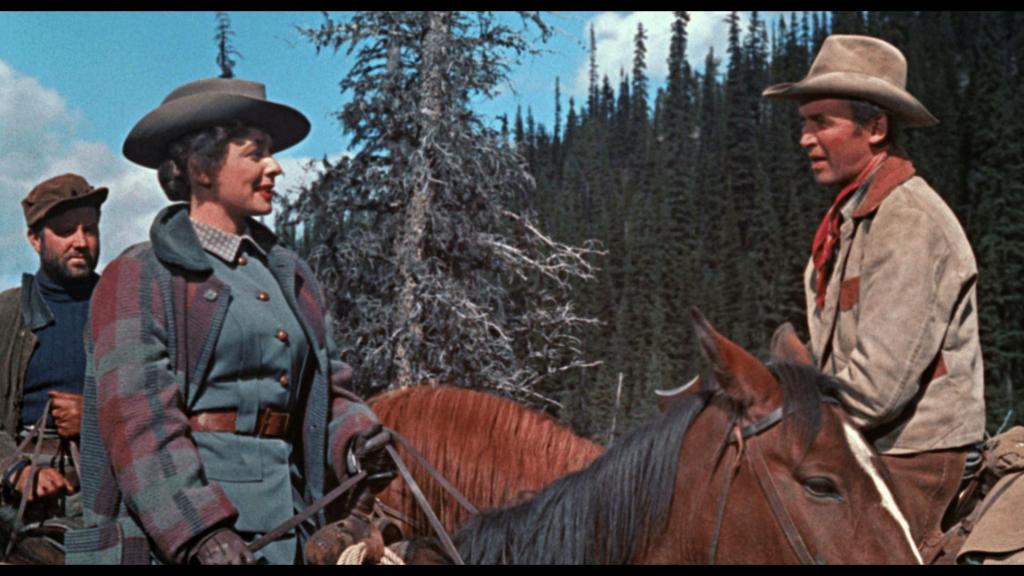
From 1950 to 1955, director Anthony Mann and James Stewart collaborated on eight films together – five of which were Westerns. Any one of them deserves a spot on this list, and it nearly came down to Winchester ’73 and The Man from Laramie, but I went with my personal favorite. In The Far Country, Stewart plays Jeff Webster, a cattle driver who makes his way to Alaska during the Yukon Gold Rush. When he crosses paths with the evil Judge Gannon (loosely based on real-life conman, Soapy Smith), the tension is palpable. It only rises as the movie goes on as Webster stops Gannon, scheme after scheme, until it comes to a boiling point – a one-on-one duel that turns into an ambush.
22. Thousand Pieces of Gold
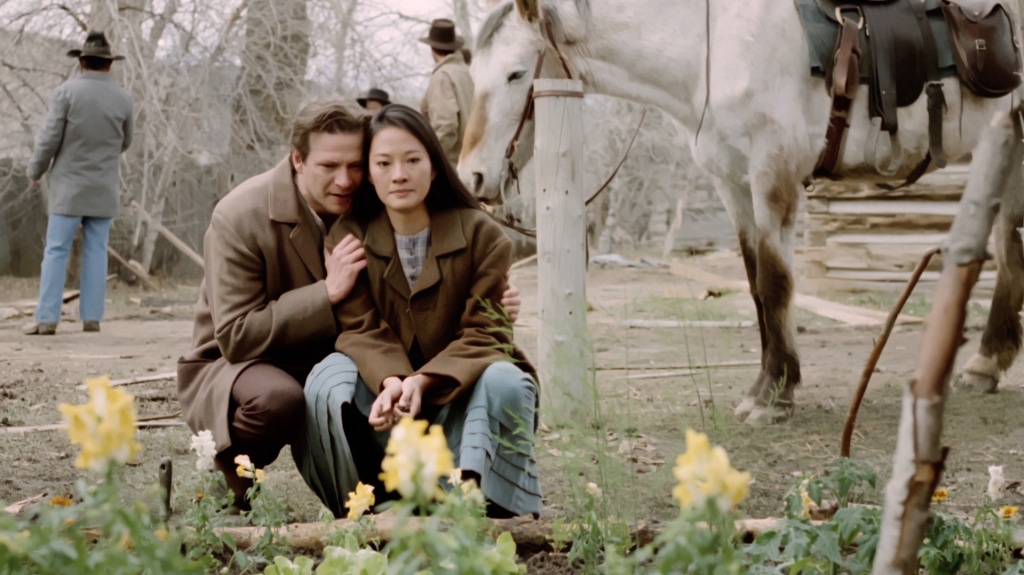
Thousand Pieces of Gold is the sole feature film from director Nancy Kelly, which is a shame. She has such a strong grasp on the Western genre and the female perspective that it’s criminal that this film failed and cost her a career. Rosalind Chao (fans of Star Trek: TNG might recognize her) stars as Lalu, a Chinese woman who is sold to America by her impoverished family. In a Northwest mining town, she is bought to be a wife, then a prostitute, and finally, she is won in a poker game by a man named Charlie (Chris Cooper). With Charlie, Lalu is given the freedom to figure out who she is and create a better life for herself. This Western Romance is at times too sentimental, but it has a lot of heart.
21. Johnny Guitar
If you thought this movie would focus on a man named Johnny Guitar, you would be mistaken. The main character in this film is Vienna (Joan Crawford), the strong-willed owner of a saloon that is at odds with everyone else in town because she is okay with the railroad coming through and she lets outlaws and thieves patronize her establishment. Guitar (Sterling Hayden) is just the latest drifter who stops by for a drink, and luckily, he’s handy with a gun. The antagonism from the townspeople is spurred by Emma (Mercedes McCambridge), a jealous woman who wants to see Vienna dead by any means necessary. When one of the outlaws who frequents Vienna’s saloon rob the bank in town, Emma sees her chance to get her wish. The melancholic ending proves that Johnny Guitar is the ultimate Western Noir.
20. Little Big Man
Dustin Hoffman stars as Jack Crabb, or “Little Big Man”, a white man raised by Cheyenne, who has a foot in both camps. He’s lived a pretty remarkable life, having befriended Wild Bill Hickock and worked under General Custer. He’s also the only white survivor at Little Big Horn. A Western satire for the ages, this movie uses conflicts between Native Americans and white settlers as an analogue for the Holocaust and the Vietnam War. It’s also one, if not the only, film to portray both the Sand Creek Massacre and the Battle of the Washita River (which can only be described as a “battle” because Cheyenne warriors were present at the camp that the U.S. military attacked; it was still a massacre), although it makes no mention of John Chivington, a worse offender to Native Americans than Custer ever was.
19. Buck and the Preacher
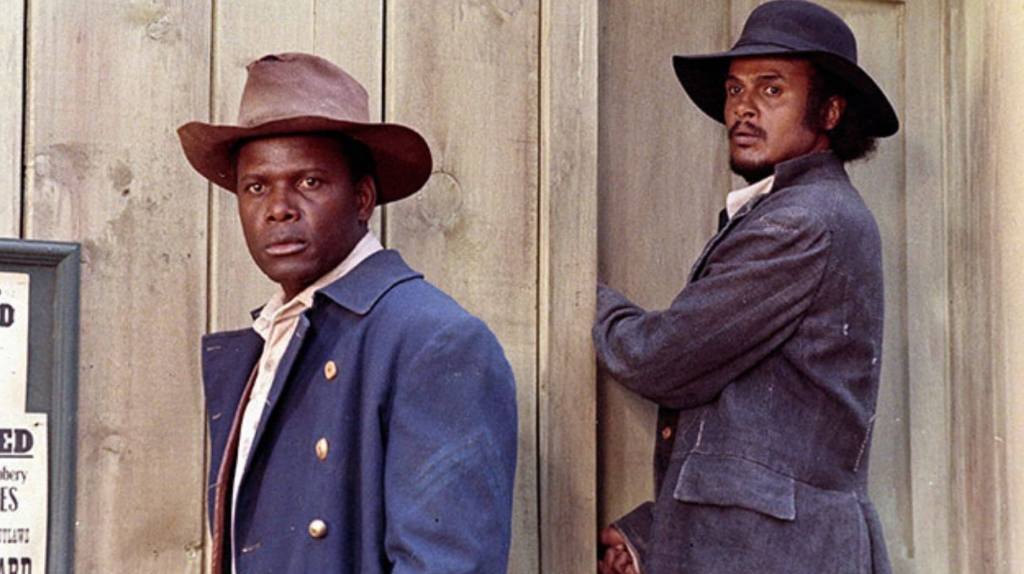
This film is all at once a Western classic, a blaxploitation film, and one of the few media portrayals of “Exodusters”, post-Civil War African American settlers who went through hostile Native land and around white plantation owners to make a new home in Kansas Territory. This is Sidney Poitier’s directorial debut, and he also portrays our hero, Buck – a cowboy who acts as Moses to these Exodusters. Along the way, he runs into Reverend Willis Oaks Rutherford (a wily and devilish Harry Belafonte), whom he enlists to help him ward off a group of white raiders. Made just a few years after the end of the Civil Rights Movement, Buck and the Preacher is just as much fun as it is important.
18. The Ox-Bow Incident
The Ox-Bow Incident is the most unsettling Western you will ever watch. Henry Fonda and Harry Morgan play two cowboys who come to town just as news is breaking that a local rancher is dead and his cattle stolen. A posse forms to search for the murderers, and the cowboys join it. Just on the outskirts of the town, they find a trio of men who are unable to provide proof of purchase of the cattle currently in their possession, and so they decide to hang them at sunrise. However, over the course of the night, some men in the posse voice their doubts that these are the murderers they’re looking for. Just before sunrise, they decide to vote on whether or not to hang the three men. I won’t spoil the conclusion here. Suffice to say, this moody Western will grab ahold of you and not let go for days to come.
17. Dances with Wolves
Another directorial debut! This time it’s Kevin Costner behind the camera and in front of it as Lieutenant John Dunbar, a Union soldier who is perhaps a little suicidal. When he helps defeat a Confederate troop, he’s rewarded by being sent to an abandoned fort in Indian Territory. After a confrontation with the Lakota, Dunbar realizes his only chance for survival is to befriend his Native neighbors. Slowly, he integrates himself into their way of life, even taking one of their own for a wife. When he’s captured by U.S. military and charged with desertion, he must be rescued by his new tribe. Realizing he’s a danger to the Lakota with the military out looking for him, Dunbar goes into hiding, never to be seen again. With beautiful cinematography and a majestic soundtrack, this epic Western is a must-watch.
16. The Searchers
Ethan Edwards is the best acting of John Wayne’s prolific career. This isn’t to say there aren’t better movies with John Wayne in them, which this list will prove later, but Wayne is so perfect as the cynical, racist uncle to Natalie Wood’s Debbie, that no other performance comes close. When Debbie is kidnapped by Comanche, Ethan leads a small group to look for her and bring her home, or kill her if she’s been “tainted”. The most harrowing scene in the film comes when Ethan attempts to do just that after five long years of searching. Once he returns Debbie home, we watch through the doorway as Ethan Edwards walks out into the sunset. Not as a hero, reveling in his success, but as a bitter man refusing to accept that the world is changing without him.
15. Destry Rides Again
Tom Destry Jr. (a much younger James Stewart) is a sheriff who is unwilling to carry a gun. Not because he can’t handle one – he’s an excellent marksman – but because he would rather rely on his wit to bring law and order to town. He’s sent to Bottleneck when the previous sheriff goes missing, and in his absence, a crooked saloon-owner named Kent, and his girlfriend, Frenchy (Marlene Dietrich), have got the town in a stranglehold. It’s an uphill battle, but Destry is determined to win the respect of the townspeople and uncover the mystery of the missing sheriff. A riotous Western comedy in it’s own right, Marlene Dietrich’s Frenchy is the source of inspiration for Madeline Kahn’s character in Blazing Saddles, right down to the inability to sing and thick German accent.
14. The Good, the Bad & the Ugly
I mean, what is there to say? You know the movie, you know the score, you know the Mexican standoff scene. Considered the ultimate Spaghetti Western, The Good, the Bad & the Ugly follows three men -the quiet Blondie, the venomous Angel Eyes, and the oafish, double-crossing Tuco – in search of a cache of Confederate gold. With bounty hunters and U.S. military hot on their trails, they must, at times, work with each other and against each other if they’re going to find the grave where the gold is buried. This film was an international success, making Clint Eastwood a mega star and introducing the United States to Lee Van Cleef and Eli Wallach. It also happens to be Sergio Leone’s masterpiece.
13. The Big Country
This is not the last time you’ll see Gregory Peck playing a pacifist seeking peace in an unruly West on this list. But this is the only time you’ll see it in Technicolor. The Big Country is an epic Western centered on a Hatfields and McCoys-style conflict between two families – the Terrills and the Hannasseys – with Peck’s James McKay caught in the middle. McKay is a wise man, who sees the folly of the rivalry, and refuses to let either side goad him into their foolishness. His desire for peace above all costs him his fiancée, Patricia, the daughter of the Terrill patriarch. McKay’s desire for peace is proven right as the confrontation between families comes to a tragic head. A morality tale with fantastic supporting performances from Charlton Heston and Burl Ives, this film, like Gregory Peck, is unwavering.
12. Stagecoach
Stagecoach did more for the Western genre than any other film. It imbued John Ford with his love for wide shots in Monument Valley, it made John Wayne a superstar lead actor, and it brought the Western out of B-Movie Hell and brought it to a place of prominence and prestige. You’ve probably seen some variation of this movie before: A group of strangers meet on a stagecoach as they make their way from Arizona to New Mexico. They have a multitude of reasons to make the trip – a fresh start, meeting family, vengeance – and they have to brave through Apache territory to get there. Along the way, John Wayne’s Ringo Kid, who has busted out of jail to kill the men who murdered his father and brother, falls in love with Dallas (Claire Trevor), a prostitute that has been kicked out of town and must now find somewhere she’s accepted. Action, romance, and great characters – this movie has it all.
11. The Gunfighter
Gregory Peck is Jimmy Ringo, the Gunfighter. Weary of his gunslinging lifestyle and tired of being viewed as an outcast or some kid’s ticket to fame as “the man who shot Ringo”, he decides it’s time to retire and become a respectable member of society. He returns to Cayenne, the town where his wife he hasn’t seen in eight years and the son he’s never met live. Through mutual friends, Ringo is given the chance to plead to his wife to join him in California, but she asks for a year to consider it and see whether he stays out of trouble. At the urging of the marshal, Ringo decides to leave town, but it’s too late. The brothers of a young man Ringo shot and killed in self-defense have arrived and are waiting to ambush Ringo. This film’s conclusion is a meditation on the price of fame and the circular perpetuation of an eye-for-an-eye.
10. Red River
John Wayne is Thomas Dunson, a man who wants a wife, a cattle ranch, and a son. When an attack on the wagon trail deprives him of his wife, Dunson decides to adopt the only survivor of the attack as his son. Fourteen years later, the cattle ranch is a success, but Dunson is a broken and wearied man. He decides to drive the cattle to Missouri in order to sell them and he brings his team, including his adopted son, Matt (Montgomery Clift), along with him. Dunson is a tyrant on the trail and eventually, Matt and Dunson’s men revolt, taking the cattle to Kansas instead. Not one to let any slight go unpunished, Dunson follows their trail. There is plenty of action and romance in Red River, as well as an excellent critique on generational sins and manhood.
9. Cat Ballou
Catherine Ballou (Jane Fonda) is a schoolteacher who returns home to her father’s ranch only to discover that the Wolf City Development Corporation is threatening Frankie Ballou (John Marley) to give up his ranch so they can use it for their own purposes. When Frankie refuses to give in to their demands, they send the killer, Tim Strawn (Lee Marvin), to do what he does best. Cat hires the notorious sharpshooter, Kid Shelleen (also Lee Marvin), in an attempt to save her father, but Shelleen is revealed to be a drunken buffoon – still a crack shot, but past his prime. After the murder of her father, Cat Ballou demands justice from the town of Wolf City, but she doesn’t get it. With a ragtag team, she decides to take matters into her own hands, becoming a notorious outlaw. When she accidentally kills the head of the Wolf City Development Corporation, she finds the town now all too willing to pursue justice. It’s hard out there for a woman. This Western Comedy is equal parts hilarious, dramatic, and action-packed, and Lee Marvin shines as the uproarious Kid Shelleen. There’s also Nat King Cole and Stubby Kaye as two banjo-wielding minstrels to narrate the story.
8. High Noon
Will Kane (Gary Cooper) is getting married when it’s announced that Frank Miller is on the twelve o’clock train, headed for town. This is a problem for Kane, since Miller is a vicious outlaw and Kane is the town’s marshal, and Kane was the one to put Miller behind bars in the first place. He now sees it as his responsibility to do so again. Miller’s gang, including his younger brother, are waiting for Frank at the train station, and when they arrive in town, it will be a very unfair four-against-one. Kane pleads with the town judge, mayor and all his friends in town to help him take care of the Miller gang, but everyone has one excuse or another, except for a fourteen-year-old boy who Kane rightly sends on his way, despite his appreciation of the boy’s courage. His own bride, Amy Fowler (Grace Kelly), urges him to abandon the town, and when he refuses, she abandons him. Come high noon, it’s an empty street as Kane and the Miller gang close the gap between them. This movie plays out in real-time, which increases the tension drastically. High Noon is mostly famous for a great performance by Gary Cooper and being an allegory of the McCarthy era Hollywood Blacklisting. It’s also responsible for its two biggest detractors, Howard Hawks and John Wayne, to make Rio Bravo – a vastly inferior film, but still considered a Western classic.
7. The Treasure of the Sierra Madre
For the record, the actual quote is, “Badges? We ain’t got no badges. We don’t need no badges. I don’t have to show you any stinking badges.” Doesn’t roll of the tongue as well, I know, but I wanted to clear the air. Fred Dobbs (Humphrey Bogart) and Bob Curtin (Tim Holt) are down-on-their-luck drifters when they hear about gold prospecting in the Sierra Madre mountains. Considering their one-off employers seem to have a bad habit of forgetting to pay the two men for their work, they happily go in with a seasoned prospect named Howard (Walter Huston). When they successfully discover gold dust in the mountains, bandits and Federales are the least of their concerns. The real enemy to watch out for is their own unbridled greed. Yes, it’s an old morality tale you’ve heard thousands of times, but no retelling of that tale is as engaging as The Treasure of the Sierra Madre. Twists and turns, double-crosses, and parasites are around every corner, and you can never guess which direction the film will go at any given moment. It’s that kinetic spontaneity that will keep the film with you years down the road.
6. Django Unchained
A German bounty hunter/dentist named Dr. King Schultz (Christoph Waltz) seeks to purchase a slave named Django (Jamie Foxx) because he should recognize the faces of his next big score, the Brittle Brothers. The deal is if Django can point them out to Schultz, then Django is a free man. As they track down the Brittles, Schultz gives Django the opportunity to learn to shoot and read, where he proves to be a natural at both. After they successfully kill the Brittle Brothers, Schultz learns that Django was married to a house slave named Broomhilda (Kerry Washington) before they were sold separately and is determined to reunite them. They find Broomhilda or “Hildi” is a slave at the plantation of Calvin Candie (Leonardo DiCaprio), and come up with a ruse to get Candie to sell Hildi to Schultz. The main house servant, Stephen (Samuel L. Jackson), discovers the nature of Django and Hildi’s relationship, and alerts Candie. Multiple gunfights ensue and it’s going to require all of Django’s wit to get out of Candie’s plantation with Hildi alive. Quentin Tarantino is not for everybody. I’m well aware of that, but if you can look past his overindulgences, you can find a charming, action-packed, and surprisingly hilarious send up to Spaghetti Westerns in here. The movie has intensity and swagger, and a multitude of well-defined characters in spades. Django Unchained is one for the ages.
5. The Man Who Shot Liberty Valance
Upon entering the town of Shinbone, Rance Stoddard (James Stewart) is immediately attacked by the outlaw, Liberty Valance (Lee Marvin), and his gang. Rance is discovered by Tom Doniphon (John Wayne) who carries Rance in to be treated for his wounds by his girlfriend, Hallie (Vera Miles). Rance works in Shinbone, hoping to set up a law practice, befriends the local newspaper editor, Dutton Peabody, and decides to build and teach a school when he discovers Hallie and a good portion of the town are illiterate. Meanwhile, Valance’s tirades on Shinbone and the surrounding area are getting worse, and Rance decides he better learn to use a gun. Tom attempts to teach him, but soon their time together turns into a competition for Hallie’s affections. When Rance finally confronts Valance, Valance quickly disarms him and aims to kill. Rance reaches for his gun and fires and Valance goes down. Unbeknownst to everyone else, Tom is standing in the bushes with a rifle. Which one was the man who shot Liberty Valance? In the end, it doesn’t seem to matter. “When the legend becomes fact, print the legend.” The Man Who Shot Liberty Valance is the best film John Ford ever made. It plays into the personalities of its lead actors, but also treats the material with the respect it deserves. It’s a statement – a bold exclamation point on the careers of three Western filmmakers.
4. Butch Cassidy and the Sundance Kid
Butch Cassidy (Paul Newman) is the fun-loving leader of the Hole-in-the-Wall gang, and Sundance (Robert Redford) is his quiet, crack shot right-hand-man. Together, with the rest of the gang, they successfully rob a couple of trains, but that alerts the attention of the head of Union Pacific, who sends a posse of lawmen after them. Cassidy convinces Sundance and Sundance’s girlfriend, Etta Place (Katharine Ross), to hide out in Bolivia, which Cassidy inexplicably assumes is an outlaw’s paradise. However, they are soon deprived of that fantasy upon their arrival. Sundance particularly loathes the place. Due to their inability to speak Spanish, they are initially unsuccessful at robbing banks, so they consider quitting the criminal life for good. Their first day as honest-working men ends with their boss being killed by bandits in a shootout. They decide the honest life isn’t for them, and return to their old ways. When they arrive in a small Bolivian town, they are met by the local authorities who have also called in the Bolivian army to help bring down Butch Cassidy and the Sundance Kid. The two friends go down in a blaze of glory and the film ends with the greatest freeze-frame of all time (although, Thelma & Louise gives it a run for its money). The chemistry between Paul Newman and Robert Redford is magnetic, so much so, between this film and The Sting, they are considered one of the greatest on-screen duos of all time.
3. True Grit (2010)
I had to specify the year because I imagine some of you erroneously believed that the original 1969 film would be on this list. If you can handle Glen Campbell and Kim Darby’s acting, more power to you, but for me, the 2010 Coen Brothers version is infinitely superior. Even if you believe that John Wayne is Rooster Cogburn, you can’t deny that Jeff Bridges is the better actor. The Coen Brothers version leans into the quirkiness of the original novel by Charles Portis, and toes the line between humor and action, while keeping the intensity and theme of fruitless revenge intact. If you don’t know the story, Mattie Ross (Hailee Steinfeld) is a strong-willed girl who doesn’t have the time or patience to leave justice against the man who killed her father to anyone else. She pursues Tom Chaney (Josh Brolin) herself, and seeks the assistance of Marshal Rooster Cogburn (Jeff Bridges) to help bring him down. Cogburn is a drunken shell of the man he once was and so doesn’t appear to be much help, but he makes the attempt anyway, and they add Texas Ranger LeBoeuf (Matt Damon) to the mix. At every turn, every person including Cogburn and LeBoeuf tell Mattie that this is no venture for a young girl, but she’s determined. Once they find Tom Chaney with the Ned Pepper gang, she and Cogburn both get the chance to prove their mettle. Bite down and your leather reins and get ready for one of the most glorious finales ever put to film.
2. The Magnificent Seven
The only difference between Westerns and Samurai movies is location, and this film is the proof. The three-hour epic from Akira Kurosawa, Seven Samurai, is the film The Magnificent Seven is based on, and the two are basically equal in their impact. Seriously, how often is a remake as good (or at least pretty close) as the original? This film is packed with an all-star cast. Yul Brynner, Steve McQueen, Charles Bronson, James Coburn, Robert Vaughn, Brad Dexter and Horst Buchholz are the titular seven, and Eli Wallach is their opposition, the leader of the bandit gang terrorizing the poor Mexican villain, Calvera. These seven gunslingers are hired by the village to defend them from Calvera. The fear of the villagers and circumstances eventually cause the seven gunfighters to second-guess their decision to help them. However, when Calvera attacks the village again, the seven rally together and defend the people who have slighted them. In the melancholic ending to this magnificent film, Chris Adams (Brynner) muses that the villagers won the day, but the nature of the gunfighter is to always lose. Great performances, a beautiful backdrop, and one of the greatest film scores of all time are the pillars of this remarkable remake of a foreign film. It’s also a loose inspiration for the plot of the Western Comedy, Three Amigos.
1. Tombstone
If you know me very well, there’s no way you’re surprised this is at the top spot. Tombstone is the movie that got me into Westerns. It’s the story of the Earp brothers, Wyatt, Virgil and Morgan, and their friend, John “Doc” Holliday, their confrontations with the red-sash-wearing Cowboys, building to the Gunfight at the O.K. Corral, and culminating in the notorious Earp Vendetta Ride. Wyatt Earp (Kurt Russell), already a famous lawman from his time in Dodge City, joins Virgil (Sam Elliott) and Morgan (Bill Paxton) in the booming town of Tombstone. They establish themselves as runners of a faro table in local saloon, and run into Wyatt’s good friend, the hard-smoking, hard-drinking, hard-gambling Doc Holliday (Val Kilmer). They also meet Bill Brocius (Powers Booth), an important member (and soon to be the leader) of the Cowboys, and Johnny Ringo (Michael Biehn), his best gunman who sees himself as the Fourth Rider of the Apocalypse. When the Earps begin to do what the law won’t do and serve justice, the Cowboys don’t take kindly to it. The Gunfight at the O.K. Corral ends in several Cowboys dead at the hands of the Earps, and the Cowboys retaliate, killing Morgan and wounding Virgil. Wyatt decides to wipe out all remaining Cowboys to finally achieve peace, and Holliday, despite his tuberculosis getting worse and making him bedridden, joins the posse. Thus begins the ultimate showdown, and the best gunfighting montage in all of cinema. A crackling script with dialogue taken directly from the late 1800s, true horse and gun play, wonderful performances, and real moustaches keep the film authentic and exciting. There are cameos and supporting roles from Chalton Heston, Billy Bob Thornton, Billy Zane, Jason Priestly, Stephen Lang, Michael Rooker, and a narration from Robert Mitchum. Above all, there is a once-in-a-lifetime performance from Val Kilmer who embodies the legend of Doc Holliday that anchors the film. “Greatest Western of All Time” hardly does it justice.
If someone were to pitch me a Scorsese movie starring Nicolas Cage as a paramedic in the process of going insane, I’d be hooked immediately. And then I’d watch Bringing Out the Dead and be surprisingly disappointed. This is the only collaboration between one of my favorite directors and one of my favorite actors, so it’s a real shame that it doesn’t play out better. Nicolas Cage doesn’t even do any of his somewhat-annoying Cage-isms. But there is something off about the movie, and maybe by the end of this review I will have pinpointed what it is.
Nicolas Cage is Frank Pierce, a paramedic who hasn’t successfully saved anyone in months and is therefore incredibly depressed. He sees the faces of his “victims” everywhere he goes, and suffers from insomnia because of it. Frank just needs a vacation. But there’s no rest for the saints of New York. We follow Frank on three shifts, paired with three different fellow paramedics. There’s John Goodman as Larry; a simple man who sees their job as a reason to be happy because they help people, Ving Rhames as the religious zealot (who is still somehow okay with picking up prostitutes), Marcus, and Tom Sizemore as…Tom, a volatile, ticking timebomb of a man who seems to prefer nearly killing people instead of saving their lives.
Frank responds to a call on the first shift we see him on regarding a man who is in cardiac arrest. At the scene, Frank sees the man’s adult, former-junkie daughter, Mary Burke, and he becomes obsessed with her. It doesn’t appear to be a romantic thing between them, Frank just sees the light of hope when he looks at her. She’s something for him to latch on to and find comfort in when the world around him becomes ever darker.
The movie seems to have a tonal problem. At different points, the film is depressing, goofy, frustrating, helpless, hopeful, and romantic. It never really lands anywhere. It was very strange watching a scene where Frank and Marcus are driving and they flip their ambulance over and I’m laughing intentionally. I do believe screenwriter Paul Schrader intended the scene to feel comedic, but it’s bizarre to be laughing at such a scene in such a movie. Bringing Out the Dead reminds me of another Scorsese film. It’s a dark and depressing, hellish nightmare version of After Hours with a dash of Taxi Driver.
Visually, the movie is uncanny. It looks like it was filmed digitally, even though it was made with filmstock. It’s oversaturated and incredibly grainy, which I think serve a purpose for displaying the inner anguish of Nicolas Cage’s character, who also acts as the narrator, but it can be an assault on the eyes in some scenes. The final shot, riffing on Catholic paintings of Mother Mary holding the Christ child, is a nice touch, however. It also has opening credits that are designed very similarly to those old piracy warnings that played at the beginning of DVDs.
In the end, this Scorsese film gets swept under the rug, and perhaps that is as it should be. I hate to say it, as I have never watched a Scorsese movie that I didn’t like, but this one comes close. Maybe after a repeat viewing I will change my tune, but for now, I will have to settle on the fact that it was one Nicolas Cage’s best performances…and that’s about all it has going for it.
Dumb Money is a simple movie. The good guys are good because they’re poor, and the bad guys are bad because they’re rich. There’s no room for any depth of character, in fact, any personality at all is a deterrent. Paul Dano, the main reason I was willing to see this movie, plays Keith Gill, a struggling financial analyst who spends most of his time streaming to YouTube and posting on Reddit. He and his wife have a young baby and little money to their names. He spends what little they have on GameStop stock.
Gill’s not necessarily unlikeable, but the only reasons we’re given to care about him are the baby and his financial situation, presented at face value. His brother, Kevin (Pete Davidson in his most Pete Davidson role yet), is completely unlikeable. He’s a jerk to his brother and eats the food that he delivers via DoorDash. He’s a stoner that lives with his parents. I think we’re supposed to like him because of these qualities, but he’s about as tolerable as scraping your bum with a cheese grater.
Keith Gill has something on his side, though: internet culture. He’s a frequent YouTuber, posting livestreams of his financial data, making arguments for why GameStop is a slept-on stock, and he’s also a frequent poster on the subreddit r/WallStreetBets. Because of his wise business sense and his dank memes, he cultivates a massive following, successfully convincing others to buy up GameStop stock simply because he “likes the stock”.
GameStop stock skyrockets as a result, and everyone holding on to their stocks instead of selling it produces a short squeeze on the hedge funds that were short selling the stock, causing some ridiculously rich men to lose a lot of money. When they notice the holes in their pockets, they do everything they can to cut off the tap. The poor nurses and college kids, as well as Keith Gill, watch in horror as the evil rich men switch the rules of the game, causing riotous behavior, such as an increase in TikTok videos. In the end, Congress gets involved and those evil rich men embarrass themselves with having to answer for their actions in a hearing. I think this is supposed to be a victory for the good guys, but I’m not sure. Also, Keith Gill is now a multimillionaire, so I think I’m supposed to hate him too now?
Dumb Money has a very specific audience. It’s a film for the younger generations who believe memes are the pinnacle of comedy, and assume anyone who is wealthier than a broke college student is a bad person. And this is my biggest problem with the movie: it makes me defend the rich guys. People who commit shady business practices (legal or otherwise) where they step on those less fortunate to deepen their pockets are bad people, but they’re not cartoon villains. There’s always a chance for redemption or at least nuance to their character. For instance, did you know that Gabe Plotkin (played by Seth Rogan trying his hardest not to Seth Rogan all over the place), despite bleeding money from the short squeeze, took money from his own compensation to provide his staff with their annual bonuses and continued to donate to Jewish veterans? If your entire knowledge of these events is this movie or Reddit, then you certainly wouldn’t.
On top of its cardboard characterization, the movie is also almost completely tensionless and forgettable. Like most anything you find in the theater, Dumb Money can be an entertaining way to waste a couple of hours, but if you’re looking for something good or fulfilling, or even something more akin to The Social Network, my advice is to look elsewhere.
A24 has just re-released this Talking Heads concert film in 4k in celebration of its 40th anniversary in the coming year, starting this week in IMAX theaters and into regular screenings next week. I’m putting this part at the beginning of the review so you have all the facts and can make the wise decision to get off the internet and to the nearest theater that’s showing what many call “the greatest concert film of all time”. What are you still doing here? Go! It’s not like I’m going anywhere.
For those of you that are just returning from your impromptu viewing experience, or for those of you who didn’t heed my advice because you (1) don’t like good music, (2) don’t like good filmmaking, or (3, and most egregiously) think concert films/music documentaries are a waste of time, here’s my review:
Stop Making Sense is one of the rare instances of blending the two parts of these types of movies. The two parts are the concert being performed and the story the director is telling (usually, it’s a history of the band or the highs and lows of a particular tour), and most of the time, they’re kept separate and the filmmakers go back and forth between the two or simply use the concert footage to fill in gaps of the actual story. In Stop Making Sense, the show, which was repeated over three nights at the Pantages Theater in Hollywood, is the story.
Our first images on screen are of Talking Heads’ frontman, David Byrne’s feet, as he enters the stage with nothing more than an acoustic guitar and a tape player. We see the tape player at his feet before we get the full image of the man, which supposedly is the source of the drum machine beat used to supply rhythm as Byrne goes into a solo performance of their first single, “Psycho Killer”. The director, Jonathan Demme (famous for movies such as Something Wild, the Denzel Washington remake of The Manchurian Candidate, Philadelphia, and this obscure, little film called, The Silence of the Lambs), keeps the focus on Byrne, using heavy amounts of close-up throughout the entire song. At this point, we have yet to see the full stage. Slowly, one song at a time, the rest of the band comes out on the stage, and we get to see a little more of the bigger picture. It’s not until the sixth number, their most recent hit at the time and their highest charting song ever, “Burning Down the House”, do we get a visual of the entire stage.
From then on, the concert is a meditation on theatrics the entire rest of the way through. Minimal use of lighting is used to focus on certain aspects of the bands’ faces and figures. For one of my favorite moments in the film, their performance of “Naive Melody (This Must Be the Place)”, the stage is, at first, lit solely by a decorative lamp that you could find leaning over an armchair in your grandparents’ house. As the song goes on, David Byrne dances with the lamp like Fred Astaire with a coatrack. A little later in the show, Byrne goes backstage and returns in his famous “big suit”, modeled after Japanese Noh and Kabuki costuming and meant to make his head look small.
For all its seeming spontaneity, the concert (and the film) are perfectly choreographed. Byrne dances with his backup singers, runs in place while strumming alongside his rhythm guitarist, and at one point, he even drops his mic stand so he has to sing by hunching over. Because of this meticulousness, it’s impossible to separate the film from what went on behind the scenes. It’s no secret that David Byrne was (maybe still is) a control freak while in the band. He’s even admitted to it and apparently apologized for it. But knowing that detail begs the question: is there an excuse for such behavior when the result is genius?
Despite what’s going on behind the curtain and the emphasis on perfection and detail, the joy shared by the band members in the film is genuine. They’re all smiles and seemingly thrilled to simply be playing music. And the music itself is explosive and exciting. There’s energy emanating from everyone on stage, from the Talking Heads: Byrne, Chris Frantz, Tina Weymouth, and Jerry Harrison, to the backup singers, Lynn Mabry and Ednah Holt, to the camera and lighting crew on stage (one of which gets a microphone in their face to sing a line of a song), and to supporting guitarist and percussionist, Alex Weir and Steve Scales, especially.
Stop Making Sense is pure performance at its most electrifying, and worth a watch to anyone who can’t help but tap their toe to the beat. I still don’t know if I can say it’s the greatest concert film of all time, but it’s certainly a “once in a lifetime” experience.
Very few movies reveal the ending during the opening credits, and even fewer movies can pull it off. Carlito’s Way is one of those movies. The second collaboration between director Brian De Palma and actor Al Pacino is less about what happens and more about how it happens.
Al Pacino plays Carlito Brigante, a drug dealer, freshly released from prison, out to follow the straight and narrow. It’s a hard thing to accomplish when everyone you know, including the lawyer who convinced a judge to let you go free, is elbow-deep in criminal activity. It’s a world where a simple ride along can become a bloody shootout, and it’s not long before he’s wrapped up in that old way of life. Insert quote from The Godfather Part III here.
That aforementioned lawyer is David Kleinfeld, played by an increasingly-erratic, coke-addicted Sean Penn, who looks more like Dr. Steve Brule than you would expect. And while Carlito works his hardest to escape his life of crime, Kleinfeld is just beginning to get a taste for it. There’s also Carlito’s ex-girlfriend, Gail (Penelope Ann Miller before people knew her as Jeffrey Dahmer’s mother in that Netflix series), whom he still loves and wants nothing more than to escape the crime-infested New York City with her for a slice of paradise in the Caribbean.
And it’s that relationship with Gail that sets Carlito’s Way apart from De Palma’s other films. It gives the film a heart and a romantic side, a warmth maybe, whereas other films in his oeuvre are cold and grisly. Carlito has plans. He has dreams, and we so badly want to see him make those dreams a reality, despite knowing from the beginning how his story will end. There’s something deeper here than post-Hays Code Hitchcockian suspense at play, though there is plenty of that.
As with his other films, De Palma shines with his intense camera angles, three-sixty degree shots and kinetic editing. An early shootout in a backroom bar and the final chase through a subway station will have you white-knuckling your armrest and on the edge of your seat. As events unfold on the screen, you will increasingly find yourself hoping and praying that Carlito’s moral code (his way, I guess you could say) is enough to save him from being swallowed up by the lifestyle and city that made him.
Carlito’s Way didn’t receive much attention when it first came out. I presume people saw it as a rehash of Scarface, and therefore decided it wasn’t worth their time. But it has since received more acclaim in the years that followed, and rightfully so. Carlito’s Way deserves to be in consideration for one of Brian De Palma’s best films (alongside Blow Out) and one of Al Pacino’s best performances. It’s rapturous, like a dance on the beach.
Carlito’s Way is available in a brand new 4k edition from Arrow Video.
The third installment of Kenneth Branagh’s Poirot series, based on the lesser-known novel, Hallowe’en Party, seems to truly find its footing in playing with suspense rather than the typical detective mystery. It feels fresh where the previous film, Death on the Nile, felt sluggish and lost. Unfortunately, by shifting to a more horror/thriller rhythm, the actual detective stuff (finding clues and deducing motives) takes a backseat, which is a problem when your movie is about the second-greatest detective ever put to film (sorry, folks, but the top spot is forever secured by the great Jacques Clouseau).
Kenneth Branagh feels more confident as a Hercule Poirot without confidence than one with. Poirot, in this film, has dropped the arrogance and replaced it with PTSD and the fear that he’s now a has-been. I can’t say whether or not this is accurate to the source material – Hallowe’en Party is towards the back end of Agatha Christie’s extensive catalogue, and I am very slowly making my way through all of them – but I can say it makes the usually-abrasive Poirot a more sympathetic figure. The supporting cast of characters are a mixed bag, but there are some true winners here. Tina Fey shines as the author, Ariadne Oliver, as does Kelly Reilly (of Yellowstone fame) as Rowena Drake.
Rowena Drake is a grieving mother. Her daughter supposedly committed suicide the previous year, but the rumor is that it was actually a murder. Of course, such rumors fly in a house that is haunted by the spirits of several children who were locked in the house long ago, left to die. The rest of the people at the house are tied, one way or another, to the deceased or the house itself, and they plan to spend the night locked in the house to experience a seance from the great Joyce Reynolds (the ever-amazing Michelle Yeoh), who claims she can speak with the deceased Alicia Drake. However, things take a turn when the Medium, Reynolds, unexpectedly falls from a balcony. From there on, it’s up to the great Hercule Poirot to solve the two deaths.
The film is meant to spook and keep you on the edge of your seat, but it also meditates on grief and loss. The stakes feel more personal than the previous films because of it. To increase those feelings, the film is full of dim lighting and uncomfortable close-ups. It fits the mood perfectly.
However, as I previously said, the tone of the film overshadows the actual story. Some of the characters are just there and never really seem invested in what’s going on. There are a few twists along the way as the story unfolds, but the conclusion isn’t a big surprise. And as far as that goes, the film may be at fault for how we get to the end, but it’s not necessarily to blame for that lackluster conclusion in and of itself. That can be blamed on circumstance. Murder on the Orient Express is probably the most famous Poirot mystery because the solving of the case is so unexpected and interesting. And because of this, it makes sense why it was the first story filmed, and also that the case for any mystery to follow would be found wanting. Honestly, there won’t be another shocker until (and if) they do The Murder of Roger Ackroyd, although I’m not sure if that twist ending will translate to film very well.
In the end, there is plenty to love about this movie, especially if you like the previous installments, but if you’re not a fan, you may find yourself not caring or getting bored. As of my writing this, there’s no confirmation on whether or not they will continue to make these, but if they don’t, this is a great conclusion to the series. If they keep at it, they run the risk of petering out. Sometimes, it’s best to quit while you’re ahead. The death knells toll for all.











 Destined for Mediocrity