91. Shaft

Blaxploitation – (n.) a term for a genre of movies, made particularly in the 1970s, that largely featured Black actors and were aimed at Black audiences. Examples include: Hit Man, Super Fly, Cleopatra Jones, The Mack, Willie Dynamite, Foxy Brown, and of course, Shaft.

Growing up a suburban, nearly-translucent white boy in Oklahoma, the closest I came to experiencing the Blaxploitation genre was Madea Goes to Camp. I knew some things through references in The Fresh Prince of Bel-Air, but I just assumed these were movies that weren’t meant for me. Depending on who you talk to, Shaft might be more for me than for Black people (written by white people who intended the film version to be white, John Shaft is considered very honky-adjacent), and sure enough, it was love at first sight. But who can blame me? They say this cat, Shaft, is a bad mother (shut your mouth!).

John Shaft is a private detective living in New York City, specifically Greenwich Village. You know, where folk music was discovered (I wonder if Shaft is a fan of Simon & Garfunkel)? He starts the movie off by fighting some mobsters, just to show us that he won’t cop out when there’s danger all about. He learns that Bumpy Jonas, a mob boss in Harlem, wants to hire him to find his daughter whom he believes has been abducted on her way to college. Bumpy tells Shaft to find a man named Ben Buford, but when he finds Ben, the two men are shot at by an unknown shooter. They soon discover that they are caught in the middle of a power struggle between two mobs, Bumpy’s and the Italians. Eventually, Shaft learns that Bumpy’s daughter is being held at a hotel. He and Ben and some of Ben’s men infiltrate the hotel under the guise of employees, determined to return Bumpy’s daughter to her home.

I mean, I’m not trying to belittle the story here, but that’s the plot to every film noir ever. Literally, the only changes are…cosmetic. And that’s where I think a lot of criticism for Shaft comes from. It doesn’t truly get to the heart of the Black experience, it simply puts blackface on a white movie. Now, while I understand that take, I don’t fully agree with it. I think a lot of credit should go to Richard Roundtree for what he brings to the table as John Shaft. The way he talks, the way he moves – none of it is like how Humphrey Bogart would do it. Once Richard Roundtree was cast in Shaft, the whole dynamic of the film changed. The man literally invented “swag”. Casting Roundtree was the absolute stroke of genius that Gordon Parks made as director of the film.

Gordon Parks was a very talented man. He only made five feature films, but he was also a renowned author, poet, composer and photographer, and he had a great influence on many who came after him, particularly Spike Lee and John Singleton. He’s even the namesake of a Sesame Street character. With Parks at the helm, making the decisions, Shaft became much more than just a film noir marketed to a Black audience; it became a pioneer. Also, that score is excellent. Shaft is the blueprint for every Blaxploitation film that came after it. And Shaft is a complicated man. Can you dig it?

Bonus Review: Buck and the Preacher

What a perfect film to pair Shaft with. Buck and the Preacher is all at once a Western classic, a blaxploitation film, and one of the few media portrayals of “Exodusters”, post-Civil War African American settlers who went through hostile Native land and around white plantation owners to make a new home in Kansas Territory (something Gordon Parks would know about considering he was descended from them – in fact, just for another recommendation, Gordon Parks’ directorial effort before Shaft was called The Learning Tree, and it’s about the descendants of Exodusters in the 1920s). This is Sidney Poitier’s directorial debut, and he also pulls double duty as our hero, Buck – a cowboy who acts as Moses to these Exodusters. Along the way, he runs into Reverend Willis Oaks Rutherford (a wily and devilish Harry Belafonte), whom he enlists to help him ward off a group of white raiders.

Buck and the Preacher took the same philosophy and bare bones of Shaft and transferred them over to an even more predominately-white genre. In spite of that, or perhaps because of it, the film wasn’t the success it should have been when it was released. But that’s why I’ll always recommend it whenever I can. It’s an exciting thrill ride that proved Sidney Poitier was as much a force of nature behind the camera as he was in front of it, and that alone is reason enough to keep it in the eyes of the public. Fortunately for us, it’s also entertaining as all get-out.

92. Watership Down

Never has there been an animated film so controversial when arguing suitably for children than this one. Some argue that the violence is too much and the subject matter too mature. Others, myself included, argue that it’s not any more traumatizing than watching Bambi’s mother die. If your kids can handle Disney, they can handle Watership Down. I will concede that little kids aren’t going to understand a lot of the story beyond a group of rabbits looking for a new home, but that doesn’t alter my main argument.

For those who haven’t seen it or read the book by Richard Adams, there’s a few things to cover beyond just the story. First of all, the rabbit culture has its own language – Lapine. So, there are instances in the movie where they refer to certain things by their Lapine word, such as “silflay”, which is the act of going above ground to feed. There’s not a lot of rhyme or reason for the use of Lapine words since, for the sake of the viewer, speak mostly in perfect English, but it helps give the world the story takes place in some character and a lived-in feel. Along with the language, the rabbits have their own mythology, which is explained in the first scene of the movie. The basics of it are that a god named Frith created the world and, originally, all animals were herbivores. However, rabbits multiplied at such a rapid rate that they were clearing the world of grass. Frith commanded the rabbit prince, El-Ahrairah, to basically get his fellow rabbits to curb their appetites for food and procreation. El-Ahrairah brushes him off and in retaliation, Frith turns some of the animals into carnivores to hunt the rabbits. Not to leave them completely defenseless, he gives rabbits the gifts of speed and cunning.

Okay, for the two of you who are still with me, here’s a brief synopsis. Fiver and his older brother, Hazel, are convinced that their home is going to be destroyed after Fiver has a vision about it. However, the chief of their warren refuses to let anyone leave. “Shut up, Chicken Little. The sky isn’t falling!” Hazel, Fiver and a small group of rabbits manage to escape the warren without being caught by the Owsla (the warren’s police force). Basically, from there, they hop (rabbit pun!) from warren to warren, in search of a new home, and discovering that the farms where these warrens are located aren’t friendly towards rabbits. Eventually, they find the land that Fiver had envisioned, Watership Down. They make it their home, but realize a house is not a home without some lady bunnies, so they go looking for some. A bird named Kehaar offers to fly around in search of a warren overflowing with does and finds one. The only problem is General Woundwort rules his warren with an iron fist, so Hazel sends the captain of his Owsla, Holly, to infiltrate the warren and find some does willing to escape. They succeed in doing so, but Woundwort finds out and does not take the slight kindly. He and his army come to Watership Down and a major battle ensues. The rabbits of Watership Down must defend the paradise they’ve found in order to live a life of peace.

Okay, for the none of you still with me, it sounds pretty good, right? I’m feeling incredibly self-conscious after that synopsis, and feel the need to defend this movie from blank stares and head-scratching. The story is so rich and handles the reality of death with such care, especially the sad-but-sweet ending. It’s beautiful storytelling, and beneficial for viewers of all ages. The movie’s theme song, “Bright Eyes” by Art Garfunkel, is a sweet and somber piece that reflects the movie quite well. The movie moves at a tight pace, too. It takes a nearly 600 page book and condenses it into a solid hour and a half film without compromising the charm of the deeper world that the book develops. It’s not just for kids, but it’s not just for adults either. Everyone can find something to enjoy in it, if they’re willing to watch an animated film.

Bonus Review: Coco

Pixar hasn’t released a good movie since Brave in 2012, with only one small exception: Coco, another animated film that handles the topic of mortality with delicate hands. When Imelda’s husband abandons her and their young daughter, Coco, to chase a music career, Imelda bans music from her household indefinitely and Coco, as the eventual matriarch of the family, continues. However, Coco’s great-great-grandson, Miguel, secretly loves music, and when Coco finds out, she smashes his guitar like she was Pete Townshend. In need of a new guitar, Miguel goes to the museum of a famous Mexican musician that was roughly the same age as Miguel’s great-great-great grandmother, and steals it, but when he strums the still-smooth strings, his world becomes significantly more vibrant as he is transported to the Land of the Dead and his ancestors.

As Miguel discovers his dead family history, he learns to value the living family he has back home. Coco is a major tearjerker with a lot of color and personality. It’ll make you want to hug your relatives, especially the older ones. It’s sweetly sentimental but still genuine, and the music is pretty solid too, but I have an affinity for Latin music, so that might not be the consensus of the viewers. This is not only the best movie from Pixar in a long time, it’s also Top 3 Pixar of All Time.

93. Ace in the Hole

Before he became one of the most versatile film writer-directors of all time, Billy Wilder was a journalist in Berlin. He changed career paths when he fell in love with screenwriting, and worked on a handful of films in Germany before the rise of the Nazi party forced him to make his way to Hollywood. As far as I’ve read, Wilder enjoyed his time writing for tabloids, so Ace in the Hole feels like it comes out of nowhere.

Chuck Tatum (Kirk Douglas) is a reporter who has been kicked out of every major publication due to his temper and has therefore been reduced to begging for a job with a small newspaper in Albuquerque. A hit story falls into his lap when he and his photographer stop for gas at a station in the middle of nowhere. There, they find out that a man named Leo Minosa, who actually owns and operates the gas station with his wife Lorraine, is trapped in a collapsed cliff dwelling. Tatum does everything in his power to extend the rescue mission so he has a week’s worth of news stories. As people hear about the incident, they come in droves to the cliff dwelling to see the rescue mission unfold, and the whole area becomes a big carnival. However, through time and faulty method, it becomes clear that Leo isn’t making it out of the cliff dwelling and Tatum finally realizes he went too far for a scoop, but it’s too late.

It’s funny to me, reading reviews from the time of the film’s release, how indignant film critics were about the idea of a lack of journalistic integrity. Reviews were scathing and a lot of them focused on how unbelievable the idea that a journalist would have put an innocent man’s life on the line for the sake of a good story was. Since then, critics have reevaluated the film as another gem in the crown of an illustrious career, and rightfully so. Ace in the Hole is more poignant than ever in an age of clickbait headlines and “fake news”. It’s also the most cynical work of a man who was notorious for cynicism. Wilder’s firing on all cylinders, which was clearly too much for critics and audiences of the day. The film didn’t make back it’s budget until it was rentable in the Blockbuster Video age, and was considered a flop in the middle of a strong run of movies, sandwiched between Sunset Boulevard and Stalag 17.

I’m glad it’s getting more respect as time goes on. It’s not my favorite Wilder film, but I love the anger behind it. And maybe I’m on the internet too much, but the plot doesn’t seem too farfetched. Honestly, the most unbelievable part of the movie is that Tatum is the only journalist trying to exploit the situation. Ace in the Hole may not be for everyone. Remember, Tatum is a violent man, but don’t worry, he isn’t unscathed by the end.

Bonus Review: A Face in the Crowd

If you’re looking to make a night of cynical features, look no further than A Face in the Crowd. Andy Griffith’s film debut is a far cry from what would be his well-known Mayberry Sheriff persona…well, maybe not that far a cry. Andy Griffith plays Larry “Lonesome” Rhodes, a drifter who comes to a town in Arkansas and gets picked up for a radio station. His folksy demeanor takes the area by storm and he becomes a sensation, growing in wealth and power, but behind the scenes, he’s a vicious, vile man who thinks his followers are morons who will believe anything he says. Sound like anyone you know?

A Face in the Crowd is another cynical film that was ahead of its time, under-appreciated at the time of its release, but is hopefully being discovered by more people as time goes on. The only hang up is whether or not you’ve watched The Andy Griffith Show. If you’ve seen the show, you’re going to fall into two camps: either you can’t see wholesome Andy in such a venomous role or you appreciate the true range he possesses as an actor. If you’re in the former camp, you probably won’t like this movie. Just fair warning.

94. Mississippi Burning

If there’s one thing that I’ve learned from movies and history books, it’s that you shouldn’t be Black and in Mississippi during the Civil Rights movement. It never works out well. Mississippi Burning is a film in a long list of films that deal with this subject, and inspired by true, terrible events. Here’s the background:

James Chaney was from a town called Meridian, Mississippi. Two men from New York City, Andrew Goodman and Michael Schwerner, met together in Philadelphia, Mississippi to work with Freedom Summer – a volunteer campaign that attempted to get Black people registered to vote in rural Mississippi. Chaney, himself, was Black, and Goodman and Schwerner were Jewish. They were pulled over for speeding, and were promptly sent to the local jail and held there for several hours. When they were released, they left town but were followed by local law enforcement, and were once again pulled over before leaving the county. This time they were abducted, sent to an undisclosed location, and killed. After a lengthy investigation from the FBI, it was discovered that members of the KKK, the Neshoba County Sheriff’s Office, and the Philadelphia Police Department were involved in the murders.

The movie follows the same basic premise, but focuses on the FBI’s investigation and sets the story in a fictional county. We’re introduced to Agent Anderson (Gene Hackman) and Agent Ward (Willem Dafoe) as they enter Mississippi, and from very early on, we see the potential clash of method between the two. Ward is interested in doing things by the book, while Anderson prefers whatever gets the job done. Their investigation proves difficult when they get no assistance from the local authorities and citizens, some of which are downright antagonistic towards them. Eventually, both agents are frustrated by their lack of success, and Ward officially lets Anderson do things “his way”. Through threats of violence and trickery, Anderson is able to piece together evidence for their case, and also decides to try the murderers for civil rights violations because it means they will be tried at a federal level instead of the state, which is where murder trials were handled at the time. Watch the movie if you want to see how that goes.

Mississippi Burning isn’t without controversy. First, for a movie about racial tension in the South, the movie is almost completely white. The fictional stand-in for Chaney appears only briefly, and beyond that, it’s nothing but waves of vanilla. Not having a Black character that is central to the story is a fair criticism and leads into dangerous “white savior” territory, and I think it would have helped if the movie had someone for the audience to identify with. However, one thing the casting decision does is reinforce the townspeople’s mentality that Black people are “outsiders”. Another criticism is the framing of the story. Making the FBI the good guys didn’t sit well with a lot of the Black community who lived through the Civil Rights Movement, considering the FBI’s penchant for wiretapping those involved. Also fair. The last criticism was from members of the families of the men killed in real life, who argued that the murders were being exploited for the sake of moviemaking. Likely true, however, that’s just a byproduct of using film to tell history, isn’t it?

Despite these criticisms, I still think Mississippi Burning is worth a watch. The performances are great, and there’s a particular scene where Agent Anderson gets to have a one-on-one chat with one of the possible murderers in a barber shop that will make you clench your butt cheeks. Also, Frances McDormand is in this as the wife of a racist deputy sheriff. She’s great in everything.

Bonus Review: In the Heat of the Night

This is the movie to watch if those criticisms for Mississippi Burning were a deterrent or if you just want to compare how the two movies handle a similar topic. Firstly, it’s not based on any actual murders to my knowledge. Secondly, not only is a Black character front and center to the story, (they call me) Mr. Tibbs is played by THE Sidney Poitier.

Mr. Virgil Tibbs is arrested as he’s traveling through a Mississippi town, suspected of murdering a white man in town. Mr. Tibbs is able to prove that he is a homicide detective from Philadelphia, Pennsylvania, and is released. On the phone with his chief, it’s decided that Tibbs will stay in town to help with the investigation. Police Chief Bill Gillespie reluctantly accepts the help despite his own prejudices. Gillespie is all too quick to arrest anyone who might be a suspect, and it’s up to Tibbs to prove their innocence. Eventually, Tibbs figures out who the actual murderer is, almost by accident, and is able to get a confession. As Mr. Tibbs boards a train to depart, he and Gillespie part ways with a mutual respect for one another.

A few firsts for this movie: 1. This is the first film that was properly lighted for darker skin complexions. Before In the Heat of the Night, film lighting would always result in a glare on Black characters. 2. It’s the first film that allowed for a Black character to slap a White character.

This movie has so much going for it. The story is great. Tibbs’ efforts despite the racist town and in the face of said racism is exciting, and his Golden Rule approach to the citizens is commendable. The acting is great, particularly Poitier and Rod Steiger, who plays Gillespie. The score from Quincy Jones is amazing. It’s got so much working for it, and it’s honestly a film that everyone should see at least once. Honestly, the more I type out my review, the more I’m convinced that this one and Mississippi Burning should switch places. In the Heat of the Night should actually be #94 on my Top 100. I’m too lazy to change it, but for those of you have read the full review (or better yet, have watched both movies), you know who the real #94 is.

95. The Best Years of Our Lives

1946. World War II had just ended the previous year, and the Allies’ victory had long since been celebrated. It was time to return to normal, but for the brave men and women who were coming back from overseas, there was no longer any normal to return to. Soldiers had a difficult time reacclimating to life back in the States, most suffering from PTSD and not knowing how to cope with it. The world moved on, and before long, people know longer cared about the valor and the sacrifice of these veterans. Still to this day, we don’t really know how to rehabilitate those who have seen war.

The Best Years of Our Lives was released that year that I mentioned earlier. It follows the lives of three men coming back from the war. There’s Fred Derry (Dana Andrews), who was a captain in the Air Force, Al Stephenson (Fredric March), an Army sergeant, and Navy officer, Homer Parrish (Harold Russell). The men bond as they travel home and then part ways to return to their families. Homer goes back to his parents and his girlfriend, Wilma (Cathy O’Donnell). Homer’s self-consciousness eats away at him as every seems to be staring at his mechanical hooks that have replaced his hands (Harold Russell was not an actor – he was an actual officer who had lost his hands in a bomb-diffusing exorcise and was chosen for the part for the sake of authenticity). Though he had written letters to Wilma professing his love and promising marriage upon his return, he no longer believes that will want to marry him. Al returns to his family and his job at a bank, but while his son is still in high school and oblivious to the change in his father, Al’s wife, Milly (Myrna Loy), and older daughter, Peggy (Teresa Wright) witness his descent into alcoholism first-hand. They go out bar hopping at Al’s request to celebrate his return and run into Fred at one establishment. Fred is there because he can’t find his wife, Marie (Virginia Mayo). Before he shipped off, they quickly got married and lived with his parents, but while he was in the war, Marie moved into an apartment and started working at a nightclub. Fred, not knowing which nightclub she is at, bar hops as well. After their night of revelry, the Stephensons take Fred to the apartment he thinks his wife is at, but when he rings the buzzer, no one answers. Peggy and Milly help him back to their car (Al is out cold in the back) and give him a place to stay at their apartment for the night. During the night, it’s revealed that Fred suffers from PTSD and night terrors.

Homer shows Wilma his bedtime ritual of getting his hooks removed, leaving him helpless, but she is undeterred and still wishes to marry him. Fred struggles to find work with no apparent skillset and returns to the soda jerk job he held before the war. Marie’s frustration by his financial floundering and a desire to return to her nightlife leads her to file for divorce. Al is criticized for offering a loan to a veteran who has no collateral and agreeing to the loan based solely on a “feeling”. Meanwhile, Peggy and Fred develop feelings for one another, which puts Fred and Al at odds with each other (at the time, Fred is still married to Marie). Homer comes to visit Fred at work one day and another man tells Homer that he lost his arms for no reason, that the US shouldn’t even have been in the war in the first place. Homer reacts angrily, but Fred steps in and punches the man on Homer’s behalf, effectively getting him fired from his job. At his wit’s end, Fred attempts to leave town but, while waiting at the airport, takes a walk through an aircraft boneyard. A workman tells him to leave, as they are preparing to scrap the planes and use the material for building houses. Fred asks for and receives a job. The film ends at Homer and Wilma’s wedding. There, Fred and Peggy reconnect and are seemingly on their way to getting together.

William Wyler, the film’s director, fought in World War II himself, and considered this project very close to his heart. He was also one of the most prolific directors of all time, and yet, he is not a household name. His films include Dodsworth, Jezebel, Wuthering Heights, The Westerner, The Letter, The Little Foxes, Mrs. Miniver, The Heiress, Roman Holiday, The Desperate Hours, Friendly Persuasion, The Big Country, The Children’s Hour, How to Steal a Million, and Funny Girl. Oh, and one of those little films you’ve probably never heard of, Ben-Hur. It’s an impressive collection, and even more impressive are some of his stats. He is tied with Frank Capra for second-most Best Director Oscar wins (3), only behind John Ford (4), and is tied with Steven Spielberg for directing the most Best Picture nominees (13), and is the only director to have directed three Best Picture winners, The Best Years of Our Lives being one of them.

Among the many accolades this film has received over time, one of the most interesting ones is that Harold Russell is the only person in Oscar history to win two awards for the same performance. With how the categories work out, this is typically not possible. However, the Academy didn’t expect Russell to win the actual Best Supporting Actor award, but they wanted to recognize his work on the film and his military sacrifices, so they gave him the Academy Honorary Award that evening. He ended up winning Best Supporting Actor too. What I’m getting at is that Harold Russell did not leave the Oscars empty-handed.

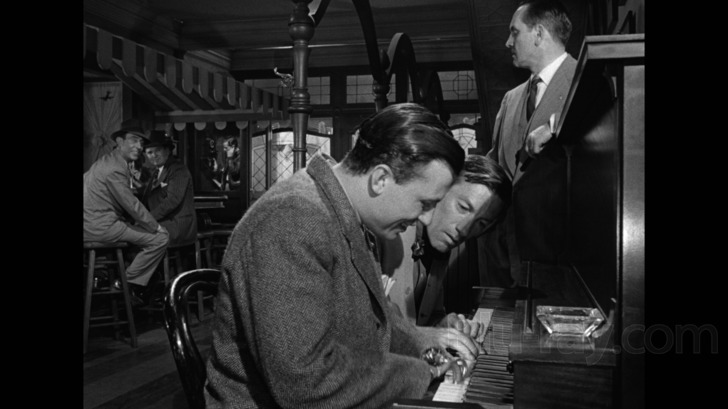
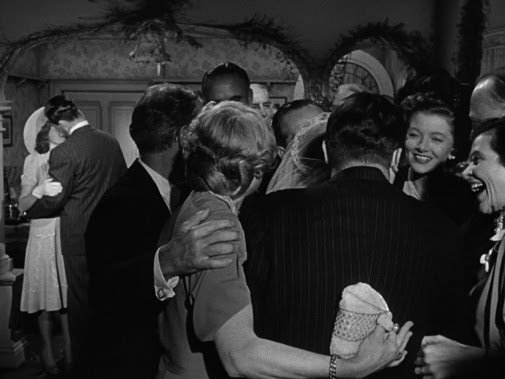
Anyway, this movie is worth watching simply because it’s a good drama with rich characters, but also for it’s technical significance. The film was shot primarily in deep focus, which is not a common technique in cinematography, because it keeps everything – the foreground, the background and the middle-ground – in focus. Normally, the camera shifts focus and the unimportant events are blurred while our attention is drawn to whatever is in focus, but because of the use of deep focus, Wyler was able to tell more of the story in a single shot. Here are some examples, and be excited! I rarely bring visual aids.

This scene gets discussed a lot because of what it accomplishes. Homer and his uncle, Butch, sit at the piano to show Al what they’ve been working on together. Fred is back in the phone booth, calling Peggy to tell her they shouldn’t see each other anymore, at Al’s request. Al is able to move his attention between the two events without the camera having to move or switch shots.

Here’s another example at the very end. Everyone in the foreground surrounds Homer and Wilma, congratulating them on their wedding, while Fred and Peggy, away from everyone else’s attention but not from ours, rekindle their romance.

Thanks for coming to my TED Talk.

Bonus Review: The Grapes of Wrath

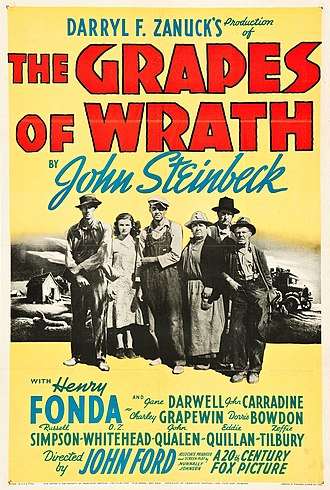
Some say that The Grapes of Wrath is John Steinbeck’s best work and the Great American Novel. Some say that The Grapes of Wrath is John Ford’s best film. People say a lot of things. The Grapes of Wrath follows the Joad family, farmers from Oklahoma during the time of the Great Depression, as they get their kicks out on Route 66 – searching for work in the Californian promised land. However, once they arrive, they soon learn the grass isn’t always greener on the other side (but at least it’s there, right?). Working and living conditions for newcomers to the Golden State are terrible and the pay is even worse. Tom Joad (Henry Fonda), a former prisoner, becomes interested in talks of unionizing, but it’s going to be an uphill battle for Tom. Not even the law is on his side.

Don’t get me wrong, I love this movie. I wouldn’t be recommending it if I didn’t. But the book is better by a lot, and so I can never really put The Grapes of Wrath higher on John Ford’s filmography. However, there are a few things that the movie does really well. First, Henry Fonda as Tom Joad is not only perfect casting, I’d argue this is the movie that truly made Fonda a star. Next, Jane Darwell as Ma. Again, perfect casting, and the role she is probably most associated with (though she will always have a special place in my heart as the Bird Lady in Mary Poppins). Finally, the film keeps a tight focus on Tom and Ma instead of the entire Joad family and beyond. I fear giving the rest of the family too much attention would really keep the film from finding a focus and feel to sprawling. That’s okay for a novel, but doesn’t work as well on screen.

This goes well with The Best Years of Our Lives, if you can sit through both at once. Both are dramas set during a time of great change in our country’s history and both focus on the people who made a difference during those times. Both are heartfelt and honest about what they have to say and don’t shy away from the human element in favor of an idealistic statement.

96. The Prince of Egypt

From 1937 to 2001, Disney had a stranglehold on animated films. There were small outliers during Mickey Mouse’s reign, namely the rise of Studio Ghibli and a string of very successful Don Bluth films with Amblin, but it wasn’t until DreamWorks came out with Shrek when we started to see the sands shifting. Shrek exploded at the box office and into the zeitgeist, and it’s no secret that Disney has never quite regained that spark that set them apart. DreamWorks, on the other hand, has maintained their status with successful franchises such as Madagascar, Trolls, How to Train Your Dragon and Kung Fu Panda (thanks to your aunt’s continued use of Minion memes on Facebook despite their drastic drop in popularity, Illumination is up there with them now, too. Side note: Can you believe they’re only on Despicable Me 4? I thought they were on the 10th one or something).

However, before Shrek, DreamWorks was struggling to find it’s voice. And by that, I mean that there was little consistency between projects and therefore no trademark for the studio, not that the movies weren’t good. In fact, partially because of that inconsistency, some of their very best films came out before Shrek. The Prince of Egypt, The Road to El Dorado and Chicken Run is a nearly-perfect three-film run, and if you want my honest opinion, The Prince of Egypt is not only the best DreamWorks animated film, it is also one of the Top 5 animated films of all time. It takes all of the youthful energy of a fledgling studio, along with the production sense of the three masters of their respective fields that make up the “SKG” below the DreamWorks logo, and swings for the fences. The result is an animated home run.

Apparently, the groundwork for The Prince of Egypt was laid way back when Jeffrey Katzenberg (Special Agent “K”) was still at The Walt Disney Company. He argued for an animated adaptation of the Charlton Heston classic, The Ten Commandments, but was repeatedly shut down by those above him because of Disney’s neutral stance towards religion. It was through the encouragement of Steven Spielberg (Agent “S”), at the founding meeting of DreamWorks, that set the film in motion. Agent “G” is David Geffen, by the way – as in Geffen Records. Anyway, more about the movie.

The Prince of Egypt is a blend of traditional hand-drawn animation and newer computer-generated animation, and uses both to great effect. The backgrounds and the characters are richly designed with significant attention to detail, and the spectacles of plagues and miracles are vibrant and fluid. My preference is hand-drawn animation by a wide margin, but there’s something to be said about what the movie was able to put to screen through a computer – the pillar of fire and parting of the Red Sea are particularly astounding. But that’s only scratching the surface.

Perhaps I should back up a bit. Show of hands, who does not know what The Prince of Egypt is about? And don’t just say “it’s about a prince in Egypt”. That’s obnoxious. Okay, well, for those of you who raised their hands, The Prince of Egypt is not totally an animated remake of The Ten Commandments. It’s a telling of the story of Exodus, with a little Charlton Heston thrown in. Fearing that his Hebrew slaves will be too numerous to keep in line, Pharaoh commands the killing of newborn Hebrew children. A woman named Yocheved isn’t letting them get her newborn son, so she sneaks to the river and puts the boy in a basket, sending it downriver and praying to God that nothing bad happens to him. Moses floats to where the river meets Pharaoh’s wife (daughter in the original text, but why introduce a character if you don’t have to?). Moses is adopted into Pharaoh’s family and raised as if he was of Pharaoh’s blood. This makes him the sort-of brother to Pharaoh’s biological son, Ramses. They grow up together, form an (almost) unbreakable bond, and chase each other through the streets of Egypt in chariots (thankfully, this is the most that gets pulled from The Ten Commandments). When Moses discovers his Hebrew heritage, he runs away (well, he takes the time to kill another man, first), becomes a shepherd, marries a pretty foreign lady with a name I’m not even going to attempt to spell, and lives a nice, quiet life away from high society. That is, until he starts hearing voices. God speaks to him through a burning bush, and tells him to return to Egypt and demand that the Egyptians (who have relied on slave labor for all their little wonders of the world projects, remember) let the Hebrew people go. Pharaoh says “no” at least seven times, which he eventually regrets, and then lets them go. Well, he changes his mind immediately and chases after the departing Hebrews with his entire army, but thanks to help from God, they get away by crossing a large body of water without a boat. Oh, and then Moses comes down from a mountain with ten commandments. The end.

The Prince of Egypt is relatively faithful to the Biblical account, but that’s only part of what makes it great. So much love and care went into this movie, and it’s clear in every second of film. Like John Hammond in Jurassic Park, they spared no expense. The film has an all-star cast, with the voice talents of Val Kilmer, Ralph Fiennes, Sandra Bullock, Jeff Goldblum, Michelle Pfeiffer, Patrick Stewart, Helen Mirren, Danny Glover, Steve Martin and Martin Short. Oh, and Ofra Haza, but I’ll get to her in a second. Val Kilmer, who voices Moses, also voices God in the burning bush scene in an attempt to move away from the big, booming voice of God from other films and treat it as more like “the voice you would hear in your head”, which I appreciate. Now, the absolute best part about this movie is the soundtrack. Every single song is fantastic, written and executed by Stephen Schwartz, whose works include Godspell, Wicked, Enchanted, and Disney’s The Hunchback of Notre Dame. A stellar tracklist all the way down, but the most memorable of them all is the opening number, “Deliver Us”. It’s grandiose and yearning melody sets the mood for the film that you’ve just started with a powerful vocal from Ofra Haza. Not only was this woman a fantastic singer, but she sang “Deliver Us’ for 17 different dubs of the movie. I can barely get the words to “La Bamba” down. I have no idea how I could ever learn how to sing in 15 other languages. It’s astounding and a true testament to her talent.

Anyway, you get the idea. Don’t be put off by the fact that this is an animated movie and you’re a grown up who watches grown up movies. The themes in The Prince of Egypt and the weight they carry are a declaration that animated movies aren’t just for kids. There’s something in this movie for everyone to enjoy.

Bonus Review: The Road to El Dorado

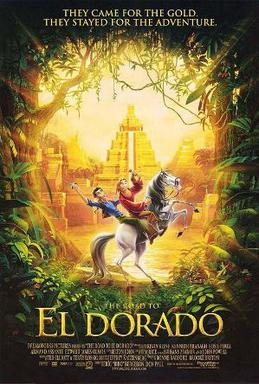
The Road to El Dorado was released a little over a year after The Prince of Egypt, and like I alluded to before, is a very different movie. The film is meant to have a lighter tone, though it still does deal with adult situations such as sexuality, conquest and human sacrifice. The main inspirations for The Road to El Dorado are old swashbucklers (what is with my affinity for them?) and the series of Bob Hope and Bing Crosby movies. It’s full of action, excitement and comedy, and includes a great collection of songs from Elton John and Tim Rice (though they are admittedly not as good as their work for The Lion King).

Miguel and Tulio are two Spanish swindlers who end up making off with a map of “the New World” – a map that leads to El Dorado, “the city of gold”. A petty thief’s paradise. Miguel and Tulio sneak onto a ship to get to the Americas, and from there, follow the map. I don’t think it’s a major spoiler to say that they find El Dorado. However, they are immediately received with distrust by the locals, and their only way to get on their good side is to pretend to be gods the locals worship. Through circumstance, they convince nearly the entire city of their divinity, but it’s a ruse that’s hard to keep up. The High Priest, Tzekel-Kan quickly goes back to distrusting the two “gods” when they refuse his ritualistic human sacrifices. The chief of El Dorado may also not believe they’re gods, but he plays along when he sees how well the foreigners treat his people. With Tzekel-Kan snooping for proof that they’re lying and Hernan Cortes hot on their trail, Miguel and Tulio have to walk a thin line if they intend to stay alive.

The casting of Kenneth Branagh and Kevin Kline as Miguel and Tulio is inspired, and the majority of the songs are great (honestly, anything Elton John touches turns to gold). The movie is chock full of memorable scenes and lines of dialogue. Sure, it’s not as captivating as The Prince of Egypt, but The Road to El Dorado is fun and exciting, and I think every bit as deserving of people’s attention.

97. The Mask of Zorro

Speaking of swashbuckling, here’s another one for you. The Mask of Zorro was the 1998 attempt to revive the character for modern audiences. Sure, Zorro is a well-known character and there have been Zorro films and television series since the 1920s, but as far as films go, the gap between 1981’s Zorro, the Gay Blade and The Mask of Zorro is the longest and means they were literally bringing Zorro to a new generation. It was successful enough to warrant a sequel, 2005’s The Legend of Zorro, but that one’s not on my list for a reason.

The Mask of Zorro stars Anthony Hopkins as the now-old Diego de la Vega, the original Zorro, and Antonio Banderas as his masked-vigilante successor, Alejandro Murrieta. Catherine Zeta-Jones in her first starring role plays Diego’s daughter Elena. During a public execution, Diego as Zorro arrives just in time stop the proceedings. The governor of the area, Don Rafael, realizes that Diego is Zorro and captures him in his house during the night. Years later, Alejandro and his brother, Joaquin, are bandits who run the risk of being captured by Captain Harrison Love, Don Rafael’s right-hand-man. Alejandro successfully gets away but Joaquin is forced to shoot himself to avoid being taken in by Captain Love. Diego crosses paths with Alejandro after escaping prison and agrees to train him in swordfighting so that he can take revenge on Captain Love. Meanwhile, Diego intends to take his own revenge on Don Rafael for the murder of his wife and the kidnapping of his daughter, Elena. While training, Alejandro discovers that Diego was once the people’s hero, Zorro, and desires greatly to be his successor. Diego decides that Alejandro, if he is to be helpful to his revenge plans, must also be taught the ways of manners and nobility. Disguised as a nobleman named Don Alejandro del Castillo y Garcia, Alejandro arrives at a party hosted by Don Rafael and proceeds to charm him and Elena, who is convinced she is actually Don Rafael’s daughter. Through his efforts, Alejandro discovers that Don Rafael intends to harvest a gold mine using slave labor until he is able to purchase all of California from Santa Anna. Alejandro, Diego and Elena must all work together to prevent his plan.

I’ll admit, I have a few qualms with this movie. First, the evil plot of Don Rafael’s is kind of silly and doesn’t really warrant a climactic showdown, but hey, we still get one, so I’m not going to complain too much. Second, the movie is a little long. I think the movie’s editing could have been a little tighter, and a few things could have been cut, such as much of the party scene. But despite these issues, the movie remains thrilling throughout and an enjoyable action adventure. The actors all bring their best, as well. Antonio Banderas was just now becoming a well-known name after his work in Philadelphia and Desperado, so The Mask of Zorro was proof that he could carry a major blockbuster. Catherine Zeta-Jones was relatively unknown at the time (she was cast based on her performance in a little-seen miniseries about the Titanic). Once you get past the fact that Anthony Hopkins is the only man in California with a British accent, his performance is excellent as well. Unlike the other two leads, he was already a veteran by this time, so he fits the mentor role perfectly.

Two other highlights to address: First, the screenplay written by Ted Elliott and Terry Rossio. These two share a resume that read like a greatest hits of 90s/00s action and animated hits, including Aladdin, Small Soldiers, The Road to El Dorado, Shrek, Treasure Planet, and the original Pirates of the Caribbean trilogy. Their scripts are famous for ambiguous characters and subverting expectations in plot and genre. The Mask of Zorro doesn’t really have these characteristics, but it’s easy to see it as a stepping stone toward future bright spots. The second is the score from James Horner. The Spanish influences on the score ignite it and lift it to soaring heights as it swoons and sweeps through striking action taking place on screen.

The Mask of Zorro runs at just under two and a half hours, so again, it’s a little long, but it’s worth making a movie night out of.

Bonus Review: The Mark of Zorro (1940)

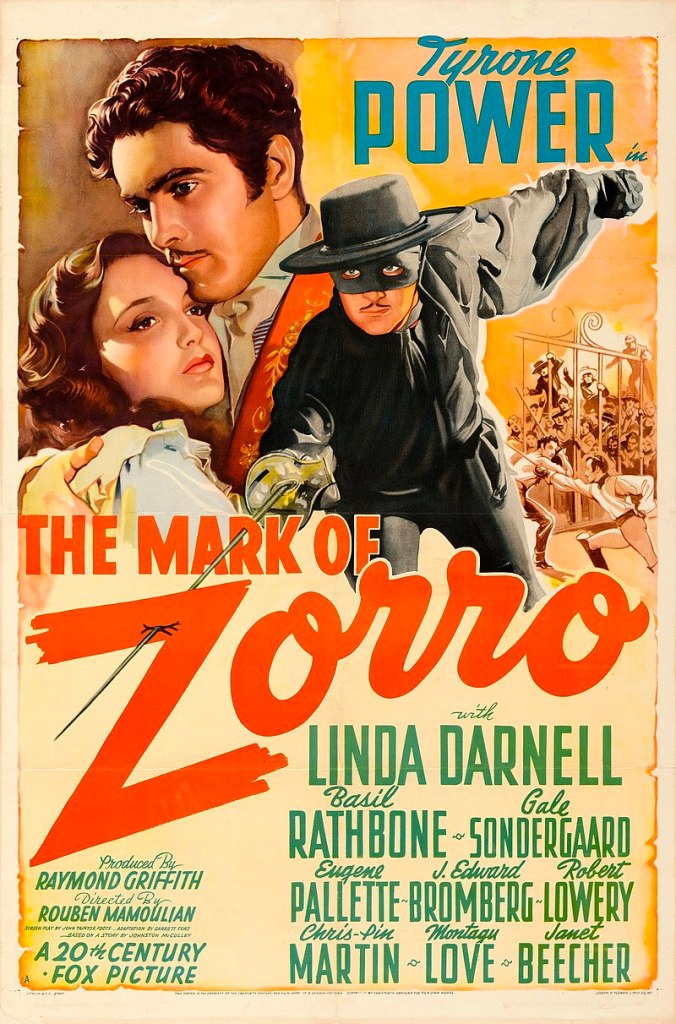
58 years before The Mask of Zorro, there was another great Zorro adventure starring Tyrone Power and Basil Rathbone (whom you saw in The Adventures of Robin Hood, if you watched it like I told you to). 1940’s The Mark of Zorro is actually a remake of a movie of the same name from 1920, starring Douglas Fairbanks, putting Antonio Banderas in good company. Both are based on the 1919 novel, The Curse of Capistrano, the very first Zorro adventure.

The Mark of Zorro acts as an introduction to the character. It follows a young Diego Vega as he returns to California from training in Spain. Upon his arrival, he discovers that his father is no longer in charge of the area, and instead has been usurped Luis Quintero with the help of Rathbone’s Captain Esteban. Everyone’s initial view of Diego is that of a useless, spineless dandy, and he uses that to his advantage. Quintero and his army are searching for the new vigilante, Zorro, and because of his introduction, no one expects Diego of being the masked man – not even his own parents.

Director Rouben Mamoulian had an eclectic filmography, with experience in romance, comedy, film noir and even horror (he directed the most famous version of Dr. Jekyll and Mr. Hyde in 1931), and he uses all these skills together in The Mark of Zorro. It keeps the film exciting from start to finish. If you can tolerate older films, be sure to give this one a watch. Just don’t go down any dark alleys immediately after seeing it.

98. The Adventures of Robin Hood

There are so many famous portrayals of English folk hero, Robin Hood. Douglas Fairbanks, Richard Greene, Russell Crowe, Kevin Costner, Cary Elwes (who could actually speak with an English accent, unlike some other Robin Hoods), Frank Sinatra (sorta), and John Cleese (briefly in the best part of Time Bandits) have all donned the name (well, “Robbo” for Ol’ Blue Eyes), but the quintessential Robin Hood will always be Errol Flynn in The Adventures of Robin Hood. Sorry, Robin Hood purists. I know he wasn’t British, but some people just embody a character so well, it’s definitive. Quiet honestly, the 1938 film had a stacked cast. Olivia de Havilland as Maid Marian, Claude Rains (one of the most underappreciated actors ever) as Prince John, Basil Rathbone as Guy of Gisbourne, Eugene Pallette as Friar Tuck, and Ian Hunter, briefly, as Richard the Lionheart.

The Adventures of Robin Hood is pretty well the blueprint for all future adaptations. Robin Hood doesn’t like seeing his fellow Saxons taxed endlessly, and so opposes Prince John, who has seized the throne while his brother, Richard, is gone. Robin openly defies Prince John at a banquet, but escapes before he can be captured. However, he is immediately labeled an outlaw by John. Robin gathers many merry men to his cause and together they rob the rich to feed the poor, and fight for all that is good. During one of these attempts, Robin meets and is immediately head-over-heels for the lovely Maid Marian, whom he woos. This is used against him by Prince John, who entices Robin to compete in an archery contest – an obvious trap which Robin falls for. Later, Robin and his men show hospitality to a group of travelers, who is later revealed to be King Richard and his men. Together, these two virtuous men lead their followers to Nottingham Castle, where a big final showdown takes place. Even if you haven’t seen the movie, you know how the story ends.

It’s honestly a miracle that some of these old Hollywood films become the classics they are, considering some of the early decision-making of the studios. For instance, Robin Hood was originally going to be played by James Cagney. I can’t imagine what other casting ideas they had in mind. Edward G. Robinson as Friar Tuck? Gloria Grahame as Maid Marian? Humphrey Bogart as Guy? Actually, I would watch that movie. Claude Rains can stay. The original script also included archaic, Ye Olde English dialogue, which, while interesting, would have given the movie a more deadpan atmosphere, like a Shakespeare in the Park-type of feeling. Thankfully, this was also scrapped in favor of more modern language. Forsooth!

The swashbuckling adventure is enough to watch this movie. Sword-fighting adventures rarely miss. In fact, my theory is that this is the reason why more recent Robin Hood films don’t do as well. They trade in the fun action and daring dos for gritty origins and low energy, “I’m not like other Robin Hoods” leads. What was the last great action-adventure? Pirates of the Caribbean? Come on, Hollywood. That was over 20 years ago! Kill me. Anyway, if you need more than sword fights to keep you around, give the soundtrack a listen. The Adventures of Robin Hood is up there with The Magnificent Seven and The Mission for its score. It’s a perfect fit for the film.

The swashbuckler (which is just a really fun word to say) is a genre that will come up a few more times on this list, and while I believe they all deserve their spot, none of them would exist if it weren’t for The Adventures of Robin Hood. I’d recommend this film to anyone.

Bonus Review: The Wizard of Oz

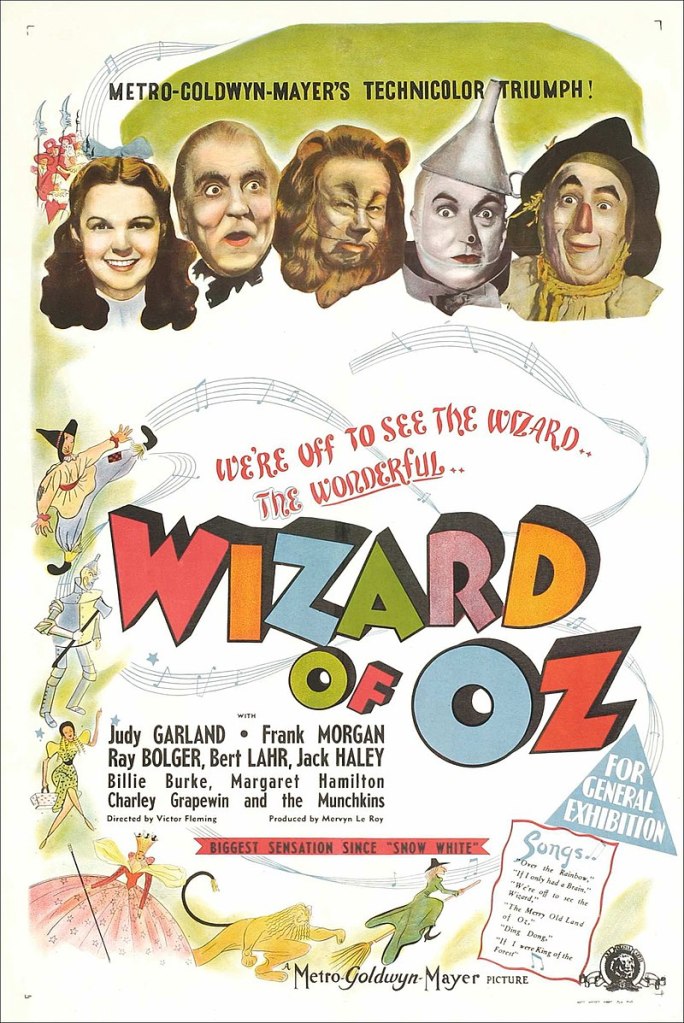
I mean, it’s The Wizard of Oz. What can I say? Is there anyone who doesn’t know this movie backwards and forwards? There are so many things from this movie that have become part of pop culture for multiple generations: flying monkeys, “I’m melting! I’m melting!”, ruby slippers, “I’ll get you, my pretty, and your little dog too!”, following the yellow brick road, “There’s no place like home.”, the man behind the curtain, the Wicked Witch’s feet curling under the house, “Over the Rainbow”, and “Toto, I’ve a feeling we’re not in Kansas anymore.”, just to name a few. It’s a classic and pairs great with The Adventures of Robin Hood.

What The Wizard of Oz does better than most other movies is make the fantastical seem actual. The land of Oz is believable and vibrant, pulsing with life, which makes it such a shame that MGM couldn’t commit to the fantasy and demanded changing the framing of the story in Oz as a dream sequence. The Wizard of Oz wasn’t even considered for a film until it was proven that fairytales were a viable genre with Walt Disney’s Snow White and the Seven Dwarves, but I guess that goodwill could only stretch so far. I digress. The Wizard of Oz is still the poster child for the Fantasy genre.

The Wizard of Oz isn’t without it’s…umm…issues? First, there’s the fact that the movie shifted hands multiple times. Three directors: George Cukor (who didn’t get very far because of a commitment to direct Gone with the Wind), Victor Fleming (who did get far, but had to replace Cukor on Gone with the Wind because of major troubles with that one), and King Vidor. 1939 had a real coaching carousel going on. Then, there’s the falling asleep in the field of flowers. The snow that falls in that scene was pure asbestos and likely contributed to his death from cancer. And then, of course, probably most egregiously, is the abuse Judy Garland suffered at the hands of the studio just to change her appearance for the sake of the money. None of these detract from what makes The Wizard of Oz great, but I think it’s worth bringing up. I hope I didn’t ruin the movie for anybody.

For the record, it was really difficult to not put The Wizard of Oz in the official Top 100. Sorry, mom.

99. Make Way for Tomorrow

From acclaimed comedic director, Leo McCarey – whose career includes early Our Gang (Little Rascals) shorts, Marx Brothers movies, Laurel and Hardy and Cary Grant – comes the most depressing film you or anyone will ever see. Seriously, if you plan to watch this movie, bring the tissues. Orson Welles famously quipped that Make Way for Tomorrow could “make a stone cry.” I haven’t put this theory to the test with my pet rock yet, but I know it works on me.

It stars Victor Moore and Beulah Bondi as an elderly couple, an odd choice considering they were 61 and 49 at the time of the film’s release. Victor Moore was known for stage work as well as his appearance in several comedies and early musical spectacles including Swing Time, The Seven-Year Itch, and a favorite Christmas movie of mine, It Happened on 5th Avenue. Beulah Bondi was most famous for being Jimmy Stewart’s mother in at least four movies: Of Human Hearts, Vivacious Lady, Mr. Smith Goes to Washington, and It’s a Wonderful Life. Oh, and she was in a couple of episodes of The Waltons. Anyway, what I’m trying to get at here is that by 1937, when Make Way for Tomorrow was released, they were both already veterans of the industry, and it shows.

Barkley and Lucy Cooper are losing their house to foreclosure because Barkley is unable to get a job due to his age. They reach out to their children to let them know and a decision is made for them to move in with them until Barkley can secure employment. The only snag is that only one of their children, daughter Nell, has room for both of them and requests three months to talk her husband into the idea. So, for the meantime, the parents are split up between daughter Cora, and son George. However, it doesn’t take long for the parents’ presence to get on their nerves, and soon Cora and George are both looking for ways to get each parent out of their respective houses. Nell also makes very little attempt to sway her husband to taking them both in, and eventually bows out of the plan. Barkley and Lucy begin to feel unwanted when Cora encourages Barkley to get rid of his cold by staying with their other daughter in warmer California and Lucy finds out that George has secretly been looking into retirement homes.

It’s all downhill from there. Make Way for Tomorrow has a purpose, or really, three purposes. 1. To make you cry, 2. To make you want to hug your parents, and 3. To argue for Social Security (which at the time of the movie was only in the early stages of development). It handles all three superbly. What makes the film so captivating and not some proto Soap Opera is mostly the script. The characters feel real, and their dialogue is genuine when it could easily fall into schmaltzy territory. The script writer, Viña Delmar, deserves particular recognition. She only ever wrote two screenplays – this one, and another Leo McCarey film released in the same year, The Awful Truth – and they’re both outstanding. It’s a shame she didn’t write more of them. Besides writing these screenplays, she spent most of her time writing novels and short stories, and being the model for the flapper girls of the 1920s.

Speaking of The Awful Truth – the Cary Grant comedy was the movie and the year (1937, same as Make Way for Tomorrow) Leo McCarey won his first Academy Award for Directing. In his speech, he famously said, “Thanks, but you gave it to me for the wrong picture,” referring to Make Way for Tomorrow, which he considered the greatest film he ever made. Considering his filmography, that’s saying something. This man gave us Duck Soup, Ruggles of Red Gap, Good Sam, Going My Way, The Bells of St. Mary’s, Love Affair and its remake, An Affair to Remember, just to name a few.

Make Way for Tomorrow is absolutely some of the best work Old Hollywood has to offer, and it’s a tragedy it hasn’t gotten the recognition it deserves. Whether you want to watch a tearjerker, an older film, or just something you’ve possibly never heard of, then definitely give this one a try. Just remember what I said before, “Bring the tissues.”

Bonus Review: Tokyo Story

Tokyo Story is a loose remake of Make Way for Tomorrow by the Japanese director, Yasujiro Ozu. It follows a very similar plot of an older couple visiting their children and discovering that their presence is mostly unwelcome, and therefore shares the same themes of the growing gap of understanding between generations. However, both films are very particular to their times. In Make Way for Tomorrow, the parents are losing their house due to economic reasons during the Great Depression, while in Tokyo Story, there’s a greater emphasis on Japanese culture coming out of World War II – urban versus rural; industrialization versus traditionalism.

While I give the edge to Make Way for Tomorrow, there are some things that Tokyo Story does better than its predecessor. For one, I believe the older couple have more agency in Tokyo Story. They are burdens to their children, but they could remove themselves from the situation at any time and aren’t just stuck sitting there, making their children’s lives miserable. For another, and probably most important, is the inclusion of the widowed daughter-in-law, Noriko. Her love and compassion for her in-laws particularly shines against the frustrations of the blood relations. It doubles down on the importance that Japanese culture places on family. Besides that, she’s the absolute best character in the whole thing.

For those of you who already feel yourself sucking in air through your teeth at the thought of watching a foreign film with subtitles, you honestly may want to avoid this one. I struggle with Ozu films myself. They are incredibly slow-moving, Tokyo Story especially, and the camera is always static. I promise you, though: if you give it a chance, it will reward you in the end. Tokyo Story is a beautiful film experience.

100. Eight Men Out

Eight Men Out is John Sayles’ take on the story of the 1919 Chicago White Sox – one of the greatest teams of baseball ever assembled – until they weren’t. It’s the all-too-true and sad story of a team, slighted by their benefactors, who decide their only way to get the pay they desire is to throw the World Series. Boxing and Gangster movies would have you believe that throwing games has been a constant practice in the world of sports, but in 1919 in America’s Pastime, it was unheard of.

Eight Men Out is also the ultimate “Oh, that guy’s in this?” movie. Some household names, like John Cusack and Charlie Sheen, as well as David Strathairn (practically in every John Sayles movie as well as Edward R. Morrow in Good Night, and Good Luck), D.B. Sweeney (Dish Boggott in Lonesome Dove and Travis Walton in Fire in the Sky), Don Harvey (bit roles in The Untouchables, Die Hard 2 and brief stint on General Hospital), Michael Rooker (McMasters in Tombstone, Yondu in Guardians of the Galaxy and Merle in The Walking Dead), Perry Lang (Jacob’s Ladder and Cattle Annie and Little Britches), James Read (North and South, Days of Our Lives, Charmed), Gordon Clapp (that guy from NYPD Blue), Bill Irwin (CSI, Northern Exposure), and Jace Alexander (…you know what, let’s not talk about him) round out the players. Richard Edson (Desperately Seeking Susan, Platoon, Good Morning, Vietnam), Christopher Lloyd (Great Scott! Do you really need his filmography?), Kevin Tighe (Emergency!), and Michael Lerner (the guy who thought it was a smart idea to have a pitch meeting for a children’s book on Christmas Eve in Elf) are the seedy gangsters and former ballplayers who claim a big payday if the boys throw the games. The floor walker from Cool Hand Luke and Fraser’s dad play the owner and manager of the team respectively. I guess you didn’t need to know all of that, but I think it’s fun.

Writer/Director John Sayles started off working under Roger Corman, a director who worked mostly outside of the studio system, except for a string of highly successful Edgar Allen Poe adaptations. For context of how important that is, here’s a list of filmmakers who were mentored under Roger Corman: Joe Dante, Peter Bogdanovich, Jonathan Demme, Ron Howard, Martin Scorsese, Francis Ford Coppola, and James Cameron. Impressive, innit? Sayles followed Corman’s way of self-financing his projects by writing genre scripts and using the paydays to fund his passions. So, the same guy who wrote and directed this movie, Passion Fish, Matewan, and Lone Star, also wrote a bunch of schlocky 80s creature features such as Piranha, Alligator and The Howling. The history lesson isn’t really necessary, but I’d always rather give my readers too much information rather than not enough. And I think John Sayles is an interesting director. Back to the movie.

After winning the American League pennant, the 1919 Chicago White Sox feel they are owed compensation, but the money-grubbing team owner, Comiskey, thinks they should be content with flat champagne. Seeds of discontent sow within the team, and that’s when wolves in former-baseball-player’s clothing swoop in and present an offer: lose the World Series on purpose and you’ll make more money than if you win. More powerful gangsters get involved, and it seems like a done deal. Some of the players, when faced with the proposition, balk at the notion and prefer the feeling of winning and playing your best, but others are all too eager to get what they think they should have already gotten from Comiskey. The de facto leader of the team, pitcher Eddie Cicotte, is on the fence at first, and goes to Comiskey to address a previous agreement that if Cicotte won 30 games in the regular season, he would receive a $10,000 bonus. Comiskey informs Cicotte that he only won 29 games and staunchly refuses. Equally motivated by revenge and a desire to provide for his family, Cicotte joins the conspiracy to throw the World Series.

Rumors float around as the Series begins, and with the White Sox’s initial performance against the Cincinnati Reds, it’s seemingly confirmed. The team manager, Kid Gleason, refuses to believe his players are cheating. Those who aren’t cheating are frustrated and fighting with those that are. Tensions and dangers mount as the gangsters start making threats against the players’ families. It’s really not a good time to be a White Sox fan…or player. After the Series ends, it only gets worse for the conspirators when a couple of journalists do enough digging to find evidence of their cheating. The players go trial, and despite being found not guilty, they are barred from Major League baseball forever.

Most sports movies are triumphant, feel-good experiences. Rocky goes toe-to-toe with Apollo Creed. Rudy plays a game for Notre Dame. Happy Gilmore saves his grandmother’s house. Kevin Costner gets to play catch with his dead dad. People remember the Titans. You get the idea. It’s much rarer to see a sports movie with a melancholic ending. These guys never got to play in the Majors again. One of the more innocent-but-still-not-totally-innocent-because-he-should-have-brought-the-conspiracy-to-someone’s-attention-if-he-knew-about-it players, Buck Weaver (John Cusack), sits at a minor league game, watching an incognito “Shoeless” Joe Jackson hit a home run and reminiscing on what could have been. It’s the what-ifs that make the story so interesting. What if Buck had said something about the conspiracy? What if Cicotte hadn’t chosen revenge? What if Kenesaw Mountain Landis (we really should bring back “mountain” as a middle name) had stood by the jury’s verdict or shone leniency? What if the conspirators had just said “no”? What if the players had just been compensated fairly in the first place?

Because of that approach, the film goes beyond the sport to shine a light on the unfair balance between those who did the work and those who reaped the benefits. And it was genuinely unfair. This was a long time before baseball players saw multimillion-dollar contracts. Owners were able to keep most of the earnings while maintaining low salaries for the players. Now, the film may not be 100% fair in it’s leaning towards the players. There are some things that we genuinely can’t be sure of. Was Buck Weaver as innocent as he claimed? Was Eddie Cicotte so concerned with money strictly for the sake of his family? Was the illiterate Joe Jackson really tricked into signing a confession of wrongdoing? These motivations, portrayed as black and white, are a lot grayer when looking at the real history. But in the end, it’s just a movie. And Eight Men Out is a fascinating one, to be sure.

Bonus Review: Matewan

Eight Men Out was released in 1988. The year before, John Sayles released another historical drama called Matewan, named after the West Virginian town where the story takes place. In 1920, coal miners in Matewan go on strike against the Stone Mountain Coal Company after wage cuts. A man named Joe Kenehan (the woefully neglected and underrated Chris Cooper in his film debut) comes to town to encourage the miners to unionize. Soon after, two men from the Baldwin-Felts Detective Agency arrive on a tip from a spy for the company within the town and attempt to frighten the strikers. When the townspeople refuse to leave, the detectives have to bring in backup. It culminates in what is known as the Battle of Matewan – a shootout between the coal miners and detectives working for the coal company.

Matewan is like Christmas – green and reds everywhere. The color grading of the film stock strengthens the greens of the trees and grass of Appalachia. It’s beautiful to look at, and rightfully received an Oscar nomination for Cinematography. The union organizer, Joe, is labeled by the detectives as a “red” – a Communist. Chris Cooper does a wonderful job for not only his first film role, but as the lead. He’s backed up by strong performances from David Strathairn and James Earl Jones.

I love the open-ended view of the politics in the film. Not everyone will agree with the pro-union message of the movie, but it does go out of it’s way to show that both sides escalate the tension and do more harm than good (the miner-supporting town sheriff starts the gunfight in the film, though in real life, no account of who fired first is made). Political messaging isn’t always the best reason for watching movies, however. Sayles’ historical dramas are informative replications of rarely-discussed events in American history. That alone makes them worth watching. Matewan makes a great double-feature with Eight Men Out mostly just to see more of Sayles’ filmography, but there’s a lot to say for the similarities between them in theme, in time period, and in actors (four of the actors are in both films). Both movies are timeless tales of timely situations.