After my last review, I thought it might be fun to explore a few other goofy Sci-Fi movies. It’s like it’s own subgenre. These movies have notoriously horrible acting, even worse visual effects and the most paper-thin plotlines imaginable. That’s what makes them fun, and it’s turned into somewhat a phenomenon to watch terrible movies for the irony – something I believe we have Mystery Science Theater 3000 for. These ten films are some of the worst out there, and they’re that much better for it.
10. The Mole People
The audacity this film has for hiring an actual college professor to explain the scientific theories that inspired this premise. A couple of archaeologists dig a little too deep and discover an entire civilization of underground albinos, who use these mole people to dig their tunnels and find them food. The albinos worship Ishtar and believe the mole people are sent from Ishtar to provide for them. However, when one of the mole people kills an archaeologist, the albinos decide the mole people are not from Ishtar. Before they can do something about it, an earthquake buries the civilization. Do with that what you will.
9. Attack of the 50ft Woman
When a woman comes in contact with radiation by a giant humanoid space alien, she becomes a giant herself. As if her life wasn’t already difficult enough. Her husband is seeing another woman and intends to kill her so he and his mistress can inherit her massive estate. However, killing her proves difficult when she becomes a giant. Now, it’s her turn to get revenge on those who have wronged her, while the original alien uses the diamonds from her necklace as a source of power to get his ship off the ground.
8. Them!
Them! precedes Godzilla by five months, making it one of the earliest examples of a normal animal coming in contact with radiation. Instead of a single lizard, however, it’s an entire colony of ants that has grown in size due to the testing of an atomic bomb. When bodies turn up dead and full of acid, the local authorities are forced to confront the ant threat. It becomes such an infestation that the National Guard is called in to dispatch the ants with flamethrowers. The giant ants are hilarious to watch as they terrorize the New Mexico town.
7. Teenage Zombies
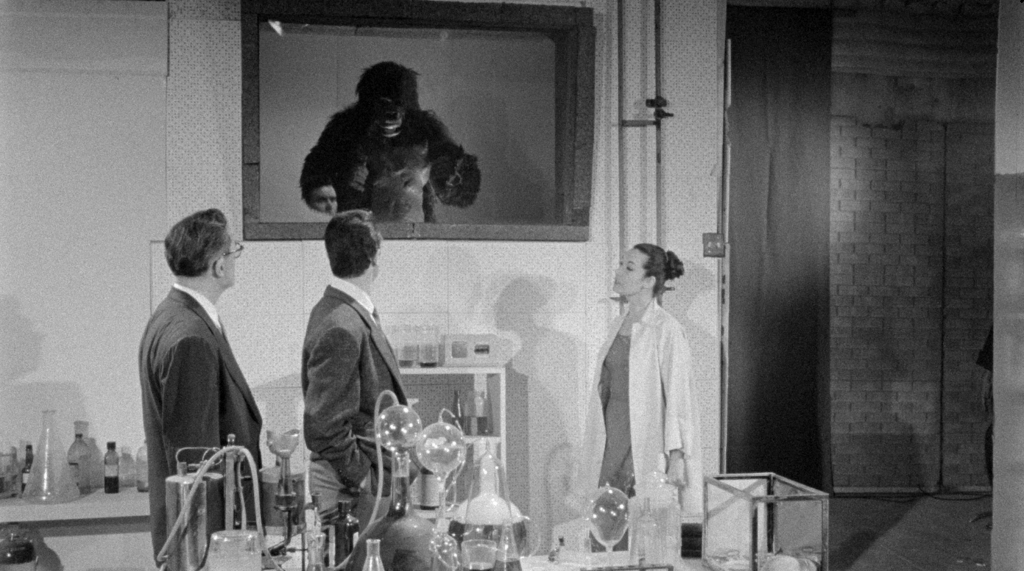
A group of teenagers discover an island inhabited by a woman mad scientist, her pet gorilla, and her zombie slave. She has the teenagers captured and plans to zombify them in order to test a drug she’s developing on behalf of an unknown country. A few of them escape and run to get the local authorities, but it turns out he’s in cahoots with the mad scientist. It’s up to the most unlikely hero – the gorilla – to save the teenagers before they can become zombies themselves.
6. King Dinosaur
A group of scientists are sent to a new planet to see if it’s possible for humans to live there. Pretty soon after they arrive, they discover a plethora of animals, many of which are extinct on Earth. Before too long, they discover the apex predator of the planet: a Tyrannosaurus Rex (played by the iguana in the picture above). The king dinosaur chases the scientists to an island and their only escape is to unleash a nuclear power that effectively wipes out all animal life on the planet and radiating the land. Guess it’s not inhabitable, after all.
5. Robot Monster
Ro-Man, the robot monster, has a mission: wipe out all life on planet Earth. And it’s a mission he’s perfectly capable of acting out, except for one little snare. He falls in love with a human woman. His infatuation with the woman derails his entire purpose, and he’s already been told by The Great One, the one who sent him to Earth, that there’s no coming home until his purpose is completed. Mass destruction and chaos ensue until one of the surviving humans wakes up from their horrible nightmare. All is right with the world. That is, until Ro-Man emerges from his cave and marches right towards the audience. He’s coming for you!
4. The Blob (1958)
Beware of the Blob! It creeps, and leaps, and glides and slides across the floor! There you go. You have the entire premise of the movie in the opening theme song. Steve McQueen’s first starring role is Steve Andrews, a teenager who witnesses a crashing meteorite while making out with his girlfriend in his car. It’s going to be up to him to stop the Blob – an alien creature that grows as it devours citizens of the town, until he’s even bigger than a building. It’s the most terrifying wad of gum you will ever see.
3. Plan 9 from Outer Space
Aliens invade the Earth to enact the mysterious “Plan 9” – an attempt to resurrect the dead in order to prevent humanity from creating a weapon that can destroy the entire universe. Because that makes sense. Considered one of the worst movies ever made, Plan 9 from Outer Space is responsible for a few things in our modern cinema history: the infamy of director Ed Wood, the resurgence of appreciation for Bela Lugosi, and the phenomenon of wrestlers becoming actors. It was not as successful an attempt for Tor Johnson as it was for Dwayne.
2. Santa Claus Conquers the Martians
Martians are sent to Earth to kidnap Santa Claus for the sake of their own children, but can’t distinguish the real one from the fake ones at the mall, so they kidnap a couple of children to help them. Now, it’s up to Santa Claus to sort it out, but fret not, there’s no actual conquering involved. This movie is hilarious for two reasons: 1. The worst attempt at a polar bear costume ever put to film, and 2. Holding the distinction of being the first representation of Mrs. Claus on screen. The fact that the Martians are implied to represent Jewish people make it a little cringey by today’s standards.
1. Teenagers from Outer Space
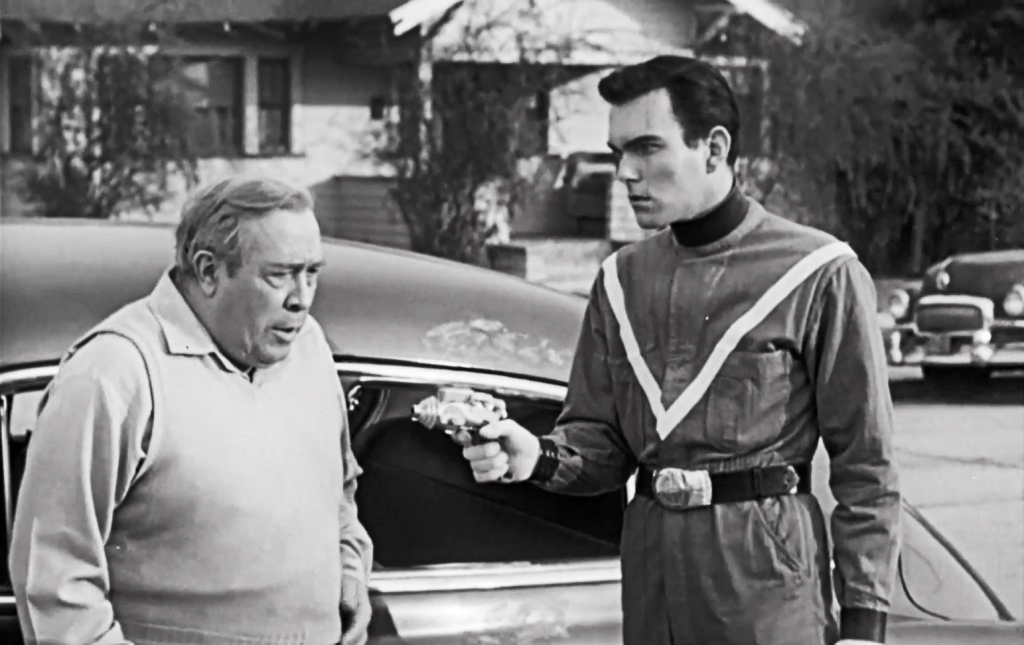
An alien, sick of his alien lifestyle, attempts to live anonymously among the human race. However, some of his fellow aliens are tasked with not only retrieving their defected comrade, but also annihilating the entire planet Earth. To do so, they unleash their alien creatures of destruction, the Gargons. Boasting the worst acting of any movie on this list, it’s hilarious for the performances alone. However, the cherry on top is that the Gargons are portrayed by giant lobsters. This movie is, in my opinion, the definitive “so bad it’s good” movie.
Since I’ve already said that I’m not much of a fan of Horror movies, I expect some of you won’t give my reviews of the genre much credit, and rightfully so. To attempt to give you a way to gauge your interests compared to mine, I’ve decided I should do another controversial list. So, here it is: The Top 15 Horror Movies.
15. The Wolf Man
The son of the Man of a Thousand Faces, Lon Chaney Jr. stars as Larry Talbot – a man who returns home for the burial of his brother. His father, John (Claude Rains), is a difficult man to be be around, but Larry’s return is an opportunity for reconciliation. Larry’s life changes when he’s bitten by a werewolf – a Romani Bela Lugosi. Now, he transforms into a werewolf every night, killing a villager and waking up without remembering. The terror of the town is eventually brought down by John Talbot, who looks on in horror as the wolf he’s just beaten with a silver cane turns back into his son. Sad-eyed Chaney Jr. does his father proud with his work in this classic monster movie, and Claude Rains proves yet again that he can literally act in anything.
14. The Lighthouse
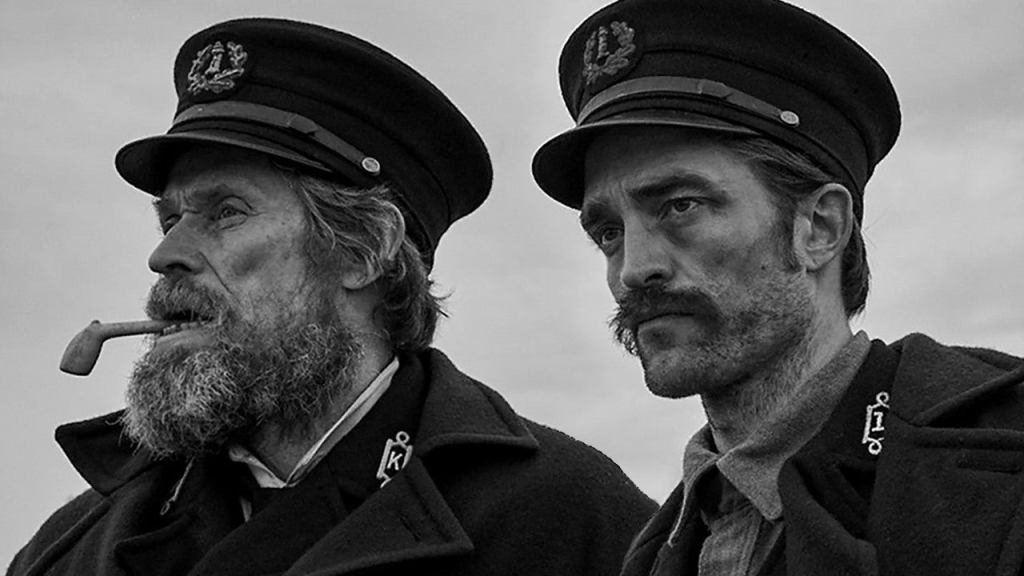
Inspired by an unfinished story by Edgar Allen Poe and a myth about the mysterious deaths of a couple of lighthouse wickies in Wales, The Lighthouse follows two wickies as they spend their time in isolation. Over the course of the film, the two slowly descend into drunken madness. That descent ramps up ever more when Robert Pattinson’s Ephraim kills a one-eyed seagull, something that Willem Dafoe’s Thomas superstitiously warns him against doing. This film is filmed in black and white and contains frequent use of period-accurate maritime dialogue, which gives it a greater sense of historical and mythological presence. Robert Eggers’ previous film, The Witch, also notoriously keeps it’s depiction accurate to the period in which it is based, making Eggers an interesting new-ish director to watch.
13. The Others
Nicole Kidman stars as Grace Stewart, a mother who lost her husband in World War II and now spends her time taking care of her children who are sensitive to light by keeping the house as dark as possible. However, before too long, many inexplicable thing happen, convincing Grace that her house is haunted. Things take an even stranger turn when her husband she was convinced is dead returns home. Eventually, Grace uncovers the truth of what is going on in her home, and it’s honestly probably not what you think. Kidman’s performance and the beautiful look of the film carry it. And while everyone loves a good twist, there’s more to keep you invested in the movie than just that. Perfectly creepy in tone, The Others is a thrilling supernatural horror mystery just waiting to be solved.
12. Donnie Darko
Donnie Darko (Jake Gyllenhaal) is a troubled youth in the late 1980s. He sleepwalks and has visions of a man in a creepy rabbit costume named Frank, something that saves his life from being crushed by a crashing airplane that no one can account for. Frank convinces Darko to cause a flood in his school and burn down the house of a motivational speaker (Patrick Swayze in an unusually sinister role), all the while trying to get him to understand something about time travel and explain that the world is going to end on Halloween night. Things come to a head mere moments before the end of the world in an absolutely bonkers finale. Donnie Darko is a complex and twisty independent horror film that is probably to blame for Horror’s recent-ish fascination with 1980s nostalgia, but that’s not a mark against it.
11. Cat People
This film is sort of the female version of The Wolf Man. Simone Simon plays Irena, an immigrant from a village in Serbia who believes she is descended from a group of people who turn into black panthers when aroused. We’ve all been there, am I right? (I’m so sorry, mom) She falls in love with Oliver, who doesn’t believe Irena’s superstitions, and they get married. However, Irena becomes increasingly concerned with turning into a cat, and Oliver convinces her to see a psychiatrist. Irena and Oliver’s marriage gets rocky and Oliver finds solace in the arms of his coworker, Alice. Irena is suspicious of their relationship and ends up stalking Alice, but is it as human or as a panther? I have a difficult time getting people to take my recommendation on this movie. I guess because it’s a kinda-goofy concept, but let me tell you this: no other Horror movie draws from the fear of what you don’t see more than Cat People, and that includes most Hitchcock films.
10. A Nightmare on Elm Street
Wes Craven was the Slasher director, and his talent and thoughtfulness for the subgenre were at their peak with A Nightmare on Elm Street. When some of the promiscuous teens in town start having weird dreams about a man in a red and green sweater and hat, who walks around with steak knives on his gloved hand, the line between dream and reality get blurred. What this man, the one and only Freddy Krueger, does in their dreams, follows them into their awakened lives, including death. Nancy, one of the girls plagued by these nightmares, slowly uncovers who Freddy is (or was) and in the end, it’s up to her to stand up to him. The premise of being unable to avoid Freddy because he attacks your dreams is a wonderfully frightening thought, and it separates A Nightmare on Elm Street from other movies of the genre.
9. The Exorcist
When Chris MacNeil’s (Ellen Burstyn) daughter, Regan (Linda Blair), starts exhibiting strange behavior, Father Karras (Jason Miller) is convinced it’s demon possession. However, he is currently experiencing a crisis of faith and feels unfit for the task, so they call in Father Merrin (Max von Sydow) who is quite experienced with exorcisms. Together, Fathers Merrin and Karras attempt to extract the demon from Regan, but unfortunately, they are not capable of doing it. It’s not until Father Karras makes a Christ-like sacrifice that the demon leaves poor Regan alone. Most Horror films, especially newer ones, are very antagonistic towards religion, but The Exorcist treats it’s Catholic origins with respect and therefore, it makes it’s story more believable.
8. The Thing
John Carpenter’s best film takes place in Antarctica, where an American research team witness a helicopter blow up in pursuit of a dog. R.J. MacReady (Kurt Russell) investigates and finds an unusual-looking body, which he brings back to base to have investigated. However, it soon becomes clear that the body is that of an alien creature taking the form of a human. As the revelations about the aliens abilities come to fruition, MacReady and the others realize, in their isolation, none of them are safe. The alien could be impersonating any one of them. That paranoia of who is who they say they are drives the movie to it’s explosive end. Kurt Russell’s performance and the special effects, which are still quite impressive if not disgusting, make this film a must-watch.
7. Diabolique
Michel runs a boarding school with an iron fist. He mistreats his wife, Christina, and his mistress, Nicole. Fed up with his abuse, Nicole and Christina agree to murder Michel and make it look like an accident, so they drown him in a bathtub and throw his body in the pool. However, the next morning, there is no body. Several mysteries surrounding Michel’s body and ghost plague Christina to the point of sickness. As her sanity unravels, the film presents so many twists, it’ll make your head spin. There’s a reason there was a warning before the movie was shown in theaters telling audiences not to spoil the ending for others. This French film is tense from start to finish, and thrilling to watch. It’s no wonder Alfred Hitchcock wanted the rights so badly. However, the film is nearly perfect in the hands of Henri-Georges Clouzot.
6. Jaws
The ultimate summer blockbuster. Only Steven Spielberg’s third film, Jaws shot him to the stratosphere as well as revitalized the Monster movie genre. When a great white shark terrorizes the beach of a coastal town, the new police chief, Martin Brody (Roy Scheider), closes the beaches. The heartless mayor is on his case about keeping the beaches closed, as he fears the town’s economic suffering for the summer months. Instead, a bounty is placed on the shark, and when the many would-be bounty hunters fail at bringing the shark down, it’s up to Brody, Matt Hooper (Richard Dreyfuss), and Quint (Robert Shaw) to save the local waters. You know the movie. You know the soundtrack. The movie and specifically the image of just a shark fin gliding across the water has been parodied and referenced to death, but that just proves it’s longevity.
5. An American Werewolf in London
Two American travelers, David Kessler (David Naughton) and Jack Goodman (Griffin Dunne), get attacked by a wolf out in the Yorkshire moors, leaving David bedridden for weeks and killing Jack. David appears to be healing up rather quickly according to Dr. Hirsch and the nurse, Alex, but he’s convinced he’s getting worse. He and Alex fall in love and sleep together at her apartment. When she goes to work for her night shift, David transforms into a werewolf in one of the most excruciatingly long scenes ever, and then attacks people night after night. His reign of terror on London is ended when the police corner him in an alley behind an adult movie theater. The movie is funnier than you might expect, but it’s also truly horrific, with jump scares and intense shadows. Quite frankly, it’s one of the best monster movies of all time.
4. The Cabinet of Dr. Caligari
Considered the first true horror film, The Cabinet of Dr. Caligari has all the makings of a classic. The German Expressionist set pieces, the creeping shadows, the twist ending – it’s all there. The story is recounted in a discussion between two men. The one telling the story, Francis, relays his personal experience with the eponymous doctor to an older man. Dr. Caligari is a hypnotist with a somnambulist under his spell. He uses the somnambulist to murder and kidnap people. When Caligari has his somnambulist kidnap his fiancee, Jane, Francis attempts to put a stop to Caligari’s misdeeds, but Caligari escapes into an insane asylum, where, it turns out, he’s the director. I won’t spoil the ending, but this 1921 German silent film is a movie that has to be seen to be believed.
3. Dracula
The original Universal monster movie. Dracula started the explosive era of monster movies in America in the 1930s. Bela Lugosi stars as the famous Count Dracula, who recruits the easily-persuaded Renfield into his services. Renfield secures passage for the Count on a boat traveling from Transylvania to London, England. There, he meets Dr. Seward and John Harker, as well as his next two victims, Mina Seward and Lucy Weston. Harker becomes suspicious of Dracula after Lucy dies and brings in the famous Dr. Van Helsing to investigate. Together, they have to take down Dracula before Mina becomes completely under his spell. Bela Lugosi had a struggling career after this movie because of how well he embodied Dracula, and it’s no wonder. There has never been a better monster performance or movie.
2. Psycho
Marion Crane (Janet Leigh) steals from her boss in order to pay her boyfriend’s debts. Immediately feeling regret and paranoia, she decides to return the money, but the rain on the road is impossible to see through and she finds haven at the Bates Motel. But things aren’t all as they seem at the motel or with its proprietors. The unsuspecting Marion will never finish her shower. (Is this a spoiler? Come on, you all know the scene.) From there, the movie shifts focus to Marion’s boyfriend and sister as they investigate Marion’s mysterious disappearance. Hitchcock turned the audience’s expectations completely on their heads by casting the headliner Leigh in a role that disappears after the first third of the movie, but that’s just the beginning of what this movie has in store.
1. The Silence of the Lambs
Along with the above film, The Silence of the Lambs ignited a love affair between American audiences and serial killers. Clarice Starling is an FBI agent that gets involved with the case of the Buffalo Bill murders by being asked to interview known cannibal, Dr. Hannibal Lecter, to get a profile on Buffalo Bill. Lecter complies but only if Starling lets him psychoanalyze him as well. At each of their meetings, he offers a nugget of information about Bill in exchange for personal information about her. Starling follows Lecter’s clues, pursuing Bill, and Lecter is transferred to a different prison facility, where he successfully breaks out. This Oscar-winning film keeps you on the edge of your seat throughout and only heightens its intensity in its climax. Both this movie and Psycho take a lot of inspiration from real-life serial killer, Ed Guinn. That true-life comparison and its proximity serve to inflame our fear. The Silence of the Lambs is truly terrifying.
It’s almost my birthday, and since I’m a dull individual, I’ll probably spend it marathoning movies of my favorite genre; America’s genre: the Western. The characters, the wilderness landscape, crooked landowners, physical feats of strength and determination, psychological struggles, and personal moral codes – Westerns have it all in spades.
Because it’s probably my favorite genre, I had a very difficult time narrowing down my list for a Top 10. This Top 25 is the best I could do. This list is also definitive – if you disagree with any of the films on this list or their placement, you can safely assume that you’re in the wrong. Sorry, I don’t make the rules. Though I will admit, if you’re a fan of Western Comedies, there are some glaring omissions. Don’t worry, though. I’m saving them for later. Without further ado, put on your spurs and giddy up for the Greatest 25 Westerns of All Time,
25. The Sisters Brothers
The Sisters Brothers flew under the radar for most people. It’s a coproduction between America and France, and directed by Jacques Audiard, in his first English-language film. Based on a novel, The Sisters Brothers follows…the Sisters brothers, Charlie (Joaquin Phoenix) and Eli (John C. Reilly) – two assassins on the hunt of two men who have found a dangerous solution for panning for gold. The two leads play off each other well as the loose-cannon Charlie and at-the-end-of-the-road Eli, as well as Jake Gyllenhaal as one of the two panners. The film is a rambunctious adventure up to its blistering conclusion.
24. The Assassination of Jesse James by the Coward Robert Ford
This 2-and-a-half-hour epic Western is also based on a novel. Unlike the previous entry, however, there are true events to back this one up. The Assassination of Jesse James is meditative and slow, but it’s beautiful and intelligent. Don’t let my title shorthand fool you, though. The film belongs to Robert Ford (Casey Affleck) – an outsider looking in on the fame that follows the leader of his gang, Jesse James (Brad Pitt). The camera captures the beauty of the landscape as well as the darkness creeping in to Ford’s relationship with James, and though we know how the story will end, the movie still keeps us enthralled the whole way through.
23. The Far Country
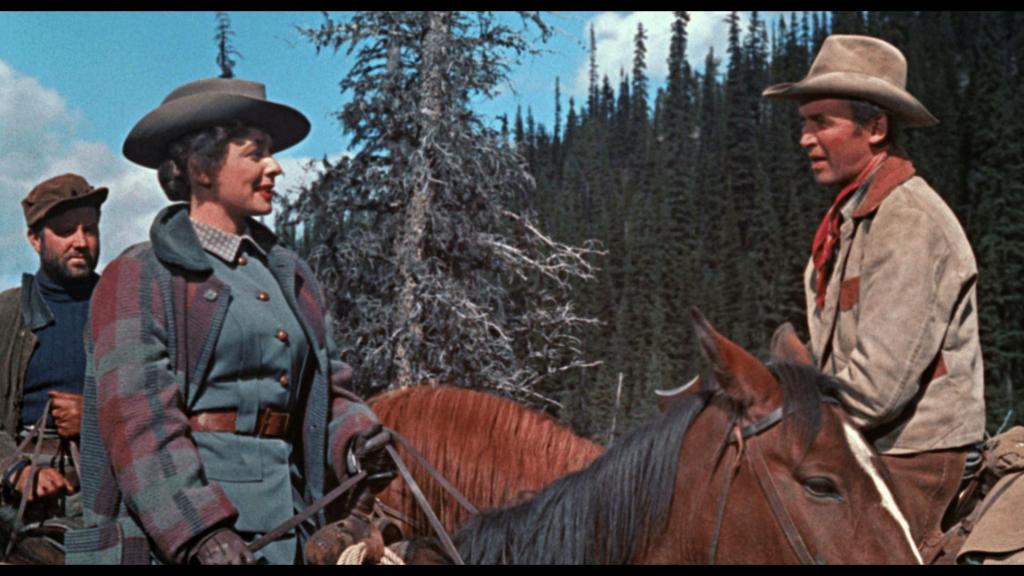
From 1950 to 1955, director Anthony Mann and James Stewart collaborated on eight films together – five of which were Westerns. Any one of them deserves a spot on this list, and it nearly came down to Winchester ’73 and The Man from Laramie, but I went with my personal favorite. In The Far Country, Stewart plays Jeff Webster, a cattle driver who makes his way to Alaska during the Yukon Gold Rush. When he crosses paths with the evil Judge Gannon (loosely based on real-life conman, Soapy Smith), the tension is palpable. It only rises as the movie goes on as Webster stops Gannon, scheme after scheme, until it comes to a boiling point – a one-on-one duel that turns into an ambush.
22. Thousand Pieces of Gold
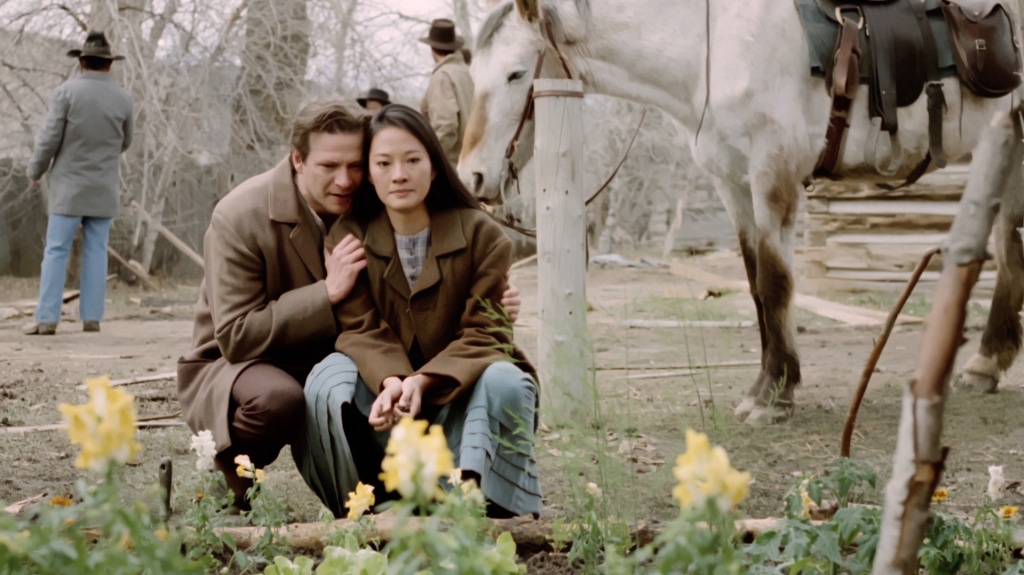
Thousand Pieces of Gold is the sole feature film from director Nancy Kelly, which is a shame. She has such a strong grasp on the Western genre and the female perspective that it’s criminal that this film failed and cost her a career. Rosalind Chao (fans of Star Trek: TNG might recognize her) stars as Lalu, a Chinese woman who is sold to America by her impoverished family. In a Northwest mining town, she is bought to be a wife, then a prostitute, and finally, she is won in a poker game by a man named Charlie (Chris Cooper). With Charlie, Lalu is given the freedom to figure out who she is and create a better life for herself. This Western Romance is at times too sentimental, but it has a lot of heart.
21. Johnny Guitar
If you thought this movie would focus on a man named Johnny Guitar, you would be mistaken. The main character in this film is Vienna (Joan Crawford), the strong-willed owner of a saloon that is at odds with everyone else in town because she is okay with the railroad coming through and she lets outlaws and thieves patronize her establishment. Guitar (Sterling Hayden) is just the latest drifter who stops by for a drink, and luckily, he’s handy with a gun. The antagonism from the townspeople is spurred by Emma (Mercedes McCambridge), a jealous woman who wants to see Vienna dead by any means necessary. When one of the outlaws who frequents Vienna’s saloon rob the bank in town, Emma sees her chance to get her wish. The melancholic ending proves that Johnny Guitar is the ultimate Western Noir.
20. Little Big Man
Dustin Hoffman stars as Jack Crabb, or “Little Big Man”, a white man raised by Cheyenne, who has a foot in both camps. He’s lived a pretty remarkable life, having befriended Wild Bill Hickock and worked under General Custer. He’s also the only white survivor at Little Big Horn. A Western satire for the ages, this movie uses conflicts between Native Americans and white settlers as an analogue for the Holocaust and the Vietnam War. It’s also one, if not the only, film to portray both the Sand Creek Massacre and the Battle of the Washita River (which can only be described as a “battle” because Cheyenne warriors were present at the camp that the U.S. military attacked; it was still a massacre), although it makes no mention of John Chivington, a worse offender to Native Americans than Custer ever was.
19. Buck and the Preacher
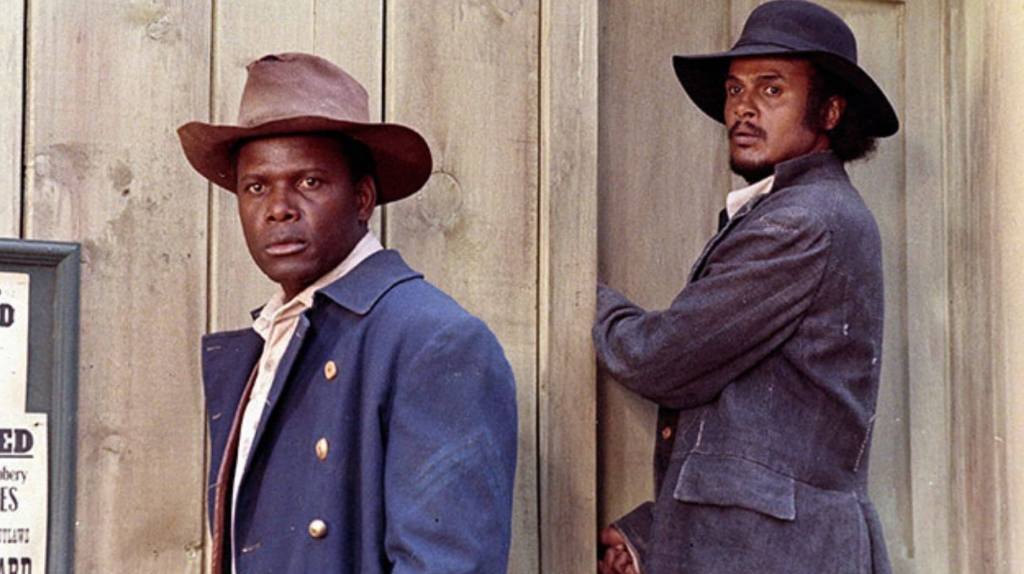
This film is all at once a Western classic, a blaxploitation film, and one of the few media portrayals of “Exodusters”, post-Civil War African American settlers who went through hostile Native land and around white plantation owners to make a new home in Kansas Territory. This is Sidney Poitier’s directorial debut, and he also portrays our hero, Buck – a cowboy who acts as Moses to these Exodusters. Along the way, he runs into Reverend Willis Oaks Rutherford (a wily and devilish Harry Belafonte), whom he enlists to help him ward off a group of white raiders. Made just a few years after the end of the Civil Rights Movement, Buck and the Preacher is just as much fun as it is important.
18. The Ox-Bow Incident
The Ox-Bow Incident is the most unsettling Western you will ever watch. Henry Fonda and Harry Morgan play two cowboys who come to town just as news is breaking that a local rancher is dead and his cattle stolen. A posse forms to search for the murderers, and the cowboys join it. Just on the outskirts of the town, they find a trio of men who are unable to provide proof of purchase of the cattle currently in their possession, and so they decide to hang them at sunrise. However, over the course of the night, some men in the posse voice their doubts that these are the murderers they’re looking for. Just before sunrise, they decide to vote on whether or not to hang the three men. I won’t spoil the conclusion here. Suffice to say, this moody Western will grab ahold of you and not let go for days to come.
17. Dances with Wolves
Another directorial debut! This time it’s Kevin Costner behind the camera and in front of it as Lieutenant John Dunbar, a Union soldier who is perhaps a little suicidal. When he helps defeat a Confederate troop, he’s rewarded by being sent to an abandoned fort in Indian Territory. After a confrontation with the Lakota, Dunbar realizes his only chance for survival is to befriend his Native neighbors. Slowly, he integrates himself into their way of life, even taking one of their own for a wife. When he’s captured by U.S. military and charged with desertion, he must be rescued by his new tribe. Realizing he’s a danger to the Lakota with the military out looking for him, Dunbar goes into hiding, never to be seen again. With beautiful cinematography and a majestic soundtrack, this epic Western is a must-watch.
16. The Searchers
Ethan Edwards is the best acting of John Wayne’s prolific career. This isn’t to say there aren’t better movies with John Wayne in them, which this list will prove later, but Wayne is so perfect as the cynical, racist uncle to Natalie Wood’s Debbie, that no other performance comes close. When Debbie is kidnapped by Comanche, Ethan leads a small group to look for her and bring her home, or kill her if she’s been “tainted”. The most harrowing scene in the film comes when Ethan attempts to do just that after five long years of searching. Once he returns Debbie home, we watch through the doorway as Ethan Edwards walks out into the sunset. Not as a hero, reveling in his success, but as a bitter man refusing to accept that the world is changing without him.
15. Destry Rides Again
Tom Destry Jr. (a much younger James Stewart) is a sheriff who is unwilling to carry a gun. Not because he can’t handle one – he’s an excellent marksman – but because he would rather rely on his wit to bring law and order to town. He’s sent to Bottleneck when the previous sheriff goes missing, and in his absence, a crooked saloon-owner named Kent, and his girlfriend, Frenchy (Marlene Dietrich), have got the town in a stranglehold. It’s an uphill battle, but Destry is determined to win the respect of the townspeople and uncover the mystery of the missing sheriff. A riotous Western comedy in it’s own right, Marlene Dietrich’s Frenchy is the source of inspiration for Madeline Kahn’s character in Blazing Saddles, right down to the inability to sing and thick German accent.
14. The Good, the Bad & the Ugly
I mean, what is there to say? You know the movie, you know the score, you know the Mexican standoff scene. Considered the ultimate Spaghetti Western, The Good, the Bad & the Ugly follows three men -the quiet Blondie, the venomous Angel Eyes, and the oafish, double-crossing Tuco – in search of a cache of Confederate gold. With bounty hunters and U.S. military hot on their trails, they must, at times, work with each other and against each other if they’re going to find the grave where the gold is buried. This film was an international success, making Clint Eastwood a mega star and introducing the United States to Lee Van Cleef and Eli Wallach. It also happens to be Sergio Leone’s masterpiece.
13. The Big Country
This is not the last time you’ll see Gregory Peck playing a pacifist seeking peace in an unruly West on this list. But this is the only time you’ll see it in Technicolor. The Big Country is an epic Western centered on a Hatfields and McCoys-style conflict between two families – the Terrills and the Hannasseys – with Peck’s James McKay caught in the middle. McKay is a wise man, who sees the folly of the rivalry, and refuses to let either side goad him into their foolishness. His desire for peace above all costs him his fiancée, Patricia, the daughter of the Terrill patriarch. McKay’s desire for peace is proven right as the confrontation between families comes to a tragic head. A morality tale with fantastic supporting performances from Charlton Heston and Burl Ives, this film, like Gregory Peck, is unwavering.
12. Stagecoach
Stagecoach did more for the Western genre than any other film. It imbued John Ford with his love for wide shots in Monument Valley, it made John Wayne a superstar lead actor, and it brought the Western out of B-Movie Hell and brought it to a place of prominence and prestige. You’ve probably seen some variation of this movie before: A group of strangers meet on a stagecoach as they make their way from Arizona to New Mexico. They have a multitude of reasons to make the trip – a fresh start, meeting family, vengeance – and they have to brave through Apache territory to get there. Along the way, John Wayne’s Ringo Kid, who has busted out of jail to kill the men who murdered his father and brother, falls in love with Dallas (Claire Trevor), a prostitute that has been kicked out of town and must now find somewhere she’s accepted. Action, romance, and great characters – this movie has it all.
11. The Gunfighter
Gregory Peck is Jimmy Ringo, the Gunfighter. Weary of his gunslinging lifestyle and tired of being viewed as an outcast or some kid’s ticket to fame as “the man who shot Ringo”, he decides it’s time to retire and become a respectable member of society. He returns to Cayenne, the town where his wife he hasn’t seen in eight years and the son he’s never met live. Through mutual friends, Ringo is given the chance to plead to his wife to join him in California, but she asks for a year to consider it and see whether he stays out of trouble. At the urging of the marshal, Ringo decides to leave town, but it’s too late. The brothers of a young man Ringo shot and killed in self-defense have arrived and are waiting to ambush Ringo. This film’s conclusion is a meditation on the price of fame and the circular perpetuation of an eye-for-an-eye.
10. Red River
John Wayne is Thomas Dunson, a man who wants a wife, a cattle ranch, and a son. When an attack on the wagon trail deprives him of his wife, Dunson decides to adopt the only survivor of the attack as his son. Fourteen years later, the cattle ranch is a success, but Dunson is a broken and wearied man. He decides to drive the cattle to Missouri in order to sell them and he brings his team, including his adopted son, Matt (Montgomery Clift), along with him. Dunson is a tyrant on the trail and eventually, Matt and Dunson’s men revolt, taking the cattle to Kansas instead. Not one to let any slight go unpunished, Dunson follows their trail. There is plenty of action and romance in Red River, as well as an excellent critique on generational sins and manhood.
9. Cat Ballou
Catherine Ballou (Jane Fonda) is a schoolteacher who returns home to her father’s ranch only to discover that the Wolf City Development Corporation is threatening Frankie Ballou (John Marley) to give up his ranch so they can use it for their own purposes. When Frankie refuses to give in to their demands, they send the killer, Tim Strawn (Lee Marvin), to do what he does best. Cat hires the notorious sharpshooter, Kid Shelleen (also Lee Marvin), in an attempt to save her father, but Shelleen is revealed to be a drunken buffoon – still a crack shot, but past his prime. After the murder of her father, Cat Ballou demands justice from the town of Wolf City, but she doesn’t get it. With a ragtag team, she decides to take matters into her own hands, becoming a notorious outlaw. When she accidentally kills the head of the Wolf City Development Corporation, she finds the town now all too willing to pursue justice. It’s hard out there for a woman. This Western Comedy is equal parts hilarious, dramatic, and action-packed, and Lee Marvin shines as the uproarious Kid Shelleen. There’s also Nat King Cole and Stubby Kaye as two banjo-wielding minstrels to narrate the story.
8. High Noon
Will Kane (Gary Cooper) is getting married when it’s announced that Frank Miller is on the twelve o’clock train, headed for town. This is a problem for Kane, since Miller is a vicious outlaw and Kane is the town’s marshal, and Kane was the one to put Miller behind bars in the first place. He now sees it as his responsibility to do so again. Miller’s gang, including his younger brother, are waiting for Frank at the train station, and when they arrive in town, it will be a very unfair four-against-one. Kane pleads with the town judge, mayor and all his friends in town to help him take care of the Miller gang, but everyone has one excuse or another, except for a fourteen-year-old boy who Kane rightly sends on his way, despite his appreciation of the boy’s courage. His own bride, Amy Fowler (Grace Kelly), urges him to abandon the town, and when he refuses, she abandons him. Come high noon, it’s an empty street as Kane and the Miller gang close the gap between them. This movie plays out in real-time, which increases the tension drastically. High Noon is mostly famous for a great performance by Gary Cooper and being an allegory of the McCarthy era Hollywood Blacklisting. It’s also responsible for its two biggest detractors, Howard Hawks and John Wayne, to make Rio Bravo – a vastly inferior film, but still considered a Western classic.
7. The Treasure of the Sierra Madre
For the record, the actual quote is, “Badges? We ain’t got no badges. We don’t need no badges. I don’t have to show you any stinking badges.” Doesn’t roll of the tongue as well, I know, but I wanted to clear the air. Fred Dobbs (Humphrey Bogart) and Bob Curtin (Tim Holt) are down-on-their-luck drifters when they hear about gold prospecting in the Sierra Madre mountains. Considering their one-off employers seem to have a bad habit of forgetting to pay the two men for their work, they happily go in with a seasoned prospect named Howard (Walter Huston). When they successfully discover gold dust in the mountains, bandits and Federales are the least of their concerns. The real enemy to watch out for is their own unbridled greed. Yes, it’s an old morality tale you’ve heard thousands of times, but no retelling of that tale is as engaging as The Treasure of the Sierra Madre. Twists and turns, double-crosses, and parasites are around every corner, and you can never guess which direction the film will go at any given moment. It’s that kinetic spontaneity that will keep the film with you years down the road.
6. Django Unchained
A German bounty hunter/dentist named Dr. King Schultz (Christoph Waltz) seeks to purchase a slave named Django (Jamie Foxx) because he should recognize the faces of his next big score, the Brittle Brothers. The deal is if Django can point them out to Schultz, then Django is a free man. As they track down the Brittles, Schultz gives Django the opportunity to learn to shoot and read, where he proves to be a natural at both. After they successfully kill the Brittle Brothers, Schultz learns that Django was married to a house slave named Broomhilda (Kerry Washington) before they were sold separately and is determined to reunite them. They find Broomhilda or “Hildi” is a slave at the plantation of Calvin Candie (Leonardo DiCaprio), and come up with a ruse to get Candie to sell Hildi to Schultz. The main house servant, Stephen (Samuel L. Jackson), discovers the nature of Django and Hildi’s relationship, and alerts Candie. Multiple gunfights ensue and it’s going to require all of Django’s wit to get out of Candie’s plantation with Hildi alive. Quentin Tarantino is not for everybody. I’m well aware of that, but if you can look past his overindulgences, you can find a charming, action-packed, and surprisingly hilarious send up to Spaghetti Westerns in here. The movie has intensity and swagger, and a multitude of well-defined characters in spades. Django Unchained is one for the ages.
5. The Man Who Shot Liberty Valance
Upon entering the town of Shinbone, Rance Stoddard (James Stewart) is immediately attacked by the outlaw, Liberty Valance (Lee Marvin), and his gang. Rance is discovered by Tom Doniphon (John Wayne) who carries Rance in to be treated for his wounds by his girlfriend, Hallie (Vera Miles). Rance works in Shinbone, hoping to set up a law practice, befriends the local newspaper editor, Dutton Peabody, and decides to build and teach a school when he discovers Hallie and a good portion of the town are illiterate. Meanwhile, Valance’s tirades on Shinbone and the surrounding area are getting worse, and Rance decides he better learn to use a gun. Tom attempts to teach him, but soon their time together turns into a competition for Hallie’s affections. When Rance finally confronts Valance, Valance quickly disarms him and aims to kill. Rance reaches for his gun and fires and Valance goes down. Unbeknownst to everyone else, Tom is standing in the bushes with a rifle. Which one was the man who shot Liberty Valance? In the end, it doesn’t seem to matter. “When the legend becomes fact, print the legend.” The Man Who Shot Liberty Valance is the best film John Ford ever made. It plays into the personalities of its lead actors, but also treats the material with the respect it deserves. It’s a statement – a bold exclamation point on the careers of three Western filmmakers.
4. Butch Cassidy and the Sundance Kid
Butch Cassidy (Paul Newman) is the fun-loving leader of the Hole-in-the-Wall gang, and Sundance (Robert Redford) is his quiet, crack shot right-hand-man. Together, with the rest of the gang, they successfully rob a couple of trains, but that alerts the attention of the head of Union Pacific, who sends a posse of lawmen after them. Cassidy convinces Sundance and Sundance’s girlfriend, Etta Place (Katharine Ross), to hide out in Bolivia, which Cassidy inexplicably assumes is an outlaw’s paradise. However, they are soon deprived of that fantasy upon their arrival. Sundance particularly loathes the place. Due to their inability to speak Spanish, they are initially unsuccessful at robbing banks, so they consider quitting the criminal life for good. Their first day as honest-working men ends with their boss being killed by bandits in a shootout. They decide the honest life isn’t for them, and return to their old ways. When they arrive in a small Bolivian town, they are met by the local authorities who have also called in the Bolivian army to help bring down Butch Cassidy and the Sundance Kid. The two friends go down in a blaze of glory and the film ends with the greatest freeze-frame of all time (although, Thelma & Louise gives it a run for its money). The chemistry between Paul Newman and Robert Redford is magnetic, so much so, between this film and The Sting, they are considered one of the greatest on-screen duos of all time.
3. True Grit (2010)
I had to specify the year because I imagine some of you erroneously believed that the original 1969 film would be on this list. If you can handle Glen Campbell and Kim Darby’s acting, more power to you, but for me, the 2010 Coen Brothers version is infinitely superior. Even if you believe that John Wayne is Rooster Cogburn, you can’t deny that Jeff Bridges is the better actor. The Coen Brothers version leans into the quirkiness of the original novel by Charles Portis, and toes the line between humor and action, while keeping the intensity and theme of fruitless revenge intact. If you don’t know the story, Mattie Ross (Hailee Steinfeld) is a strong-willed girl who doesn’t have the time or patience to leave justice against the man who killed her father to anyone else. She pursues Tom Chaney (Josh Brolin) herself, and seeks the assistance of Marshal Rooster Cogburn (Jeff Bridges) to help bring him down. Cogburn is a drunken shell of the man he once was and so doesn’t appear to be much help, but he makes the attempt anyway, and they add Texas Ranger LeBoeuf (Matt Damon) to the mix. At every turn, every person including Cogburn and LeBoeuf tell Mattie that this is no venture for a young girl, but she’s determined. Once they find Tom Chaney with the Ned Pepper gang, she and Cogburn both get the chance to prove their mettle. Bite down and your leather reins and get ready for one of the most glorious finales ever put to film.
2. The Magnificent Seven
The only difference between Westerns and Samurai movies is location, and this film is the proof. The three-hour epic from Akira Kurosawa, Seven Samurai, is the film The Magnificent Seven is based on, and the two are basically equal in their impact. Seriously, how often is a remake as good (or at least pretty close) as the original? This film is packed with an all-star cast. Yul Brynner, Steve McQueen, Charles Bronson, James Coburn, Robert Vaughn, Brad Dexter and Horst Buchholz are the titular seven, and Eli Wallach is their opposition, the leader of the bandit gang terrorizing the poor Mexican villain, Calvera. These seven gunslingers are hired by the village to defend them from Calvera. The fear of the villagers and circumstances eventually cause the seven gunfighters to second-guess their decision to help them. However, when Calvera attacks the village again, the seven rally together and defend the people who have slighted them. In the melancholic ending to this magnificent film, Chris Adams (Brynner) muses that the villagers won the day, but the nature of the gunfighter is to always lose. Great performances, a beautiful backdrop, and one of the greatest film scores of all time are the pillars of this remarkable remake of a foreign film. It’s also a loose inspiration for the plot of the Western Comedy, Three Amigos.
1. Tombstone
If you know me very well, there’s no way you’re surprised this is at the top spot. Tombstone is the movie that got me into Westerns. It’s the story of the Earp brothers, Wyatt, Virgil and Morgan, and their friend, John “Doc” Holliday, their confrontations with the red-sash-wearing Cowboys, building to the Gunfight at the O.K. Corral, and culminating in the notorious Earp Vendetta Ride. Wyatt Earp (Kurt Russell), already a famous lawman from his time in Dodge City, joins Virgil (Sam Elliott) and Morgan (Bill Paxton) in the booming town of Tombstone. They establish themselves as runners of a faro table in local saloon, and run into Wyatt’s good friend, the hard-smoking, hard-drinking, hard-gambling Doc Holliday (Val Kilmer). They also meet Bill Brocius (Powers Booth), an important member (and soon to be the leader) of the Cowboys, and Johnny Ringo (Michael Biehn), his best gunman who sees himself as the Fourth Rider of the Apocalypse. When the Earps begin to do what the law won’t do and serve justice, the Cowboys don’t take kindly to it. The Gunfight at the O.K. Corral ends in several Cowboys dead at the hands of the Earps, and the Cowboys retaliate, killing Morgan and wounding Virgil. Wyatt decides to wipe out all remaining Cowboys to finally achieve peace, and Holliday, despite his tuberculosis getting worse and making him bedridden, joins the posse. Thus begins the ultimate showdown, and the best gunfighting montage in all of cinema. A crackling script with dialogue taken directly from the late 1800s, true horse and gun play, wonderful performances, and real moustaches keep the film authentic and exciting. There are cameos and supporting roles from Chalton Heston, Billy Bob Thornton, Billy Zane, Jason Priestly, Stephen Lang, Michael Rooker, and a narration from Robert Mitchum. Above all, there is a once-in-a-lifetime performance from Val Kilmer who embodies the legend of Doc Holliday that anchors the film. “Greatest Western of All Time” hardly does it justice.
It’s been awhile since I’ve done a list. I wanted to just stick to “Top 10’s”, but between this and my Top Westerns, I’m finding that to be a limit that I can’t stick to. Anyone who knows me will not be shocked by that fact. Anyway, enough about my shortcomings. Here are the Top 20 Christian Films, the criteria of which is simply whether it has a positive Christian message to it and whether or not it’s good. My apologies in advance to anyone expecting anything from PureFlix on here. Maybe when I do a Bottom 10?
20. Bruce Almighty
Bruce Almighty might be a head-scratcher for some. I remember when it came out it received some flack from Christian circles for making a mockery of God and Christianity, but I assume people who argued that didn’t watch past the first five minutes or didn’t watch the film at all. Bruce may be skeptical at first, and there’s no denying he’s intending to mock God when he decides he could do a better job, but the film is sincere in its take on faith and what Christian humility and service can do for one’s own spirit. The climax of the film is the most beautiful “field moment” (thank you, Say Goodnight Kevin) of any Christian movie ever – a “field moment” is that part of a Christian movie where the main character, at their wit’s end, walks out into a field, hands held high, and cries out to God in total surrender. The only difference is that, in Bruce Almighty, it takes place in the middle of a busy intersection.
19. First Reformed
Paul Schrader has never shied away from religious themes in his scripts, but First Reformed is one of his more obvious ones, as well as a blatant homage to another film on this list, Winter Light. We follow the pastor (Ethan Hawke) of a Dutch Reformed church in upstate New York as he struggles through a crisis of faith. His church attendance dwindles, death and suicide linger around him, others are concerned with the political climate rather than Christian stewardship. It’s enough to drag anybody down, and the reading of classic Christian authors, such as G.K. Chesterton, isn’t helping. It’s hopeless in Hawke’s mind, and he lingers so deeply in despair that his only solution is to go out with a bang. Much like Hawke’s pastor, by the end of the film, we are left with more questions than answers.
18. The Tree of Life
The first of two Terrence Malick films on the list. The Tree of Life is Malick at his most visually stunning. From the opening history of the earth sequence, to the above image towards the end of the three-hour film, there is not a wasted shot. Jumping between timelines, the film loosely follows the life of a boy growing up in Waco, Texas, as he grapples with the contending harshness of his father and the abounding grace of his mother – a personified battle between the Old and New Testament. Philosophical questions plague the boy, Jack, as he grows through his parents dichotomy and the loss of his innocence, until his adult life presents him a vision of the dead coming back to life, giving him a chance to say a final goodbye to his family. Brilliantly performed and unforgivingly experimental, this movie is all at once confusing and beautiful.
17. Sergeant York
Sergeant York was a conflicted man. He saw it as his patriotic duty to serve in the War, but it was his Christian responsibility to “not kill”. His solution, in the film, is to capture his enemies alive and march them all back to his camp…after he’s killed several. Made in 1941, Sergeant York is clearly American propaganda, encouraging everyone to do “the right thing” and get involved in the current war effort despite Christian misgivings, but it’s good propaganda. Gary Cooper is in perfect form as the “aw, shucks”, good ol’ boy, who’s a sharpshooter when it comes to turkeys, but the message of country-over-self keeps this from being higher on the list.
16. Ordet
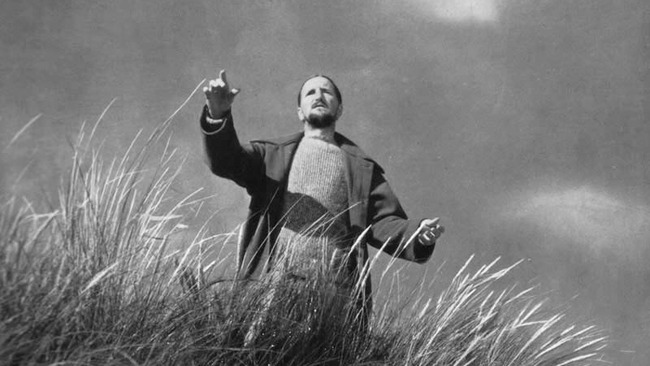
Morten is a devout man who is struggling. He has lost his wife, his eldest son has no faith at all, his middle son thinks he’s Jesus Christ, and his youngest son is in love with a Lutheran – things couldn’t be worse. Weaving themes of self-righteousness, loss of faith, conflicts amongst different Christian sects, and the desire for faith when everything around you is crumbling into one film is a masterwork of one of the Danish greats, Carl Th. Dreyer. Ordet feels grander in scope and significantly more complicated, which is why it’s on this list over his more well-known film, The Passion of Joan of Arc.
15. Ben-Hur
Ben-Hur is a four-hour epic about a man who just wants to get back to his family. Judah Ben-Hur spends time in prison, as a galley slave, and a charioteer before successfully returning home. Throughout the trials that Judah Ben-Hur endures, he grows increasingly angry, fueling his hate for the man who betrayed him until it consumes him. Jesus Christ appears four times in the story, mostly in the background – his birth, a scene at a well where he gives Judah a drink of water, when he preaches the Sermon on the Mount, and his crucifixion, where Judah recognizes him as the man who gifted him water so long ago and attempts to return the favor. It is the crucifixion where Christ comes to the forefront, and acts as the ending to the film. At seeing Christ on the cross, Judah Ben-Hur’s rage dissipates.
14. Leap of Faith
In Rustwater, Kansas, Jonas Nightengale’s Travelling Salvation Show pulls into town. Accidentally. Their tour bus breaks down and they’re stuck in the dusty town for a few days. Nightengale (Steve Martin) decides to bring his big tent revival to the people in order to raise the money they need for parts. The town is ready to receive the Word. The only catch is Jonas isn’t a preacher- he isn’t even a Christian – he’s a conman out of New York City looking to make the big bucks with his faith healing shtick. Once he witnesses a true, honest-to-God miracle, his faith (or lack thereof) will be shaken to its very core. Slowly realizing the error of his ways, Jonas leaves town in the middle of the night, not wishing to feed the town anymore false gospel. On his way out, he witnesses another miracle and laughs, overcome with the joy of the truth he has discovered.
13. The Last Temptation of Christ
If you’re looking for a movie on the life of Christ, steer clear of this one. In fact, I don’t know if this is a film I’d recommend to most Christians. I’m sure you’ve heard the controversy surrounding The Last Temptation of Christ, so I won’t go into the details, but whatever you’ve heard of this film is probably true. The criticism from the Christian crowd tends to miss the point of it all, though. In the novel this film is based on, the author, Nikos Kazantzakis, prefaces it by saying that his intention was to play with the dual-nature of Christ. Yes, He was all God, but that means He was also all Man, and to think that Christ had to deny himself the life of a normal man – the life we all get to enjoy – makes his sacrifice all the more incredible, and that is something worth considering, even if both the novel and the film stray too far from the all-God side of Christ to emphasize their point.
12. A Man Escaped
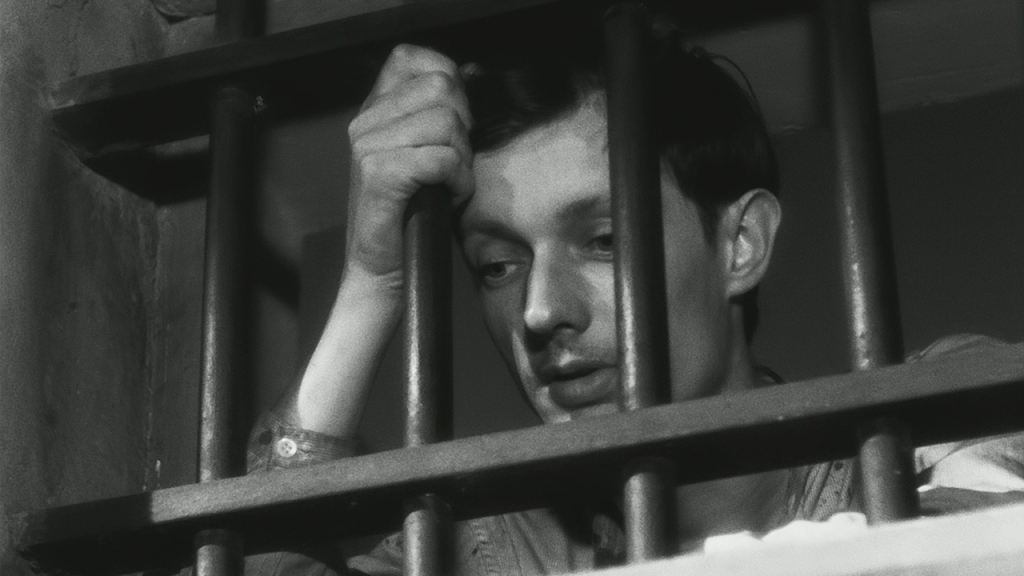
A Man Escaped is a POW film by the French director, Robert Bresson. Fontaine is a member of the French Resistance who has been captured and imprisoned by German soldiers towards the end of World War II. His days are spent mostly in solitude, occasionally chatting with one of the lucky prisoners who gets outdoors-time outside Fontaine’s window, or communicating with his neighbor in the next cell over. Fontaine has two things keeping him sane – the hope he has in his eventual escape and the hope he inspires in others, and both come from his unwavering Christian faith. He knows God will make a way for his escape, and it’s his fellow prisoners’ lack of faith that keeps them from joining him. This film is minimalist at its core, which may make the film seem boring to some viewers, but it’s deeply moving and its triumph is inspiring.
11. The Passion of the Christ
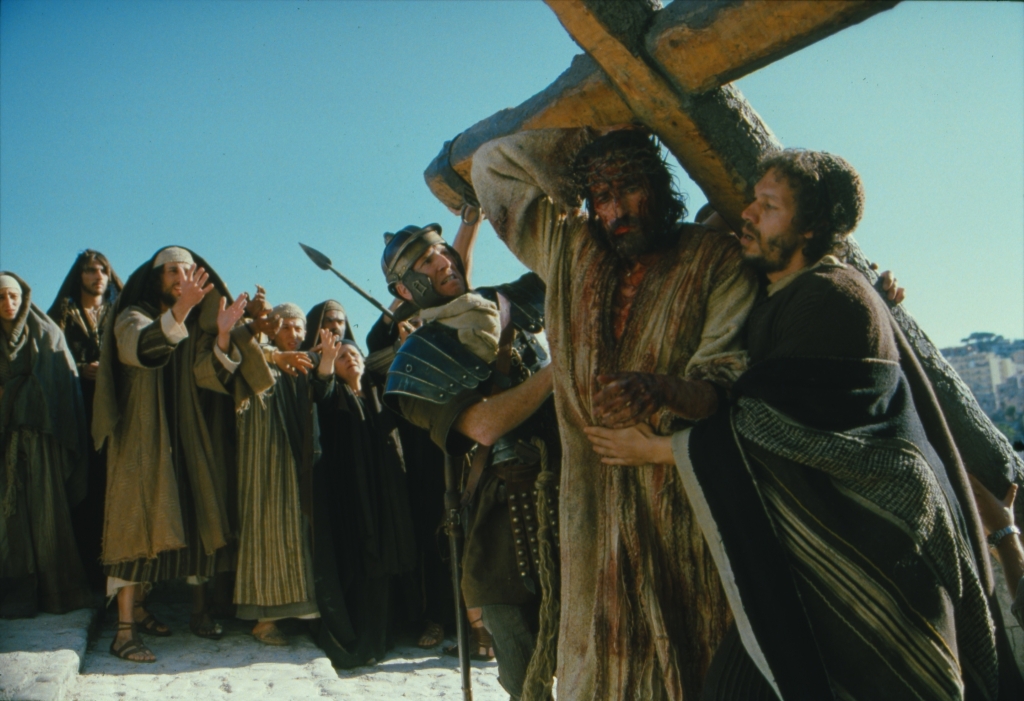
The main criticism of The Passion of the Christ is that it’s gore porn. I understand how that could be the view from an outsider, but I think the majority of Christians would agree that the violence showed on screen is the tip of the iceberg for what Christ endured during his trial and crucifixion. Displaying that horror in all of its gruesomeness is compelling and convicting, and necessary, if you want to do this part of the Gospel justice. More praise can be given for Mel Gibson’s use of unknown actors or the original languages used in the film (a particularly bold choice when most Americans are averse to subtitles by default). The film is a lot to take in, and it has a purpose in going to the extremes it goes to. Personal views of Gibson or Jim Caviezel aside, the message conveyed in this film is very basic and very Catholic, but it’s no less important for it.
10. Andrei Rublev
In the mood for a three-hour Russian biographical epic made by one of the most methodical film directors of all time? Understandable if you aren’t, but you’d be missing out on a beautiful piece of cinematic history. Which is not to say that it’s enjoyable to watch, but that’s more up to the individual. Andrei Rublev is set in the 15th century, and follows the titular painter through eight segments. Andrei witnesses horror and pagan violence, but also beauty on the handiwork of God in his trek across the Russian countryside. The film’s director, Andrei Tarkovsky, claimed the purpose of this film was to show “Christianity as an axiom of Russia’s historical identity”, and decides to end the film with a lengthy montage of Rublev’s work, showcasing the beauty in the religious experience.
9. Winter Light
The middle part of a spiritual trilogy from one of the greatest filmmakers of all time, Winter Light finds Ingmar Bergman at his most existential. This film is the clear inspiration for First Reformed, as it follows a preacher of a dying church as he seeks to console what remains of his flock, all the while having abandoned his faith, himself. This film is bleak and cold like the Swedish landscape it was filmed across, but it poses some very thought-provoking ideas, like the idea that the betrayal and confusion of his disciples and the silence of God while Jesus was on the cross is a harsher burden to bear than the physical torture he received. Bergman’s own history with faith (his father was a minister) gets put under the microscope for us to analyze. More vulnerable than wearing his heart on his sleeve, Bergman bears his soul to us.
8. Hacksaw Ridge
Hacksaw Ridge is Sergeant York without the propaganda. And involving a different war. Desmond Doss is drafted to fight in World War II, but his Christian morals prevent him from taking the life of another man. His goal is to become a medic so that he can comply with his country’s demands and stick to his moral code. His seeming self-righteousness makes him several enemies among his fellow soldiers, but he sticks to his beliefs in the face of such adversity and ends up saving those who hated him. He becomes a hero. It’s a little simple and straightforward, and most of the conflict is manufactured, but that doesn’t detract from what makes it great. The movie is a testament to unrelenting faith and a lack of compromise when trials come.
7. The Prince of Egypt
I don’t think anyone who has seen it needs to be convinced of how great this movie is. The animation is gorgeous, the voice acting is superb, and of course, the music is beyond amazing. A relatively faithful adaptation of the Exodus story, we follow Moses from his youth under the Egyptian Pharaoh to his time in the desert, and to his return to Egypt to lead God’s chosen people to their freedom. Sure, it pulls from The Ten Commandments about as much as it does from the Bible, but it tells its story without any compromise on the involvement of God or the harshness of His judgments. In fact, those judgments – the plagues – make for the best segment of the film.
6. Au Hasard Balthazar
When director Robert Bresson wanted to portray a character of pure innocence, he cast a donkey. This will make some people roll their eyes, I’m sure, but it’s accurate to the foundation of the Christian faith to say that, sometimes, people can’t cut it. Besides that, the personification of a donkey is scriptural, as is the opinion that the donkey is a humble beast of burden. The film revolves around Balthazar and the only human to ever show him any kindness, Marie. It’s a tragic story of sin’s abuse of innocence, and it culminates in one of the most beautiful final shots in a film ever. Au hasard Balthazar is not for everyone, and that’s okay, but you can’t do better than this film if you’re looking for a picture of the desolation of innocence in a sinful world.
5. The Mission
Rodrigo Mendoza is the worst kind of human being. He sells people into slavery, and he’s a Cain. He killed his own brother. He finds salvation through conversations with a Jesuit priest named Gabriel, who is in Paraguay, attempting to convert the natives to Christianity. He is successful with Mendoza, and somewhat successful with the natives, until political realignments in Spain and Portugal condemn the mission they call home and demand they move. Mendoza defends his newfound faith and home the only way he knows how – with a sword. The Mission is a testament to the strength of faith when it’s genuine and the detriment a wayward believer can have on a new convert or the overlap of politics and religion can have on entire groups of people.
4. Shadowlands
Based on a play, based on the true story of C.S. Lewis and his marriage to Joy Davidman, Shadowlands is an interesting perspective on romantic love and the plans of humans. It’s also a wonderful story of faith amidst tragedy. Lewis – “Jack” to his friends – meets Joy and immediately finds an intellectual equal. He’s intrigued by her, infatuated with her (in a sense), and when faced with reality that he will lose her, realizes he’s in love with her. It’s an unconventional love story and an excellent portrayal of all four types of love that Lewis ascribed to. It also contains one of my favorite quotes of all time. When questioned by one of his friends as to why he prays when he knows that the future is inevitable, Lewis says, “Prayer doesn’t change God; it changes me.”
3. A Hidden Life
Another film by the wonderfully poetic Terrence Malick, A Hidden Life is another true-story World War II film about a soldier that cannot reconcile his faith and his country’s demand that he fight and kill. The only difference between this film and Hacksaw Ridge – and it is a big difference – is that Franz is Austrian, meaning his country’s authority is Adolf Hitler, and Hitler’s less forgiving of defiance against country than Americans. The film covers a lot of ground, and even though it moves slowly, it earns its three-hour runtime. The film is a meditation on faith under God’s deafening silence and that is a theme that I think should be explored more.
2. Silence
One of Martin Scorsese’s absolute best films, Silence also explores the idea of God’s silence. However, in A Hidden Life, Franz never waivers in his commitment to his faith; in Silence, the Jesuit priest to Japan, Rodrigues, fails. He apostatizes when he is given the ultimatum from Japanese officials to either do so or witness the torture of innocents for his refusal. While Rodrigues does deny Christ to the Japanese government, he dies and is buried with a crucifix in his hand. The film proposes a very interesting thought: Is it okay to deny Christ (even in word only) if it means others will be spared? I don’t have an answer for that, but I don’t believe it’s as cut-and-dry as others might argue, and that’s what makes the movie so incredible.
1. The Gospel According to Matthew
What do you get when you give a copy of the New Testament to an atheist, socialist, homosexual Italian filmmaker? You get the most accurate film portrayal of a biblical story ever. This is not hyperbole. Whereas other films on the subject of Christ add dramatic embellishments or combine portions of the other gospels, Pier Paolo Pasolini’s The Gospel According to Matthew is purely from its source. The dialogue is taken directly from the gospel account, and there are no “Hollywood” additions. To avoid the confusion of celebrity, Jesus is played by an unknown Italian man, and he is played with all the stoicism of a man uncomfortable with being in front of a camera. Pasolini’s motivation for the film is totally nostalgic for a belief he no longer has, if he ever did to begin with, and that distant desire for closeness frames the movie perfectly.
This collection of five films from the Criterion Collection showcases the bulk of collaborations between under-the-radar B-Western director, Budd Boetticher, and longtime Western hero, Randolph Scott. The films included are The Tall T, Decision at Sundown, Buchanan Rides Alone, Ride Lonesome, and Comanche Station. All five films feature Randolph Scott as the lone wanderer with his own moral code to live by, and relatable villains. We’ll take them one at a time.
The Tall T This one is based on a story from Elmore Leonard, the writer of many classic Western tales, such as 3:10 to Yuma, Valdez is Coming, and Last Stand at Sable River. Scott plays Pat Brennan, a rancher with a “place of his own” that he hopes to build up into something great. We see him wandering through the opening credits and stopping at a way station to begin our story. The place is operated by a man and his little boy, and Brennan promises to bring the little boy back some candy when he returns from visiting the nearby town. Unfortunately, after leaving the town, Brennan loses his horse and is forced to hop on a stagecoach with the daughter of a rich mining baron and her new husband. The coach stops at the way station where three men, Frank Usher, Billy Jack, and the unfortunately-named, Chink, have taken over and murdered the man and his boy. Richard Boone plays Frank Usher, and while his young henchman are a little too trigger happy, Usher has a code of ethics similar to Brennan, only he’s willing to let innocents die to get what he wants. Through their conversations, they both realize that, in another life, they might have been friends.
Usher is looking for a big payout so he can live the life he wants, and he seems to have stumbled into it when the newlywed husband turns out to be a craven, self-serving piece of trash. He admits his wife’s father is rich and is willing to go and deliver a ransom note to the baron in exchange for his own freedom. Once the plan is set in motion, and the husband is no longer needed, he gets a bullet in the back, courtesy of Frank Usher. The justification being that the husband was no-good for abandoning his wife, and at that point, it’s hard for the audience to disagree.
The film has a tight runtime of 78 minutes, and Burt Kennedy’s script is an economic tension-builder that matches the best of them and shows us what makes the post-World War II Westerns such a joy to watch.
Decision At Sundown The second film in this set takes the tropes of these Westerns and turns them on their head. Scott, this time, plays Bart Allison, a man who rides into the town of Sundown with one thing on his mind: vengeance. He’s after the man he blames for his wife’s suicide, Tate Kimbrough, and he’s not leaving until he kills him. Lucky for Allison, Kimbrough has the entire town of Sundown in a vice grip, and they aren’t too happy with the way he’s running things.
Once Allison arrives in town, the movie jumps right into the action. Allison stops Kimbrough’s wedding and a shootout ensues. The rest of the movie is a true Western standoff – the town is completely quiet, all doors are shut, and the heroes and villains yell at each other from around the corners of buildings. However, in that time, we learn that Bart Allison is far from the hero we expect from Randolph Scott. He is fueled and blinded by his hatred. He refuses to believe his good friend, Sam, when he is told that his wife was not a good woman to begin with and never loved him. His code of ethics has been swapped for revenge, and revenge alone. And when even the sheriff of Sundown gets in his way, well, that’s just too bad for the sheriff.
Kimbrough is obviously not a good guy, so we’re happy at the thought of him getting his comeuppance, but it doesn’t happen. Kimbrough is allowed to escape as Allison deals with the loss of his friend, Sam, and the realization that what he said about his wife was true. In the end, multiple people are dead, Allison fails in his mission, and the town of Sundown is freed. The town, of course, is happy to celebrate, but for Allison, there is nothing to do but mourn his losses. He leaves Sundown, refusing their thanks, and alone once more.
Buchanan Rides Alone In this film, Randolph Scott is Tom Buchanan, and you guessed, he rides into town alone. Agry is not a town you want to ride into and stay very long, even the townspeople say so. As soon as Buchanan passes the bridge from Mexico into Agry, he is greeted by a suspicious sheriff who aggressively gets Buchanan off his horse and patted down. Buchanan soon finds that Sheriff Lew Agry isn’t the only unfriendly soul in town, nor is he the only one the town is named after. Lew has two brothers, and while he is sinister, scheming one, his brother, Amos, is too dimwitted to do anything beyond run the hotel, and his other brother, Simon, is the most respected of the brothers and the town judge.
When Simon’s son, Roy, the town hothead and drunk, is shot and killed by Juan de la Vega, a Mexican who had a personal vendetta against Roy, Tom Buchanan gets roped into the town’s politics, and it’s up to him to get de la Vega out of trouble. The brothers Agry’s war amongst themselves sucks in the entire town, as well as the lives of Buchanan and de la Vega, presenting several twists and turns along the way. It all culminates in a nail-biting shootout involving hostages on both sides of the same bridge Buchanan crossed when he entered the town and a saddlebag with $50,000 smack dab in the middle.
Because of how this movie zig-zags throughout and the intense finale, Buchanan Rides Alone may be my favorite out of the Ranown films I’ve watched so far. This one clocks in at 80 minutes, so again, it’s short and sweet, tightly-paced, with several interesting, flawed characters to keep viewers invested. A great film to show those who are skeptical of the Western genre.
Ride Lonesome Randolph Scott stars as Ben Brigade, a bounty hunter who is after more than just the money when he tracks down and captures wanted criminal, Billy John. In his attempt to get Billy to Santa Cruz, Brigade runs in with a couple of outlaws with their own motivations and a woman who is all alone in the harsh western country. Together, they have to outrun Indians and a band of outlaws (the leader of which is Billy’s brother, Frank), until Brigade’s true intentions are made known.
The film consists of many twists and turns, and the entire time, it’s hard to keep track of the alliances and loyalties between the characters. The film banks on misdirection. Even one of the outlaws, Sam Boone (Pernell Roberts), at the end of the film, claims to Brigade, “Ain’t it funny how a thing can seem one way and turn out another?” Brigade can’t help but agree. Neither can we. Even as the ending comes, and all loose ends are tied, and all the good guys have gotten what they wanted, the film still plays on this misdirection. It was a comedy in the classic sense, right? The happy ending? And then the final shot of the film happens, and you realize what a truly cold revenge story this was.
Burt Kennedy’s script sense shines once again, as the characters are mostly fleshed out, except for the villain, Frank. Even though he’s played by the great Lee Van Cleef, he remains forgettable. The woman and Native American characters are treated the same, but that’s at least a bit more common of the genre. Ride Lonesome is certainly not the best film in this collection, but it is an entertaining one, and probably carries a lot more rewatch value than some of the others.
Comanche Station In the final film between Scott and Boetticher, Scott plays Jefferson Cody, another man alone on his own personal mission. He rescues a woman from a tribe of Comanches, and rides off with her only to be waylaid by a trio of outlaws – the evil Ben, the scheming Frank, and the dimwitted Dobie. They all ride together for a time, and during that time, Ben and Frank come up with separate plans for how to make off with the woman and a $5000 reward for her safe return. Dobie, of course, follows along but doesn’t come up with any plans of his own or really approve of Frank or Ben’s methods. Cody, meanwhile, claims to know nothing about the reward; he is rescuing the woman, Nancy Lowe, for his own reasons.
Similar themes run rampant in Comanche Station as does through the others in this collection – loyalty, personal honor, the fine line between hero and villain, and it’s chockfull of a few twists and turns along the way. Why is Cody risking his life for Nancy without a thought of the financial reward? Can Nancy believe him when he claims to have no prior knowledge of the reward? What secret is Nancy hiding herself? Are any of the outlaws to be trusted? The finale is as much shocking as it is endearing.
This film and the previous one, Ride Lonesome, were both filmed in CinemaScope, so you get some beautiful wide landscapes of the open range, as well as that sunburned color look, so they look best in the 4K format on the biggest screen you can handle. Scott is often framed to reflect his larger-than-life hero image. The script is once again precise and tight, even if, at this point, it’s familiar territory.
Looking back on the whole collection, I don’t think I would marathon these films in one or two sittings. They benefit from being allowed to breathe. As I alluded to in the paragraph above, by the end of the series, it begins to feel repetitive. The same basic premises, with just enough of a twist to justify being their own releases, and Randolph Scott basically plays the same character in each one (except for Decision At Sundown).
Having said that, I still recommend this set or at least these movies to anyone who likes Westerns, early Revisionist cinema, or wants something to watch under an hour and a half. They look great, especially in Criterion’s new 4K release, and they’re an excellent cap to Randolph Scott’s impressive career. He retired after Comanche Station, only to come out of retirement for Sam Peckinpah’s Ride the High Country before retiring again, for good, but in my opinion, these films are the better closure for his lifetime of moviemaking.















 Destined for Mediocrity