If there’s one thing that I’ve learned from movies and history books, it’s that you shouldn’t be Black and in Mississippi during the Civil Rights movement. It never works out well. Mississippi Burning is a film in a long list of films that deal with this subject, and inspired by true, terrible events. Here’s the background:
James Chaney was from a town called Meridian, Mississippi. Two men from New York City, Andrew Goodman and Michael Schwerner, met together in Philadelphia, Mississippi to work with Freedom Summer – a volunteer campaign that attempted to get Black people registered to vote in rural Mississippi. Chaney, himself, was Black, and Goodman and Schwerner were Jewish. They were pulled over for speeding, and were promptly sent to the local jail and held there for several hours. When they were released, they left town but were followed by local law enforcement, and were once again pulled over before leaving the county. This time they were abducted, sent to an undisclosed location, and killed. After a lengthy investigation from the FBI, it was discovered that members of the KKK, the Neshoba County Sheriff’s Office, and the Philadelphia Police Department were involved in the murders.
The movie follows the same basic premise, but focuses on the FBI’s investigation and sets the story in a fictional county. We’re introduced to Agent Anderson (Gene Hackman) and Agent Ward (Willem Dafoe) as they enter Mississippi, and from very early on, we see the potential clash of method between the two. Ward is interested in doing things by the book, while Anderson prefers whatever gets the job done. Their investigation proves difficult when they get no assistance from the local authorities and citizens, some of which are downright antagonistic towards them. Eventually, both agents are frustrated by their lack of success, and Ward officially lets Anderson do things “his way”. Through threats of violence and trickery, Anderson is able to piece together evidence for their case, and also decides to try the murderers for civil rights violations because it means they will be tried at a federal level instead of the state, which is where murder trials were handled at the time. Watch the movie if you want to see how that goes.
Mississippi Burning isn’t without controversy. First, for a movie about racial tension in the South, the movie is almost completely white. The fictional stand-in for Chaney appears only briefly, and beyond that, it’s nothing but waves of vanilla. Not having a Black character that is central to the story is a fair criticism and leads into dangerous “white savior” territory, and I think it would have helped if the movie had someone for the audience to identify with. However, one thing the casting decision does is reinforce the townspeople’s mentality that Black people are “outsiders”. Another criticism is the framing of the story. Making the FBI the good guys didn’t sit well with a lot of the Black community who lived through the Civil Rights Movement, considering the FBI’s penchant for wiretapping those involved. Also fair. The last criticism was from members of the families of the men killed in real life, who argued that the murders were being exploited for the sake of moviemaking. Likely true, however, that’s just a byproduct of using film to tell history, isn’t it?
Despite these criticisms, I still think Mississippi Burning is worth a watch. The performances are great, and there’s a particular scene where Agent Anderson gets to have a one-on-one chat with one of the possible murderers in a barber shop that will make you clench your butt cheeks. Also, Frances McDormand is in this as the wife of a racist deputy sheriff. She’s great in everything.
Bonus Review: In the Heat of the Night
This is the movie to watch if those criticisms for Mississippi Burning were a deterrent or if you just want to compare how the two movies handle a similar topic. Firstly, it’s not based on any actual murders to my knowledge. Secondly, not only is a Black character front and center to the story, (they call me) Mr. Tibbs is played by THE Sidney Poitier.
Mr. Virgil Tibbs is arrested as he’s traveling through a Mississippi town, suspected of murdering a white man in town. Mr. Tibbs is able to prove that he is a homicide detective from Philadelphia, Pennsylvania, and is released. On the phone with his chief, it’s decided that Tibbs will stay in town to help with the investigation. Police Chief Bill Gillespie reluctantly accepts the help despite his own prejudices. Gillespie is all too quick to arrest anyone who might be a suspect, and it’s up to Tibbs to prove their innocence. Eventually, Tibbs figures out who the actual murderer is, almost by accident, and is able to get a confession. As Mr. Tibbs boards a train to depart, he and Gillespie part ways with a mutual respect for one another.
A few firsts for this movie: 1. This is the first film that was properly lighted for darker skin complexions. Before In the Heat of the Night, film lighting would always result in a glare on Black characters. 2. It’s the first film that allowed for a Black character to slap a White character.
This movie has so much going for it. The story is great. Tibbs’ efforts despite the racist town and in the face of said racism is exciting, and his Golden Rule approach to the citizens is commendable. The acting is great, particularly Poitier and Rod Steiger, who plays Gillespie. The score from Quincy Jones is amazing. It’s got so much working for it, and it’s honestly a film that everyone should see at least once. Honestly, the more I type out my review, the more I’m convinced that this one and Mississippi Burning should switch places. In the Heat of the Night should actually be #94 on my Top 100. I’m too lazy to change it, but for those of you have read the full review (or better yet, have watched both movies), you know who the real #94 is.
1946. World War II had just ended the previous year, and the Allies’ victory had long since been celebrated. It was time to return to normal, but for the brave men and women who were coming back from overseas, there was no longer any normal to return to. Soldiers had a difficult time reacclimating to life back in the States, most suffering from PTSD and not knowing how to cope with it. The world moved on, and before long, people know longer cared about the valor and the sacrifice of these veterans. Still to this day, we don’t really know how to rehabilitate those who have seen war.
The Best Years of Our Lives was released that year that I mentioned earlier. It follows the lives of three men coming back from the war. There’s Fred Derry (Dana Andrews), who was a captain in the Air Force, Al Stephenson (Fredric March), an Army sergeant, and Navy officer, Homer Parrish (Harold Russell). The men bond as they travel home and then part ways to return to their families. Homer goes back to his parents and his girlfriend, Wilma (Cathy O’Donnell). Homer’s self-consciousness eats away at him as every seems to be staring at his mechanical hooks that have replaced his hands (Harold Russell was not an actor – he was an actual officer who had lost his hands in a bomb-diffusing exorcise and was chosen for the part for the sake of authenticity). Though he had written letters to Wilma professing his love and promising marriage upon his return, he no longer believes that will want to marry him. Al returns to his family and his job at a bank, but while his son is still in high school and oblivious to the change in his father, Al’s wife, Milly (Myrna Loy), and older daughter, Peggy (Teresa Wright) witness his descent into alcoholism first-hand. They go out bar hopping at Al’s request to celebrate his return and run into Fred at one establishment. Fred is there because he can’t find his wife, Marie (Virginia Mayo). Before he shipped off, they quickly got married and lived with his parents, but while he was in the war, Marie moved into an apartment and started working at a nightclub. Fred, not knowing which nightclub she is at, bar hops as well. After their night of revelry, the Stephensons take Fred to the apartment he thinks his wife is at, but when he rings the buzzer, no one answers. Peggy and Milly help him back to their car (Al is out cold in the back) and give him a place to stay at their apartment for the night. During the night, it’s revealed that Fred suffers from PTSD and night terrors.
Homer shows Wilma his bedtime ritual of getting his hooks removed, leaving him helpless, but she is undeterred and still wishes to marry him. Fred struggles to find work with no apparent skillset and returns to the soda jerk job he held before the war. Marie’s frustration by his financial floundering and a desire to return to her nightlife leads her to file for divorce. Al is criticized for offering a loan to a veteran who has no collateral and agreeing to the loan based solely on a “feeling”. Meanwhile, Peggy and Fred develop feelings for one another, which puts Fred and Al at odds with each other (at the time, Fred is still married to Marie). Homer comes to visit Fred at work one day and another man tells Homer that he lost his arms for no reason, that the US shouldn’t even have been in the war in the first place. Homer reacts angrily, but Fred steps in and punches the man on Homer’s behalf, effectively getting him fired from his job. At his wit’s end, Fred attempts to leave town but, while waiting at the airport, takes a walk through an aircraft boneyard. A workman tells him to leave, as they are preparing to scrap the planes and use the material for building houses. Fred asks for and receives a job. The film ends at Homer and Wilma’s wedding. There, Fred and Peggy reconnect and are seemingly on their way to getting together.
William Wyler, the film’s director, fought in World War II himself, and considered this project very close to his heart. He was also one of the most prolific directors of all time, and yet, he is not a household name. His films include Dodsworth, Jezebel, Wuthering Heights, The Westerner, The Letter, The Little Foxes, Mrs. Miniver, The Heiress, Roman Holiday, The Desperate Hours, Friendly Persuasion, The Big Country, The Children’s Hour, How to Steal a Million, and Funny Girl. Oh, and one of those little films you’ve probably never heard of, Ben-Hur. It’s an impressive collection, and even more impressive are some of his stats. He is tied with Frank Capra for second-most Best Director Oscar wins (3), only behind John Ford (4), and is tied with Steven Spielberg for directing the most Best Picture nominees (13), and is the only director to have directed three Best Picture winners, The Best Years of Our Lives being one of them.
Among the many accolades this film has received over time, one of the most interesting ones is that Harold Russell is the only person in Oscar history to win two awards for the same performance. With how the categories work out, this is typically not possible. However, the Academy didn’t expect Russell to win the actual Best Supporting Actor award, but they wanted to recognize his work on the film and his military sacrifices, so they gave him the Academy Honorary Award that evening. He ended up winning Best Supporting Actor too. What I’m getting at is that Harold Russell did not leave the Oscars empty-handed.
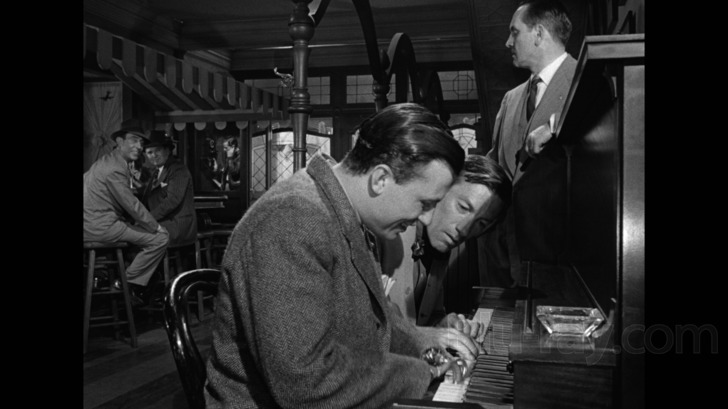
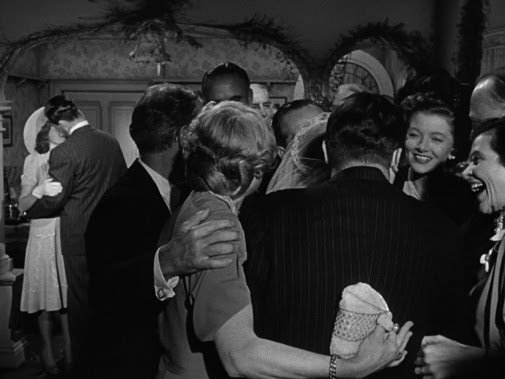
Anyway, this movie is worth watching simply because it’s a good drama with rich characters, but also for it’s technical significance. The film was shot primarily in deep focus, which is not a common technique in cinematography, because it keeps everything – the foreground, the background and the middle-ground – in focus. Normally, the camera shifts focus and the unimportant events are blurred while our attention is drawn to whatever is in focus, but because of the use of deep focus, Wyler was able to tell more of the story in a single shot. Here are some examples, and be excited! I rarely bring visual aids.
This scene gets discussed a lot because of what it accomplishes. Homer and his uncle, Butch, sit at the piano to show Al what they’ve been working on together. Fred is back in the phone booth, calling Peggy to tell her they shouldn’t see each other anymore, at Al’s request. Al is able to move his attention between the two events without the camera having to move or switch shots.
Here’s another example at the very end. Everyone in the foreground surrounds Homer and Wilma, congratulating them on their wedding, while Fred and Peggy, away from everyone else’s attention but not from ours, rekindle their romance.
Thanks for coming to my TED Talk.
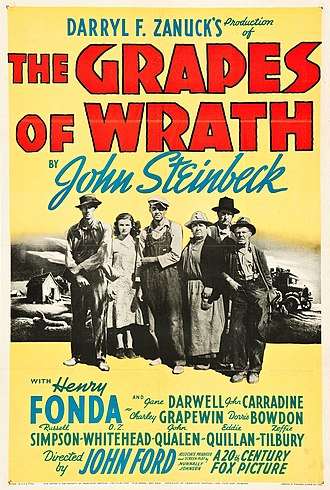
Bonus Review: The Grapes of Wrath
Some say that The Grapes of Wrath is John Steinbeck’s best work and the Great American Novel. Some say that The Grapes of Wrath is John Ford’s best film. People say a lot of things. The Grapes of Wrath follows the Joad family, farmers from Oklahoma during the time of the Great Depression, as they get their kicks out on Route 66 – searching for work in the Californian promised land. However, once they arrive, they soon learn the grass isn’t always greener on the other side (but at least it’s there, right?). Working and living conditions for newcomers to the Golden State are terrible and the pay is even worse. Tom Joad (Henry Fonda), a former prisoner, becomes interested in talks of unionizing, but it’s going to be an uphill battle for Tom. Not even the law is on his side.
Don’t get me wrong, I love this movie. I wouldn’t be recommending it if I didn’t. But the book is better by a lot, and so I can never really put The Grapes of Wrath higher on John Ford’s filmography. However, there are a few things that the movie does really well. First, Henry Fonda as Tom Joad is not only perfect casting, I’d argue this is the movie that truly made Fonda a star. Next, Jane Darwell as Ma. Again, perfect casting, and the role she is probably most associated with (though she will always have a special place in my heart as the Bird Lady in Mary Poppins). Finally, the film keeps a tight focus on Tom and Ma instead of the entire Joad family and beyond. I fear giving the rest of the family too much attention would really keep the film from finding a focus and feel to sprawling. That’s okay for a novel, but doesn’t work as well on screen.
This goes well with The Best Years of Our Lives, if you can sit through both at once. Both are dramas set during a time of great change in our country’s history and both focus on the people who made a difference during those times. Both are heartfelt and honest about what they have to say and don’t shy away from the human element in favor of an idealistic statement.
From 1937 to 2001, Disney had a stranglehold on animated films. There were small outliers during Mickey Mouse’s reign, namely the rise of Studio Ghibli and a string of very successful Don Bluth films with Amblin, but it wasn’t until DreamWorks came out with Shrek when we started to see the sands shifting. Shrek exploded at the box office and into the zeitgeist, and it’s no secret that Disney has never quite regained that spark that set them apart. DreamWorks, on the other hand, has maintained their status with successful franchises such as Madagascar, Trolls, How to Train Your Dragon and Kung Fu Panda (thanks to your aunt’s continued use of Minion memes on Facebook despite their drastic drop in popularity, Illumination is up there with them now, too. Side note: Can you believe they’re only on Despicable Me 4? I thought they were on the 10th one or something).
However, before Shrek, DreamWorks was struggling to find it’s voice. And by that, I mean that there was little consistency between projects and therefore no trademark for the studio, not that the movies weren’t good. In fact, partially because of that inconsistency, some of their very best films came out before Shrek. The Prince of Egypt, The Road to El Dorado and Chicken Run is a nearly-perfect three-film run, and if you want my honest opinion, The Prince of Egypt is not only the best DreamWorks animated film, it is also one of the Top 5 animated films of all time. It takes all of the youthful energy of a fledgling studio, along with the production sense of the three masters of their respective fields that make up the “SKG” below the DreamWorks logo, and swings for the fences. The result is an animated home run.
Apparently, the groundwork for The Prince of Egypt was laid way back when Jeffrey Katzenberg (Special Agent “K”) was still at The Walt Disney Company. He argued for an animated adaptation of the Charlton Heston classic, The Ten Commandments, but was repeatedly shut down by those above him because of Disney’s neutral stance towards religion. It was through the encouragement of Steven Spielberg (Agent “S”), at the founding meeting of DreamWorks, that set the film in motion. Agent “G” is David Geffen, by the way – as in Geffen Records. Anyway, more about the movie.
The Prince of Egypt is a blend of traditional hand-drawn animation and newer computer-generated animation, and uses both to great effect. The backgrounds and the characters are richly designed with significant attention to detail, and the spectacles of plagues and miracles are vibrant and fluid. My preference is hand-drawn animation by a wide margin, but there’s something to be said about what the movie was able to put to screen through a computer – the pillar of fire and parting of the Red Sea are particularly astounding. But that’s only scratching the surface.
Perhaps I should back up a bit. Show of hands, who does not know what The Prince of Egypt is about? And don’t just say “it’s about a prince in Egypt”. That’s obnoxious. Okay, well, for those of you who raised their hands, The Prince of Egypt is not totally an animated remake of The Ten Commandments. It’s a telling of the story of Exodus, with a little Charlton Heston thrown in. Fearing that his Hebrew slaves will be too numerous to keep in line, Pharaoh commands the killing of newborn Hebrew children. A woman named Yocheved isn’t letting them get her newborn son, so she sneaks to the river and puts the boy in a basket, sending it downriver and praying to God that nothing bad happens to him. Moses floats to where the river meets Pharaoh’s wife (daughter in the original text, but why introduce a character if you don’t have to?). Moses is adopted into Pharaoh’s family and raised as if he was of Pharaoh’s blood. This makes him the sort-of brother to Pharaoh’s biological son, Ramses. They grow up together, form an (almost) unbreakable bond, and chase each other through the streets of Egypt in chariots (thankfully, this is the most that gets pulled from The Ten Commandments). When Moses discovers his Hebrew heritage, he runs away (well, he takes the time to kill another man, first), becomes a shepherd, marries a pretty foreign lady with a name I’m not even going to attempt to spell, and lives a nice, quiet life away from high society. That is, until he starts hearing voices. God speaks to him through a burning bush, and tells him to return to Egypt and demand that the Egyptians (who have relied on slave labor for all their little wonders of the world projects, remember) let the Hebrew people go. Pharaoh says “no” at least seven times, which he eventually regrets, and then lets them go. Well, he changes his mind immediately and chases after the departing Hebrews with his entire army, but thanks to help from God, they get away by crossing a large body of water without a boat. Oh, and then Moses comes down from a mountain with ten commandments. The end.
The Prince of Egypt is relatively faithful to the Biblical account, but that’s only part of what makes it great. So much love and care went into this movie, and it’s clear in every second of film. Like John Hammond in Jurassic Park, they spared no expense. The film has an all-star cast, with the voice talents of Val Kilmer, Ralph Fiennes, Sandra Bullock, Jeff Goldblum, Michelle Pfeiffer, Patrick Stewart, Helen Mirren, Danny Glover, Steve Martin and Martin Short. Oh, and Ofra Haza, but I’ll get to her in a second. Val Kilmer, who voices Moses, also voices God in the burning bush scene in an attempt to move away from the big, booming voice of God from other films and treat it as more like “the voice you would hear in your head”, which I appreciate. Now, the absolute best part about this movie is the soundtrack. Every single song is fantastic, written and executed by Stephen Schwartz, whose works include Godspell, Wicked, Enchanted, and Disney’s The Hunchback of Notre Dame. A stellar tracklist all the way down, but the most memorable of them all is the opening number, “Deliver Us”. It’s grandiose and yearning melody sets the mood for the film that you’ve just started with a powerful vocal from Ofra Haza. Not only was this woman a fantastic singer, but she sang “Deliver Us’ for 17 different dubs of the movie. I can barely get the words to “La Bamba” down. I have no idea how I could ever learn how to sing in 15 other languages. It’s astounding and a true testament to her talent.
Anyway, you get the idea. Don’t be put off by the fact that this is an animated movie and you’re a grown up who watches grown up movies. The themes in The Prince of Egypt and the weight they carry are a declaration that animated movies aren’t just for kids. There’s something in this movie for everyone to enjoy.
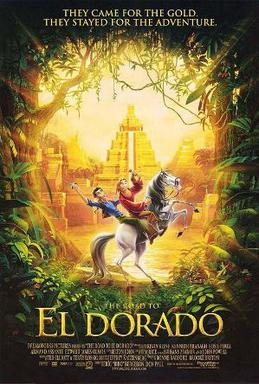
Bonus Review: The Road to El Dorado
The Road to El Dorado was released a little over a year after The Prince of Egypt, and like I alluded to before, is a very different movie. The film is meant to have a lighter tone, though it still does deal with adult situations such as sexuality, conquest and human sacrifice. The main inspirations for The Road to El Dorado are old swashbucklers (what is with my affinity for them?) and the series of Bob Hope and Bing Crosby movies. It’s full of action, excitement and comedy, and includes a great collection of songs from Elton John and Tim Rice (though they are admittedly not as good as their work for The Lion King).
Miguel and Tulio are two Spanish swindlers who end up making off with a map of “the New World” – a map that leads to El Dorado, “the city of gold”. A petty thief’s paradise. Miguel and Tulio sneak onto a ship to get to the Americas, and from there, follow the map. I don’t think it’s a major spoiler to say that they find El Dorado. However, they are immediately received with distrust by the locals, and their only way to get on their good side is to pretend to be gods the locals worship. Through circumstance, they convince nearly the entire city of their divinity, but it’s a ruse that’s hard to keep up. The High Priest, Tzekel-Kan quickly goes back to distrusting the two “gods” when they refuse his ritualistic human sacrifices. The chief of El Dorado may also not believe they’re gods, but he plays along when he sees how well the foreigners treat his people. With Tzekel-Kan snooping for proof that they’re lying and Hernan Cortes hot on their trail, Miguel and Tulio have to walk a thin line if they intend to stay alive.
The casting of Kenneth Branagh and Kevin Kline as Miguel and Tulio is inspired, and the majority of the songs are great (honestly, anything Elton John touches turns to gold). The movie is chock full of memorable scenes and lines of dialogue. Sure, it’s not as captivating as The Prince of Egypt, but The Road to El Dorado is fun and exciting, and I think every bit as deserving of people’s attention.
There are so many famous portrayals of English folk hero, Robin Hood. Douglas Fairbanks, Richard Greene, Russell Crowe, Kevin Costner, Cary Elwes (who could actually speak with an English accent, unlike some other Robin Hoods), Frank Sinatra (sorta), and John Cleese (briefly in the best part of Time Bandits) have all donned the name (well, “Robbo” for Ol’ Blue Eyes), but the quintessential Robin Hood will always be Errol Flynn in The Adventures of Robin Hood. Sorry, Robin Hood purists. I know he wasn’t British, but some people just embody a character so well, it’s definitive. Quiet honestly, the 1938 film had a stacked cast. Olivia de Havilland as Maid Marian, Claude Rains (one of the most underappreciated actors ever) as Prince John, Basil Rathbone as Guy of Gisbourne, Eugene Pallette as Friar Tuck, and Ian Hunter, briefly, as Richard the Lionheart.
The Adventures of Robin Hood is pretty well the blueprint for all future adaptations. Robin Hood doesn’t like seeing his fellow Saxons taxed endlessly, and so opposes Prince John, who has seized the throne while his brother, Richard, is gone. Robin openly defies Prince John at a banquet, but escapes before he can be captured. However, he is immediately labeled an outlaw by John. Robin gathers many merry men to his cause and together they rob the rich to feed the poor, and fight for all that is good. During one of these attempts, Robin meets and is immediately head-over-heels for the lovely Maid Marian, whom he woos. This is used against him by Prince John, who entices Robin to compete in an archery contest – an obvious trap which Robin falls for. Later, Robin and his men show hospitality to a group of travelers, who is later revealed to be King Richard and his men. Together, these two virtuous men lead their followers to Nottingham Castle, where a big final showdown takes place. Even if you haven’t seen the movie, you know how the story ends.
It’s honestly a miracle that some of these old Hollywood films become the classics they are, considering some of the early decision-making of the studios. For instance, Robin Hood was originally going to be played by James Cagney. I can’t imagine what other casting ideas they had in mind. Edward G. Robinson as Friar Tuck? Gloria Grahame as Maid Marian? Humphrey Bogart as Guy? Actually, I would watch that movie. Claude Rains can stay. The original script also included archaic, Ye Olde English dialogue, which, while interesting, would have given the movie a more deadpan atmosphere, like a Shakespeare in the Park-type of feeling. Thankfully, this was also scrapped in favor of more modern language. Forsooth!
The swashbuckling adventure is enough to watch this movie. Sword-fighting adventures rarely miss. In fact, my theory is that this is the reason why more recent Robin Hood films don’t do as well. They trade in the fun action and daring dos for gritty origins and low energy, “I’m not like other Robin Hoods” leads. What was the last great action-adventure? Pirates of the Caribbean? Come on, Hollywood. That was over 20 years ago! Kill me. Anyway, if you need more than sword fights to keep you around, give the soundtrack a listen. The Adventures of Robin Hood is up there with The Magnificent Seven and The Mission for its score. It’s a perfect fit for the film.
The swashbuckler (which is just a really fun word to say) is a genre that will come up a few more times on this list, and while I believe they all deserve their spot, none of them would exist if it weren’t for The Adventures of Robin Hood. I’d recommend this film to anyone.
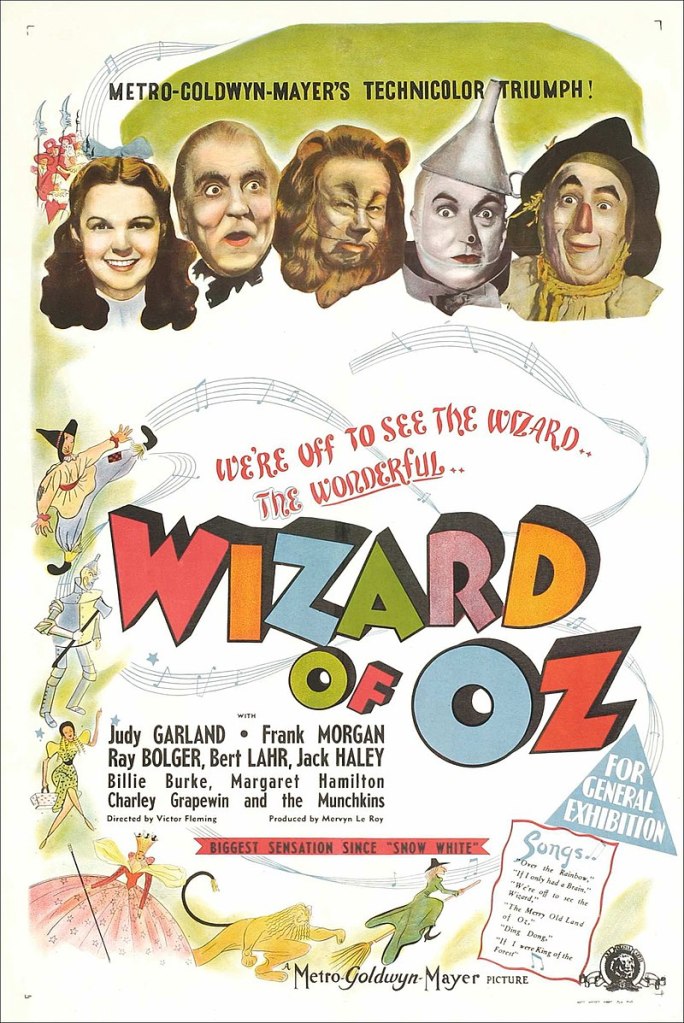
Bonus Review: The Wizard of Oz
I mean, it’s The Wizard of Oz. What can I say? Is there anyone who doesn’t know this movie backwards and forwards? There are so many things from this movie that have become part of pop culture for multiple generations: flying monkeys, “I’m melting! I’m melting!”, ruby slippers, “I’ll get you, my pretty, and your little dog too!”, following the yellow brick road, “There’s no place like home.”, the man behind the curtain, the Wicked Witch’s feet curling under the house, “Over the Rainbow”, and “Toto, I’ve a feeling we’re not in Kansas anymore.”, just to name a few. It’s a classic and pairs great with The Adventures of Robin Hood.
What The Wizard of Oz does better than most other movies is make the fantastical seem actual. The land of Oz is believable and vibrant, pulsing with life, which makes it such a shame that MGM couldn’t commit to the fantasy and demanded changing the framing of the story in Oz as a dream sequence. The Wizard of Oz wasn’t even considered for a film until it was proven that fairytales were a viable genre with Walt Disney’s Snow White and the Seven Dwarves, but I guess that goodwill could only stretch so far. I digress. The Wizard of Oz is still the poster child for the Fantasy genre.
The Wizard of Oz isn’t without it’s…umm…issues? First, there’s the fact that the movie shifted hands multiple times. Three directors: George Cukor (who didn’t get very far because of a commitment to direct Gone with the Wind), Victor Fleming (who did get far, but had to replace Cukor on Gone with the Wind because of major troubles with that one), and King Vidor. 1939 had a real coaching carousel going on. Then, there’s the falling asleep in the field of flowers. The snow that falls in that scene was pure asbestos and likely contributed to his death from cancer. And then, of course, probably most egregiously, is the abuse Judy Garland suffered at the hands of the studio just to change her appearance for the sake of the money. None of these detract from what makes The Wizard of Oz great, but I think it’s worth bringing up. I hope I didn’t ruin the movie for anybody.
For the record, it was really difficult to not put The Wizard of Oz in the official Top 100. Sorry, mom.
If someone were to pitch me a Scorsese movie starring Nicolas Cage as a paramedic in the process of going insane, I’d be hooked immediately. And then I’d watch Bringing Out the Dead and be surprisingly disappointed. This is the only collaboration between one of my favorite directors and one of my favorite actors, so it’s a real shame that it doesn’t play out better. Nicolas Cage doesn’t even do any of his somewhat-annoying Cage-isms. But there is something off about the movie, and maybe by the end of this review I will have pinpointed what it is.
Nicolas Cage is Frank Pierce, a paramedic who hasn’t successfully saved anyone in months and is therefore incredibly depressed. He sees the faces of his “victims” everywhere he goes, and suffers from insomnia because of it. Frank just needs a vacation. But there’s no rest for the saints of New York. We follow Frank on three shifts, paired with three different fellow paramedics. There’s John Goodman as Larry; a simple man who sees their job as a reason to be happy because they help people, Ving Rhames as the religious zealot (who is still somehow okay with picking up prostitutes), Marcus, and Tom Sizemore as…Tom, a volatile, ticking timebomb of a man who seems to prefer nearly killing people instead of saving their lives.
Frank responds to a call on the first shift we see him on regarding a man who is in cardiac arrest. At the scene, Frank sees the man’s adult, former-junkie daughter, Mary Burke, and he becomes obsessed with her. It doesn’t appear to be a romantic thing between them, Frank just sees the light of hope when he looks at her. She’s something for him to latch on to and find comfort in when the world around him becomes ever darker.
The movie seems to have a tonal problem. At different points, the film is depressing, goofy, frustrating, helpless, hopeful, and romantic. It never really lands anywhere. It was very strange watching a scene where Frank and Marcus are driving and they flip their ambulance over and I’m laughing intentionally. I do believe screenwriter Paul Schrader intended the scene to feel comedic, but it’s bizarre to be laughing at such a scene in such a movie. Bringing Out the Dead reminds me of another Scorsese film. It’s a dark and depressing, hellish nightmare version of After Hours with a dash of Taxi Driver.
Visually, the movie is uncanny. It looks like it was filmed digitally, even though it was made with filmstock. It’s oversaturated and incredibly grainy, which I think serve a purpose for displaying the inner anguish of Nicolas Cage’s character, who also acts as the narrator, but it can be an assault on the eyes in some scenes. The final shot, riffing on Catholic paintings of Mother Mary holding the Christ child, is a nice touch, however. It also has opening credits that are designed very similarly to those old piracy warnings that played at the beginning of DVDs.
In the end, this Scorsese film gets swept under the rug, and perhaps that is as it should be. I hate to say it, as I have never watched a Scorsese movie that I didn’t like, but this one comes close. Maybe after a repeat viewing I will change my tune, but for now, I will have to settle on the fact that it was one Nicolas Cage’s best performances…and that’s about all it has going for it.
Very few movies reveal the ending during the opening credits, and even fewer movies can pull it off. Carlito’s Way is one of those movies. The second collaboration between director Brian De Palma and actor Al Pacino is less about what happens and more about how it happens.
Al Pacino plays Carlito Brigante, a drug dealer, freshly released from prison, out to follow the straight and narrow. It’s a hard thing to accomplish when everyone you know, including the lawyer who convinced a judge to let you go free, is elbow-deep in criminal activity. It’s a world where a simple ride along can become a bloody shootout, and it’s not long before he’s wrapped up in that old way of life. Insert quote from The Godfather Part III here.
That aforementioned lawyer is David Kleinfeld, played by an increasingly-erratic, coke-addicted Sean Penn, who looks more like Dr. Steve Brule than you would expect. And while Carlito works his hardest to escape his life of crime, Kleinfeld is just beginning to get a taste for it. There’s also Carlito’s ex-girlfriend, Gail (Penelope Ann Miller before people knew her as Jeffrey Dahmer’s mother in that Netflix series), whom he still loves and wants nothing more than to escape the crime-infested New York City with her for a slice of paradise in the Caribbean.
And it’s that relationship with Gail that sets Carlito’s Way apart from De Palma’s other films. It gives the film a heart and a romantic side, a warmth maybe, whereas other films in his oeuvre are cold and grisly. Carlito has plans. He has dreams, and we so badly want to see him make those dreams a reality, despite knowing from the beginning how his story will end. There’s something deeper here than post-Hays Code Hitchcockian suspense at play, though there is plenty of that.
As with his other films, De Palma shines with his intense camera angles, three-sixty degree shots and kinetic editing. An early shootout in a backroom bar and the final chase through a subway station will have you white-knuckling your armrest and on the edge of your seat. As events unfold on the screen, you will increasingly find yourself hoping and praying that Carlito’s moral code (his way, I guess you could say) is enough to save him from being swallowed up by the lifestyle and city that made him.
Carlito’s Way didn’t receive much attention when it first came out. I presume people saw it as a rehash of Scarface, and therefore decided it wasn’t worth their time. But it has since received more acclaim in the years that followed, and rightfully so. Carlito’s Way deserves to be in consideration for one of Brian De Palma’s best films (alongside Blow Out) and one of Al Pacino’s best performances. It’s rapturous, like a dance on the beach.
Carlito’s Way is available in a brand new 4k edition from Arrow Video.
It’s been awhile since I’ve done a list. I wanted to just stick to “Top 10’s”, but between this and my Top Westerns, I’m finding that to be a limit that I can’t stick to. Anyone who knows me will not be shocked by that fact. Anyway, enough about my shortcomings. Here are the Top 20 Christian Films, the criteria of which is simply whether it has a positive Christian message to it and whether or not it’s good. My apologies in advance to anyone expecting anything from PureFlix on here. Maybe when I do a Bottom 10?
20. Bruce Almighty
Bruce Almighty might be a head-scratcher for some. I remember when it came out it received some flack from Christian circles for making a mockery of God and Christianity, but I assume people who argued that didn’t watch past the first five minutes or didn’t watch the film at all. Bruce may be skeptical at first, and there’s no denying he’s intending to mock God when he decides he could do a better job, but the film is sincere in its take on faith and what Christian humility and service can do for one’s own spirit. The climax of the film is the most beautiful “field moment” (thank you, Say Goodnight Kevin) of any Christian movie ever – a “field moment” is that part of a Christian movie where the main character, at their wit’s end, walks out into a field, hands held high, and cries out to God in total surrender. The only difference is that, in Bruce Almighty, it takes place in the middle of a busy intersection.
19. First Reformed
Paul Schrader has never shied away from religious themes in his scripts, but First Reformed is one of his more obvious ones, as well as a blatant homage to another film on this list, Winter Light. We follow the pastor (Ethan Hawke) of a Dutch Reformed church in upstate New York as he struggles through a crisis of faith. His church attendance dwindles, death and suicide linger around him, others are concerned with the political climate rather than Christian stewardship. It’s enough to drag anybody down, and the reading of classic Christian authors, such as G.K. Chesterton, isn’t helping. It’s hopeless in Hawke’s mind, and he lingers so deeply in despair that his only solution is to go out with a bang. Much like Hawke’s pastor, by the end of the film, we are left with more questions than answers.
18. The Tree of Life
The first of two Terrence Malick films on the list. The Tree of Life is Malick at his most visually stunning. From the opening history of the earth sequence, to the above image towards the end of the three-hour film, there is not a wasted shot. Jumping between timelines, the film loosely follows the life of a boy growing up in Waco, Texas, as he grapples with the contending harshness of his father and the abounding grace of his mother – a personified battle between the Old and New Testament. Philosophical questions plague the boy, Jack, as he grows through his parents dichotomy and the loss of his innocence, until his adult life presents him a vision of the dead coming back to life, giving him a chance to say a final goodbye to his family. Brilliantly performed and unforgivingly experimental, this movie is all at once confusing and beautiful.
17. Sergeant York
Sergeant York was a conflicted man. He saw it as his patriotic duty to serve in the War, but it was his Christian responsibility to “not kill”. His solution, in the film, is to capture his enemies alive and march them all back to his camp…after he’s killed several. Made in 1941, Sergeant York is clearly American propaganda, encouraging everyone to do “the right thing” and get involved in the current war effort despite Christian misgivings, but it’s good propaganda. Gary Cooper is in perfect form as the “aw, shucks”, good ol’ boy, who’s a sharpshooter when it comes to turkeys, but the message of country-over-self keeps this from being higher on the list.
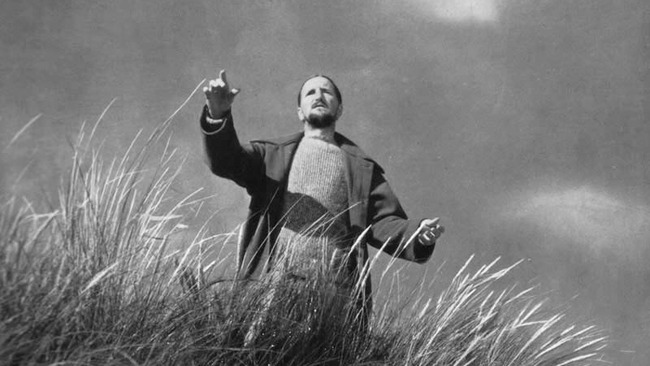
16. Ordet
Morten is a devout man who is struggling. He has lost his wife, his eldest son has no faith at all, his middle son thinks he’s Jesus Christ, and his youngest son is in love with a Lutheran – things couldn’t be worse. Weaving themes of self-righteousness, loss of faith, conflicts amongst different Christian sects, and the desire for faith when everything around you is crumbling into one film is a masterwork of one of the Danish greats, Carl Th. Dreyer. Ordet feels grander in scope and significantly more complicated, which is why it’s on this list over his more well-known film, The Passion of Joan of Arc.
15. Ben-Hur
Ben-Hur is a four-hour epic about a man who just wants to get back to his family. Judah Ben-Hur spends time in prison, as a galley slave, and a charioteer before successfully returning home. Throughout the trials that Judah Ben-Hur endures, he grows increasingly angry, fueling his hate for the man who betrayed him until it consumes him. Jesus Christ appears four times in the story, mostly in the background – his birth, a scene at a well where he gives Judah a drink of water, when he preaches the Sermon on the Mount, and his crucifixion, where Judah recognizes him as the man who gifted him water so long ago and attempts to return the favor. It is the crucifixion where Christ comes to the forefront, and acts as the ending to the film. At seeing Christ on the cross, Judah Ben-Hur’s rage dissipates.
14. Leap of Faith
In Rustwater, Kansas, Jonas Nightengale’s Travelling Salvation Show pulls into town. Accidentally. Their tour bus breaks down and they’re stuck in the dusty town for a few days. Nightengale (Steve Martin) decides to bring his big tent revival to the people in order to raise the money they need for parts. The town is ready to receive the Word. The only catch is Jonas isn’t a preacher- he isn’t even a Christian – he’s a conman out of New York City looking to make the big bucks with his faith healing shtick. Once he witnesses a true, honest-to-God miracle, his faith (or lack thereof) will be shaken to its very core. Slowly realizing the error of his ways, Jonas leaves town in the middle of the night, not wishing to feed the town anymore false gospel. On his way out, he witnesses another miracle and laughs, overcome with the joy of the truth he has discovered.
13. The Last Temptation of Christ
If you’re looking for a movie on the life of Christ, steer clear of this one. In fact, I don’t know if this is a film I’d recommend to most Christians. I’m sure you’ve heard the controversy surrounding The Last Temptation of Christ, so I won’t go into the details, but whatever you’ve heard of this film is probably true. The criticism from the Christian crowd tends to miss the point of it all, though. In the novel this film is based on, the author, Nikos Kazantzakis, prefaces it by saying that his intention was to play with the dual-nature of Christ. Yes, He was all God, but that means He was also all Man, and to think that Christ had to deny himself the life of a normal man – the life we all get to enjoy – makes his sacrifice all the more incredible, and that is something worth considering, even if both the novel and the film stray too far from the all-God side of Christ to emphasize their point.
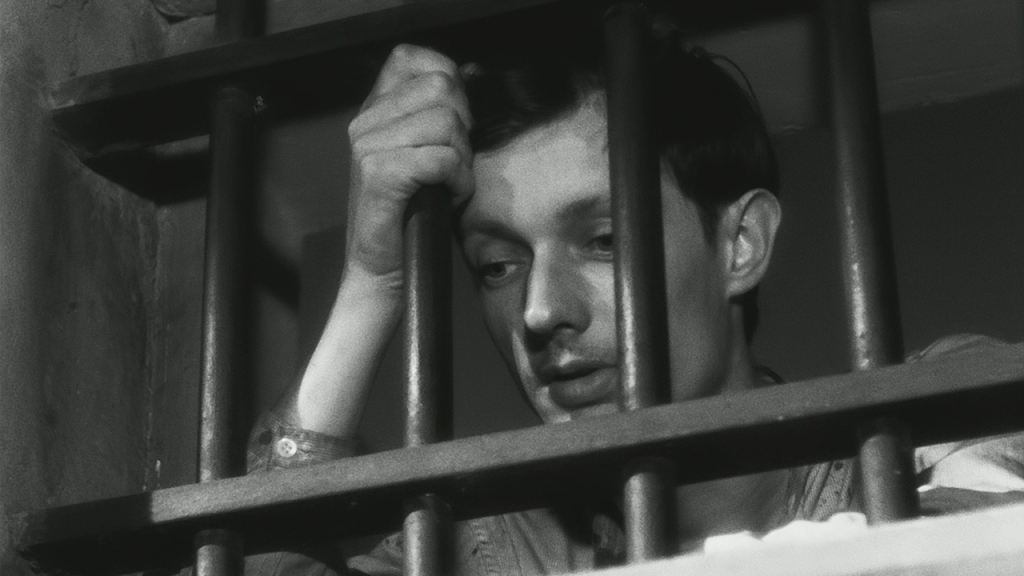
12. A Man Escaped
A Man Escaped is a POW film by the French director, Robert Bresson. Fontaine is a member of the French Resistance who has been captured and imprisoned by German soldiers towards the end of World War II. His days are spent mostly in solitude, occasionally chatting with one of the lucky prisoners who gets outdoors-time outside Fontaine’s window, or communicating with his neighbor in the next cell over. Fontaine has two things keeping him sane – the hope he has in his eventual escape and the hope he inspires in others, and both come from his unwavering Christian faith. He knows God will make a way for his escape, and it’s his fellow prisoners’ lack of faith that keeps them from joining him. This film is minimalist at its core, which may make the film seem boring to some viewers, but it’s deeply moving and its triumph is inspiring.
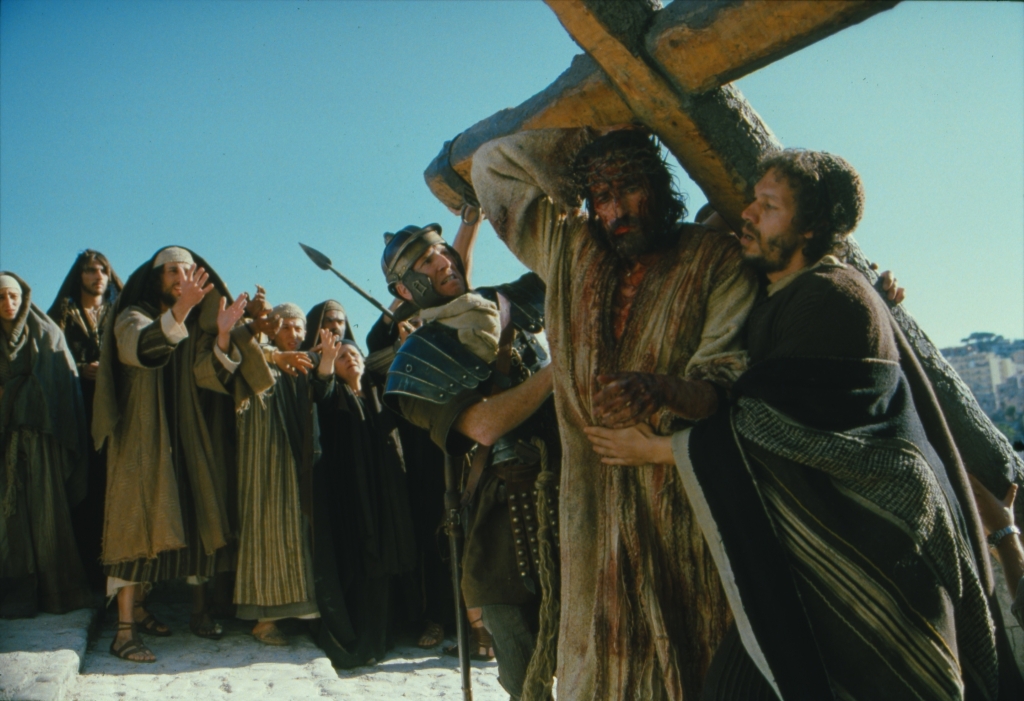
11. The Passion of the Christ
The main criticism of The Passion of the Christ is that it’s gore porn. I understand how that could be the view from an outsider, but I think the majority of Christians would agree that the violence showed on screen is the tip of the iceberg for what Christ endured during his trial and crucifixion. Displaying that horror in all of its gruesomeness is compelling and convicting, and necessary, if you want to do this part of the Gospel justice. More praise can be given for Mel Gibson’s use of unknown actors or the original languages used in the film (a particularly bold choice when most Americans are averse to subtitles by default). The film is a lot to take in, and it has a purpose in going to the extremes it goes to. Personal views of Gibson or Jim Caviezel aside, the message conveyed in this film is very basic and very Catholic, but it’s no less important for it.
10. Andrei Rublev
In the mood for a three-hour Russian biographical epic made by one of the most methodical film directors of all time? Understandable if you aren’t, but you’d be missing out on a beautiful piece of cinematic history. Which is not to say that it’s enjoyable to watch, but that’s more up to the individual. Andrei Rublev is set in the 15th century, and follows the titular painter through eight segments. Andrei witnesses horror and pagan violence, but also beauty on the handiwork of God in his trek across the Russian countryside. The film’s director, Andrei Tarkovsky, claimed the purpose of this film was to show “Christianity as an axiom of Russia’s historical identity”, and decides to end the film with a lengthy montage of Rublev’s work, showcasing the beauty in the religious experience.
9. Winter Light
The middle part of a spiritual trilogy from one of the greatest filmmakers of all time, Winter Light finds Ingmar Bergman at his most existential. This film is the clear inspiration for First Reformed, as it follows a preacher of a dying church as he seeks to console what remains of his flock, all the while having abandoned his faith, himself. This film is bleak and cold like the Swedish landscape it was filmed across, but it poses some very thought-provoking ideas, like the idea that the betrayal and confusion of his disciples and the silence of God while Jesus was on the cross is a harsher burden to bear than the physical torture he received. Bergman’s own history with faith (his father was a minister) gets put under the microscope for us to analyze. More vulnerable than wearing his heart on his sleeve, Bergman bears his soul to us.
8. Hacksaw Ridge
Hacksaw Ridge is Sergeant York without the propaganda. And involving a different war. Desmond Doss is drafted to fight in World War II, but his Christian morals prevent him from taking the life of another man. His goal is to become a medic so that he can comply with his country’s demands and stick to his moral code. His seeming self-righteousness makes him several enemies among his fellow soldiers, but he sticks to his beliefs in the face of such adversity and ends up saving those who hated him. He becomes a hero. It’s a little simple and straightforward, and most of the conflict is manufactured, but that doesn’t detract from what makes it great. The movie is a testament to unrelenting faith and a lack of compromise when trials come.
7. The Prince of Egypt
I don’t think anyone who has seen it needs to be convinced of how great this movie is. The animation is gorgeous, the voice acting is superb, and of course, the music is beyond amazing. A relatively faithful adaptation of the Exodus story, we follow Moses from his youth under the Egyptian Pharaoh to his time in the desert, and to his return to Egypt to lead God’s chosen people to their freedom. Sure, it pulls from The Ten Commandments about as much as it does from the Bible, but it tells its story without any compromise on the involvement of God or the harshness of His judgments. In fact, those judgments – the plagues – make for the best segment of the film.
6. Au Hasard Balthazar
When director Robert Bresson wanted to portray a character of pure innocence, he cast a donkey. This will make some people roll their eyes, I’m sure, but it’s accurate to the foundation of the Christian faith to say that, sometimes, people can’t cut it. Besides that, the personification of a donkey is scriptural, as is the opinion that the donkey is a humble beast of burden. The film revolves around Balthazar and the only human to ever show him any kindness, Marie. It’s a tragic story of sin’s abuse of innocence, and it culminates in one of the most beautiful final shots in a film ever. Au hasard Balthazar is not for everyone, and that’s okay, but you can’t do better than this film if you’re looking for a picture of the desolation of innocence in a sinful world.
5. The Mission
Rodrigo Mendoza is the worst kind of human being. He sells people into slavery, and he’s a Cain. He killed his own brother. He finds salvation through conversations with a Jesuit priest named Gabriel, who is in Paraguay, attempting to convert the natives to Christianity. He is successful with Mendoza, and somewhat successful with the natives, until political realignments in Spain and Portugal condemn the mission they call home and demand they move. Mendoza defends his newfound faith and home the only way he knows how – with a sword. The Mission is a testament to the strength of faith when it’s genuine and the detriment a wayward believer can have on a new convert or the overlap of politics and religion can have on entire groups of people.
4. Shadowlands
Based on a play, based on the true story of C.S. Lewis and his marriage to Joy Davidman, Shadowlands is an interesting perspective on romantic love and the plans of humans. It’s also a wonderful story of faith amidst tragedy. Lewis – “Jack” to his friends – meets Joy and immediately finds an intellectual equal. He’s intrigued by her, infatuated with her (in a sense), and when faced with reality that he will lose her, realizes he’s in love with her. It’s an unconventional love story and an excellent portrayal of all four types of love that Lewis ascribed to. It also contains one of my favorite quotes of all time. When questioned by one of his friends as to why he prays when he knows that the future is inevitable, Lewis says, “Prayer doesn’t change God; it changes me.”
3. A Hidden Life
Another film by the wonderfully poetic Terrence Malick, A Hidden Life is another true-story World War II film about a soldier that cannot reconcile his faith and his country’s demand that he fight and kill. The only difference between this film and Hacksaw Ridge – and it is a big difference – is that Franz is Austrian, meaning his country’s authority is Adolf Hitler, and Hitler’s less forgiving of defiance against country than Americans. The film covers a lot of ground, and even though it moves slowly, it earns its three-hour runtime. The film is a meditation on faith under God’s deafening silence and that is a theme that I think should be explored more.
2. Silence
One of Martin Scorsese’s absolute best films, Silence also explores the idea of God’s silence. However, in A Hidden Life, Franz never waivers in his commitment to his faith; in Silence, the Jesuit priest to Japan, Rodrigues, fails. He apostatizes when he is given the ultimatum from Japanese officials to either do so or witness the torture of innocents for his refusal. While Rodrigues does deny Christ to the Japanese government, he dies and is buried with a crucifix in his hand. The film proposes a very interesting thought: Is it okay to deny Christ (even in word only) if it means others will be spared? I don’t have an answer for that, but I don’t believe it’s as cut-and-dry as others might argue, and that’s what makes the movie so incredible.
1. The Gospel According to Matthew
What do you get when you give a copy of the New Testament to an atheist, socialist, homosexual Italian filmmaker? You get the most accurate film portrayal of a biblical story ever. This is not hyperbole. Whereas other films on the subject of Christ add dramatic embellishments or combine portions of the other gospels, Pier Paolo Pasolini’s The Gospel According to Matthew is purely from its source. The dialogue is taken directly from the gospel account, and there are no “Hollywood” additions. To avoid the confusion of celebrity, Jesus is played by an unknown Italian man, and he is played with all the stoicism of a man uncomfortable with being in front of a camera. Pasolini’s motivation for the film is totally nostalgic for a belief he no longer has, if he ever did to begin with, and that distant desire for closeness frames the movie perfectly.
It feels weird, reviewing a movie that’s been with you since your childhood, and there’s a certain fear that comes with that: Is the movie as good as you remember it? More often than not, you go back to a movie from your past and you stare at the screen in horror over the idea that you ever enjoyed such a thing. And what’s worse, you told people recently that you liked that movie, before you sat yourself down to rewatch it. You have to hang your head in shame, now, around some of your friends because you spent several hours heatedly defending Space Jam. Life, as you knew it, is now over.
But there are other instances, where you return to a film through the eyes of your adult self, and it’s just as good as you remember it. Sometimes better. Pee-Wee’s Big Adventure is one of those movies. With the recent passing of Paul Reubens, a rewatch of the 1985 classic felt necessary. And I am thrilled to say that this film remains one of the best cinematic tales of young love, between a boy and his bike.
Pee-Wee Herman is your normal, everyday acid-trip-induced man-child version of Mister Rogers. He lives in a house with his dog, Speck, covered in gadgets and knick-knacks that overcomplicate the simplest tasks. His entire kitchen is rigged to where you can light a candle and your breakfast is made while you’re off doing something else. As a boy, I always wished for something similar in my future, but the logistics of having such a house seem insurmountable. But above everything else he owns, there is his most cherished possession: a red bicycle with a tiger’s head on the front. And there ain’t no one gonna come between him and that bike.
Paul Reubens saw Tim Burton’s original short, Frankenweenie, and personally requested that he direct this film. His fingerprints are all over the film, too. There are multiple dream sequences, some involving claymation, with black and white, German Expressionism-style set design. There’s a beautiful sunrise seen through the open jaws of a large T-Rex sideshow attraction, complete with jagged teeth framing it. There’s a fun, bouncing score from Danny Elfman, his first music-related project post-Oingo Boingo and his first collaboration of many with Burton. Burton’s style and attitude toward filmmaking are a perfect match for the character of Pee-Wee Herman.
The plot of the movie is hard to describe without sounding absolutely ridiculous, so I might as well just lean into it. All is wonderful in Pee-Wee’s world until he runs into the rich “kid” down the street, Francis Buxton. Buxton wants Pee-Wee’s bike more than anything at the moment and, to get it, he hires a greaser to steal it while Pee-Wee’s out doing a little bit of shopping. Pee-Wee soon realizes that no one is going to help him find his bike (after all, it’s “just a bike”) – not the police, not his friends – so he is on his own. With nowhere else to turn, he meets a fortune teller who tells him his bike is in the basement of the Alamo.
Pee-Wee hitchhikes to Texas with the help of a convict on the run for tearing the tags off mattresses, and a woman truckdriver named Large Marge. Although, this Large Marge lady may not be all that she seems to be. He gets dropped off at an unnamed diner in an unnamed part of the world, and he meets a friendly waitress named Simone. Simone encourages Pee-Wee to keep searching for his bike, and he encourages her to follow her dream of traveling to Paris. Simone’s boyfriend Andy is less understanding of her friendship with Pee-Wee, especially after he overhears them talking about her big “but”. He chases Pee-Wee with a dinosaur bone through a cornfield, forcing Pee-Wee to escape by jumping onto a moving train. He sings old songs with a hobo until he reaches his destination, San Antonio.
Pee-Wee is rightfully disappointed to find out that the Alamo doesn’t even have a basement, and so he’s back to the drawing board. While in San Antonio, he sets a national record in bull-riding. He also suffers from brief amnesia after being thrown from the bull. But don’t you worry, my dear Texans. Pee-Wee may not be able to remember his name, but he remembers the Alamo.
From there, he realizes he needs to get to a phone and call home, so he visits a bar that’s the local hangout of the biker gang, “Satan’s Helpers”. After he knocks over their bikes just outside the bar (which happens in any self-respecting road trip movie), Satan’s Helpers hold him down and debate how they’re going to kill him. He asks for a last request, and is granted it, so he borrows a busboy’s platform shoes and dances on top of the bar to “Tequila” by The Champs. As is expected, this wins over Satan’s Helpers and they offer him one of their bikes so he can travel home. He makes it to the edge of the parking lot before driving into the bar’s streetside signage.
Pee-Wee gets rushed to the hospital and sees a news report on TV that indicates his bike is in Hollywood on a film set. He makes his way to Hollywood, takes back his bike, and flees the Warner Bros. studio lot while being pursued by the entirety of the Warner Bros. security team. He travels through a beach movie, a Christmas movie, a Godzilla movie, a Tarzan movie, and a Twisted Sister music video before successfully escaping with his bike. Unfortunately, his freedom is short-lived. He stops to save all the animals inside a burning pet store, and it is there that he is caught and brought before Warner Bros. execs. Lucky for Pee-Wee, his story is interesting enough to where Warner Bros. wants to make a movie out of it! The film ends at the local drive-in, where all of Pee-Wee’s new friends show up to witness the premiere of this autobiographical movie.
Bonkers, right? Absolutely crazy, but it’s so much fun. The script is tight and throwaway lines earlier on make an appearance again later on. Pee-Wee’s retort to Francis (“I know you are, but what am I?”) is quoted by the film-version of Pee-Wee at the end. When making a police report, Pee-Wee is convinced that “the Soviets” are responsible for his missing bike, and in the fake film, Soviet ninjas are the main villains. It’s smart for knowing that it’s dumb and playing it up. Some scenes are terrifying, or at least were to the younger me – Large Marge, the dream sequences, one involving a T-Rex eating his bike, and another one involving three of a child’s biggest fears: clowns, doctors, and Satan. Pee-Wee’s Big Adventure is a joy to watch. It’s funny, quotable, feverishly ridiculous, and according to my wife, a little creepy, and we have Paul Reubens to thank for all of that.
Verdict: There’s no way I’m getting rid of this movie. Not only am I nostalgic for it, but it really is a great film. Everyone should own a copy.
The Cold War was a time of great paranoia. Was Russia going to blow everyone up? Was your next door neighbor a spy? Were the people teaching your children or making your movies Communists? Unfortunately, over 30 years after the Cold War officially ended, some of these questions still remain. But instead of talking politics, let’s talk about movies. These are the Top 10 Cold War Era Films…according to me.
10. North By Northwest
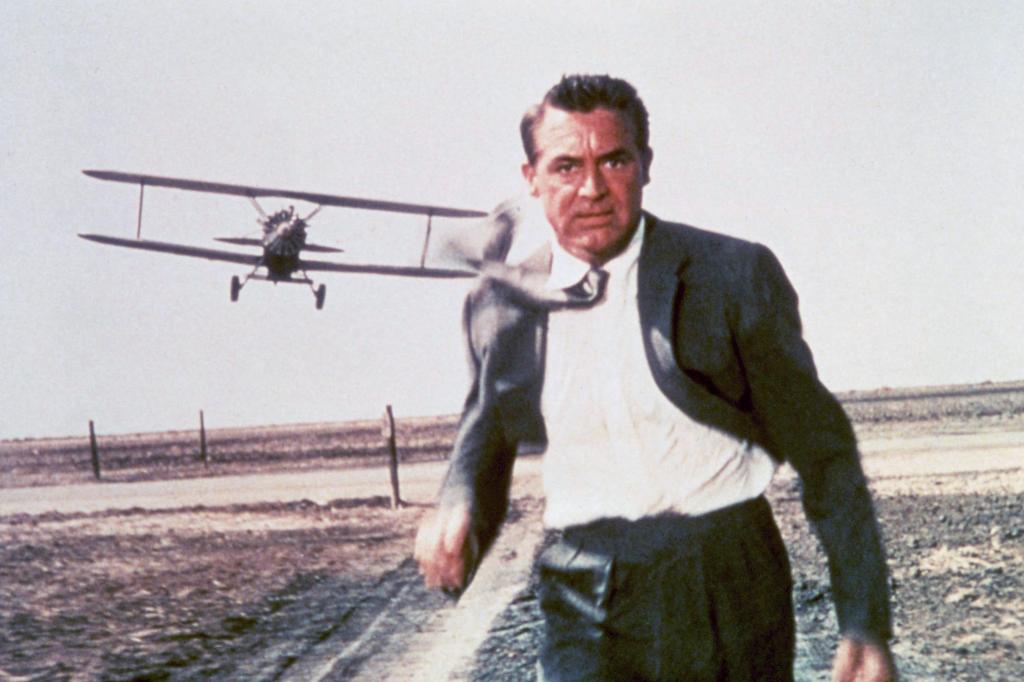
Not Hitchcock’s best by a long shot. Not Cary Grant’s best by a longer shot. But it is the best film involving Mount Rushmore. It’s a classic thriller – a story of mistaken identity where our hero is in the wrong place at the wrong time, where a perfectly-timed photo might not be as it appears, where government agencies willingly put individuals at risk for the “greater good”. It’s hokey, but it’s a lot of fun, and it’s got that iconic shot of Cary Grant running from a plane.
9. The Courier
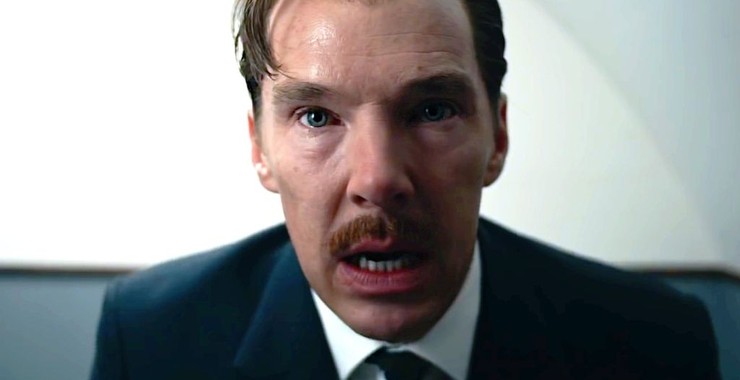
Benedict Cumberbatch is the British electrical equipment salesman, Greville Wynne, who serves his country by acting as a courier between England and Russia. He befriends his Russian correspondent and learns that not all comrades are bad, but the ones that are bad, are really bad. Merab Ninidze claims the screen as Oleg Penkovsky.
8. The Hunt for Red October
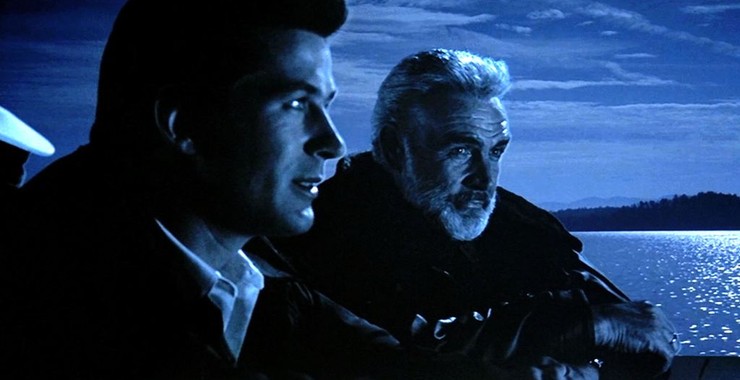
Alec Baldwin plays CIA analyst, Jack Ryan, before Harrison Ford came along and played it better. Tensions build and claustrophobia looms large as Ryan must work out negotiations between defecting Soviet naval captain, Marko Ramius – Sean Connery’s best role, and I’ll fight anyone who disagrees – and the United States before the U.S. and Russian navies come to blows and destroy one another.
7. Rocky IV
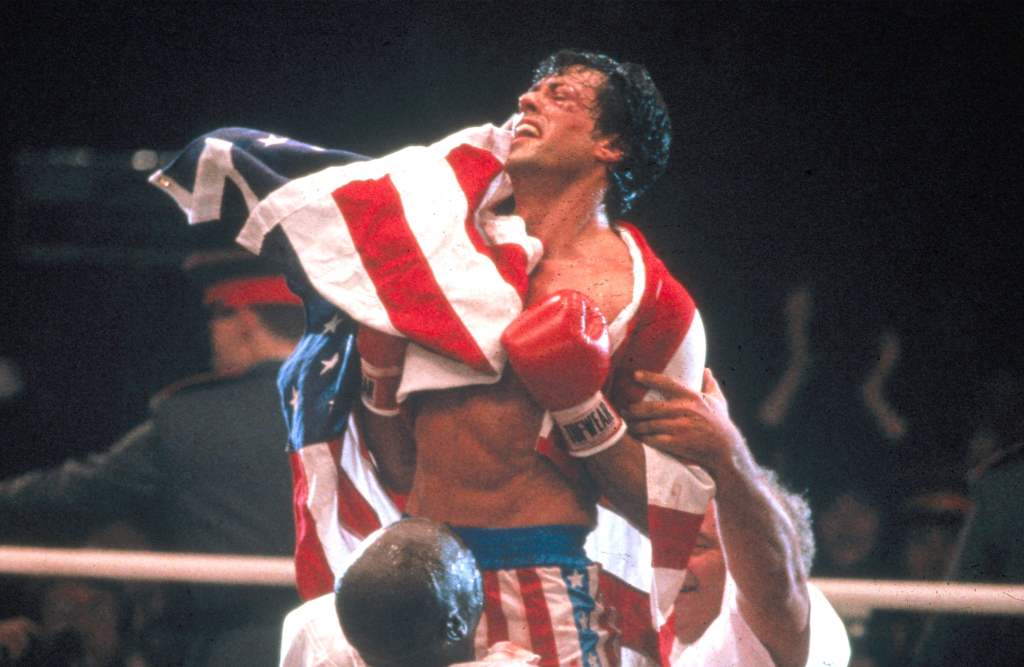
“If I can change, we all can change,” Rocky yells at a crowd of Russians after he has knocked out their favorite boxer, Ivan Drogo, and turned an arena full of boos into cheers. It’s a rallying moment for the audience too, since we’re all relieved that he not only won, but avenged his rival and friend, Apollo Creed. This movie features not one, but two training montages set to cheesy 80’s tunes that should definitely be on everyone’s workout playlist.
6. The Iron Giant
Hogarth Hughes is your typical nine-year-old boy. He loves comic books and riding his bike – oh! – and he befriends a 50-foot robot from outer space. Having a giant, iron robot for a best friend is tough enough, but it’s even tougher when you have a U.S. government agent staying at your house, investigating the mysterious goings-on in the town of Rockwell. Luckily, Hogarth knows Dean McCoppin, a beatnik artist, who helps hide his new alien friend.
5. Hail, Caesar!
Like some of the other films on this list, the Cold War is really just the backdrop of this Coen Brothers ode to Hollywood. A group of blacklisted Communist screenwriters are pulling the strings of some of the film’s major events, but this movie is mostly about Eddie Mannix, the studio fixer who is tasked with keeping the stars’ improper personal lives out of the hands of the gossip columnist. He’s got a lot on his plate when his big movie star, Baird Whitlock (George Clooney playing another classic Coen doofus), goes missing in the middle of filming the studio’s big sword and sandals picture.
4. The Lives of Others
Simply one of the best spy movies of all time. Gerd Wiesler, or HGW XX/7, is a captain of the Stasi who has been instructed to bug and survey the apartment of Georg Dreyman, a playwright whose sole crime is the fact that he’s dating an actress who has caught the eye of the Minister of Culture. Wiesler wrestles with the morality of his position after learning the true reason for his assignment, and decides to play the role of Dreyman’s guardian angel. A traitor with a moral compass makes for the best character studies.
3. Tinker Tailor Soldier Spy
Based on the novel by Le Carre, this star-studded British spy drama leaves you guessing until the very end. George Smiley must investigate within his agency to find who of the higher-ups in British Intelligence is a mole for the Soviets. Red herring after red herring gets in his way until he finally gets down to the bottom of it. And by then, what has Smiley lost in the process? Gary Oldman leads a cast of heavy-hitters that include Colin Firth, Benedict Cumberbatch, Mark Strong, and Tom Hardy.
2. Dr. Strangelove or: How I Learned to Stop Worrying and Love the Bomb
Slim Pickens riding a missile like a horse, Peter Sellers (in one of his three roles) wrestling with his own artificial hand, Sterling Hayden’s rant about what the Communists are going to do to everyone’s bodily fluids, the phone call with Dmitri – there are too many great scenes in this film to list them all. Satirically skewering national relations during the Cold War, Stanley Kubrick left none alive in one of the funniest movies of all time.
1. The Third Man
This film is nearly perfect and certainly one of the best Noirs of all time. Impeccably acted and supremely shot, this movie withstands all tests of time. Holly Martins comes to Vienna at the request of his old childhood friend, Harry Lime, only to discover upon his arrival that Lime is dead. Conflicting accounts on who was present at Lime’s death lead Martins on a twisted ride through the streets of Vienna and down into its sewers for one of the most exciting endings to any film, ever. Joseph Cotten and Orson Welles are at their absolute best in this masterpiece of cinema.









 Destined for Mediocrity