82. Casablanca

Casablanca is a movie that probably shouldn’t have worked as well as it did. It has a pretty star-studded cast, but it’s based on an unproduced play and the script was being written while filming was already underway. The script had three writers on it, and it was two against one the whole time. Paul Henreid, who played Victor Laszlo, apparently hated the rest of the cast. The movie is also more than the sum of its parts. The performances are good, the dialogue is mostly fine and full of famous lines, the story is decent but nothing special, but when it’s all put together and the movie fades to black, you’re left with a calming, resolute feeling in your heart.

Rick Blaine (Humphrey Bogart) owns and operates Rick’s Cafe in Casablanca, Morocco, and his door is open to everyone – French, American refugees, Nazis. He claims no loyalty to any political group, though he previously had a part in the Spanish Civil War. A thief named Ugarte (Peter Lorre) asks Rick to hold a couple of letters of transit he got from killing two German men until he can sell them, which Rick agrees to do. However, Ugarte is caught by local police captain Louis Renault (Claude Rains) and dies while in custody, taking the knowledge of the letters to his grave. Ilsa Lund (Ingrid Bergman), Rick’s former love, walks in and asks Sam, the piano player, to play “As Time Goes By”. Considering Ilsa ran out on Rick years ago, he’s less than happy to see her. It doesn’t help that she’s got her husband, Victor Laszlo, who is a fugitive resistance leader, with her. They could really benefit from some letters of transit. However, Rick isn’t too keen on parting with them after being spurned by Ilsa. Laszlo then convinces Rick to use the letters to take Ilsa to safety, knowing of their former romance while he was thought to be dead. Rick seemingly plans to do just that and have Laszlo framed for a crime in the process, but at the last minute, he sends Ilsa and Laszlo on the plane and walks away with Renault.

Everyone who sees it can admit that Casablanca is great, but what’s fascinating is that no one came seem to agree on why it’s great. At the time of its release, the United States had been involved in World War II for just over a year, so there was a heightened sense of patriotism in moviegoers that gravitated them toward Rick’s ultimate sacrifice. Over time, analysis of Rick’s sacrifice has shifted from the political to the personal, and a lot of emphasis gets placed on its status as a “classic”.

This sounds like I’m arguing why this movie doesn’t deserve to be on the list. It does. It’s a great story, a romantic drama with Nazi occupation in the background, but it’s a really good example of the effect time and culture has on the success of a movie. Casablanca received its accolades because it’s great. It exploded because of circumstance.

Bonus Review: Gone with the Wind
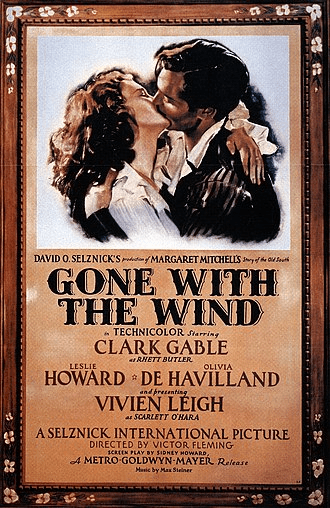
Gone with the Wind is a sweeping Civil War epic running just under four hours. But don’t worry your pretty little bladder, there’s an intermission, in case that’s a deterrent for you.

Gone with the Wind is the timeless tale of the love between a woman and her plantation. Scarlett O’Hara (Vivien Leigh, in the role she is rightfully known for) has the worst luck in the world. She loses her parents, three husbands, and two children (only one of these simply leaves, the others all die), she has to work and marry to keep her family’s plantation alive and in her possession, and the only person in the world who genuinely likes her is the wife of the man she loves (probably the worst of them all). Really, it’s the story of woman’s fight for survival at all costs, and despite her bad luck and the time in which she lives, she does it. It’s a romantic look at a very unromantic life.

Vivien Leigh puts in the performance of lifetime by bouncing between emotions, even within the same scene. She’s happy, sad, angry, distraught, flustered, excited and scared, all within the four-hour span. She and Clark Gable are obviously the focal point of the movie, but some of the supporting cast hold their own and keep themselves from being regulated to the background. Specifically, Olivia de Havilland and Hattie McDaniel. Hattie McDaniel even won an Academy Award for her performance, marking the first time an African American won the award. The film has a mixed reputation with the Black community for its portrayal of the slaves in personality and in perpetuating the “happy negro” myth. However, much has been said for Hattie McDaniel’s performance and subsequent win as some semblance of progress, though that’s still a point of contention. The head of the NAACP at the time referred to Hattie McDaniel as an “Uncle Tom” – a derogatory term that comes from the most egregious offender of the “happy negro” myth – but McDaniel replied, “I’d rather make seven hundred dollars a week playing a maid than seven dollars being one.”

Regardless of what’s outdated in the movie, it still holds up. It’s a story of determination and preservation, and should be viewed by everyone at least once. It’s a valuable piece of cinematic history and the highest grossing movie of all time, still, when adjusted for inflation.
83. The Green Mile

When you’re as prolific a writer as Stephen King, they can’t all be winners (re: these reviews), but The Green Mile is one of his best, and the film version is honestly better. Despite being over three hours, it’s tighter and flows smoother than the book, which could have benefitted from an editor (like a lot of King’s books). Also different from other King novels, The Green Mile isn’t really a horror story. It has some horror elements and a very supernatural premise, but comparatively, it’s much more grounded than what you’d expect.

Paul Edgecomb (Tom Hanks) is the supervisor over the correctional officers at Cold Mountain Penitentiary: Brutal, Dean, Harry and Percy. Most of them are easy to work with, except for Percy, who takes sadistic pleasure in torturing the inmates and flaunts his connections as the state governor’s nephew to avoid punishment. He takes particular pleasure in breaking the fingers of one of the inmates, Del, and killing his pet mouse, Mr. Jingles. The new inmate, John Coffey (Michael Clarke Duncan), arrives and, despite being a towering black man, he has the meekest personality that Paul has ever come across. He’s a gentle giant who has a healing touch, and he shares that gift with Paul, by clearing up a bladder infection, and with Del by reviving Mr. Jingles. When John cures the warden’s wife from a brain tumor, Paul understands the impartiality of John’s gift. Once John has touched someone, he takes on their pain and has to find a way to release it or he will die. John releases the the energy of the brain tumor into Percy, which makes Percy walk up to the cell of the newest inmate, “Wild Bill” Wharton, and shoot him. John, who is in prison for allegedly raping and killing two little girls, touches Paul and shows him in a vision that Wharton committed the crime he is accused of. Paul, knowing the truth about John, offers to let him go free and suffer the consequences, but John admits that, as scared of being executed as he is, death would be a relief from the cruel world.

Michael Clarke Duncan portrays John Coffey with duality – a man so physically overwhelming and yet so timid that he’s afraid of the dark. He seems like such a natural that you can easily forget that this is only like his second movie where he doesn’t play a bouncer or bodyguard, which he had hands-on experience with. In fact, he was the bodyguard for Notorious B.I.G., though a friend was working in his place on the night Biggie was shot. Duncan quit being a bodyguard soon after the incident. He then had a string of great movie performances, including this one, and then sort of got regulated to direct-to-video and TV movies. I’m not sure why, since he was so clearly great, but my assumption is typecasting. Michael Clarke Duncan died in 2012. He was only 54.

Bonus Review: Big Fish

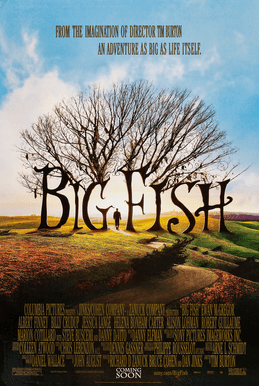
Big Fish is the story of an estranged father and son who attempt to reconcile on the father’s deathbed. Will’s father, Edward, has a gift for storytelling, possibly with some embellishments. The fantastical nature of Edward’s stories convinces Will that they’re lies and so he decides he doesn’t want to raise his family around his father. However, just a matter of years after Will’s marriage, Edward develops cancer and slowly withers away. Will and his wife, Josephine, take care of Edward in his home in Alabama where he tells Josephine the stories Will has heard his entire life. Over the course of his life, Edward has supposedly come across and befriended witches, giants, ringmasters who are secretly werewolves, poets, and Siamese twins. He was a circus performer and fought in Korea. Quite a colorful life. Will decides to investigate his father’s claims and learns there may be more truth to them than he believed. Upon his return, Will learns his father has had a stroke and is in the hospital. Edward, who now cannot tell his stories, asks Will to tell him the story of how he will die. Will spins a yarn of their escape from the hospital to a lake where all of Edward’s friends are waiting. There, Will helps his dad into the water where he turns into a giant catfish. Satisfied, Edward dies peacefully. At his funeral, Will meets many of the characters from Edward’s stories and is surprised that they were only slightly embellished.

The father-son relationship is the core of Big Fish, but there are some other major themes at play too. It acts as an analysis of how we process death (which is why I paired it with The Green Mile), and also argues for the joy in storytelling – and that love for storytelling is certainly the key. Visually, it’s Tim Burton’s least-Tim-Burton-y movie, but at it’s heart, it’s probably his most genuine. Edward’s stories could each be their own Burton film, honestly, and that’s why the movie works so well. It’s a feel good movie with some meat on it, and is therefore, one of if not my most highly recommended Tim Burton movie.

84. Bill & Ted’s Excellent Adventure

For those who didn’t live through the decade, like myself, it’s an odd realization that Bill & Ted’s Excellent Adventure was released after the 80s teen comedy scene was already petering out, because it fits right in with the likes of Back to the Future, Weird Science, Better Off Dead, Ferris Bueller’s Day Off and Fast Times at Ridgemont High. And it’s a film that shouldn’t…I don’t know, work? Two Valley guys travel through time in a phone booth and steal celebrities throughout history for a school project? If I pitched that to you, you’d kick me out most expeditiously and find a doctor to prescribe me Olanzapine. Thankfully, the De Laurentiis Entertainment Group took a chance. Nevermind that they went bankrupt before the movie was released.

Bill S. Preston, Esq. (Alex Winter) and Ted “Theodore” Logan (Keanu Reeves) are on the verge of failing their History class most egregiously, and if they do, the two will be separated forever when Ted is shipped off to military school. This isn’t just bad for Bill and Ted, it’s bad for the future. In the year 2688, a council living in a perfect world founded on the music and philosophy of the Great Ones (Bill and Ted), decide to send their best man, Rufus, with a telephone booth that works as a time machine to help them with their project. Bill and Ted are at a local Circle K, racking their brains on what they’re going to do, when Rufus shows up. At first, they wonder if they can trust this man from the future, but then future Bill and Ted pop in with a booth-ful of historical figures on their way to their presentation and confirm that Rufus is a good dude. Reassured, present Bill and Ted take their empty phonebooth and begin to poach for their project. They pick up Billy the Kid, So-crates, Sigmund Frood, Beeth-oven, Noah’s wife, Joan, Genghis Khan, and Abraham Lincoln (there’s a joke about dodging a bullet somewhere in here). They arrive just in time to give the most triumphant presentation San Dimas High School has ever seen.

My love for Bill & Ted’s Excellent Adventure is admittedly strongly influenced by nostalgia. It was the first time I saw a movie about time travel and the first time I heard Valley speak – both things that had a large presence in other films of the decade, but because of when I viewed them, Bill & Ted’s Excellent Adventure feels like the blueprint rather than the curtain call. The premise is so ridiculous. When they go to ancient Greece to pick up Socrates, there’s an obvious language barrier, and so when encouraged to share their own philosophy, they point to themselves, grab a handful of sand and let be carried off by the wind while quoting Kansas. The mall scene is considered a favorite among fans of the movie, even if it is a little dated. Since there’s a little bit of time before their presentation, Bill and Ted bring the historical characters to the San Dimas mall and obvious hijinks ensue. Sigmund Freud tries to hit on women in the food court, Joan of Arc takes over a jazzercise class, Beethoven tries his hands at an extensive electronic keyboard, Genghis Khan rides a skateboard out of a sporting good store, and so on. It’s funny and charming in a way, and it’s a testament to how imaginative an idea the film really is. Thank goodness the producers convinced the screenwriters to remove the part where Bill and Ted bring back Hitler.

Bonus Review: This Is Spinal Tap

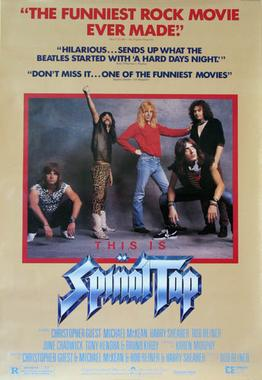
This is another one of those times where the two films I review could be interchangeable. This Is Spinal Tap is just as deserving of being in the Top 100 as Bill & Ted’s Excellent Adventure. In fact, I can openly admit, it’s the funnier of the two by a mile. Bill and Ted may have more heart and be more likeable, but Spinal Tap…well, let’s just say they deserve the movie they got. This Is Spinal Tap was the jumping off point for two important careers. Rob Reiner, who directed this as his first film, went on to make The Sure Thing, and then a string of five back-to-back hits: Stand By Me, The Princess Bride, When Harry Met Sally…, Misery, and A Few Good Men – all great movies for very different reasons. Christopher Guest would go on to write, direct and star in Waiting for Guffman, Best In Show, A Mighty Wind (his costars from Spinal Tap, Michael McKean and Harry Shearer, join him again as a folk music trio, The Folksmen), and For Your Consideration. Like This Is Spinal Tap, these other films feature very basic premises and a large amount of improvisation.

Filmed as a documentary, Marty Di Bergi (Rob Reiner channeling his best Scorsese a la The Last Waltz) follows the band Spinal Tap as they prepare for a nationwide tour to promote their newest album, Smell the Glove. Spinal Tap was originally a folk group called The Originals. They changed their name to the New Originals when they found out there was another group called The Originals. Then they were an early rock ‘n’ roll group, the Thamesmen. Their only hit was “Gimme Some Money”. They finally found some success after changing their name to Spinal Tap and releasing their hippie rock song, “Listen to the Flower People”. The next logical step was to pursue heavy metal. As their tour begins, things go from bad to worse. They lose another drummer to spontaneous combustion, they have to book smaller venues due to poor ticket sales, they’re late to a show because they can’t find the stage, one of their pods malfunctions and so one of them is unable to perform the entire show, when they order a large, grand Stonehenge for the backdrop of their show, someone writes the dimensions incorrectly and so the Stonehenge they receive is incredibly tiny, they get second billing to a puppet show, relationships interfere with the band’s dynamic, oh, and the album bombs. Things seem hopeless, and the members consider throwing in the towel, but then they find out they’re a surprise hit in Japan. They pack their bags and move their tour across the Pacific.

This Is Spinal Tap is situationally funny, sure, but it’s also incredibly quotable and true to life, especially for musicians. It’s become common vernacular in the music world to “turn it up to 11” when you want to get loud (guitarist Nigel shows off his custom amps, proud that they go up to 11 instead of the usual 10 on volume, and when questioned why he didn’t just make 10 a louder volume, he responds with, “But these go to eleven”). Many rock bands have admitted to pulling a “Spinal Tap” by blowing through drummers like candy. Even more rock bands have admitted to seeing themselves in Spinal Tap – particularly getting lost backstage. Members of Twisted Sister, Alice in Chains, Ozzy Osbourne, Talking Heads, Nirvana, Aerosmith, U2, Dokken, The Misfits, Metallica and Led Zeppelin have all praised This Is Spinal Tap and acknowledged comparisons between the fictional Spinal Tap and their own bands. If you’re into rock music or just in to a good satire, This Is Spinal Tap…well, we’ll just say it goes to 11.

85. Cinema Paradiso

I guess I have Italian films on the brain. What Bicycle Thieves and Neorealism did for the Italian movie industry in the 40s, Cinema Paradiso revived in the 80s. Considered one of the greatest films of all time, Cinema Paradiso is a movie about youth, realizing your destiny, nostalgia, and the power of movies. Basically, it’s a full-length version of that Nicole Kidman AMC ad, but actually good (Side note, but I need people besides just my wife to know this: Rewatch that ad sometime. She goes on about “we come to movie theaters to live, laugh, love, blah, blah, blah” and then she says, “and to go someplace we’ve never been before”, and when she says that, it shows a movie clip on the screen. Originally, it was a clip of Jurassic World, but recently, it changed to Avatar: The Way of Water. You know…places we’ve already been before! How are you going to say a line like that in all seriousness and then show clips from sequels?? End of rant).

Anyway, Cinema Paradiso is about young Salvatore, a boy in a Sicilian village post-World War II who gets into all sorts of trouble. By visiting the local theater, Cinema Paradiso, Salvatore develops a deep love of movies. Alfredo, the projectionist, encourages Salvatore’s passion and lets him sit in the projection booth with him as the movies play. Alfredo acts as a friend and father figure to Salvatore, who lost his father in the war, and lets him watch as Alfredo cuts out scenes of kisses and hugs from the films because the owner of the theater, the local priest, demands it despite audience reactions. One night, Cinema Paradiso catches on fire with Alfredo inside. Salvatore rescues him, but Alfredo is left permanently blind when reel of film explodes in his face. Cinema Paradiso gets rebuilt, and a teenaged Salvatore becomes the new projectionist, having been taught by Alfredo. He also purchases a camera and films random things around the village, including a girl named Elena. Salvatore falls head-over-heels for Elena, but her father does not approve, and eventually her family moves away. After a brief stint in the military, Salvatore is convinced by Alfredo to leave the village and never return, and instead become a filmmaker, and so he does. Thirty years later, he returns for Alfredo’s funeral and discovers a gift Alfredo left for him after he passed: a film reel of all the romantic scenes cut from movies being shown at Cinema Paradiso.

What a picture! The ending where Salvatore watches the film reel Alfredo left him is considered one of the greatest film endings of all time, and with good reason. It’s a montage of passion, love between man and woman, sure, but a love for how movies can make us feel. And it just goes to show that spying on people is creepy, but if you do it with a movie camera, it’s sweet and beautiful. I think that’s the message of the movie, but if that’s not it, then nostalgia for one’s childhood is. Nostalgia is a pretty hot commodity these days. It’s a selling point for movies and television, remakes of video games, increasing viewership on Facebook pages, and getting you to buy a cable plan with MeTV. Nostalgia brought back Dunkaroos from extinction, so I have surely benefitted from it. But it’s all surface-level, remember-the-good-ol’-days-type stuff. Cinema Paradiso begs you to look deeper. Yes, there’s the good, but there’s bad too in every childhood, and it’s up to you to make peace with the fact that both helped shape who you became.

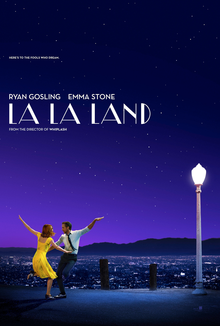
Bonus Review: La La Land

Another movie about nostalgia, just geared towards old Hollywood musicals, this time. La La Land was a surprise hit from the guy who made J.K. Simmons more than just the Peanut M&M – a jazz musical, with all original songs choreography, would be a tough sell in our modern days, but after the success of Whiplash, writer-director Damien Chazelle got carte blanche to make his dream project. La La Land is an ode to the Hollywood of old and an amalgamation of Singin’ in the Rain, An American in Paris, The Umbrellas of Cherbourg and The Young Girls of Rochefort.

Sebastian (Ryan Gosling) and Mia (Emma Stone) are two struggling artists that run into each other pretty frequently in one of the largest-populated cities in the country. Sebastian dreams of opening his own jazz club and tickling the ivories every night, while Mia wants to be a leading lady. They bond over their mutual lack of luck and quickly fall in love. While together, they push each other to pursue their dreams, but even with the added support, it doesn’t get any easier. Mia writes a one-woman play, which tanks, and Sebastian joins his friend in a pop band for the steady income but hates it. Their differing schedules keep them from seeing each other very much. After a fight, Mia goes home to Nevada, but after she leaves, a producer who caught her play wants her to audition for a role. Sebastian drives out to Nevada to convince her to come back and audition, and she successfully gets the part. Five years later, Mia is a successful actress and married with a child, but not to Sebastian. She and her husband go out for a date night and accidentally come across Sebastian’s jazz club. Between songs, Sebastian and Mia’s eyes meet, and for a brief eight minutes, they imagine what their lives could have been like together before returning to reality, briefly smiling at one another, and going their separate ways.

Sometimes, dreams don’t work out, and sometimes you have to choose which dream to make a reality. Not everything gets tied up in a neat little bow like in the movies. La La Land is a contradiction in how it fawns over movies and then demands you believe that things don’t always work out despite what the movies tell you, but it’s an enjoyable one to watch. It has all the flair and color of its inspirations, the music is surprisingly catchy, and Ryan Gosling and Emma Stone seep with chemistry (but if you’ve seen Crazy, Stupid Love, you already knew that). A love letter to a dead genre, La La Land fits right in on the shelf with the musicals that came before.

87. Shadowlands

I’m pretty sure I’ve mentioned this movie before, which makes sense, because I absolutely love it. C.S. Lewis happens to be on my short-list of favorite writers of all time, and so any biopic about him is at least going to grab my attention. However, I had a rather difficult time finding a way to watch it when I originally attempted to, years ago. It’s seemingly flown under the radar since its release, when it received wide-spread acclaim and award nominations, but I had never even heard of the movie until I was going through a phase where I wanted to watch not only every Academy Award Best Picture nominee, but nominees for several other categories as well. I have since come to my senses and believe the Academy Awards are about as valuable to cinema as your child’s graduation certificate for Kindergarten is to your friends. But thank goodness for a time when I felt differently, because it made me hunt down this 1993 Best Actress and Best Adapted Screenplay nominee.

Anthony Hopkins portrays C.S. Lewis in this film that focuses specifically on his relationship with Joy Davidman Gresham (who is played by Debra Winger from An Officer and a Gentleman and Terms of Endearment). C.S. Lewis was a bachelor until he was 47 years old, and he originally suspected he’d be one for his entire life because of an intolerance for cooties. But then, he met Joy. And he developed a friendship with Joy through their mutual intelligence and wide range of interests. And he was surprised by Joy because of her sharp wit and his developing affection for her. And he wished to show her charity by marrying her in a legal sense so she could remain in England instead of return to America and her abusive husband. Let’s see, that’s three of the…well, he had the eros kind of love for her too, but the movie is rated PG, so we don’t get to see any of that. Anyway, Joy is diagnosed with bone cancer and grows considerably weaker over the next few weeks. With the realization that he will soon lose her, Lewis is overcome and decides he doesn’t want just a legal marriage, but a Christian one…oh yeah, there’s the eros. They marry, and Lewis takes care of her until she withers away, leaving behind a son, Douglas, who Lewis continues to raise as his own.

This film, which adapted a stage play, which adapted a television film, which adapted the real story, is one of the most heart-wrenching romances out there. It’s so genuine in its portrayal of its subjects and treats this odd love story with the reverence it deserves. Both Lewis and Gresham were complicated people and so it makes sense that their courtship would be just as complicated. But, then again, all four loves can be complicated, can’t they? And the movie knows its subject so well and treats it so tenderly, that we can overlook the occasional fabrication of real events. For instance, Joy actually had two children, Douglas and David, but you don’t miss David in the movie. There’s also the slight detail that they vacationed in Greece before Joy’s passing, but in the movie, they sentimentally search for the inspiration of a landscape painting in Lewis’ office. It’s for the sake of sweet storytelling, and so all is forgiven.

Anthony Hopkins is an odd choice for Lewis, partially because he looks nothing like him, but also because he was still riding the wave of Hannibal Lecter from two years earlier. Hopkins does great, though, convincingly quoting Lewis in lectures and discussions. Debra Winger plays Joy with all the duality and conflict capable of a human. She shines as a woman that can go blow-for-blow with a “thinking” man, and, if you’ve seen Terms of Endearment, you already knew she was good and playing dying women. Spoilers, I guess. Also, Joseph Mazzello does an excellent job as Joy’s son, Douglas, who must grapple with what is happening to his mother. If you watch Shadowlands, you’ll see him and think, “Hey! It’s the kid from Jurassic Park!” But let me assure you, he does more than scream in this one. Speaking of Jurassic Park, Shadowlands was directed by Sir Richard Attenborough, who played Mazzello’s grandfather and creator of Jurassic Park, John Hammond (after working with Mazzello on Jurassic Park, he just had to get him on Shadowlands; he spared no expense). As an actor, Attenborough has an extensive filmography, including Brighton Rock, The Great Escape, The Flight of the Phoenix, Doctor Doolittle, And Then There Were None, Miracle on 34th Street, and Elizabeth, but as a director, I think you’ll find his best work: A Bridge Too Far, Gandhi, Cry Freedom, and Chaplin. Also, just a random bit of trivia, but his younger brother is David Attenborough. You’ll know David’s voice if you’ve ever seen any of the BBC Earth documentaries, such as Planet Earth.

Anyway, if you’re a fan of C.S. Lewis, or a lover of quirky love stories that don’t involve angsty teenagers, or you want to at least tear up, Shadowlands is the movie for you.

Bonus Review: Finding Neverland

For this bonus review, we’re going to look at another biopic about a famous author with two initials and a last name, who fell in love with a family, that’s based on a play, and involves a final scene where the author comforts the son of a dead mother. Finding Neverland is about J.M. Barrie (Johnny Depp), the creator of the original Peter Pan play. However, at first, he seems to be unsuccessful at his work. But when he meets Sylvia Llewelyn Davies (Kate Winslet) and her four sons, he develops a friendship with the family, acting as a second father to the boys and a close-but-platonic friend to Sylvia. His time spent pretending with the boys becomes the basis for Peter Pan. A producer, Charles Frohman (Dustin Hoffman), agrees to help Barrie make Peter Pan a reality, though he does not believe it will sell. Barrie decides to bring in some children from a nearby orphanage to sit throughout the theatre for the premiere. Their laughter is infectious to the other patrons and Peter Pan becomes an immediate success. Sylvia is unable to make the premiere because of an illness, and she soon dies. In her will, she requests that her mother and Barrie both raise her children.

Finding Neverland is basically Shadowlands without the Christian stuff in the background. It’s just as much a sentimental tearjerker, though, and I think makes a great companion film. Depp does some of his best work when he’s not covered in makeup or dreadlocks. Peter Pan, which I mostly know because of Walt Disney, is one of my favorite stories, so I easily gravitate towards a film about its creation. Again, you have to be in the mood to at least cry a little, but Finding Neverland is worthy of anyone’s time and tears.

88. Harvey

“Who is Harvey?” I hear you ask. Well, to quote Elwood P. Dowd, “He’s a Pooka!” Pooka’s, according to Celtic folklore, are mischievous spirits who can shapeshift into different kinds of animals and assist the humans they come in contact with. Harvey happens to be a six-foot, three-and-a-half inches tall white rabbit, only visible to Elwood.

Elwood’s a simple and peaceful man. He has the demeanor of a monk, and his best friend is an invisible rabbit whom he tries to introduce to everyone he meets. His sister, Veta, and niece, Myrtle Mae, live with him at his estate, and tries throwing a party at their house. However, the guests get weirded out and leave when Elwood has a seemingly-one-sided conversation with Harvey in the corner. Veta is understandably upset with her brother, and decides to have him committed to a sanatorium, but at the sanatorium, when Veta is explaining Elwood’s “problems”, she accidentally lets it slip that she sometimes sees Harvey. The doctor who listens to her story decides that she’s the one who should be institutionalized, so he lets Elwood go free. The head of the sanatorium, Dr. Chumley, realizes the mistake and everyone goes searching for Elwood. Dr. Chumley finds him at Charlie’s, Elwood’s favorite watering hole. There, Elwood, Dr. Chumley and Harvey converse for several hours. When the others at the sanatorium realize how long Dr. Chumley’s been gone, they go to Charlie’s. However, Dr. Chumley is nowhere to be found, but Elwood is there. They bring him back to the sanatorium, believing he has in some way harmed Dr. Chumley, whom Elwood claims is off with Harvey. Dr. Chumley soon returns and privately admits to Elwood that he now fully believes Harvey is real. However, the others decide to still commit Elwood, and plan to inject him with a formula that will make him “stop seeing the rabbit”. Realizing the cab driver that brought them all back from Charlie’s is still waiting to be paid, Veta goes outside with her bag, looking for her coin purse. She is unable to find it, unsure of where she could have left it, and insists that the cab driver wait until Elwood has been injected, then he can come out and pay. The cabbie makes some comments about the injection – how it turns interesting people into boring ones – and Veta decides to not go through with the injection, and chooses to believe Harvey is real too.

In a long list of movies that celebrate quirky individualism, Harvey is near the top. It’s so sweet and, outside of the final conversation with the cab driver, it isn’t in your face with the message. James Stewart plays Elwood so earnestly, it has to be one of his most endearing performances – more bright-eyed than Mr. Smith Goes to Washington and more patient that Mr. Hobbs Takes a Vacation. Veta’s actress, Josephine Hull, won an Oscar for her performance, which Stewart helped push for by saying she had the hardest role in the film because she had to “not believe in Harvey and believe in Harvey at the same time.” Hull had a short film career, with only six credits to her name, but she did so much with so little. She’s also one of the aunts in Arsenic and Old Lace, so check that out too.

One of the smartest decisions for the filmmakers was to treat Harvey as if he is there and visible. There’s instances where the camera “follows” Harvey as he supposedly moves, and in general, the film is full of wider shots to ensure that Harvey is in the frame when he walks around with James Stewart. The camera treating Harvey as actually there helps the audience to do the same, and while the film never directly shows he’s real, it does enough to make sure that we believe he is. Harvey is great fun and a whimsical movie to spend an evening with.

Bonus Review: A Matter of Life and Death

Peter Carter is a British pilot in the Royal Air Force. His plane gets shot down and as he’s hurtling toward the ground, he realizes he doesn’t have a working parachute. He reaches out to make contact and gets ahold of US Air Force radio operator, June, and they converse for a time before Peter decides to go ahead and eject. However, in the thick English fog, his escort to Heaven is unable to find him, and so he survives. Peter meets June as she is biking her way back home after her shift, and they fall in love. Peter’s escort to Heaven, Conductor 71, finds Peter and tries to convince him to come to Heaven, but Peter wants to appeal his case. Conductor 71 goes to talk to his superiors, giving Peter and June more time together, and returns to tell Peter he has three days to prepare for his appeal. June is convinced that Peter is having visions and takes him to Doctor Reeves, who believes the visions are the result of a brain injury. Reeves then dies in a motorcycle crash, but it makes him eligible to represent Peter in his appeal. At trial, Reeves makes the argument that Peter, through no fault of his own, has been given more time on Earth and during that time has fallen in love and now has a obligation to stay on Earth. The Council question Peter’s and June’s love for one another, and so Reeves has June take the stand and tells her the only way to save Peter’s life is to take his place. She does so without hesitation. The Council then concedes and allows Peter more time on Earth.

This movie was made in order to help repair British-American relations after World War II. The British viewed the Americans getting involved in World War II as too little too late, and the American way of brashness didn’t sit well with the countrymen who had spent the last few years being bombed at and having to ration their food. This film acted as salve by letting the British man win the day and getting the American girl instead of the other way around. It lifts the British up without putting the Americans down by letting June’s willing sacrifice be the climax of the movie. In fact, the only negative portrayal of Americans in the film is the prosecutor for the appeal, named Abraham Farlan, who was supposedly the first man shot by the British during the Revolutionary War, so he has a little reason to not take kindly to Limeys.

91. Shaft

Blaxploitation – (n.) a term for a genre of movies, made particularly in the 1970s, that largely featured Black actors and were aimed at Black audiences. Examples include: Hit Man, Super Fly, Cleopatra Jones, The Mack, Willie Dynamite, Foxy Brown, and of course, Shaft.

Growing up a suburban, nearly-translucent white boy in Oklahoma, the closest I came to experiencing the Blaxploitation genre was Madea Goes to Camp. I knew some things through references in The Fresh Prince of Bel-Air, but I just assumed these were movies that weren’t meant for me. Depending on who you talk to, Shaft might be more for me than for Black people (written by white people who intended the film version to be white, John Shaft is considered very honky-adjacent), and sure enough, it was love at first sight. But who can blame me? They say this cat, Shaft, is a bad mother (shut your mouth!).

John Shaft is a private detective living in New York City, specifically Greenwich Village. You know, where folk music was discovered (I wonder if Shaft is a fan of Simon & Garfunkel)? He starts the movie off by fighting some mobsters, just to show us that he won’t cop out when there’s danger all about. He learns that Bumpy Jonas, a mob boss in Harlem, wants to hire him to find his daughter whom he believes has been abducted on her way to college. Bumpy tells Shaft to find a man named Ben Buford, but when he finds Ben, the two men are shot at by an unknown shooter. They soon discover that they are caught in the middle of a power struggle between two mobs, Bumpy’s and the Italians. Eventually, Shaft learns that Bumpy’s daughter is being held at a hotel. He and Ben and some of Ben’s men infiltrate the hotel under the guise of employees, determined to return Bumpy’s daughter to her home.

I mean, I’m not trying to belittle the story here, but that’s the plot to every film noir ever. Literally, the only changes are…cosmetic. And that’s where I think a lot of criticism for Shaft comes from. It doesn’t truly get to the heart of the Black experience, it simply puts blackface on a white movie. Now, while I understand that take, I don’t fully agree with it. I think a lot of credit should go to Richard Roundtree for what he brings to the table as John Shaft. The way he talks, the way he moves – none of it is like how Humphrey Bogart would do it. Once Richard Roundtree was cast in Shaft, the whole dynamic of the film changed. The man literally invented “swag”. Casting Roundtree was the absolute stroke of genius that Gordon Parks made as director of the film.

Gordon Parks was a very talented man. He only made five feature films, but he was also a renowned author, poet, composer and photographer, and he had a great influence on many who came after him, particularly Spike Lee and John Singleton. He’s even the namesake of a Sesame Street character. With Parks at the helm, making the decisions, Shaft became much more than just a film noir marketed to a Black audience; it became a pioneer. Also, that score is excellent. Shaft is the blueprint for every Blaxploitation film that came after it. And Shaft is a complicated man. Can you dig it?

Bonus Review: Buck and the Preacher

What a perfect film to pair Shaft with. Buck and the Preacher is all at once a Western classic, a blaxploitation film, and one of the few media portrayals of “Exodusters”, post-Civil War African American settlers who went through hostile Native land and around white plantation owners to make a new home in Kansas Territory (something Gordon Parks would know about considering he was descended from them – in fact, just for another recommendation, Gordon Parks’ directorial effort before Shaft was called The Learning Tree, and it’s about the descendants of Exodusters in the 1920s). This is Sidney Poitier’s directorial debut, and he also pulls double duty as our hero, Buck – a cowboy who acts as Moses to these Exodusters. Along the way, he runs into Reverend Willis Oaks Rutherford (a wily and devilish Harry Belafonte), whom he enlists to help him ward off a group of white raiders.

Buck and the Preacher took the same philosophy and bare bones of Shaft and transferred them over to an even more predominately-white genre. In spite of that, or perhaps because of it, the film wasn’t the success it should have been when it was released. But that’s why I’ll always recommend it whenever I can. It’s an exciting thrill ride that proved Sidney Poitier was as much a force of nature behind the camera as he was in front of it, and that alone is reason enough to keep it in the eyes of the public. Fortunately for us, it’s also entertaining as all get-out.

92. Watership Down

Never has there been an animated film so controversial when arguing suitably for children than this one. Some argue that the violence is too much and the subject matter too mature. Others, myself included, argue that it’s not any more traumatizing than watching Bambi’s mother die. If your kids can handle Disney, they can handle Watership Down. I will concede that little kids aren’t going to understand a lot of the story beyond a group of rabbits looking for a new home, but that doesn’t alter my main argument.

For those who haven’t seen it or read the book by Richard Adams, there’s a few things to cover beyond just the story. First of all, the rabbit culture has its own language – Lapine. So, there are instances in the movie where they refer to certain things by their Lapine word, such as “silflay”, which is the act of going above ground to feed. There’s not a lot of rhyme or reason for the use of Lapine words since, for the sake of the viewer, speak mostly in perfect English, but it helps give the world the story takes place in some character and a lived-in feel. Along with the language, the rabbits have their own mythology, which is explained in the first scene of the movie. The basics of it are that a god named Frith created the world and, originally, all animals were herbivores. However, rabbits multiplied at such a rapid rate that they were clearing the world of grass. Frith commanded the rabbit prince, El-Ahrairah, to basically get his fellow rabbits to curb their appetites for food and procreation. El-Ahrairah brushes him off and in retaliation, Frith turns some of the animals into carnivores to hunt the rabbits. Not to leave them completely defenseless, he gives rabbits the gifts of speed and cunning.

Okay, for the two of you who are still with me, here’s a brief synopsis. Fiver and his older brother, Hazel, are convinced that their home is going to be destroyed after Fiver has a vision about it. However, the chief of their warren refuses to let anyone leave. “Shut up, Chicken Little. The sky isn’t falling!” Hazel, Fiver and a small group of rabbits manage to escape the warren without being caught by the Owsla (the warren’s police force). Basically, from there, they hop (rabbit pun!) from warren to warren, in search of a new home, and discovering that the farms where these warrens are located aren’t friendly towards rabbits. Eventually, they find the land that Fiver had envisioned, Watership Down. They make it their home, but realize a house is not a home without some lady bunnies, so they go looking for some. A bird named Kehaar offers to fly around in search of a warren overflowing with does and finds one. The only problem is General Woundwort rules his warren with an iron fist, so Hazel sends the captain of his Owsla, Holly, to infiltrate the warren and find some does willing to escape. They succeed in doing so, but Woundwort finds out and does not take the slight kindly. He and his army come to Watership Down and a major battle ensues. The rabbits of Watership Down must defend the paradise they’ve found in order to live a life of peace.

Okay, for the none of you still with me, it sounds pretty good, right? I’m feeling incredibly self-conscious after that synopsis, and feel the need to defend this movie from blank stares and head-scratching. The story is so rich and handles the reality of death with such care, especially the sad-but-sweet ending. It’s beautiful storytelling, and beneficial for viewers of all ages. The movie’s theme song, “Bright Eyes” by Art Garfunkel, is a sweet and somber piece that reflects the movie quite well. The movie moves at a tight pace, too. It takes a nearly 600 page book and condenses it into a solid hour and a half film without compromising the charm of the deeper world that the book develops. It’s not just for kids, but it’s not just for adults either. Everyone can find something to enjoy in it, if they’re willing to watch an animated film.

Bonus Review: Coco

Pixar hasn’t released a good movie since Brave in 2012, with only one small exception: Coco, another animated film that handles the topic of mortality with delicate hands. When Imelda’s husband abandons her and their young daughter, Coco, to chase a music career, Imelda bans music from her household indefinitely and Coco, as the eventual matriarch of the family, continues. However, Coco’s great-great-grandson, Miguel, secretly loves music, and when Coco finds out, she smashes his guitar like she was Pete Townshend. In need of a new guitar, Miguel goes to the museum of a famous Mexican musician that was roughly the same age as Miguel’s great-great-great grandmother, and steals it, but when he strums the still-smooth strings, his world becomes significantly more vibrant as he is transported to the Land of the Dead and his ancestors.

As Miguel discovers his dead family history, he learns to value the living family he has back home. Coco is a major tearjerker with a lot of color and personality. It’ll make you want to hug your relatives, especially the older ones. It’s sweetly sentimental but still genuine, and the music is pretty solid too, but I have an affinity for Latin music, so that might not be the consensus of the viewers. This is not only the best movie from Pixar in a long time, it’s also Top 3 Pixar of All Time.

94. Mississippi Burning

If there’s one thing that I’ve learned from movies and history books, it’s that you shouldn’t be Black and in Mississippi during the Civil Rights movement. It never works out well. Mississippi Burning is a film in a long list of films that deal with this subject, and inspired by true, terrible events. Here’s the background:

James Chaney was from a town called Meridian, Mississippi. Two men from New York City, Andrew Goodman and Michael Schwerner, met together in Philadelphia, Mississippi to work with Freedom Summer – a volunteer campaign that attempted to get Black people registered to vote in rural Mississippi. Chaney, himself, was Black, and Goodman and Schwerner were Jewish. They were pulled over for speeding, and were promptly sent to the local jail and held there for several hours. When they were released, they left town but were followed by local law enforcement, and were once again pulled over before leaving the county. This time they were abducted, sent to an undisclosed location, and killed. After a lengthy investigation from the FBI, it was discovered that members of the KKK, the Neshoba County Sheriff’s Office, and the Philadelphia Police Department were involved in the murders.

The movie follows the same basic premise, but focuses on the FBI’s investigation and sets the story in a fictional county. We’re introduced to Agent Anderson (Gene Hackman) and Agent Ward (Willem Dafoe) as they enter Mississippi, and from very early on, we see the potential clash of method between the two. Ward is interested in doing things by the book, while Anderson prefers whatever gets the job done. Their investigation proves difficult when they get no assistance from the local authorities and citizens, some of which are downright antagonistic towards them. Eventually, both agents are frustrated by their lack of success, and Ward officially lets Anderson do things “his way”. Through threats of violence and trickery, Anderson is able to piece together evidence for their case, and also decides to try the murderers for civil rights violations because it means they will be tried at a federal level instead of the state, which is where murder trials were handled at the time. Watch the movie if you want to see how that goes.

Mississippi Burning isn’t without controversy. First, for a movie about racial tension in the South, the movie is almost completely white. The fictional stand-in for Chaney appears only briefly, and beyond that, it’s nothing but waves of vanilla. Not having a Black character that is central to the story is a fair criticism and leads into dangerous “white savior” territory, and I think it would have helped if the movie had someone for the audience to identify with. However, one thing the casting decision does is reinforce the townspeople’s mentality that Black people are “outsiders”. Another criticism is the framing of the story. Making the FBI the good guys didn’t sit well with a lot of the Black community who lived through the Civil Rights Movement, considering the FBI’s penchant for wiretapping those involved. Also fair. The last criticism was from members of the families of the men killed in real life, who argued that the murders were being exploited for the sake of moviemaking. Likely true, however, that’s just a byproduct of using film to tell history, isn’t it?

Despite these criticisms, I still think Mississippi Burning is worth a watch. The performances are great, and there’s a particular scene where Agent Anderson gets to have a one-on-one chat with one of the possible murderers in a barber shop that will make you clench your butt cheeks. Also, Frances McDormand is in this as the wife of a racist deputy sheriff. She’s great in everything.

Bonus Review: In the Heat of the Night

This is the movie to watch if those criticisms for Mississippi Burning were a deterrent or if you just want to compare how the two movies handle a similar topic. Firstly, it’s not based on any actual murders to my knowledge. Secondly, not only is a Black character front and center to the story, (they call me) Mr. Tibbs is played by THE Sidney Poitier.

Mr. Virgil Tibbs is arrested as he’s traveling through a Mississippi town, suspected of murdering a white man in town. Mr. Tibbs is able to prove that he is a homicide detective from Philadelphia, Pennsylvania, and is released. On the phone with his chief, it’s decided that Tibbs will stay in town to help with the investigation. Police Chief Bill Gillespie reluctantly accepts the help despite his own prejudices. Gillespie is all too quick to arrest anyone who might be a suspect, and it’s up to Tibbs to prove their innocence. Eventually, Tibbs figures out who the actual murderer is, almost by accident, and is able to get a confession. As Mr. Tibbs boards a train to depart, he and Gillespie part ways with a mutual respect for one another.

A few firsts for this movie: 1. This is the first film that was properly lighted for darker skin complexions. Before In the Heat of the Night, film lighting would always result in a glare on Black characters. 2. It’s the first film that allowed for a Black character to slap a White character.

This movie has so much going for it. The story is great. Tibbs’ efforts despite the racist town and in the face of said racism is exciting, and his Golden Rule approach to the citizens is commendable. The acting is great, particularly Poitier and Rod Steiger, who plays Gillespie. The score from Quincy Jones is amazing. It’s got so much working for it, and it’s honestly a film that everyone should see at least once. Honestly, the more I type out my review, the more I’m convinced that this one and Mississippi Burning should switch places. In the Heat of the Night should actually be #94 on my Top 100. I’m too lazy to change it, but for those of you have read the full review (or better yet, have watched both movies), you know who the real #94 is.

95. The Best Years of Our Lives

1946. World War II had just ended the previous year, and the Allies’ victory had long since been celebrated. It was time to return to normal, but for the brave men and women who were coming back from overseas, there was no longer any normal to return to. Soldiers had a difficult time reacclimating to life back in the States, most suffering from PTSD and not knowing how to cope with it. The world moved on, and before long, people know longer cared about the valor and the sacrifice of these veterans. Still to this day, we don’t really know how to rehabilitate those who have seen war.

The Best Years of Our Lives was released that year that I mentioned earlier. It follows the lives of three men coming back from the war. There’s Fred Derry (Dana Andrews), who was a captain in the Air Force, Al Stephenson (Fredric March), an Army sergeant, and Navy officer, Homer Parrish (Harold Russell). The men bond as they travel home and then part ways to return to their families. Homer goes back to his parents and his girlfriend, Wilma (Cathy O’Donnell). Homer’s self-consciousness eats away at him as every seems to be staring at his mechanical hooks that have replaced his hands (Harold Russell was not an actor – he was an actual officer who had lost his hands in a bomb-diffusing exorcise and was chosen for the part for the sake of authenticity). Though he had written letters to Wilma professing his love and promising marriage upon his return, he no longer believes that will want to marry him. Al returns to his family and his job at a bank, but while his son is still in high school and oblivious to the change in his father, Al’s wife, Milly (Myrna Loy), and older daughter, Peggy (Teresa Wright) witness his descent into alcoholism first-hand. They go out bar hopping at Al’s request to celebrate his return and run into Fred at one establishment. Fred is there because he can’t find his wife, Marie (Virginia Mayo). Before he shipped off, they quickly got married and lived with his parents, but while he was in the war, Marie moved into an apartment and started working at a nightclub. Fred, not knowing which nightclub she is at, bar hops as well. After their night of revelry, the Stephensons take Fred to the apartment he thinks his wife is at, but when he rings the buzzer, no one answers. Peggy and Milly help him back to their car (Al is out cold in the back) and give him a place to stay at their apartment for the night. During the night, it’s revealed that Fred suffers from PTSD and night terrors.

Homer shows Wilma his bedtime ritual of getting his hooks removed, leaving him helpless, but she is undeterred and still wishes to marry him. Fred struggles to find work with no apparent skillset and returns to the soda jerk job he held before the war. Marie’s frustration by his financial floundering and a desire to return to her nightlife leads her to file for divorce. Al is criticized for offering a loan to a veteran who has no collateral and agreeing to the loan based solely on a “feeling”. Meanwhile, Peggy and Fred develop feelings for one another, which puts Fred and Al at odds with each other (at the time, Fred is still married to Marie). Homer comes to visit Fred at work one day and another man tells Homer that he lost his arms for no reason, that the US shouldn’t even have been in the war in the first place. Homer reacts angrily, but Fred steps in and punches the man on Homer’s behalf, effectively getting him fired from his job. At his wit’s end, Fred attempts to leave town but, while waiting at the airport, takes a walk through an aircraft boneyard. A workman tells him to leave, as they are preparing to scrap the planes and use the material for building houses. Fred asks for and receives a job. The film ends at Homer and Wilma’s wedding. There, Fred and Peggy reconnect and are seemingly on their way to getting together.

William Wyler, the film’s director, fought in World War II himself, and considered this project very close to his heart. He was also one of the most prolific directors of all time, and yet, he is not a household name. His films include Dodsworth, Jezebel, Wuthering Heights, The Westerner, The Letter, The Little Foxes, Mrs. Miniver, The Heiress, Roman Holiday, The Desperate Hours, Friendly Persuasion, The Big Country, The Children’s Hour, How to Steal a Million, and Funny Girl. Oh, and one of those little films you’ve probably never heard of, Ben-Hur. It’s an impressive collection, and even more impressive are some of his stats. He is tied with Frank Capra for second-most Best Director Oscar wins (3), only behind John Ford (4), and is tied with Steven Spielberg for directing the most Best Picture nominees (13), and is the only director to have directed three Best Picture winners, The Best Years of Our Lives being one of them.

Among the many accolades this film has received over time, one of the most interesting ones is that Harold Russell is the only person in Oscar history to win two awards for the same performance. With how the categories work out, this is typically not possible. However, the Academy didn’t expect Russell to win the actual Best Supporting Actor award, but they wanted to recognize his work on the film and his military sacrifices, so they gave him the Academy Honorary Award that evening. He ended up winning Best Supporting Actor too. What I’m getting at is that Harold Russell did not leave the Oscars empty-handed.

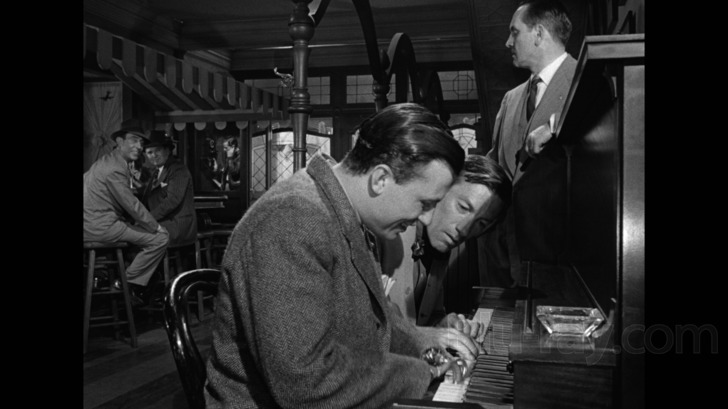
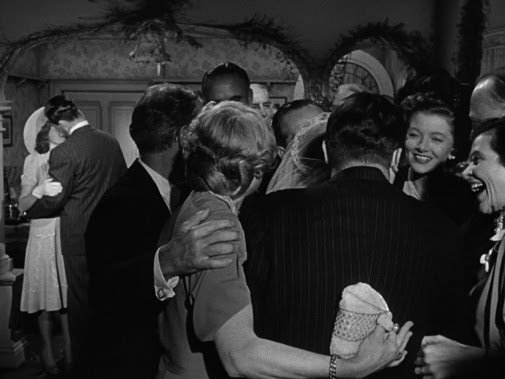
Anyway, this movie is worth watching simply because it’s a good drama with rich characters, but also for it’s technical significance. The film was shot primarily in deep focus, which is not a common technique in cinematography, because it keeps everything – the foreground, the background and the middle-ground – in focus. Normally, the camera shifts focus and the unimportant events are blurred while our attention is drawn to whatever is in focus, but because of the use of deep focus, Wyler was able to tell more of the story in a single shot. Here are some examples, and be excited! I rarely bring visual aids.

This scene gets discussed a lot because of what it accomplishes. Homer and his uncle, Butch, sit at the piano to show Al what they’ve been working on together. Fred is back in the phone booth, calling Peggy to tell her they shouldn’t see each other anymore, at Al’s request. Al is able to move his attention between the two events without the camera having to move or switch shots.

Here’s another example at the very end. Everyone in the foreground surrounds Homer and Wilma, congratulating them on their wedding, while Fred and Peggy, away from everyone else’s attention but not from ours, rekindle their romance.

Thanks for coming to my TED Talk.

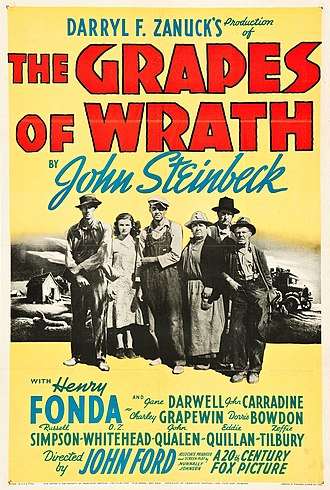
Bonus Review: The Grapes of Wrath

Some say that The Grapes of Wrath is John Steinbeck’s best work and the Great American Novel. Some say that The Grapes of Wrath is John Ford’s best film. People say a lot of things. The Grapes of Wrath follows the Joad family, farmers from Oklahoma during the time of the Great Depression, as they get their kicks out on Route 66 – searching for work in the Californian promised land. However, once they arrive, they soon learn the grass isn’t always greener on the other side (but at least it’s there, right?). Working and living conditions for newcomers to the Golden State are terrible and the pay is even worse. Tom Joad (Henry Fonda), a former prisoner, becomes interested in talks of unionizing, but it’s going to be an uphill battle for Tom. Not even the law is on his side.

Don’t get me wrong, I love this movie. I wouldn’t be recommending it if I didn’t. But the book is better by a lot, and so I can never really put The Grapes of Wrath higher on John Ford’s filmography. However, there are a few things that the movie does really well. First, Henry Fonda as Tom Joad is not only perfect casting, I’d argue this is the movie that truly made Fonda a star. Next, Jane Darwell as Ma. Again, perfect casting, and the role she is probably most associated with (though she will always have a special place in my heart as the Bird Lady in Mary Poppins). Finally, the film keeps a tight focus on Tom and Ma instead of the entire Joad family and beyond. I fear giving the rest of the family too much attention would really keep the film from finding a focus and feel to sprawling. That’s okay for a novel, but doesn’t work as well on screen.

This goes well with The Best Years of Our Lives, if you can sit through both at once. Both are dramas set during a time of great change in our country’s history and both focus on the people who made a difference during those times. Both are heartfelt and honest about what they have to say and don’t shy away from the human element in favor of an idealistic statement.