Romantic comedies, by their very nature, are unrealistic. Not to be a downer, but perfect relationships don’t exist and the typical conflict between the couple is usually more serious than what the movies portray. However, every so often a rom-com comes along that feels authentic and genuine. Definitely, Maybe, Roman Holiday and (500) Days of Summer come to mind when I think of more realistic romances or movies that at least have a grounded take on love. But then there’s one movie that stands above the rest – one movie that feels more true to life than just about any other and has also in some way inspired every rom-com that has come after it: When Harry Met Sally…
Just as the title suggests, When Harry Met Sally… begins with Harry and Sally being introduced by their mutual friend, Amanda, and agree to carpool from Chicago to New York. Along the way, they discuss their views on relationships and Harry claims men and women can never just be friends. In New York, they part ways intending to never see each other again. However, five years later, they end up on a flight together. Sally is dating Harry’s neighbor, Joe, and Harry is engaged to a woman named Helen. Harry also disagrees with his former statement and says he and Sally should try and be friends, but Sally disagrees. Another five years pass, and Harry and Sally run into each other at a bookstore. Over coffee, they each reveal that their partners have left them. They agree to be friends and end up having late-night phone conversations, dinners together and more discussions on their respective love lives. They share a kiss at a New Year’s Eve party as their attraction grows for one another, but they intend to remain just friends and at each other up with their best friends, Jess and Marie. Over dinner, Jess and Marie fall in love with each other, leaving Harry and Sally alone again. Sally calls Harry one night in tears because her ex is now getting married. Harry comes over to comfort her and the two end up sleeping together. Harry leaves early in the morning, feeling regret for overstepping their friendship line. They stop talking for awhile and when they see each other again at Jess and Marie’s wedding, they end up arguing. At another New Year’s Eve party, Sally admits she misses Harry. Meanwhile, Harry is at home watching tv when he decides to go out. He arrives at the party just as Sally is about to leave and confesses his love for her.
For research for the screenplay, Nora Ephron interviewed couples she knew to get their love stories. She ended up putting some of these interviews into the movie in between scenes. The stories are sweet and poignant, and it beautifully culminates in the final interview with Harry and Sally just before the end credits. It’s an unusual device but a smart one because it helps keep the movie grounded. This is a dialogue-heavy film. It gives Richard Linklater’s Before movies a run for their money. But it’s a perfect fit for the two leads. Meg Ryan and Billy Crystal play off each other so well and there’s room for improvisation between both of them. The pairing of Ryan and Crystal is a bit unusual. It’s hard to see Billy Crystal as a leading man, though he does give off the Everyman vibe quite well, but he feels out of place next to the gorgeous Meg Ryan. Other than that, there is very little to complain about this movie. If you never have seen it, give When Harry Met Sally… a watch. If you have, well, maybe it’s time to revisit it.
Bonus Review: Pride & Prejudice
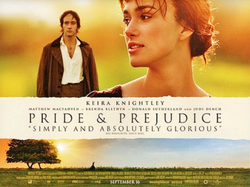
Before anyone tries to come and strip me of all credibility here, the Colin Firth BBC adaptation is a miniseries, so it doesn’t count. Besides that, Joe Wright’s 2005 adaptation of the greatest romance ever written is an exemplary piece of filmmaking. The camera constantly moves, it’s kinetic and full of youthful energy that some of the other adaptations don’t have. This direct contrast to the other adaptations, as well as the time period the story is based in, sets this version of Pride & Prejudice apart. This also happens to be Joe Wright’s feature film debut and I can only assume he had something to prove which accounted for the surprising confidence that his work exudes. A particular scene at a ball contains a single, nearly-three-minute shot that moves and changes perspectives a total of 17 times before cutting. The amount of care and choreography that goes into filming a scene that complex is astounding to say the least. Honestly, the camera work in the film is one of the biggest highlights. The English landscape is breathed in as deeply as possible. Characters may be in the foreground of such scenes, but it’s the background that draws us into the shots. This fact makes Pride & Prejudice one of the most beautiful movies to look at.
The Bennet family (Mr. and Mrs., and daughters Jane, Elizabeth, Mary, Kitty and Lydia) live in a quaint house in rural England. Mrs. Bennet’s entire concern is securing suitable marriages for their daughters and is thrilled to learn that a wealthy young bachelor, Mr. Bingley, has moved in nearby. At a ball, Mr. Bingley, his sister, and his friend, Mr. Darcy, are introduced to society. Mr. Bingley and Jane are smitten right away, but Elizabeth and Mr. Darcy seemingly have great disdain for each other. Jane visits the Bingleys, but gets sick while there and must stay and recoup. Elizabeth comes to check on her sister and verbally spars with Miss Bingley and Mr. Darcy. When Jane is better, the sisters return home just in time to meet Mr. Bennet’s cousin, Mr. Collins – a pompous and aloof clergyman who is set to inherit the Bennet household since Mr. Bennet has no male heirs. Lieutenant Wickham also introduces himself and seemingly connects with Elizabeth and confides in her that his father died in the service of the Darcy family and Mr. Darcy denied Lieutenant Wickham his inheritance.
At the same party, Elizabeth dances with Mr. Darcy after he asks, but their time together is strained. The next day, Mr. Collins proposes to Elizabeth but she rejects him outright. Mr. Collins instead marries Elizabeth’s friend, Charlotte, and later, Elizabeth visits them and meets Mr. Collins’ benefactor, Catherine de Bourgh. She unexpectedly runs into Catherine’s nephew, Mr. Darcy. It is revealed that Mr. Darcy is the reason Jane is rejected by Mr. Bingley, but Elizabeth is taken aback when Mr. Darcy proposes marriage to her. They fight and later, Mr. Darcy delivers a letter explaining his reasoning for his actions as well as the truth about Lieutenant Wickham. Later, Elizabeth tours parts of London with her aunt and uncle, and they end up at Mr. Darcy’s estate, Pemberley. Mr. Darcy is there and invites them to dinner, which they accept. But while there, Elizabeth receives a letter saying Lydia and Wickham have run away together. To avoid ruining the Bennet family, Mr. Darcy pays for Lydia and Wickham’s wedding as well as her dowry but does not tell Elizabeth. Lydia herself lets the information slip. Later, Bingley and Darcy return to the countryside and both propose to Jane and Elizabeth respectively. Realizing Elizabeth’s true feelings for Darcy and learning of what he did to prevent their family from ruin, Mr. Bennet gives his permission for them to marry.
 Destined for Mediocrity